


The Signature 510 helm station brings protection, control, visibility and cockpit connection into one serious bluewater sailing position.
The Privilège Signature 510 helm station is one of the clearest examples of how intelligent design changes life at sea. On many catamarans, the helm is treated as a steering position. On the 510, it becomes the operational centre of the yacht. It offers two access routes, one from the cockpit and one from the interior, which improves movement and safety in bad weather. It keeps the skipper connected with guests and family in the cockpit. It brings the running rigging back to the helm, allowing sail handling from one protected position when the yacht is specified with electric systems. It shelters the watchkeeper behind a hardtop and windscreen. It also offers an unusually complete view of the boat, including the four corners. This is why the 510 helm station is not a detail. It is a defining feature of a serious luxury bluewater catamaran.
The helm station defines the real character of a bluewater catamaran
A luxury bluewater catamaran is judged by many visible elements. Buyers notice the owner’s suite, the cockpit, the saloon, the finishes, the galley and the general feeling of space. These points matter. They shape comfort and emotion. Yet the helm station tells the deeper truth about the yacht.
The helm shows how the boat is meant to be sailed. It reveals whether the yacht was designed for occasional fair-weather use or for serious time at sea. It shows whether the shipyard understands short-handed sailing, fatigue, weather, family life, visibility, protection and fast decision-making.
On the Privilège Signature 510, the helm station is not an accessory placed on the deck. It is the command centre of the yacht. It sits at the heart of the boat’s bluewater logic. It allows the skipper to steer, trim, reef, monitor systems and stay connected with the cockpit. It also protects the person on watch when conditions deteriorate.
This is why we can speak frankly. The protected helm station of the Signature 510 is one of the strongest in the luxury catamaran market. It brings together ideas that are often separated on other boats: safety, comfort, visibility, sail handling and social connection.
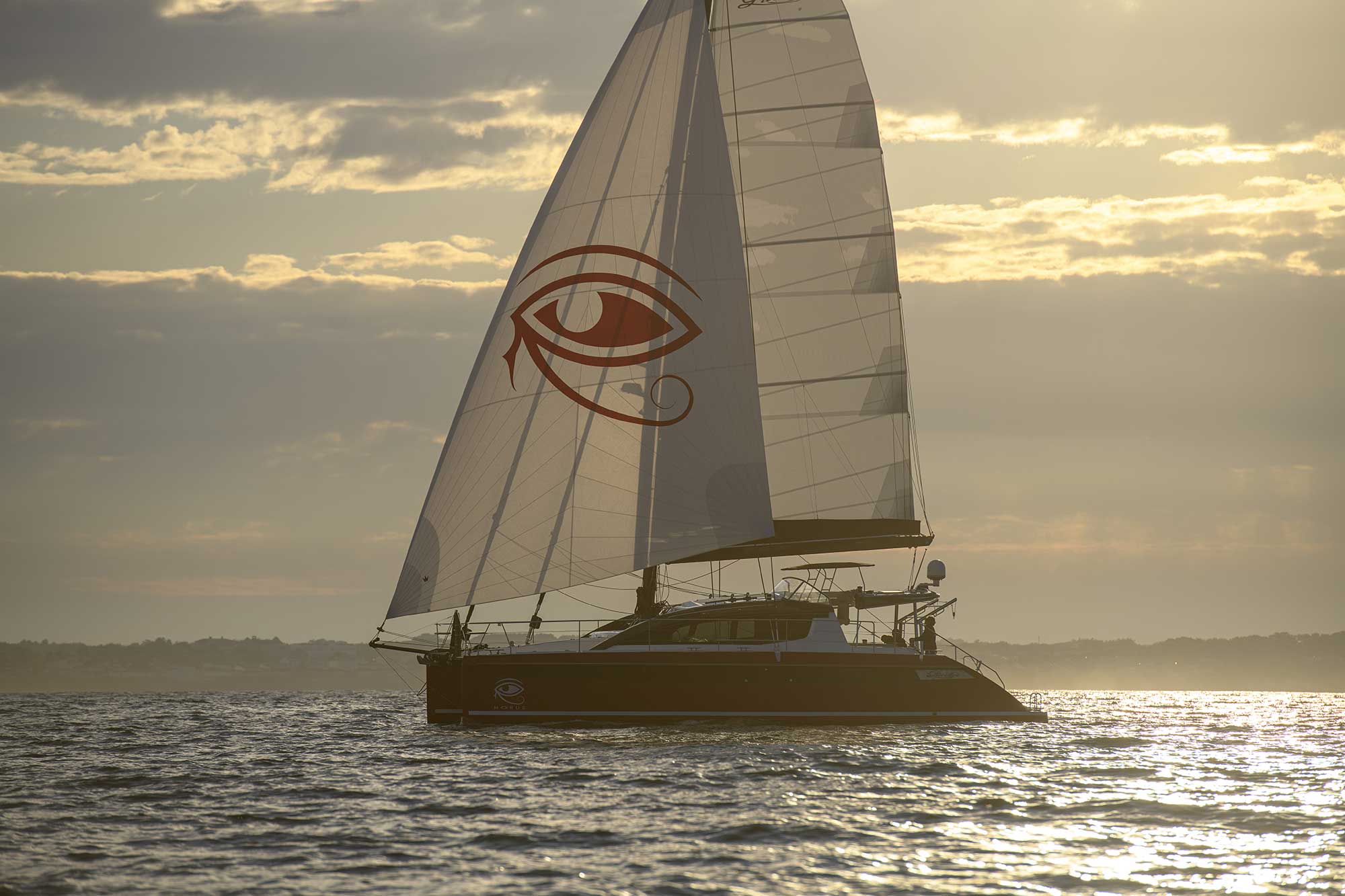
The numbers give the context. The Signature 510 measures 17.09 metres (56 feet) overall, with a beam of 7.98 metres (26 feet). It carries a 165 m² (1,775 square feet) sail area, including an 88 m² (947 square feet) mainsail, a 57 m² (613 square feet) genoa, a 20 m² (215 square feet) staysail and an optional 120 m² (1,292 square feet) gennaker. This is a real sailing platform. It requires a helm station that can manage power, loads and visibility with confidence.
The 510 answers that requirement with a simple idea: the helm must make the boat easier, safer and more enjoyable to sail.
The double access changes safety in bad weather
The first advantage is also one of the most important. The Signature 510 helm station has two ways in. One access comes from the cockpit. The other comes from the inside. This is a major point for offshore sailing.
In calm weather, this may sound like a detail. In a squall, at night, in cold rain, during a reefing manoeuvre or on a long passage, it becomes essential. A watchkeeper can reach the helm without exposing himself unnecessarily. Movement between the saloon, cockpit and helm remains controlled. The crew does not need to cross large open deck areas to take action.
This matters because bad weather rarely announces itself politely. A cloud line builds. The wind increases. A reef must be taken. A sail needs trimming. A course must be adjusted. The skipper needs safe access, not a dramatic climb.
The two routes to the helm improve the yacht’s operational safety. They also reduce fatigue. On long passages, the crew may rotate watches every two or three hours. If each watch change is exposed, wet and physically demanding, fatigue builds faster. The 510’s helm design reduces that friction.
This is a serious bluewater advantage. Safety at sea is not only about emergency equipment. It is also about the way people move every day. A yacht becomes safer when its layout allows calm, direct and protected action.
The Signature 510 understands that.
The cockpit connection keeps the skipper inside the life of the boat
Many catamarans separate the skipper from the social life of the yacht. Some flybridge helms give a commanding view, but they can place the person on watch far from the cockpit. Some bulkhead helms keep the skipper lower, but reduce visibility. Some exposed stations work well in the sunshine and become uncomfortable in spray or rain.
The Privilège 510 takes a more intelligent route. The helm station remains connected to the cockpit. The skipper can speak with guests. He can see what is happening behind him. He remains part of the life on board.
This matters because a bluewater catamaran is often sailed by an owner couple or a family. The helm should not isolate the person responsible for the yacht. On a long passage, communication matters. At anchor, it matters. During coastal sailing, it matters. When guests are aboard, it matters.
The cockpit connection also improves practical safety. The skipper can coordinate with someone preparing lines. He can watch children moving between spaces. He can speak naturally with the crew during sail handling. He can remain aware of the atmosphere on board.
This is one of the great strengths of the Signature 510. The helm position feels protected and serious without becoming remote. It supports command without removing the skipper from the human centre of the yacht.
A luxury bluewater catamaran must do both. It must be a sailing machine and a floating home. The helm station must respect both roles.
The running rigging creates real command from one place
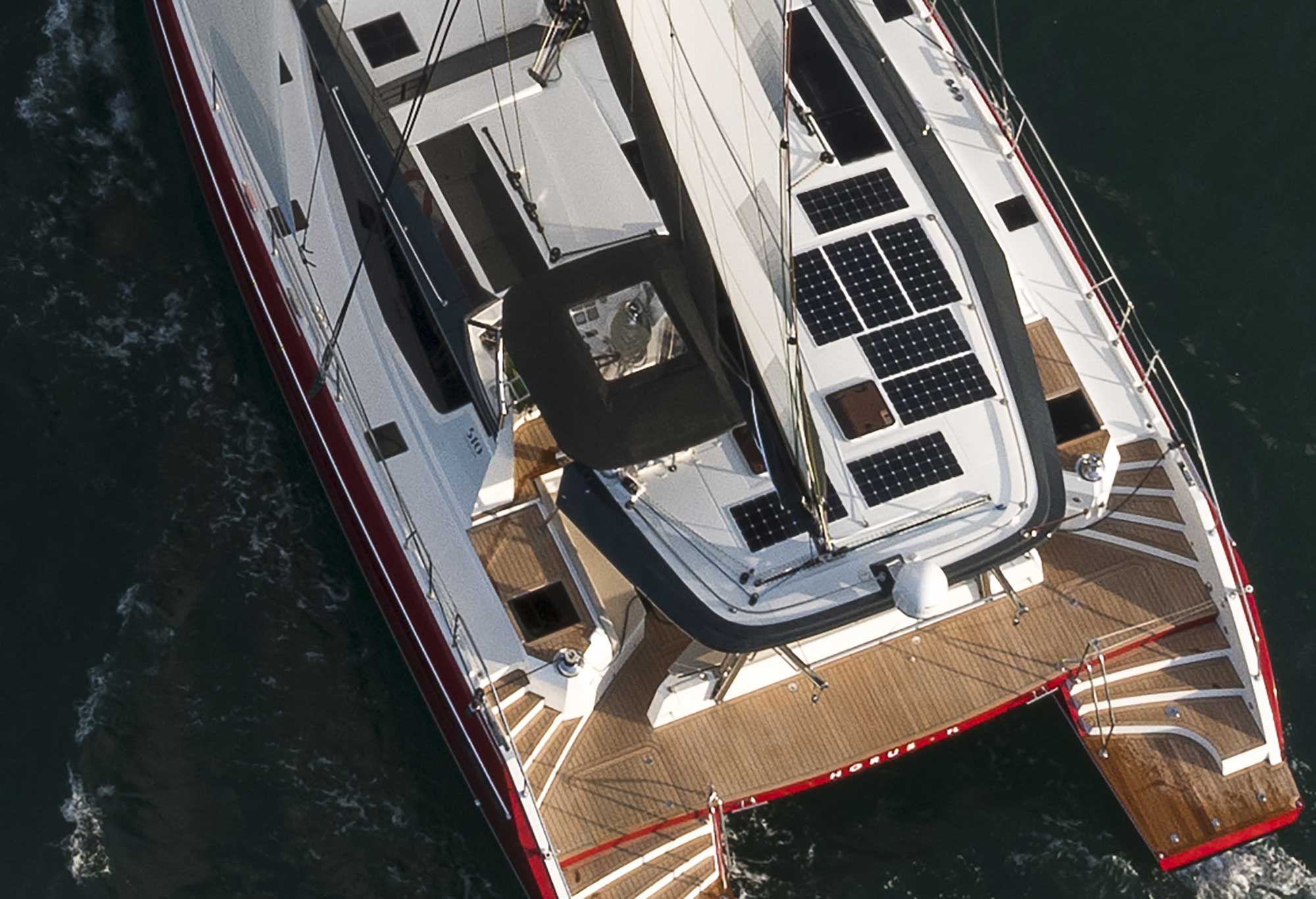
The second major advantage is sail control. On the Signature 510, the running rigging is led back to the helm area. This includes the key lines needed to manage the sail plan. The boat’s equipment descriptions refer to electric two-speed Antal winches at the helm area for the mainsail halyard, reefing lines, gennaker, Code 0 or spinnaker furling lines, topping lift, genoa and staysail sheets, mainsheet and traveller control.
This arrangement changes the way the yacht is sailed. The skipper can manage major sail functions from a single protected position. This is especially important for short-handed cruising.
A 17.09-metre (56-foot) catamaran with a large square-top mainsail carries serious loads. The 510 has an 88 m² (947 square feet) mainsail and a 57 m² (613 square feet) genoa. Add the optional 120 m² (1,292 square feet) gennaker, and the need for efficient control becomes obvious. Sail handling must be simple, logical and safe.
The advantage of all lines led to hand is clear. The skipper does not need to run from one winch to another. The crew does not need to work exposed at different stations for routine manoeuvres. The yacht can be trimmed, reefed and managed with fewer people.
When the yacht is specified with electric winches and electric furling options, the helm station becomes even more powerful. The owner can control sheets, halyards, reefing and furling with a level of ease that suits real cruising. This does not remove seamanship. It makes seamanship more controlled.
The point is not laziness. The point is safety. A yacht that is easy to reef early is a safer yacht. A yacht that allows one person to reduce sail from a protected position is a calmer yacht. A yacht that centralizes loads reduces unnecessary movement in difficult conditions.
This is why the Privilège 510 helm station deserves attention. It turns sail management into a coherent system.
The protected position keeps the watchkeeper dry and focused
Protection is one of the most underrated luxuries at sea. It becomes important when weather changes, when temperatures drop, when spray comes over the deck, when rain arrives, or when a night watch lasts longer than expected.
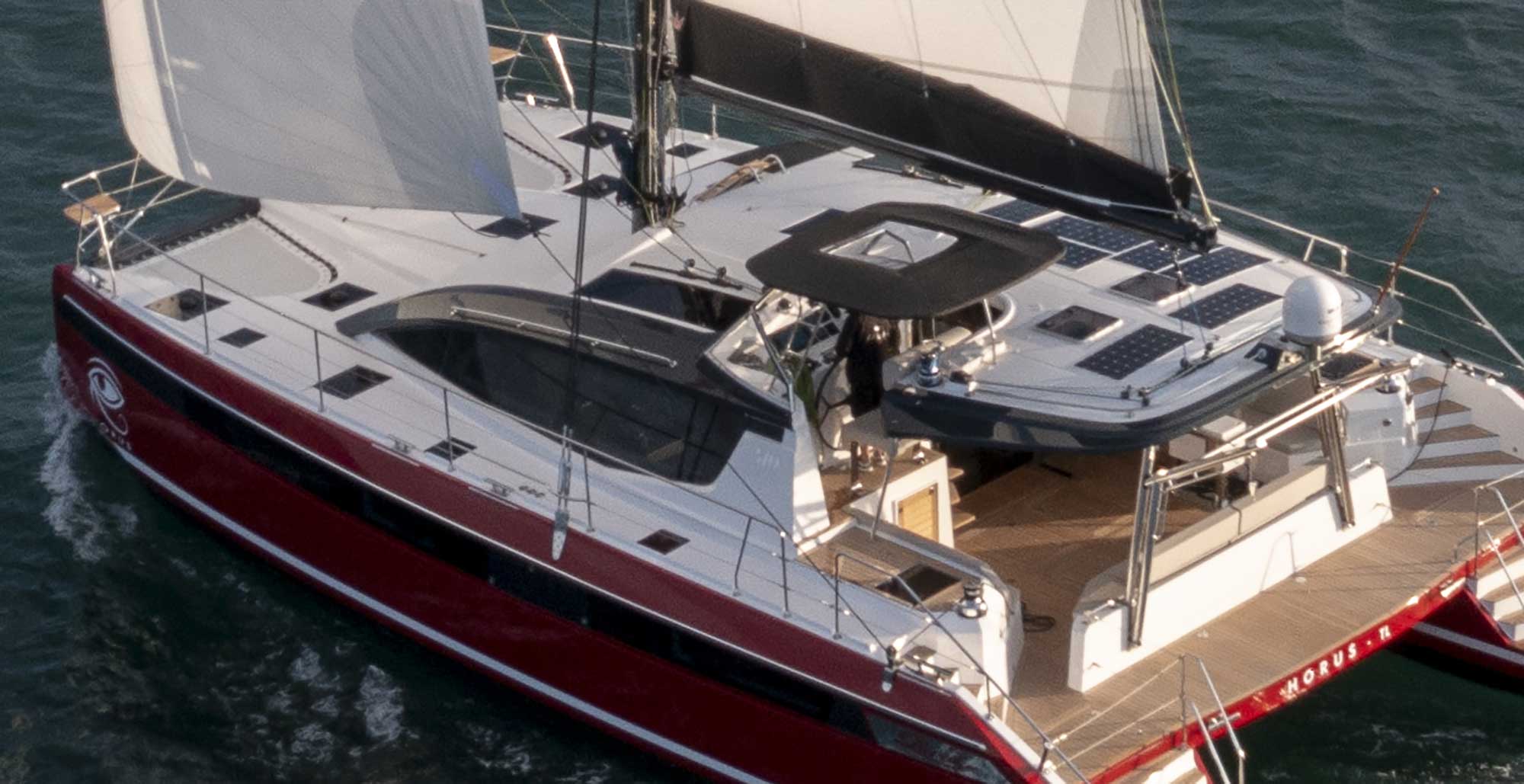
The Signature 510 helm station is protected by a hardtop and windscreen. With enclosure options, it becomes a genuine all-weather command area. The watchkeeper can remain dry. Instruments stay readable. The skipper can concentrate on the sea, the sails and the course instead of fighting discomfort.
This is not only about comfort. It is about performance and judgment. A cold, wet and tired skipper makes poorer decisions. A protected skipper sees better, thinks better and reacts faster.
The bad-weather security of the 510 helm station comes from this combination of shelter and access. The helm is outside enough to feel the boat and see the environment. It is protected enough to make long watches realistic. It is connected enough to remain part of the cockpit. It is centralized enough to control the sail plan.
This balance is difficult to achieve. A fully exposed helm can be exciting in perfect weather and punishing offshore. A fully internal station can feel secure, but disconnected from sail trim and the sea. The 510 finds the right middle ground.
The result is a helm station designed for owners who actually sail.
The all-round view gives the skipper control of the whole boat
Visibility is another decisive point. A catamaran is wide. The Signature 510 has a beam of 7.98 metres (26 feet). That width gives stability, volume and comfort, but it also creates a visibility challenge. The skipper must understand the four corners of the yacht, especially when docking, anchoring, manoeuvring in a marina or moving in tight spaces.
The 510 helm station offers a rare advantage: the skipper can see the boat properly. From the helm, visibility extends across the platform and allows awareness of all four corners. This matters for precision manoeuvres and for psychological confidence.
The expression 360-degree visibility is often used too loosely in yacht marketing. On the 510, the principle is practical. The skipper needs to see forward, aft, to port and to starboard. He needs to judge distance to pontoons, other boats, mooring buoys, swimmers, tender traffic and dock lines. He needs to know where the extremities of the yacht are.
On a 17-metre catamaran, that is not optional. It is central to safe handling.
Good visibility also improves sailing. The skipper can read sails, watch traffic, monitor the sea state and remain aware of movement around the cockpit. When combined with the protected position and centralized controls, this gives the 510 helm station its rare quality. It does not solve one problem. It solves several at once.
That is the mark of a mature design.
The short-handed sailor gets a yacht that feels smaller in operation
Many owners of luxury bluewater catamarans sail with limited crew. Some sail as a couple. Some sail with family. Some bring a skipper for deliveries or difficult passages, then operate the yacht privately during the season. This is the reality of modern owner use.
For these owners, the best catamaran is not always the one that offers the most dramatic layout. It is the one that feels manageable.
The Signature 510 is a large and capable yacht, but its helm station makes operation feel more controlled. The sail plan is brought to the skipper. The controls are concentrated. The helm is protected. Access is logical. Visibility is complete. The cockpit remains close.
This is what short-handed sailing requires. It does not mean that one person should do everything in every condition. It means the yacht should allow a small crew to act safely and efficiently.
The 510’s helm station helps an owner make good decisions earlier. Reef before the wind becomes too strong. Trim without sending someone forward. Adjust course while staying in touch with guests. Monitor instruments without leaving the command position. Dock with a better view of the hulls.
This ease changes the emotional experience of the yacht. The owner feels less intimidated by the boat. The crew becomes calmer. The family enjoys the passage more. The yacht’s size becomes an asset rather than a burden.
The protected helm supports the Privilège idea of ocean comfort
Privilège Marine builds catamarans that are safe, capable of crossing oceans and designed as real floating homes. This philosophy is visible in the Signature 510 as a whole.
The yacht carries 800 litres (211 US gallons) of fuel and 600 litres (158 US gallons) of fresh water. It has a full-load displacement of 22.8 tonnes (50,700 pounds). It offers 3 to 4 cabins and CE A-12 certification. It was designed by Cabinet Marc Lombard, with interior design by Darnet Design. These facts place it in the world of serious bluewater cruising, not decorative coastal sailing.
The helm station belongs to that same logic. It is not designed only for a sunny afternoon. It is designed for the owner who leaves Les Sables-d’Olonne, crosses the Bay of Biscay, sails to the Mediterranean, spends time in the Atlantic islands, or prepares for the Caribbean.
This is why bluewater logic matters. Every feature must serve use. The helm station must protect the skipper. The cockpit must keep people safe and connected. The running rigging must reduce unnecessary exposure. The visibility must support manoeuvres. The systems must be accessible. The yacht must make the sea feel manageable without pretending the sea is simple.
The Signature 510 respects this balance. It does not chase a single spectacular idea. It solves the real problems that owners face.
The best helm station is the one that works when conditions are poor
A yacht feature proves its value when conditions are difficult. In perfect weather, almost every helm station can seem pleasant. The real judgment comes at night, in rain, in a rising breeze, in a crowded anchorage, in a marina crosswind, or during a tired watch after several days at sea.
This is where the Signature 510 stands apart.
The skipper can reach the helm securely from two directions. He remains protected. He keeps contact with the cockpit. He has the lines close at hand. He can use electric assistance for key manoeuvres when specified. He can see the four corners of the boat. He can stay dry enough to remain alert. He can manage the yacht without turning every adjustment into a deck operation.
This is why the helm station feels so complete. It is not simply a steering wheel with a view. It is a command architecture.
For Privilège Marine, that difference is essential. We build yachts for owners who want beauty, comfort and freedom, but also seriousness. A bluewater catamaran must earn the trust of the people who live aboard. The 510 helm station earns that trust through details that become important every day.
The best designs often feel obvious once they exist. The Privilège Signature 510 helm station has that quality. It places the skipper where he should be: protected, connected, informed and in control.
That is why it can be described as one of the finest helm stations in the world of luxury bluewater catamarans. It is not the most theatrical claim. It is the most practical one. At sea, practical intelligence is the highest form of luxury.