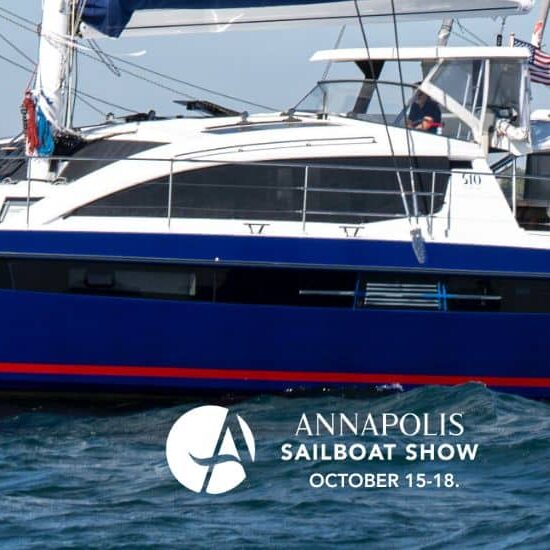
Why experienced monohull sailors are moving to catamarans for flatter passages, lower fatigue and a more practical life on long ocean voyages.
The move from a monohull to a catamaran often begins with a change in priorities. Experienced sailors may still value the balance, feedback and tradition of a monohull. Long passages then expose the cost of permanent heel. Cooking, sleeping, watchkeeping and maintenance require continuous physical effort. A cruising catamaran keeps its living spaces much closer to level. That can reduce fatigue and make life aboard easier to sustain over several weeks. The trade-off requires clear judgement. A catamaran has a different motion, greater beam, higher marina costs and less warning through heel when sail loads increase. It must be sailed according to its reefing plan and loading limits. For owners who intend to cross oceans and live aboard properly, comfort becomes part of seamanship. A well-designed bluewater catamaran gives the crew more energy for navigation, weather decisions and life at sea.
The romance of heel eventually meets the reality of daily life
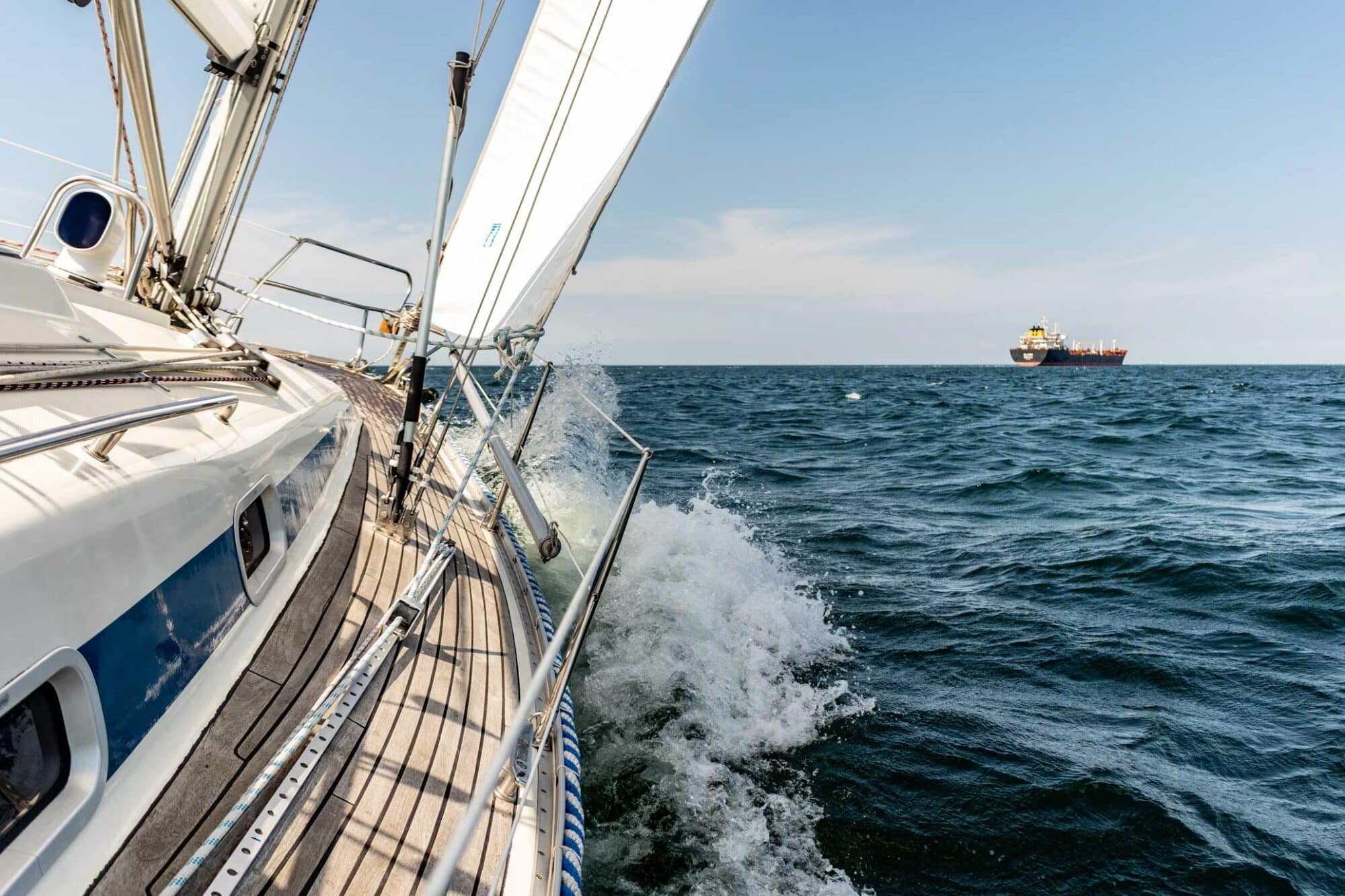
The phrase “sailing at 45 degrees” captures a familiar frustration, although 45 degrees is far beyond the normal working angle of a cruising monohull. A modern monohull sailing upwind will commonly settle around 15 to 20 degrees of heel. Beyond about 20 degrees, many cruising yachts develop more weather helm, more leeway and higher loads without producing a proportionate gain in speed.
The physical effect remains substantial. At 20 degrees, a cabin sole rises by roughly 36 centimetres over a horizontal distance of 1 metre. A person crossing the saloon is effectively walking up or down a steep ramp. A saucepan moves towards the leeward side of the cooker. A locker door carries its own weight when opened. A sleeping body presses against a lee cloth.
For an afternoon sail, this can feel alive and engaging. During a passage lasting ten or twenty days, it becomes a continuous demand on the body. Muscles remain active while standing, washing, dressing and preparing food. Sleep becomes more fragmented. Simple maintenance tasks require bracing.
The monohull remains one of sailing’s most elegant machines. Its heel communicates wind pressure and balance. Its ballast keel creates the righting moment that allows it to recover from severe angles. Yet purity of sensation is only one part of long-distance sailing. The quality of a voyage also depends on how well people can eat, rest, think and work after several days at sea.
The catamaran changes the source of stability
The monohull uses ballast and heel as part of its equilibrium
A monohull resists wind pressure through hull form and ballast. The aerodynamic force on the sails creates a heeling moment. The keel and displaced hull create a righting moment. The yacht settles at the angle where those forces reach equilibrium.
Heel therefore belongs to the operating logic of the boat. It also provides feedback. A rising angle, heavier helm and water moving closer to the rail tell the crew that the sail plan needs adjustment. A well-sailed monohull can be kept at a sensible angle through reefing, sail trim and course selection.
The catamaran uses beam and separated buoyancy
A catamaran develops stability through the distance between its two hulls. As wind pressure loads the rig, the leeward hull carries more displacement while the windward hull carries less. The wide platform produces a large righting moment at a small angle.
The practical result is a yacht that sails close to level. Plates remain on the table. People can use the galley with both feet on the floor. Cabins, bathrooms and workspaces retain their intended geometry.
This architecture also creates several distinct living zones. Two hulls and a central nacelle can separate machinery, technical storage, guest accommodation and private space more effectively than a monohull of comparable length. The gain comes from beam rather than length alone.
The comfort advantage becomes measurable after several days
Comfort at sea is often presented as an interior-design subject. Offshore, it becomes a question of human performance.
Research involving Royal Navy crews found relationships between deck acceleration and difficulty with physical tasks, cognitive work and motion sickness. Medical studies also identify low-frequency movement around 0.2 hertz as especially capable of provoking motion sickness. The response varies by person and sea state, but the operational lesson is clear. Motion affects judgement, appetite, sleep and work capacity.
A catamaran produces a different motion pattern. The platform generally rolls through smaller angles. It can still pitch sharply, move diagonally in a confused sea and experience rapid transverse acceleration. Waves can strike the underside of the central structure and create bridgedeck slamming.
The design details determine the result. Hull fineness, weight distribution, bridgedeck clearance, nacelle shape and sailing speed all influence comfort. A low central structure may meet waves repeatedly. Excess weight lowers the boat, reduces clearance and increases wetted surface. Heavy equipment placed far forward can aggravate pitching.
This is why loading discipline remains fundamental on a bluewater cruising catamaran. Generous volume encourages owners to carry tools, spares, water toys, provisions and domestic equipment. The naval architecture sets a payload envelope. Respecting it protects performance, structure and motion comfort.
The flat platform transforms work, sleep and watchkeeping
The galley becomes a reliable working space
Food preparation reveals the difference immediately. A gimballed cooker helps on a monohull, yet the cook still stands on a sloping floor. Chopping, draining boiling water and opening refrigeration demand care.
On a catamaran, the galley works more like a domestic workspace. Worktops stay level. Several people can move through the saloon without repeatedly climbing across the heel angle. Regular meals become easier to prepare.
That has a safety value. Tired crews often simplify meals, eat less or rely on snacks. A practical galley supports nutrition, hydration and morale throughout the passage.
The cabins support actual recovery
A berth on a monohull can be secure with good lee cloths and the correct orientation. Its comfort often depends on the tack and sea state. A catamaran offers a more stable sleeping surface under sail.
Cabin position still matters. Forward cabins experience greater vertical movement. Spaces closer to the centre of pitch are usually calmer. Ventilation, sound insulation and access remain essential.
At Privilège Marine, the central owner’s suite has long formed part of the design identity. On the Signature 510, the full-beam suite sits forward in the nacelle and combines privacy, panoramic visibility and direct integration into the main living platform. The central volume becomes the owner’s primary space.
The helm supports sustainable watch systems
A passage crew needs repeatable routines. A protected helm position, clear visibility and short movement paths reduce exposure and unnecessary effort.
The Signature 510 places the helm so the person on watch remains connected to the cockpit and interior. The yacht measures 17.09 metres overall (56 feet), with a beam of 7.98 metres (26 feet). Its balanced rig and deck plan are intended for operation by a couple or family without a permanent professional crew.
That objective matters more than size alone. Controls must be reachable. Sail loads must be managed through appropriate hardware. Reefing must remain practical. The crew should be able to move between helm, navigation station, galley and rest areas safely at night.
The ocean rewards a nuanced comparison
A catamaran generally offers more comfort at anchor, on reaching courses and during everyday life aboard. Certain sea states can still be demanding.
Short, steep waves taken directly ahead may produce rapid pitching. Quartering seas can create an irregular corkscrew motion. Bridgedeck impacts can generate noise and shock. A light performance catamaran may react quickly, while an overloaded cruising catamaran may become slower and less responsive.
A monohull can sometimes move through a head sea with a more regular rhythm. Its ballast creates inertia. Its narrower beam changes the way it meets certain wave patterns. Some sailors prefer this motion offshore, even while accepting the heel.
The useful comparison concerns the owner’s complete programme. Where will the yacht sail? How many people will live aboard? How much equipment will be carried? How often will the route involve hard sailing to windward? How much time will be spent at anchor?
For many long-distance owners, the catamaran’s largest gain appears across the full voyage. The yacht remains easier to inhabit underway and after arrival. The saloon, cockpit and cabins continue to work without a fundamental change in posture or circulation.
The safety case depends on disciplined multihull seamanship
The missing heel signal changes reefing decisions
A monohull communicates rising load through heel. A catamaran can carry increasing rig loads while remaining visually level. The crew must read wind speed, apparent wind angle, boat speed, sea state and the manufacturer’s reefing schedule.
This is the central lesson for sailors changing from a monohull to a multihull. Reefing by numbers replaces reefing by sensation. The correct reefing thresholds come from the yacht’s documentation and sail plan, rather than from a universal rule.
The wide platform creates high initial stability. A cruising catamaran will generally remain inverted after a full capsize, whereas a ballasted monohull is designed to recover from large angles within its stability range. Capsize is rare on properly operated cruising catamarans, but the consequence requires respect. Early reefing, conservative sail selection and speed control in heavy seas are core multihull skills.
The certification defines a serious design framework
The Privilège Signature 510 carries CE certification A-12. Under the European Recreational Craft Directive, Category A applies to craft designed for winds that may exceed Beaufort Force 8 and significant wave heights of 4 metres (13 feet) and above, excluding abnormal conditions such as hurricanes, violent storms and rogue waves.
Certification defines the design scope. Weather routing, maintenance, crew competence and loading remain decisive.
Privilège was founded within the offshore culture of Les Sables-d’Olonne and Philippe Jeantot, the sailor who won the BOC Challenge twice and created the Vendée Globe. That inheritance gives comfort a precise meaning. It concerns endurance, autonomy and the preservation of human capacity over distance.
The practical costs deserve equal attention
The move to a catamaran changes ownership ashore. Beam limits marina availability. A berth may cost more because the yacht occupies greater width. Haul-out facilities need suitable travel lifts or wide platforms.
Twin engines provide redundancy and excellent manoeuvrability under power. They also create two propulsion systems to service, with two sets of filters, cooling circuits and drive components.
The greater deck and interior area increase cleaning and maintenance. Large glazing, multiple heads, refrigeration, watermakers, electrical systems and domestic equipment add comfort while creating technical responsibility.
A catamaran provides more usable living volume, and that volume must be maintained. The decision becomes rational when the additional stability, space and privacy directly support the owner’s intended life.
The bluewater market has already shifted
Ocean rallies show how strongly multihulls have entered long-distance cruising. In the 2024 Atlantic Rally for Cruisers, 45 multihulls represented 32 per cent of the 140-boat fleet departing for the Caribbean. In 2025, 32 multihulls joined a fleet of 145 starters on the direct route from Las Palmas de Gran Canaria to Saint Lucia, a passage of about 5,000 kilometres (2,700 nautical miles).
These are private cruising yachts crossing an ocean, often with couples, families and mixed-experience crews. Their presence reflects a change in what owners expect from long-distance sailing. Passage speed matters. Recovery, privacy and practical living matter just as much.
The strongest cruising catamarans seek both. Slender hulls, controlled weight and an efficient sail plan support passage-making. Protected working areas, storage and well-designed accommodation preserve the crew.
The Privilège approach begins with the owner’s real life
At Privilège Marine, we build homes capable of crossing oceans. That principle shapes the design conversation from the beginning.
Many owners arrive after years of monohull sailing. They understand sail trim, weather routing and the satisfaction of a balanced helm. Their questions have become more practical. Can they cook safely during a night passage? Can they sleep before the next watch? Can they carry several months of equipment without damaging the yacht’s behaviour? Can family members live aboard without turning every shared space into a dormitory?
The answer involves layout, materials, systems, storage and service access. Heavy equipment needs correct placement. Machinery must remain accessible. Private and shared spaces require separation. The helm needs protection while maintaining a connection with the sea.
A bespoke bluewater catamaran allows these choices to follow the owner’s routines. One owner needs an office. Another needs a workshop, a gym, additional refrigeration or accommodation for a professional crew member. Each choice must be integrated into the weight study, electrical architecture, ventilation, plumbing and circulation plan.
The better sailing life is the one that can be sustained
Changing from a monohull to a catamaran usually reflects experience rather than rejection. The monohull offers direct feedback, elegant efficiency and a deep connection with sailing history. The catamaran offers a flatter platform, broader living space and a different relationship between movement and distance.
For coastal weekends, heel may remain part of the pleasure. For owners preparing to live aboard, cross oceans and welcome people for long periods, sleep, food, privacy, storage and physical recovery become central design criteria.
Discomfort proves very little. Judgement, preparation and crew condition determine the quality of a passage. The sea remains demanding enough. The yacht should give its people the strength to meet it.