


True yacht luxury now lies in relevance: a bespoke sailing yacht shaped around ownership, life on board and long-distance cruising.
The definition of luxury in yachting is changing. Finish quality still matters, but it no longer explains the real premium paid by serious owners. A yacht becomes valuable when it fits the way an owner lives, sails, rests, works, hosts and crosses oceans. That is the difference between a polished object and a relevant home at sea.
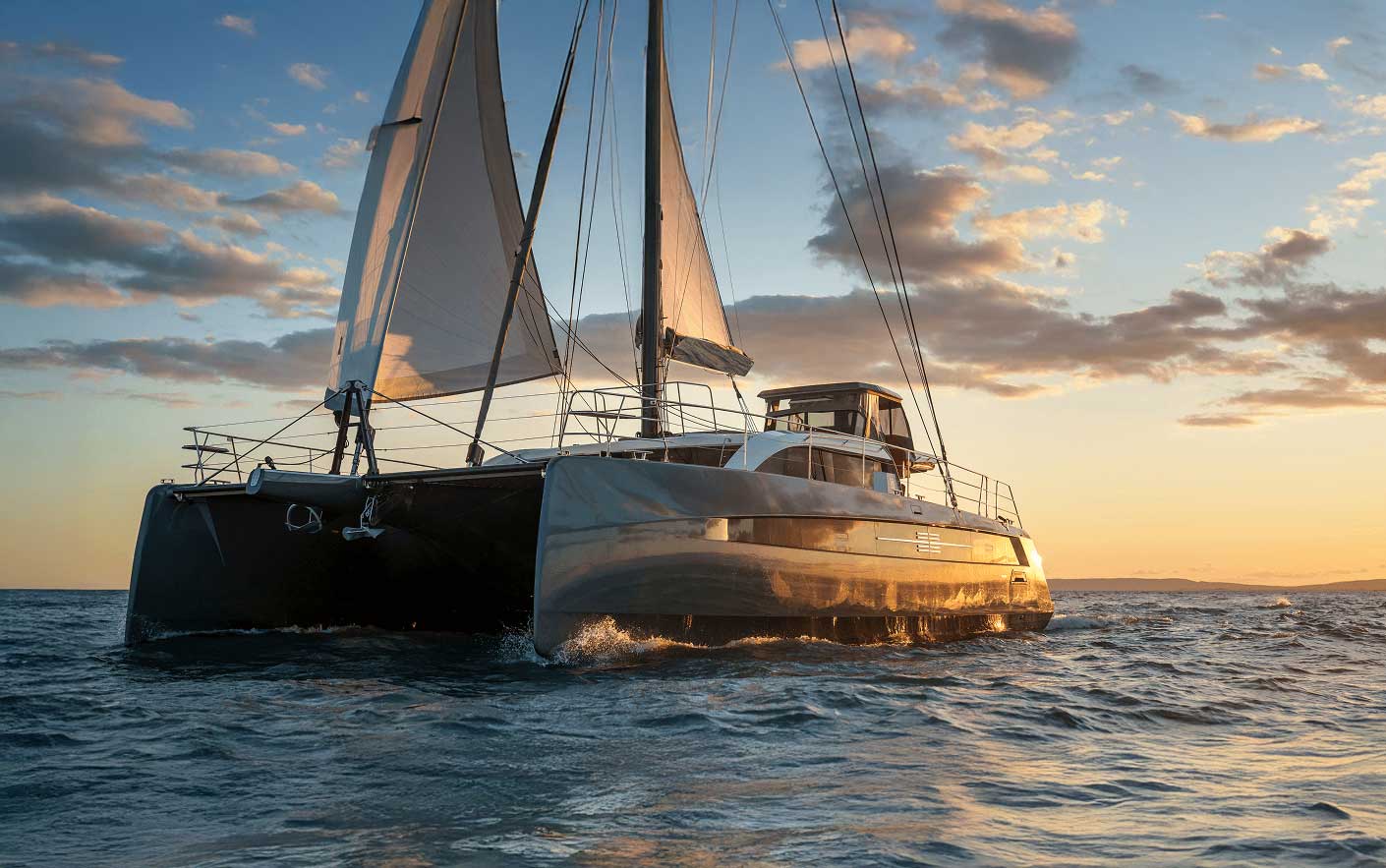
For Privilège Marine, this distinction is central. From its shipyard in Les Sables d’Olonne, the company builds bluewater sailing catamarans around each owner’s real requirements. Layout, circulation, autonomy, storage, safety systems, materials, technical configuration and interior atmosphere must form one coherent whole. The result is a bespoke sailing yacht with purpose, not a standardized luxury product with expensive finishes. In a market where high-end buyers are asking for deeper personal relevance, the future of yachtbuilding belongs to yards able to listen, interpret and build around a precise way of life.
The market is moving from visible luxury to useful luxury
Luxury yachting has long been judged through visible signs. Glossy joinery, rare materials, large cabins, bigger glazing and impressive entertainment areas have carried much of the conversation. These elements still count. They are part of the physical experience of a yacht. Yet they do not answer the most important question an owner eventually asks at sea: does this yacht make my life easier, safer and more meaningful?
That question is now reshaping the premium yacht market. Deloitte and Confindustria Nautica estimated the global new-build yachting market at €34.8 billion in 2023, up 7.3% year on year. The market then entered a more selective phase, with pressure on smaller boats and stronger resilience in premium and large-yacht segments. In that environment, buyers become more demanding. They are less impressed by generic luxury. They expect a yacht to solve their own life at sea.
The superyacht data points in the same direction. The Monaco Yacht Show Market Report 2025 by SuperYacht Times counted 6,174 superyachts over 30 metres (98 feet) in operation by early August 2025. Only 915 were sailing yachts. Among the 588 new superyachts in build, only 40 were sailing yachts, equal to 7% of the construction book. Sailing yachts occupy a narrower, more intentional segment. Owners who choose sail often want more than space and prestige. They want range, silence, seamanship, autonomy and a closer relationship with the sea.
This is why relevance has become a stronger marker of luxury than finish level alone. A surface can be expensive and still irrelevant. A layout can be impressive at a boat show and tiring after three weeks offshore. A cabin can be beautiful and poorly suited to the owner’s actual rhythm. True luxury begins when the yacht reflects use, not display.
The owner’s lifestyle is the real specification
The serious owner does not buy a yacht as a neutral object. He buys a way of living. That life may involve crossing the Atlantic as a couple, spending months in the Mediterranean with children, working remotely from anchorages, welcoming guests for short periods, storing equipment for diving or kitesurfing, or sailing with a reduced crew. Each scenario changes the yacht.
This is where standardization reaches its limit. A fixed layout can be efficient for production. It can make comparisons easier. It can also ignore the real use of the boat. An owner who sails with family needs different privacy, storage and watchkeeping logic from an owner who uses professional crew. An owner who works on board needs acoustic privacy, lighting, power management and connectivity. An owner who spends months in remote anchorages needs autonomy, refrigeration, water capacity, spare-parts storage and technical access. An owner who values wellness may want a gym, a meditation area or a larger owner’s suite rather than another conventional guest cabin.
A yacht is a system. Every choice has consequences. Moving storage affects weight distribution. Adding equipment affects electrical load. Expanding refrigeration affects energy management. Creating a media room requires ventilation, sound control and power planning. A larger wardrobe changes circulation and storage logic. A better office needs more than a desk. It needs daylight, privacy, connectivity, seating position and protection from heat.
That is why Privilège Marine treats personalisation as an engineering and design discipline. It is not cosmetic. It begins with dialogue. How does the owner sail? Who is on board? How long are the passages? Which areas will be used every day? Which spaces must remain quiet? Where should technical systems be accessible? Which details will still matter after five years of ownership?
The answer defines the yacht.
The Privilège approach starts with the owner before the layout
Privilège Marine has been building ocean-going catamarans for more than 40 years in Les Sables d’Olonne, on the French Atlantic coast. This location matters. The shipyard is based in a port shaped by offshore sailing culture, close to the world of the Vendée Globe and long-distance seamanship. The product is not conceived as a floating apartment. It is conceived as a bluewater sailing catamaran for owners who expect comfort and confidence over distance.
The company’s range reflects that positioning. The Signature 510 is a 17.09-metre (56-foot) catamaran designed for autonomous bluewater sailing, with 165 square metres (1,775 square feet) of sail area, 800 litres (211 gallons) of fuel and 600 litres (158 gallons) of fresh water. Its full-beam owner’s suite, protected helm station and large storage capacity speak to long voyages rather than short-term appearance.
The Signature 600 moves the concept further. At 18.28 metres (60 feet), with 259 square metres (2,787 square feet) of sail area, two 110 hp engines, two 485-litre fuel tanks and two 450-litre fresh-water tanks, it is built for long-distance cruising and extended use. Yet its most revealing feature is not only technical. It is the aft portside cabin, treated as a flexible space. Depending on the owner, it may become a home cinema, gym, office, storage room, artist’s studio or large walk-in wardrobe.
That decision captures the Privilège philosophy. The same area of the boat can answer several lifestyles. The value lies in choosing the right answer for the owner, not in forcing every owner into the same solution.
The Signature 650 extends the same thinking at a larger scale. With an overall length of 21.25 metres (70 feet), 264 square metres (2,840 square feet) of total sail area and fuel capacity of two 1,000-litre tanks, it is built for owners who want to explore with greater volume, comfort and autonomy. Its central owner’s suite, protected cockpit and secure circulation support long periods at sea. The yacht is still a sailing machine. It is also a private retreat.
The interior becomes valuable when it supports life at sea
Interior luxury is often reduced to materials. That is too narrow. Materials matter because they create atmosphere, durability and sensory comfort. Yet the real question is how the interior behaves after the first impression.
On a long-range sailing catamaran, the interior must support movement, sleep, storage, social life, privacy and recovery. A saloon must work at anchor and underway. A galley must be practical in real use, not only photogenic. A cabin must provide comfort without becoming a cave. Lighting must be calm at night and useful during maintenance. Ventilation matters. Handles, edges and circulation routes matter. The distance between the helm, cockpit, saloon and cabins matters because fatigue is part of sailing.
This is the difference between standard luxury and relevant luxury. Standard luxury asks whether a space looks expensive. Relevant luxury asks whether the space works for the people who will inhabit it.
For Privilège Marine, this is why the owner’s suite has always carried importance. The owner is not a guest on his own yacht. He should have privacy, volume and a sense of permanence. The forward or central owner’s suite found across the range is not a decorative signature. It changes the emotional balance of the yacht. It tells the owner that the boat has been organised around long-term life on board.
The technical choices are part of the luxury experience
The yachting industry sometimes separates luxury from engineering. Owners know this is false. Comfort at sea depends on structure, weight, sail handling, protection, visibility, noise, autonomy and safety. A beautiful yacht that is stressful to sail does not remain luxurious for long.
Privilège Marine’s design logic places safety and usability at the centre. The Signature 510 is designed to be handled without a crew, thanks to a balanced rig and intuitive deck plan. The Signature 580 and Signature 600 use a helm position conceived to combine visibility, protection and connection with life on board. The Signature 650 adds scale without abandoning secure circulation and protected spaces.
The integration of SEA.AI as standard equipment across the range also shows how technology can be relevant rather than ornamental. The system uses optical and thermal cameras with artificial intelligence to detect unidentified floating objects and other risks around the boat, including targets that radar or AIS may not always identify. For owners sailing at night, in reduced visibility, in busy anchorages or with a small crew, this is not a gadget. It supports vigilance. It reduces cognitive load. It adds another layer to serenity at sea.
That is luxury in a practical form. It is not louder. It is more useful.
The bespoke yacht is a coherent object, not a list of options
The word bespoke is often overused in luxury markets. In yachtbuilding, it should mean something precise. A bespoke yacht is not simply a standard platform with more options. It is a coherent object shaped through decisions that fit together.
A custom office must make sense with power, lighting, ventilation and acoustic comfort. A gym must make sense with structure, storage, air flow and movement. Extra storage must make sense with weight and access. A larger guest area must make sense with privacy and service. A media room must make sense with sound, heat and electricity. The role of the shipyard is to protect coherence.
This is where Privilège Marine’s position is distinct. The company builds tailor-made luxury yachts with the discipline required for ocean use. The process cannot be reduced to aesthetic choice. It must reconcile the owner’s wishes with naval architecture, structure, ergonomics and long-term reliability.
That balance is especially important on a sailing catamaran. A catamaran offers volume, stability and living space, but it also demands discipline around weight and systems. Relevance cannot become excess. A well-designed yacht must carry what the owner truly needs and avoid what will become unused complexity.
The premium is therefore not only in choosing. It is in choosing wisely.
The new luxury owner expects recognition without theatricality
Across the wider luxury market, the most valuable clients are moving away from massified signals. BCG and Altagamma’s 2025 True-Luxury Global Consumer Insights describe a top-tier luxury clientele that values intimacy, recognition, excellence and personal connection. This applies directly to yachting.
A yacht owner does not need theatrical attention. He needs to be understood. He needs a shipyard capable of translating personal use into technical and spatial decisions. The relationship should be direct, serious and precise. Good questions are more valuable than generic promises.
This is also why editorially serious yacht luxury should be discussed with more rigour. Finish level remains part of the story, but it is no longer enough. The owner who spends years with a yacht will judge the shipyard on daily relevance: how the yacht behaves at 02:00 during a night watch, how calm the saloon feels after a rough passage, how easily guests move through the cockpit, how well the systems can be monitored, how naturally the family lives together without losing privacy.
The best luxury disappears into use. It does not need to announce itself every minute.
The future belongs to yachts that feel necessary
The next phase of yacht luxury will be less about adding features and more about sharper relevance. Owners will still demand beauty. They will still expect fine materials, refined craftsmanship and technical excellence. Yet the strongest premium will go to yachts that feel inevitable once they are used.
That is the standard Privilège Marine seeks to meet. A Privilège is not conceived as a universal answer. It is built around a particular owner, a particular rhythm and a particular ambition at sea. The yacht must cross oceans with confidence. It must feel calm. It must support autonomy. It must protect those on board. It must carry the owner’s personal way of living without compromising the fundamentals of seamanship.
This is a frank definition of modern yacht luxury: the most valuable yacht is the one that makes the owner’s life at sea more coherent.
For Privilège Marine, relevance is not a marketing layer. It is the reason to build differently. It is why each yacht begins with dialogue. It is why layouts remain open to interpretation. It is why engineering, craftsmanship and personalisation must be considered together. And it is why a true luxury catamaran is never only finished to a high standard. It is built to belong to one owner.