


The best Sardinian coves, marinas, restaurants and clubs for 50 to 70 ft luxury catamarans, from calm bays to Porto Cervo nightlife.
Sardinia is one of the most rewarding cruising grounds in the Mediterranean for a large luxury catamaran. A 50 to 70 ft yacht, about 15.2 to 21.3 metres, can use the island in a way that neither a small day boat nor a deep-draft superyacht can. It can anchor in clear water, remain stable overnight, carry guests in comfort and move between quiet coves, serious marinas, beach clubs and high-end restaurants. The best areas depend on the mood of the owner. Cala di Volpe and Romazzino deliver elegance and calm. Liscia Ruja and Cala Petra Ruja suit beach-club days. Porto Cervo brings restaurants, regattas and status. Baja Sardinia has the strongest sunset and nightlife scene. La Maddalena offers the most spectacular scenery. Tavolara gives a wilder southern alternative. For Privilège Marine owners, Sardinia is a perfect demonstration of freedom at sea.
The large catamaran reads Sardinia differently
Sardinia is often sold through beach photography. For the owner of a large catamaran, it should be read through shelter, seabed, tender access, berth availability, restaurants, clubs and wind direction.
A 50 to 70 ft catamaran, roughly 15.2 to 21.3 metres, needs more than a pretty bay. It needs space to swing. It needs holding that is suitable for anchoring. It needs protection from the Maestrale when the north-westerly wind builds. It needs safe tender landings. It also needs a plan B in a marina when weather, guests or logistics require it.
This is why Sardinia works so well for a Privilège Marine owner. Our yachts are built for ocean passages, but they are also floating homes. The same qualities that matter offshore become valuable along the Sardinian coast. Autonomy allows the yacht to stay longer at anchor. Beam creates stability. A protected cockpit turns the anchorage into a living room. A real galley allows lunch on board when restaurants are full. Proper storage supports several days away from shore.
Sardinia gives owners a rare choice. They can anchor in quiet water in the morning, send a tender ashore for lunch, return to the yacht for the afternoon, then move by tender or car to dinner and music in the evening. The yacht remains the private base. The island provides the atmosphere.
The best itinerary should combine silence and social energy. It should avoid treating the coast as a checklist. Sardinia rewards owners who stay in fewer places and understand them properly.
The Costa Smeralda is the natural gateway for large yachts
The Costa Smeralda is the logical starting point for most large catamaran cruises in Sardinia. It concentrates marinas, anchorages, restaurants, clubs, hotels, provisions, technical services and fast access to Olbia Costa Smeralda Airport. For owners flying in with family or guests, that matters.
Marina di Porto Cervo is the symbolic centre. It offers around 700 berths and can accommodate yachts up to 160 metres, which means a 50 to 70 ft catamaran sits comfortably within its operating range. It is the best marina for owners who want high visibility, luxury retail, yacht services, regatta culture and direct access to Porto Cervo’s restaurants.
IGY Portisco Marina is more practical as an operational base. It has 589 berths and accepts yachts up to 90 metres, with deep water and a location between Porto Cervo and Porto Rotondo. It is a strong choice for provisioning, crew changes, repairs and a quieter first or last night. Cala dei Sardi is another useful base, especially for catamarans and charter logistics. It sits close to the Gulf of Cugnana and gives easy access to Porto Rotondo, Portisco and the northern Costa Smeralda.
Marina di Olbia is less glamorous, but it is extremely useful. It offers 270 berths and can take large yachts, with direct proximity to the airport, city services and road connections. For owners who value efficiency over display, Olbia is a sensible embarkation point.
For restaurants near this first cruising zone, Porto Rotondo gives two easy names. Tartarughino is useful for owners who want a relaxed seafood lunch or dinner with a polished but informal local mood. It works well after a day at anchor near Porto Rotondo or after a berth in Portisco. Bambusa, in Piazzetta I Ginepri, is better for a more cosmopolitan dinner, with Mediterranean cuisine influenced by international flavours. It suits guests who want a polished port evening without the intensity of Porto Cervo.
For nightlife, Country Club Porto Rotondo is the local reference. It has been part of the Porto Rotondo summer scene since 1980 and is the place to choose when the group wants dinner to become a long night. It is less showy than some Porto Cervo addresses, but it has history, music and a more local Costa Smeralda rhythm.
The Cala di Volpe anchorage is the elegant centre of the coast
Cala di Volpe is one of the most famous bays in the Mediterranean. Its appeal is easy to understand. The water is clear, the landscape is sculpted by granite, and the bay has a calm, refined atmosphere when the weather is settled. For a luxury bluewater catamaran, it is one of the most comfortable places to spend a day or a night in the right conditions.
For a 50 to 70 ft catamaran, Cala di Volpe offers space, scenic value and access to some of the most desirable restaurants on the coast. The skipper should still be disciplined. The bay is popular in high season. The anchorage should be chosen with care, avoiding Posidonia seagrass, swimming zones and areas with too much tender traffic. A catamaran’s modest draft helps, but beam and swinging radius still matter.
The dining scene is the reason many owners return. Matsuhisa at Cala di Volpe is the address for guests who want Nobu-style Japanese-Peruvian cuisine in a Sardinian setting. It works well for a refined evening after a quiet day on board. Beefbar Cala di Volpe is the better choice when the group wants a more international menu built around premium meat, polished service and hotel glamour. Quattro Passi al Pescatore, in Porto Cervo, also fits this area because it is one of the classic waterfront seafood restaurants to book when staying in or near Cala di Volpe and moving ashore by car or tender transfer.
Cala di Volpe is where owners go for elegant understatement. It has celebrity weight, but it does not need to be loud. Superyachts sit in the bay. Hotel guests move between restaurants and private decks. Tenders run quietly across the water. The best way to use the bay is to anchor early, swim before the traffic builds, have lunch on board, then go ashore for dinner.
This is not the best place for owners seeking total solitude in August. It is the right place for owners who want scenic beauty, refined dining and the feeling of being inside the classic Costa Smeralda story.
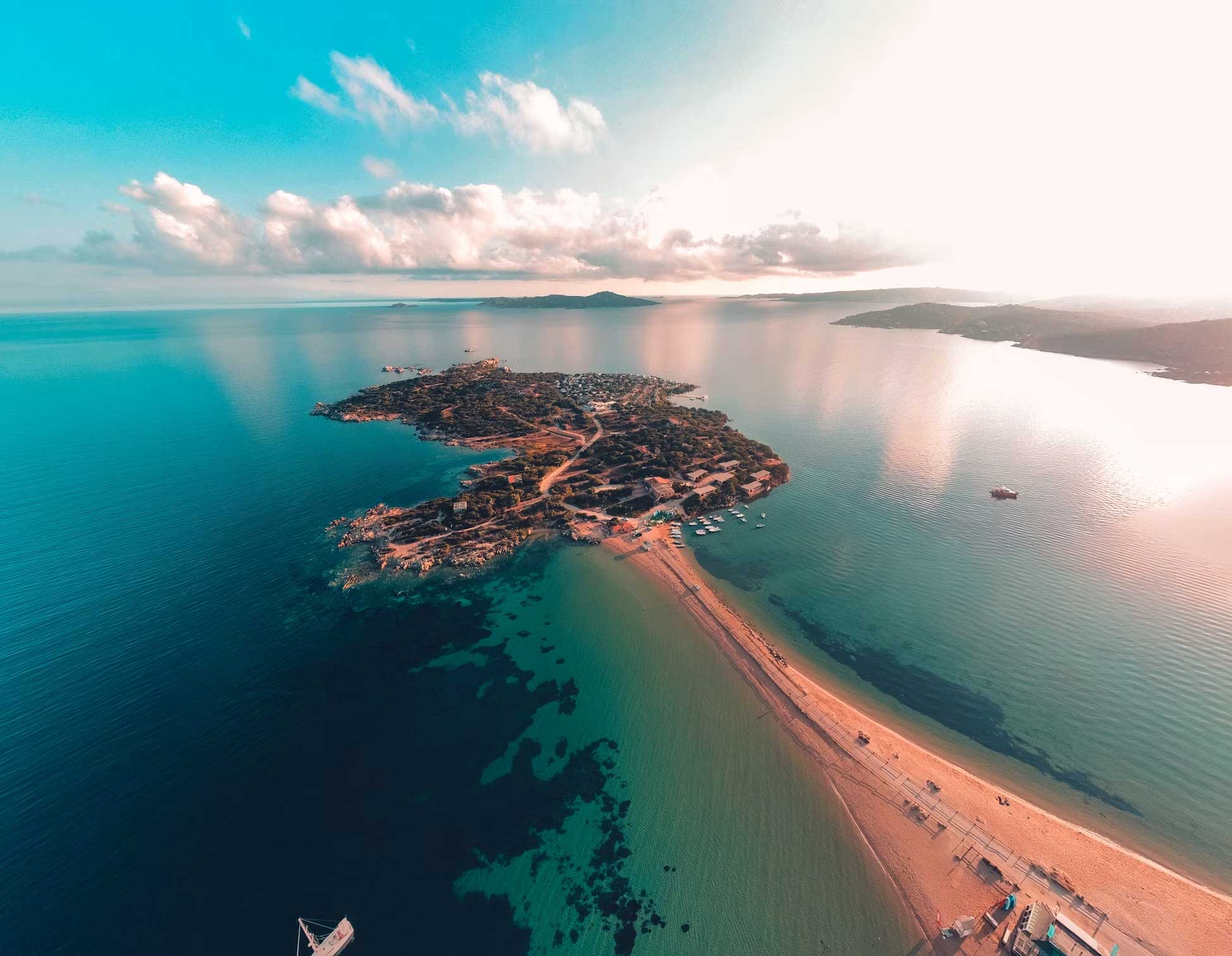
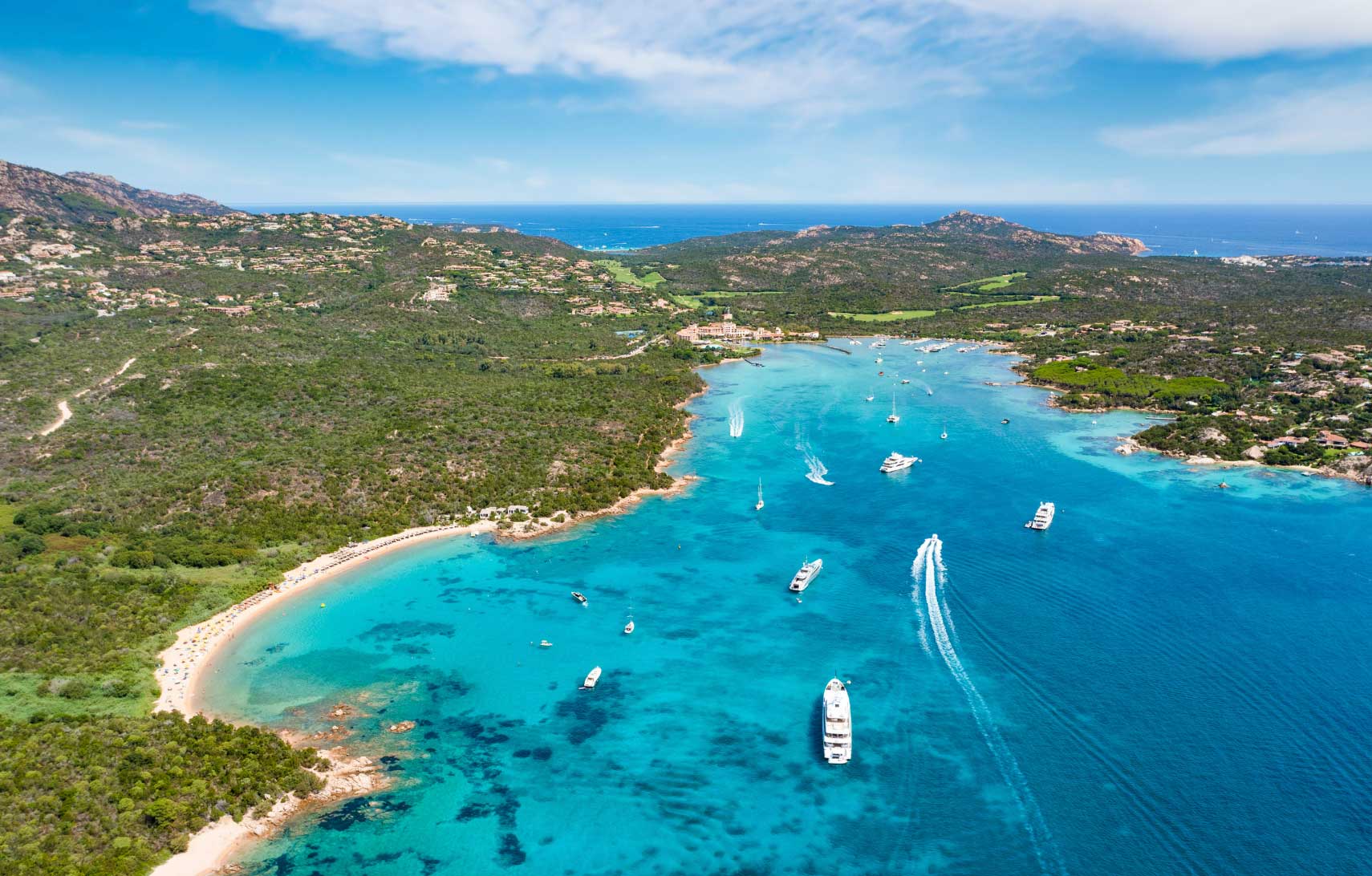
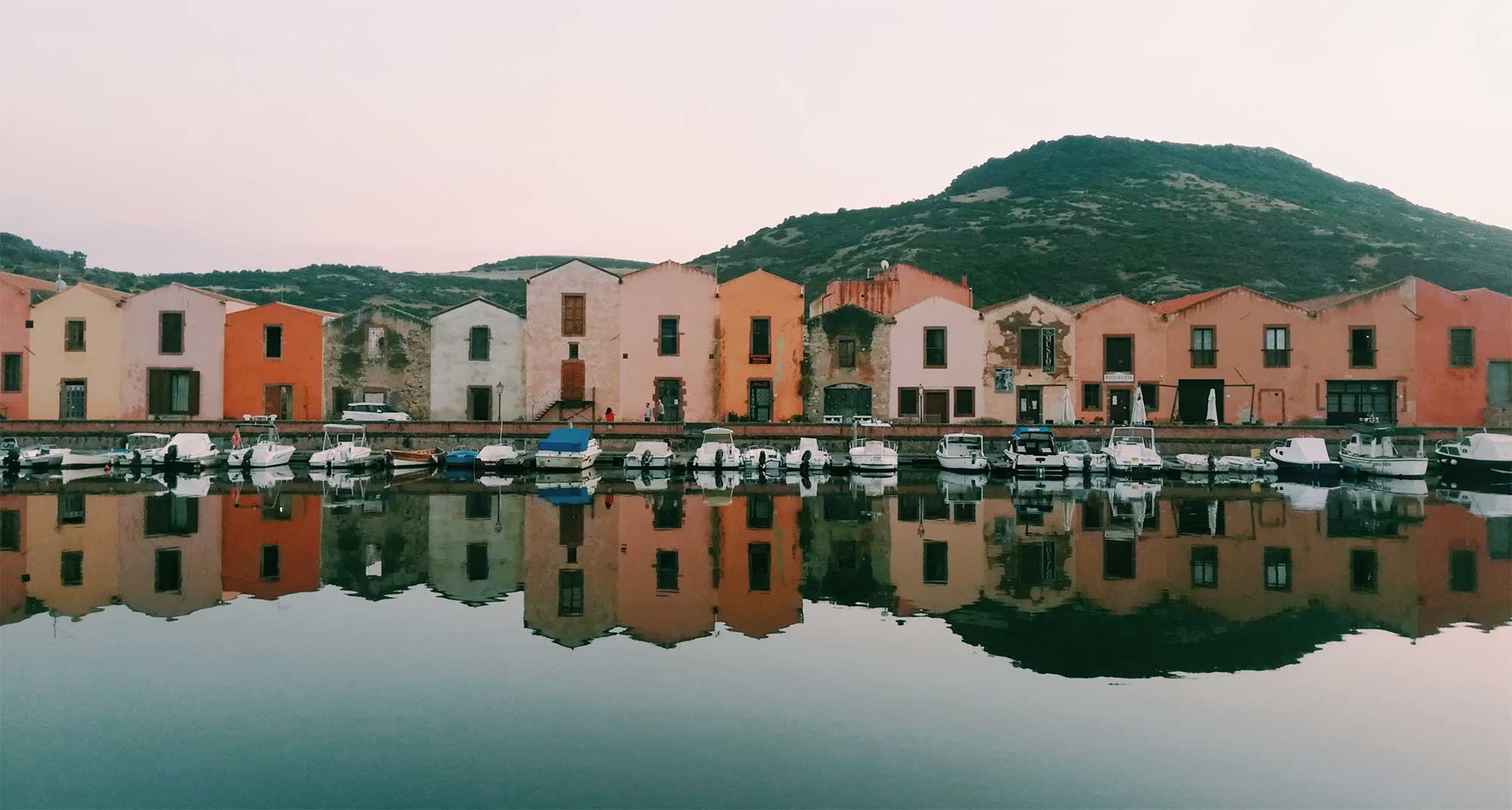
The Romazzino and Pevero bays are made for calm days with easy access
Romazzino and Pevero are useful because they sit close to Porto Cervo and Cala di Volpe while offering a softer rhythm. They work well when the owner wants a beautiful anchorage without committing to the theatre of Porto Cervo marina.
Grande Pevero and Piccolo Pevero are practical in settled weather. The beaches are attractive, the water is clear, and road access from shore is simple. This makes the area useful for guests who want to meet a car, play golf nearby, go to lunch, or move to Porto Cervo in the evening. For a large catamaran, the key is to anchor outside the busy beach zone and keep enough room for wind shifts and other yachts.
Romazzino is quieter and more discreet. It suits owners who want the Costa Smeralda without its full social volume. The anchorage gives the yacht a strong sense of place: pale sand, blue water, low green hills and granite edges. It is excellent for families, couples and guests who want swimming, paddleboards and lunch on board.
For restaurants, the best approach is to use the yacht as the base and move by tender or road transfer to Cala di Volpe or Porto Cervo. Matsuhisa and Beefbar remain strong choices from Romazzino. Quattro Passi al Pescatore works well for a more maritime dinner in Porto Cervo. Novikov Porto Cervo is the choice when guests want Asian fusion, a fashionable atmosphere and a terrace view over the bay.
For a club mood, Pevero is not the strongest area. That is its advantage. It is better for a quiet evening, followed by a short transfer to Porto Cervo if the group changes its mind. Owners who want calm waters should consider this zone carefully, especially outside peak August weeks.
The Liscia Ruja and Cala Petra Ruja coast is built for beach-club energy
Liscia Ruja is one of the broadest and most attractive beaches on the Costa Smeralda. For a large catamaran, it offers a more open feeling than Cala di Volpe. The water is bright, the beach is long, and the view toward the offshore islands gives the anchorage a natural sense of space.
This area suits owners who want a day anchored off a famous beach, with swimming, paddleboards and a relaxed social tone. It is not a protected refuge in all winds, so the skipper must read the forecast carefully. In settled conditions, however, a 50 to 70 ft catamaran can sit beautifully here, with the yacht acting as a private floating beach house.
Cala Petra Ruja adds a stronger social element because Nikki Beach Costa Smeralda is located there. This is the address to choose when guests want a beach-club lunch, music, sunbeds, champagne, cocktails and a polished international atmosphere. The venue describes its style as barefoot luxury, and that is the right way to use it. It is relaxed in dress, but carefully staged in service.
The reason to go to Nikki Beach is clear. It gives a group energy without requiring a full marina stop. Owners can keep the yacht anchored, run guests ashore by tender according to local conditions and club arrangements, then return to the privacy of the catamaran when the mood becomes too loud.
This zone is best for owners who want beach-club energy rather than silence. In July and August, it can be busy. In June and September, it becomes far more attractive. The water is still warm enough for long swims, but the coast feels less crowded.
The Porto Cervo stop is for restaurants, regattas and status
Porto Cervo should be used with intention. It is not the quietest stop in Sardinia. It is the place to enter the social and yachting centre of the Costa Smeralda.
For a 50 to 70 ft catamaran, Marina di Porto Cervo offers the most complete luxury infrastructure in the area. Berthing here gives immediate access to restaurants, boutiques, yacht services, security, provisions and the Yacht Club Costa Smeralda. During the regatta season, the atmosphere becomes especially interesting. The 2026 Yacht Club Costa Smeralda calendar includes events such as the Giorgio Armani Superyacht Regatta, the Rolex TP52 World Championship, the Smeralda 888 events and the Palermo-Porto Cervo-Montecarlo race.
This is why sailors should go to Porto Cervo at least once. The marina is not only about wealth. It is also one of the Mediterranean’s great sailing stages. Owners who appreciate yacht design, racing culture and maritime theatre will find it worthwhile.
For dinner, Quattro Passi al Pescatore is the classic choice. It is a waterfront restaurant and one of Porto Cervo’s most established seafood addresses. It suits owners who want dinner to feel connected to the port rather than hidden in a hotel. Novikov Porto Cervo is more urban and international. It works for guests who want Asian fusion, a dressier atmosphere and a fashionable table. For a more hotel-led dinner, the Cala di Volpe restaurants remain within easy reach by road.
For clubs, Porto Cervo has a changing seasonal scene, so reservations and current programmes matter. The stronger constant is the wider Porto Cervo and Baja Sardinia axis. Owners who want nightlife should plan dinner in Porto Cervo, then move toward Phi Beach or Country Club Porto Rotondo depending on the night.
Porto Cervo is where celebrities, yacht owners and luxury travellers concentrate because the system is complete. There are marinas, hotels, restaurants, shopping, privacy and security. For some owners, it will feel too staged. For others, it is exactly why they came.
The Baja Sardinia and Phi Beach area is the sunset and nightlife choice
Baja Sardinia is the right answer when the brief is action, music and a strong evening atmosphere. It is close enough to Porto Cervo to be part of the same social circuit, but its mood is more sunset-driven and club-oriented.
Phi Beach is the key venue. It sits at Forte Cappellini and is one of the most established beach-club and nightlife addresses in Sardinia. The reason to go is the setting. The rocks, the west-facing view and the sunset create a natural amphitheatre. The venue then adds dining, DJ sets and a late-night programme.
For yacht owners, Phi Beach is particularly useful because it provides a tender service and the possibility of booking buoys, subject to availability. This matters for a large catamaran. It reduces the uncertainty of getting guests ashore and makes the evening easier to plan. Owners should still check conditions, availability and local rules before committing.
The restaurant programme at Phi Beach has evolved, with Luciano’s presented as a restaurant concept inspired by Mediterranean coastal and inland traditions. Nammos Baja Sardinia also brings its high-energy seaside style to the area. These names give the group options. Luciano’s is better for a dinner that still feels linked to Sardinia and the sea. Nammos is the stronger choice when the guests want glamour, music and an international beach-club mood.
This area is not for a quiet night. It is for the owner who wants the yacht to be the private retreat before and after the party. A Privilège catamaran works well in that role. Guests can spend the day in calm, enjoy sunset ashore, then return to a quiet cabin and a stable platform.
The La Maddalena Archipelago is the scenic prize with rules
The La Maddalena Archipelago is the most spectacular cruising area in northern Sardinia. Spargi, Budelli, Razzoli, Santa Maria and Caprera create some of the clearest water and most dramatic granite scenery in the Mediterranean. For a large catamaran, this is where the yacht feels fully justified.
The area is also a national park. That means the skipper must use current official rules, permits and zone maps. Permits are required. Anchoring is regulated. Posidonia oceanica seagrass must be protected. Overnight anchoring rules have changed in recent years, so captains should verify the current framework before arrival rather than relying on older cruising guides.
For scenic anchorages, Cala Corsara on Spargi is one of the major names. It is famous for its pale sand, rock shapes and extraordinary water. Budelli’s Spiaggia Rosa is protected and should be admired respectfully from the sea. Caprera is better for owners who want a quieter and more rugged mood, depending on wind and permitted zones. The area around Porto Palma can be useful in the right conditions.
Restaurants and clubs are more limited here, which is part of the charm. La Grotta in La Maddalena town is a good restaurant to choose for seafood and local continuity. It has been part of the island’s dining scene since 1958 and works well after a day in the park. Zi Antò at Punta Tegge is another strong choice, especially for owners who want a waterfront meal with a more traditional Sardinian feel. La Scogliera, on its private-islet setting near the archipelago, is the more glamorous option. It is the one to choose for a high-end seafood lunch or dinner reached by boat transfer.
La Maddalena is best for calm seekers, families, swimmers and owners who value landscape over nightlife. It is also where a Privilège’s autonomy matters. The best experience is to slow down, follow the rules, avoid crowded hours and let the anchorage do the work.
The Tavolara and Punta Coda Cavallo area gives a wilder southern alternative
South of Olbia, Tavolara and Punta Coda Cavallo offer a different version of Sardinia. Tavolara rises sharply from the sea and gives the area a more monumental character than the Costa Smeralda. The coastline feels wilder. The water around Molara, Tavolara and Cala Brandinchi can be exceptional.
This area belongs to the Tavolara Punta Coda Cavallo Marine Protected Area. It covers about 15,000 hectares of sea and around 40 kilometres of coastline. Navigation, anchoring and mooring depend on zones. Some areas restrict free anchoring and require official mooring buoys. A large catamaran should plan carefully and avoid improvisation.
The reason to go is contrast. After Porto Cervo, Cala di Volpe and Baja Sardinia, Tavolara feels cleaner and less social. It suits owners who want natural scenery, swimming and a more elemental day at sea. It is also practical because Olbia remains close.
The restaurant to know is Da Tonino Re di Tavolara. It is located on Tavolara Island and can be reached by boat, with a pier close to the restaurant. The reason to go is the setting as much as the food. A meal there gives guests the feeling of arriving somewhere by sea, not simply visiting another coastal restaurant. It is simple, memorable and geographically specific.
For a more refined shore option, Ristorante La Corona on Tavolara is also worth considering. It suits guests who want the island setting with a more polished dining mood. This area is not a club destination. It is a place for lunch, swimming, landscape and a quieter night on board.
The Cagliari and Villasimius coast rewards longer cruises
The south of Sardinia is often overlooked by owners who focus only on the Costa Smeralda. That is a mistake for longer cruises. Cagliari, Villasimius and the Capo Carbonara area offer a different rhythm, with broader beaches, strong food culture and less dependence on the celebrity circuit.
Villasimius and Capo Carbonara are especially attractive for owners who want clear water and natural scenery. The marine protected area requires attention to zones, anchoring rules and seagrass protection. This is another place where the captain should check official information before entering.
For restaurants, Villasimius works well for a more local dinner after days at anchor. Cagliari is the stronger gastronomic stop. Da Marino al Saint Remy is a useful name for seafood and city dining. Luigi Pomata is a strong choice for tuna, contemporary Sardinian cooking and a more chef-led experience. Antica Cagliari is better for a traditional meal in the old town, especially when guests want Sardinian dishes and a warm local atmosphere.
For bars and evening life, Libarium Nostrum is one of the more memorable Cagliari choices because of its terrace and city views. It works after dinner rather than as a yacht-club style venue. Cagliari does not have the same yacht glamour as Porto Cervo, but it has a real city behind it. That gives the cruise cultural depth.
The south suits owners with time. It is better for a two-week itinerary than a short Costa Smeralda escape. It rewards those who want Sardinia beyond the familiar names.
The ideal Sardinian route depends on the owner’s mood
The best Sardinian itinerary for a 50 to 70 ft catamaran should be built around mood, not distance.
For calm, the strongest choices are Romazzino, selected parts of La Maddalena outside peak season, Caprera, Tavolara and the quieter southern coast. For a refined Costa Smeralda feeling, choose Cala di Volpe, Pevero and Porto Cervo. For beach-club energy, go to Nikki Beach at Cala Petra Ruja. For sunset, music and nightlife, go to Phi Beach and Baja Sardinia. For logistics, use Olbia, Portisco, Cala dei Sardi or Porto Cervo. For a proper sailing culture stop, time the visit around the Yacht Club Costa Smeralda calendar.
The restaurants should follow the area. Cala di Volpe means Matsuhisa or Beefbar. Porto Cervo means Quattro Passi al Pescatore or Novikov. Porto Rotondo means Tartarughino or Bambusa. Baja Sardinia means Phi Beach, Luciano’s and Nammos. La Maddalena means La Grotta, Zi Antò or La Scogliera. Tavolara means Da Tonino Re di Tavolara or La Corona. Cagliari means Luigi Pomata, Da Marino al Saint Remy, Antica Cagliari and Libarium Nostrum.
This is the real pleasure of Sardinia by catamaran. The yacht gives the owner the ability to change atmosphere without changing identity. A Privilège can be a quiet home at anchor in the morning, a platform for friends at lunch, a tender base for a beach club in the afternoon and a calm private retreat after dinner.
Sardinia works because it gives that freedom real structure. It has the bays, marinas, restaurants, clubs, protected areas and road access to make a large catamaran meaningful. The owner simply needs to choose the right mood for each day.