


A dinghy that breaks loose in a seaway becomes a hazard, and fixing it at sea is dangerous. Privilège Marine on securing the tender before the weather turns.
A tender that breaks free in a rising sea turns from a convenience into a hazard. Davits and swim-platform cradles are built for calm water, not for the shock loads of a pitching stern. A loose dinghy swings, slams against the hull and can be torn from its mounts. Worse, it tempts a crew member aft to fix it just as the deck becomes most dangerous. The remedy is simple and unglamorous: secure the tender as if a rough passage is coming, every time, before leaving the dock. Lash it so it cannot move, drain it, and remove the outboard for long passages. In heavy weather, the safest place for a dinghy is often on deck or below, not hanging astern. At Privilège Marine, we treat hull, rig and tender as one safety system. A well-stowed tender protects the boat and the people aboard.
The Moment a Secured Tender Earns Its Keep
Weather changes fast at sea. A flat anchorage at dusk can become a wind-against-tide chop by dawn. The tender that rode quietly on the davits all summer becomes a liability the instant the boat starts to pitch. It swings on its lashings, snatches at its mounts and beats against the transom. If a wave fills it or a single fixing lets go, it hangs from one point and flails.
An 18-metre (60-foot) catamaran sailing off Marseille under bare poles at 11 knots had exactly this happen. A wave tore one fixing off the RIB, the remaining lashings worked free, and the tender hurled itself about on its last two tethers. The crew came close to cutting it loose, judging it too dangerous to save. That is the heart of the matter. Securing a dinghy on davits is not about tidiness. It is about not manufacturing a problem that has to be solved later on a wet, moving deck. Sound tender safety at sea begins long before the wind rises.
The Forces a Davit and Its Lashings Must Survive
The Weight You Are Actually Carrying
Common rail- and transom-mounted davits carry safe working loads from roughly 91 to 340 kilograms (200 to 750 pounds). Larger yacht davits run from 500 kilograms to 3 tonnes. The trap is the true weight of a loaded tender. A 3.4-metre (11-foot) RIB weighs around 100 kilograms (225 pounds). Add a modern four-stroke outboard at 50 to 70 kilograms (110 to 155 pounds), a fuel tank, an anchor and a few oars, and the load passes 160 kilograms (350 pounds). Many off-the-rack davits are rated at exactly that figure, in flat water, lifted gently. They were never meant to hold it through a seaway.
The Water That Multiplies the Load
Seawater weighs about 1,025 kilograms per cubic metre. A tender that takes aboard 200 litres of green water, easily done when a following sea breaks over a low transom, gains roughly 205 kilograms (450 pounds) in an instant. The davits then carry double their design load, swinging on the ends of two arms. Motion makes it worse. As the stern rises and drops, the lashings and mounts see shock loads that briefly reach several times the static weight. This is how fittings shear, welds crack and tenders depart.
The Right Way to Lash a Tender on Davits
Start from one principle: the tender must not move at all. A dinghy left to dangle is the one that fails. Haul it firmly against its chocks or the transom and lash it in several directions so it cannot swing fore and aft or cant sideways.
Cruisers who cross oceans with the dinghy on davits describe a reliable method. Lash the bow slightly higher than the stern, remove the drain bung so any water runs straight out, and fit a full cover to keep spray from pooling inside. Run a line from the outboard side of the dinghy, under its keel, to the toe rail, so a beam gust cannot lift and flip it. Several ratchet straps to strong points beat a single rope every time. For a passage, take the outboard off and stow it low and secure, with the fuel line shut. The smaller the windage and the lower the weight, the kinder the load on every fitting. Experienced crews advise stowing the engine separately once the wind reaches around 30 knots and the seas build to 1.2 to 1.8 metres (4 to 6 feet).
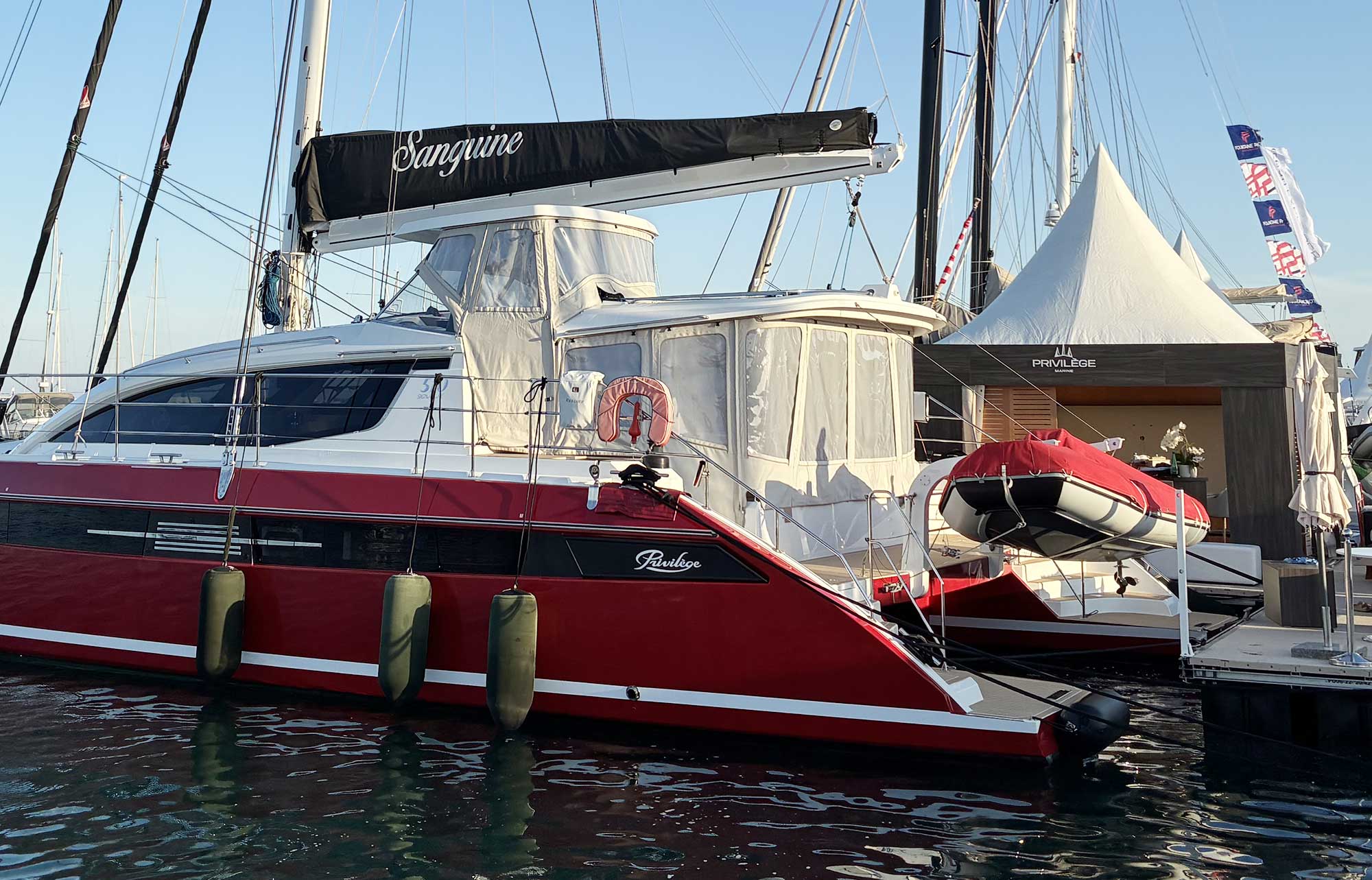
The Choice Between Davits, Deck and Towing
Davits suit coastal hops and calm seas. For an offshore passage, or when heavy weather is forecast, the dinghy belongs on deck, inverted and strapped down, or deflated and stowed below to cut windage. A platform-mounted tender must sit high enough that following seas and the boat’s own wake cannot wash it at low speed.
Towing is the weakest option offshore. A towed dinghy can surf down a wave into the transom, snatch its painter until it parts, or fill and behave like a sea anchor. One sailor measured half a knot or more of lost speed towing a RIB behind a smaller yacht. If you must tow for a short hop, use a bridle, guard hard against chafe, and stream a small drogue from the dinghy’s transom to keep it tracking straight. The honest rule from people who sail far is the simplest one. Prepare the tender as though the passage will be rough, because forecasts are wrong often enough to matter.
The Danger of Going Aft in a Seaway
The real reason to secure the tender early is human. The most dangerous place on a boat in heavy weather is the deck, and the worst moment to be there is mid-gale, reaching aft to wrestle a swinging dinghy over a pitching transom.
The figures are sobering. The Marine Accident Investigation Branch recorded 308 man-overboard occurrences in British waters between 2015 and 2023, of which 40 per cent were fatal. Across recreational craft, 47 per cent of people who go overboard do not come back. In cold water, crews have under 11 minutes on average to recover a casualty before they stop responding, and as little as 4 to 5 minutes in the coldest, roughest conditions. A person sent aft to free a flailing tender meets that exact risk. Anyone on deck in such weather should wear a 275-newton offshore lifejacket and clip on with a harness and tether. The surer protection is to give them no reason to be there at all. Real man-overboard prevention starts with removing the task.
The Habit That Keeps Crews Safe
Good seamanship makes this a routine rather than a decision. Secure the tender properly before you leave the dock, every time, and the question of whether to risk the deck later never arises. Check the lashings at dusk and ahead of any front. Treat the davit’s safe working load as a hard limit, not a target. See the hull, the rig and the tender as one system, each able to endanger the others when neglected.
At Privilège Marine, we build boats to carry their owners across oceans in comfort and confidence, and we hold that the small disciplines decide the safe voyages. A tender that stays exactly where you put it, through the worst the sea can offer, is one of those quiet disciplines worth keeping.