


Sailors call it a sea anchor, not a floating anchor. Privilège Marine explains what it does, when to deploy it, and how it differs from a drogue.
Sailors do not use the term floating anchor. The device meant by that phrase is the sea anchor, a parachute of heavy fabric streamed from the bow to hold a boat’s head to the wind and waves. Its close cousin, the drogue, is streamed from the stern to slow a boat running before a storm. The two are not interchangeable. A sea anchor stops a boat almost dead and lets a crew ride out heavy weather bow-on. A drogue keeps the stern square to breaking seas and prevents broaching and pitchpoling. For catamarans, which do not heave-to like keelboats and which risk capsize in breaking waves, both devices matter a great deal. The Jordan Series Drogue, born from the 1979 Fastnet disaster, is the most respected of them. Privilège Marine explains what each device does, when to deploy it, and how to rig it so it holds.
The Right Name for a Floating Anchor
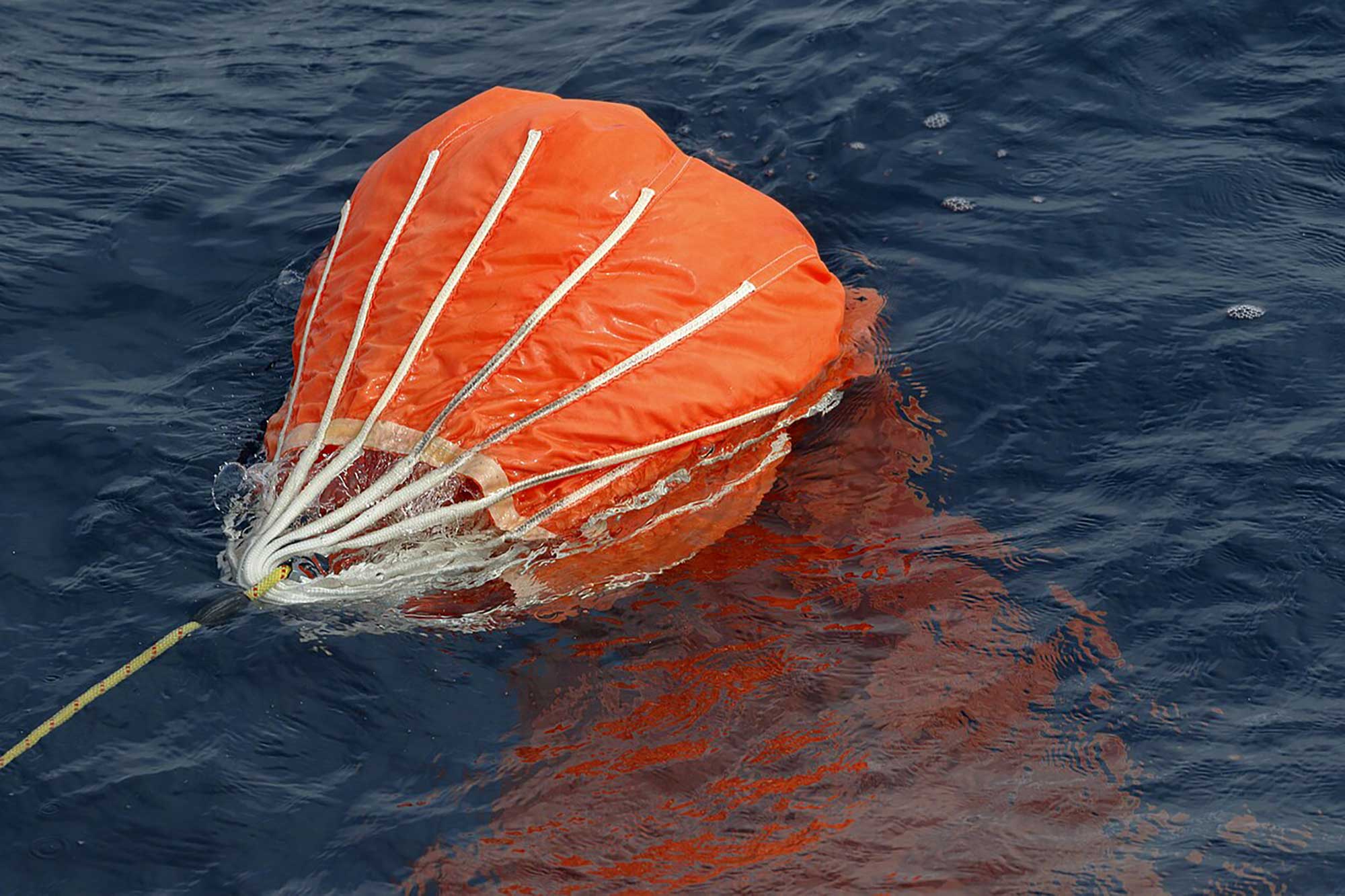
The phrase floating anchor is a literal translation that English-speaking sailors rarely use. The correct term is sea anchor, sometimes called a para-anchor because the modern version looks like a parachute. A sea anchor is a cone or canopy of strong fabric, several feet across, streamed from the bow on a long line. Once submerged, it traps a large volume of water and creates drag. The boat then lies head to wind, almost still, while the storm passes.
A related device, the drogue, does a different job from the stern. Confusing the two is a common and dangerous mistake, so the distinction is worth stating plainly. A sea anchor holds you in place, bow to the seas. A drogue slows you down as you run with them, stern to the seas. One stops the boat; the other controls a moving boat. Neither can do the other’s work.
The Job a Sea Anchor Does
The purpose of a sea anchor is to keep the bow pointed into the wind and waves while bringing the boat nearly to a standstill. A vessel lying to a well-set sea anchor drifts downwind very slowly, often under one knot. The fine bow meets the seas head-on, which is the safest and most comfortable angle in a gale.
The uses reach beyond storms. A sea anchor holds a disabled boat off a lee shore after an engine failure. It steadies a boat during a man-overboard recovery. It gives a short-handed or exhausted crew a way to stop and rest in open water, far from shipping lanes. It is, in effect, a way to heave-to where the water is too deep for ground tackle. The one firm requirement is sea room, since the boat still makes slow leeway toward the danger downwind. Several makers, among them Para-Tech and Fiorentino, sell sea anchors sized by a vessel’s displacement.
The Drogue and the Art of Running Before a Storm
A drogue answers a different question. When a crew chooses to run before a storm rather than stop, the danger becomes speed. A boat surfing down a steep wave can bury its bow and pitchpole, or slew sideways and broach. A drogue, streamed from the stern, adds drag that holds the speed down and keeps the stern square to the seas.
The most respected design is the Jordan Series Drogue, developed by the aeronautical engineer Don Jordan with the United States Coast Guard after the 1979 Fastnet Race disaster, which cost 15 lives and saw 24 boats sunk or abandoned. Rather than one large cone, it strings 100 to 200 small cones of 13 centimetres (5 inches) along a tapered line of 90 to 180 metres (300 to 600 feet), with a weighted tail of 7 to 11 kilograms (15 to 25 pounds). Because cones are always in the water, the load stays steady and the snatching shock that tears fittings from a deck is avoided. In fatigue testing the design survived 15,000 load cycles, the equivalent of a long hurricane, without failure. None of the boats lost in the 1979 Fastnet or the 1998 Sydney–Hobart race carried one.
The Choice for a Catamaran
Catamarans need this subject more than most boats. A multihull has no deep keel, so it does not heave-to and fore-reach the way a monohull does. Its great stability is also its risk: caught beam-on in large breaking seas, a catamaran can capsize. Drag devices are therefore central to multihull storm tactics.
A sea anchor can be set from a bridle led to both bows, holding the catamaran head to wind. Many offshore multihull sailors instead favour the Jordan Series Drogue on a stern bridle, which gives strong protection against capsize while running. Because multihulls carry more windage and less grip in the water, they generally need 20 to 30 per cent more cones than a monohull of similar weight. Each bridle leg should run about 2.5 times the transom width, to spread the load and hold the boat square. The custom catamaran Rum Doxy, 14 metres (46 feet) long, rode to a 150-cone series drogue off Japan in 45 to 50 knots and 7-metre (23-foot) breaking seas, drifting 56 kilometres (30 nautical miles) in twelve hours and coming through intact.
The Practical Side of Deploying One
Good gear fails through poor rigging, so the details decide the outcome. Use a nylon rode, never polyester or plain chain, because nylon stretches and absorbs the shock of each wave. Make it long, often around ten times the boat’s length and rarely less than 100 metres (330 feet), and tune that length so the boat and the device stay in step with the wave train, the boat on one crest while the anchor sits in the next.
Rig a bridle to share the load between two strong points. The single most common failure is chafe, so protect the rode at every fairlead and chock with leather or heavy hose, and inspect it often through the storm. Fit a swivel to stop the line twisting. Rig a trip line and a float to recover a sea anchor, which is otherwise almost impossible to haul back once it is full of water. When lying to a sea anchor, lock the rudder amidships, since the slow sternway can force an unsecured rudder hard over and break it. Stow the whole system in a dedicated bag, flaked and ready to run, because the time to learn deployment is a calm afternoon, not a rising gale.
The Calm That Comes From Being Ready
The deeper value of these devices is confidence. A crew that owns the right drag device for its boat, has practised setting it, and knows which tactic suits the conditions can meet heavy weather as a problem to manage rather than a crisis to survive. Choose the device that matches your hull and your likely sea room. Carry it where it can be reached fast. Rig it once in light air so the motions are already familiar.
At Privilège Marine, we build catamarans to cross oceans and to bring their people home, and we regard storm gear as part of that promise. A sea anchor or a drogue, properly chosen and properly set, can turn the worst night at sea into one that a sound boat and a ready crew are built to outlast.