


A premium yacht offers choice. A bespoke Privilège is shaped around its owner, creating a rare bluewater home with lasting personal and market value.
The luxury yacht market often uses “premium”, “custom” and “bespoke” as if they described the same thing. They do not. A premium yacht usually offers a high standard of design, equipment and finish, supported by a structured options list. A bespoke yacht begins with the owner’s life. It asks how the yacht will be sailed, who will live aboard, where it will travel and what must work every day. Layout, materials, energy, water, navigation systems, storage and service are then considered as one coherent project. At Privilège Marine, this dialogue takes place within proven bluewater platforms designed for ocean passages. The result is not a decorative variation of a standard boat. It is a personal home at sea, built in France around a particular owner and a particular programme. No two Privilège yachts are alike. That rarity has meaning because it is rooted in use, engineering and craftsmanship rather than fashion alone.
The Premium Product Offers Choice Within a Finished Idea
A premium yacht can be exceptionally well designed. It may use fine materials, respected equipment brands and advanced manufacturing methods. It may also offer several cabin plans, timber finishes, upholstery collections and electronics packages. The owner receives meaningful choice.
The central idea, however, has already been settled. The shipyard has defined the circulation, principal volumes, technical architecture and intended pattern of use. The buyer enters that system and selects the version that comes closest to his needs.
This approach has clear industrial advantages. It simplifies engineering, certification and production. It can also protect quality because the same solutions are repeated, tested and refined across a series.
The limit appears when the yacht becomes a long-term residence rather than a leisure product.
A family preparing for a circumnavigation does not have the same priorities as an owner cruising the Mediterranean with professional crew. A couple living aboard for six months each year needs different storage, refrigeration, energy generation and working space from an owner using the yacht for short holidays.
The difference becomes even clearer when personal activities enter the equation. An owner who dives regularly needs compressors, bottle storage, equipment-drying areas and safe access to the water. A remote-working entrepreneur needs reliable communications, a proper office and enough electrical autonomy to operate far from a marina. A keen cook may value a larger galley and additional refrigeration more than another guest cabin.
A premium product asks which available version the owner prefers. A bespoke yacht asks what the owner’s life requires.
The Bespoke Yacht Starts With the Owner Rather Than the Catalogue
Bespoke does not mean changing everything without restraint. Naval architecture is governed by weight, balance, structure, stability, access, ventilation, safety and certification. A responsible shipyard protects those fundamentals.
True bespoke work combines freedom with discipline. The hull platform, structural engineering and offshore purpose may be proven, while the yacht’s internal organisation, technical configuration and visual character are developed around the owner.
This is more serious than selecting decorative options from a catalogue. It is also different from the fully custom superyacht model, where the naval platform may be created from a blank sheet. In the world of bluewater sailing catamarans, a proven platform is an asset. It allows the owner to benefit from established naval architecture while shaping the elements that determine life aboard.
At Privilège Marine, every project begins with owner dialogue.
Will the yacht be sailed by a couple, a family or a permanent crew? Will it cross the Atlantic, remain in the Caribbean, spend several months in the Mediterranean or undertake a circumnavigation? How many guests will stay for several weeks rather than several nights? Does the owner cook personally? Is a separate crew route required? Will the yacht carry diving equipment, bicycles, spare sails, tools or specialist medical supplies?
These questions shape the brief. They also expose contradictions.
An owner may request more cabins, larger domestic appliances, additional batteries, a gym and extensive equipment storage while also expecting low displacement and strong sailing performance. Every addition has a cost in weight, volume, complexity, energy consumption or maintenance.
The shipyard’s role is not to approve every request. Its role is to interpret the owner’s priorities and turn them into a safe, coherent and buildable yacht. That sometimes requires saying that one idea should be modified, simplified or rejected.
Such frankness is part of genuine yacht customisation. A bespoke yacht should reflect its owner without sacrificing the qualities that allow it to cross oceans.
The Layout Becomes the Architecture of Daily Life
Layout is the clearest difference between a configured yacht and a genuinely tailored one. Cabin count alone says little about the quality of life aboard. Privacy, movement, noise, natural light, storage and the separation of functions matter more over time.
Many production catamarans are derived from charter requirements. Their interiors are designed to maximise the number of equivalent cabins and private bathrooms. This makes commercial sense for weekly rental operations, but it can create compromises for a private owner.
Privilège follows a different logic. The yacht is conceived primarily as an owner’s yacht.
The shipyard is known for placing the owner’s suite forward in the central nacelle or rostrum. On the Signature 510, the yacht measures 17.09 metres overall (56 feet) and 7.98 metres in beam (26 feet). Its full-beam owner’s suite uses the width of the central structure rather than confining the owner to one hull.
This arrangement changes the experience of the yacht. The cabin becomes a genuine private room rather than a widened corridor. It can provide greater visual openness, more natural light and a clearer separation between the owners and their guests.
The Signature 580 extends this residential logic. It measures 19.10 metres overall (62 feet 8 inches), with a beam of 9.18 metres (30 feet 1 inch). It can be arranged with four or five cabins, while the galley, guest spaces and crew accommodation can be considered according to the owner’s programme.
The yacht also links the saloon with a protected forward cockpit. This connection changes the circulation between interior and exterior spaces. It creates another private living area while allowing the forward part of the yacht to become part of daily life rather than an occasional deck space.
The new Signature 600 makes the principle even more explicit. Its aft portside cabin is treated as an open brief. The owner may turn it into a private cinema, gym, office, artist’s studio, enlarged wardrobe or serious storage room for long-distance cruising.
That decision changes the yacht’s function, not merely its appearance.
This is the architecture of daily life. A true owner’s yacht may deliberately carry fewer cabins than the available volume could accommodate. The apparent sacrifice creates privacy, order, comfort and usable storage. For an owner who intends to live aboard, that can be worth far more than another double berth.
The Materials Must Remain Convincing After Years at Sea
Premium materials are often judged under exhibition lighting. Bespoke materials must also be judged after heat, salt, ultraviolet exposure, humidity and thousands of miles of movement.
A yacht interior is not a static apartment. Furniture forms part of a moving structure. Doors, drawers, stone surfaces, timber panels, fabrics and fittings must tolerate repeated acceleration, vibration and changes in temperature.
Weight also matters. A material that works perfectly in a house may be unsuitable aboard a sailing catamaran because it is too heavy, too brittle or difficult to repair internationally.
Privilège selects real wood, engineered surfaces and composite structures according to durability, balance and tactile quality. The owner can influence timber tones, fabrics, leathers, coverings, hardware and colour relationships, but these choices must remain compatible with offshore use.
This separates decoration from yacht design.
A visually dramatic surface may age badly in tropical sunlight. A delicate fabric may be inappropriate beside an exterior access point. A fashionable finish may prove difficult to replace five years later. Certain natural stones may require lightweight backing or careful positioning. Timber must be selected, treated and assembled to remain stable in a marine environment.
A bespoke material palette should reflect the owner while remaining calm, maintainable and technically credible.
The strongest interiors rarely rely on obvious displays of expense. Their quality appears in the accuracy of the joinery, the feel of the surfaces, the quiet operation of drawers, the alignment of panels and the absence of unwanted noise at sea.
The best result feels personal without looking theatrical. It also allows the yacht to mature with dignity.
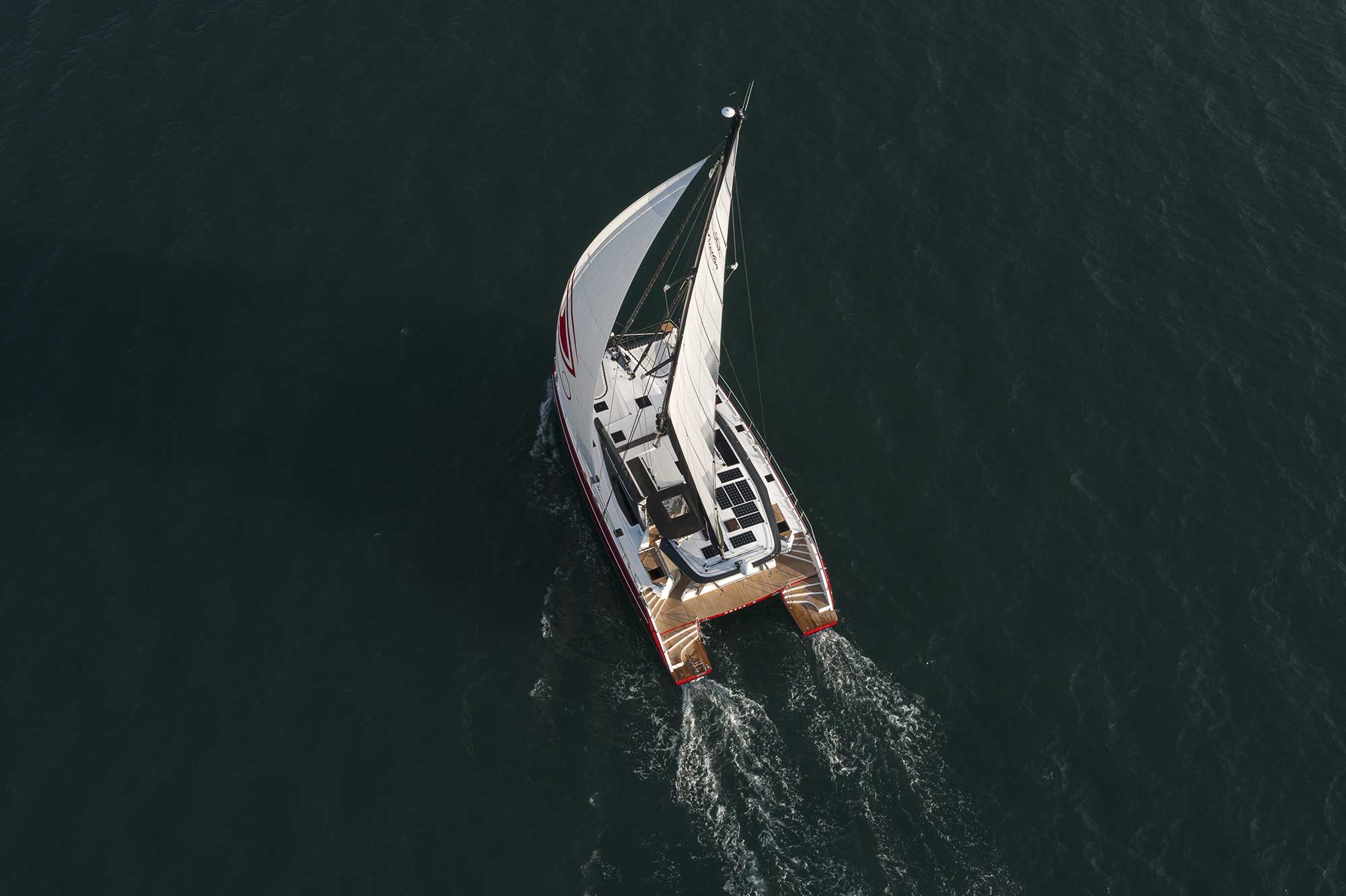
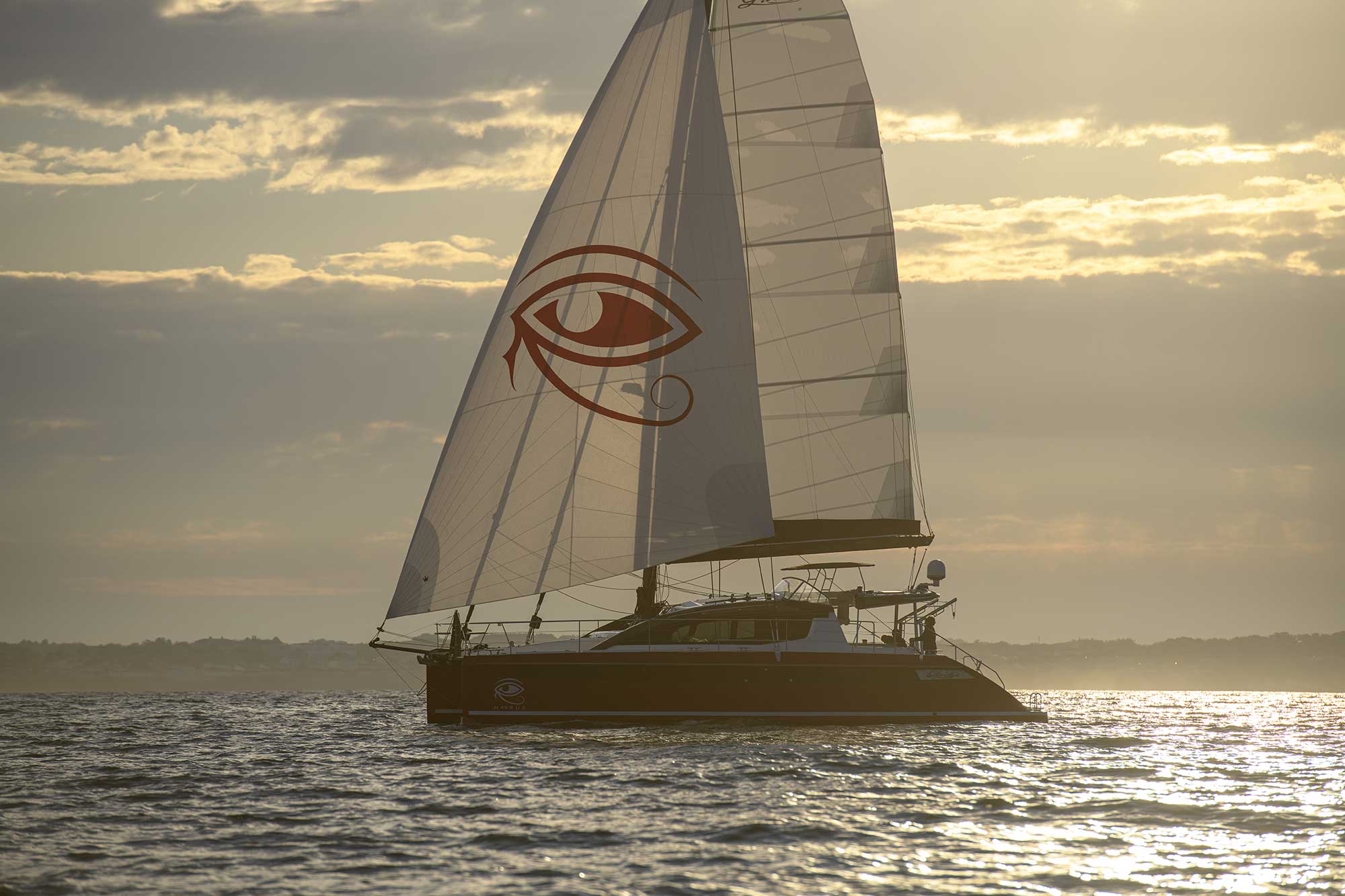
The Systems Decide Whether the Yacht Can Become a Home
A yacht becomes a home when its systems support ordinary life reliably. This is where superficial customisation ends and serious bespoke work begins.
Energy demand depends on behaviour. Air conditioning, cooking, refrigeration, water heating, communications, navigation electronics, entertainment and water production all compete for power.
Battery capacity, solar generation, inverters, generators and engine charging must therefore be specified as an integrated system rather than a collection of individual options. The correct solution depends on where the yacht will sail, how often it will use marinas and how the owner expects to live at anchor.
Water planning follows the same logic.
The Signature 510 carries 800 litres of fuel (211 US gallons) and 600 litres of fresh water (158 US gallons). The Signature 580 carries two 485-litre fuel tanks, for a total of 970 litres (256 US gallons), and two 450-litre fresh-water tanks, for a total of 900 litres (237 US gallons).
These figures provide the base. The owner’s route and habits then determine watermaker capacity, filtration, redundancy, tank monitoring and maintenance access.
A couple crossing the Atlantic may prioritise simplicity and the ability to repair equipment independently. A family living aboard in tropical climates may require greater refrigeration capacity, more air conditioning and a higher daily volume of fresh water. An owner remaining connected to a business may need satellite communications, protected network equipment and dedicated power reserves.
Technical choices also vary by region. Electrical standards, shore-power arrangements and regulatory expectations differ between Europe, the United States and Australia. Equipment must be selected with future cruising areas and international servicing in mind.
Privilège integrates mechanical, hydraulic, electrical, plumbing and climate systems with maintenance access as a core requirement. This point is critical. A beautifully finished yacht that requires major furniture removal for routine maintenance has been designed poorly.
The technical specification determines silence at anchor, confidence during a night passage and the ability to remain away from shore infrastructure. It also determines how easily the owner, crew or local technician can understand and service the yacht years after delivery.
The Offshore Platform Places Limits That Protect the Owner
Bespoke work has value because it is built on engineering that should not be compromised. Privilège catamarans are conceived as bluewater yachts, and the current range carries CE Category A certification with model-specific person limits.
Under European rules, Category A applies to craft designed for winds that may exceed Beaufort force 8 and significant wave heights of 4 metres and above, excluding abnormal conditions such as hurricanes, extreme seas and rogue waves.
The classification is not a promise that any owner can sail into any weather. It is a design framework covering stability, buoyancy, structural requirements and handling characteristics.
The Signature 580 and Signature 600 are certified CE A-12. Their published full-load displacement is 35 tonnes, compared with 29 tonnes in light-ship condition. That six-tonne difference illustrates why specification control matters.
Fuel, water, equipment, personal possessions, tenders, spare parts and custom features all consume payload. They can also affect trim, sailing performance and motion at sea.
A bespoke shipyard must therefore protect the weight estimate throughout the project. Marble, larger battery banks, additional refrigeration, exercise equipment and extensive spare parts may all be possible, but their combined effect must be understood.
The same principle applies to structural alterations. Moving a bulkhead, enlarging an opening or repositioning heavy machinery can affect more than the room where the change is made. Engineers must consider load paths, ventilation, cable routes, pipework, fire protection and future access.
This discipline strengthens the final yacht. The owner gains freedom where freedom creates value, while the naval platform retains the integrity needed for ocean passages.
The Service Continues After the Yacht Leaves the Workshop
A premium transaction often reaches its commercial conclusion at delivery. A bespoke yacht relationship should continue because the first months of use reveal how systems, habits and expectations meet in real conditions.
Privilège launches and commissions its yachts at Les Sables-d’Olonne, where direct access to the Atlantic supports sea trials and final technical adjustments. The owner receives a personalised handover rather than a simple transfer of keys.
The purpose of commissioning is to test the yacht as a complete system. Engines, sails, steering, electronics, plumbing, climate control and domestic equipment must work together. The crew or owner must also understand how those systems operate.
After-sales support is part of the build philosophy. A dedicated contact can coordinate with the owner, captain, marina, supplier or subcontractor. Feedback returns to engineering and production. This creates a useful cycle: service corrects individual issues and improves future yachts.
The dialogue matters because a yacht is a complex operating environment. Owners may need support after changing cruising region, captain or equipment. They may also wish to improve a system after gaining practical experience aboard.
Over ten years of ownership, clear documentation, system knowledge and responsive technical support can be as important as the initial interior design.
The Rarity Comes From Purpose Rather Than Artificial Scarcity
Luxury brands often manufacture scarcity through limited editions, waiting lists or controlled distribution. A bespoke Privilège is rare for a more substantial reason. It reflects a particular owner’s decisions.
No two projects combine the same route, family structure, cabin plan, materials, energy profile, storage needs and equipment.
Even yachts built on the same platform develop different identities. One may be configured for a couple crossing oceans without permanent crew. Another may support a family, an office and extended periods at anchor. A third may include professional crew circulation and formal guest accommodation.
This is rarity with purpose. It cannot be reproduced by changing upholstery or adding a numbered plaque.
Rarity alone does not guarantee resale value. Highly personal choices can narrow the future market when they reduce flexibility, compromise performance or create difficult maintenance.
Good bespoke design avoids that trap. It expresses the first owner’s life while preserving spatial logic, technical clarity and qualities that another serious sailor can understand.
A coherent owner’s yacht can remain desirable because its originality is functional. Buyers recognise proper storage, comfortable circulation, reliable systems, durable joinery and an offshore platform. These qualities age more slowly than fashion.
A boat built around a clear cruising programme may also have a more convincing history. Its equipment, layout and maintenance records tell a coherent story. This can matter when a future buyer compares it with a generic yacht whose specification was assembled largely from a standard options list.
The Most Valuable Yacht Is the One That Remains Relevant
The real difference between premium and bespoke appears after delivery. A premium yacht can impress immediately. A bespoke yacht should continue to make sense after seasons of use, long passages and changing circumstances.
Privilège Marine builds within this longer horizon. The yacht begins as a proven bluewater catamaran, then becomes a personal project through architecture, materials, systems and sustained conversation.
It is conceived as a home at sea, with the strength to cross oceans and the refinement to support daily life.
That approach creates emotional value because the owner recognises his decisions throughout the yacht. It creates practical value because spaces and systems respond to real behaviour. It can also support long-term value when personalisation remains coherent, durable and technically sound.
The strongest bespoke projects balance individuality with restraint. They give the owner exactly what matters while avoiding changes that would weaken performance, reliability or future relevance.
A truly bespoke yacht does not need to announce its exclusivity. Its distinction is visible in the way people move through it, the way equipment has been integrated and the way the yacht continues to serve its owner far from land.
The result is rare because it belongs to one life. It is valuable because it was designed to remain useful, safe and meaningful for years.