


Yacht brands can learn from luxury hospitality by turning ownership into a personal, serviced and deeply customized experience.
Luxury hospitality has changed the way wealthy clients define value. The best hotels no longer sell only a beautiful room, a famous address or polished service. They sell recognition, privacy, anticipation and a sense that every detail has been considered before the guest asks. Yacht brands should study this evolution closely. The future of luxury yachting will not be won by builders that offer a mass luxury product with a thin layer of exclusivity. It will be won by yards able to design a yacht, and an ownership experience, around the real life of the owner. At Privilège Marine, this distinction is central. A bluewater catamaran must cross oceans safely, but it must also become a private home at sea. True luxury is not standardization with expensive finishes. It is personalization with purpose, supported by service, comfort and technical credibility.
The hospitality lesson that yacht builders can no longer ignore
Luxury hospitality has become one of the clearest laboratories for modern luxury. The lesson is direct. Clients no longer judge value only through physical assets. They judge it through experience.
A hotel suite can be large, beautifully furnished and placed in a prestigious location. That is no longer enough. The best hospitality brands now compete on details that are less visible in photographs: how quickly a guest is recognized, how discreetly preferences are remembered, how well the room supports sleep, how intelligently food, wellness, privacy, mobility and local experience are connected.
This matters for yacht brands because the yacht is one of the most complex luxury objects a person can own. It is a home, a technical system, a means of travel, a social space, a private retreat and, for some owners, a workplace. A yacht that fails as an experience fails as a luxury product, even if the joinery is excellent.
The hospitality industry understands this point. Deloitte has described the next-generation hotel guest experience as a combination of high-touch hospitality and immediate, technology-enabled utility. Bain & Company has also noted that luxury experiences have grown faster than average as consumers shifted spending toward travel and social events. In 2024, Bain estimated total luxury spending at €1.48 trillion, with luxury cars, personal luxury goods and luxury hospitality together representing about 80% of the market.
These figures reveal a structural shift. The wealthiest clients still buy products. But they increasingly judge those products by the experience that surrounds them. Yachting is directly exposed to this change.
The mass luxury model creates an illusion of exclusivity
The term “mass luxury” sounds contradictory, but it defines much of the premium market today. It describes products sold at high prices, wrapped in scarcity language, but produced through systems that depend on repeatability, standardization and volume.
This model can work in fashion, accessories, real estate and even some parts of the yacht industry. It gives clients the feeling of entering a privileged world. It uses limited editions, branded materials, controlled distribution and sophisticated staging. The problem is that many buyers now see through the formula.
Aspirational luxury has been under pressure. Bain reported that the personal luxury goods market contracted by 2% in 2024, the first contraction in 15 years outside the Covid period. It also noted that brands had lost around 50 million luxury consumers over two years, partly because of macroeconomic pressure and elevated prices. The warning is clear. Price alone can no longer carry the idea of luxury.
In yachting, the mass luxury trap is easy to identify. A builder may offer glossy interiors, fashionable upholstery, a large saloon, a beach-club platform and a promise of exclusivity. Yet the boat may be based on the same layout, the same circulation, the same cabin logic and the same service assumptions as dozens of other units. The owner receives a premium product, but not a truly personal object.
This is where luxury hospitality provides a useful contrast. The best hotels may operate at scale, but their guest experience is designed to feel individual. A guest does not want to feel like room 407. A yacht owner does not want to feel like hull number 42.
The true luxury yacht begins with the owner’s life
A serious yacht brand should begin with a simple question: how will the owner really live on board?
This question changes the entire design conversation. It moves the discussion beyond cabins, finishes and brochure images. It forces the shipyard to understand the owner’s routes, guests, family structure, work habits, privacy needs, appetite for crew, storage requirements, cooking style, maintenance expectations, security concerns and tolerance for technical complexity.
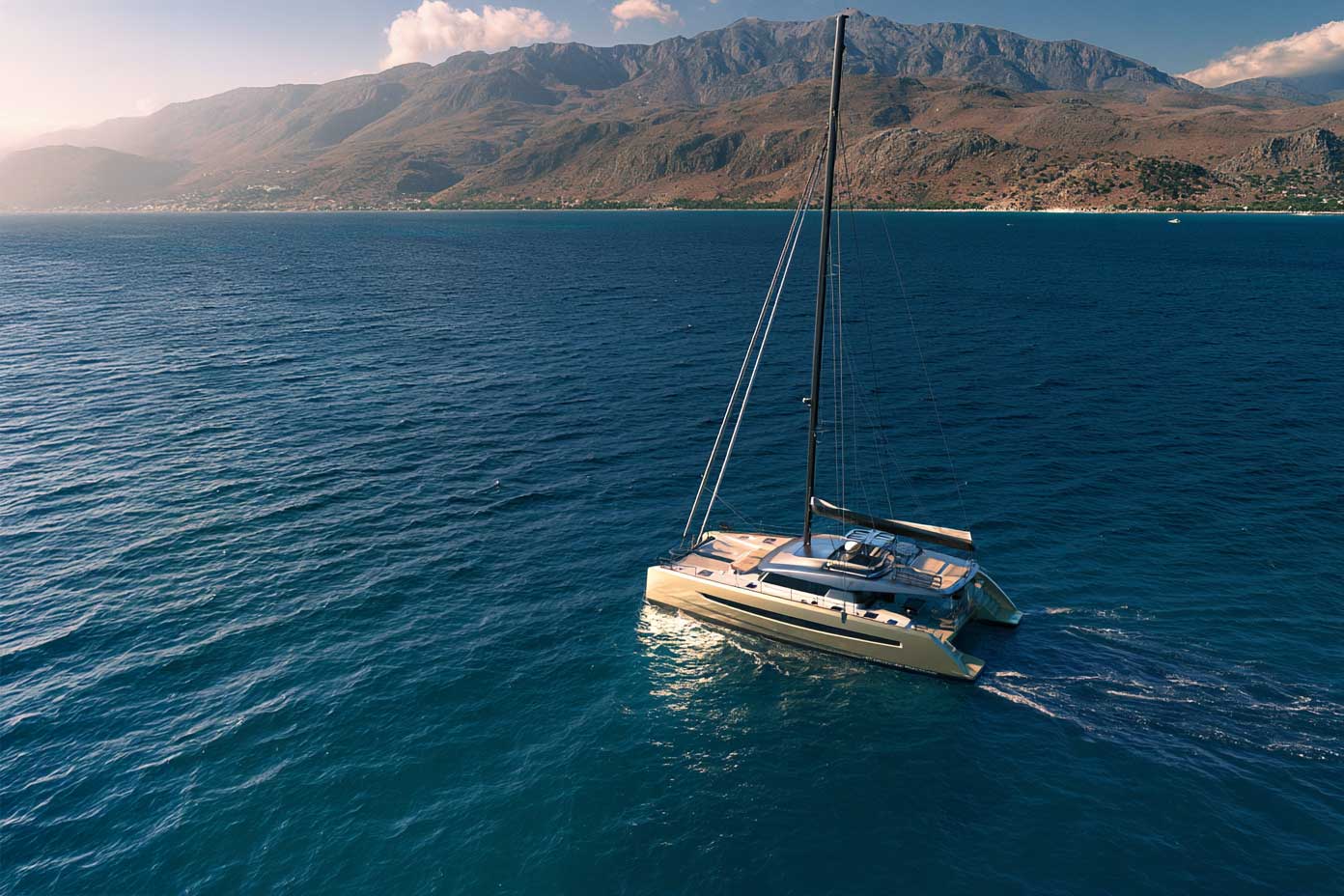
At Privilège Marine, this is not a decorative idea. It is central to the product. We build bluewater luxury catamarans in Les Sables-d’Olonne for owners who want to cross oceans and live aboard with confidence. Each yacht must combine offshore safety, refined comfort, performance and a layout shaped around the owner.
This is also why the word “customization” must be used carefully. In mass luxury, customization often means choosing from a menu of surfaces: fabrics, woods, cushions, colours, decorative details. Those choices matter, but they do not define a yacht. True customization asks deeper questions. Does the owner need a private office with reliable connectivity? Does the family need more cold storage for remote cruising? Should a guest cabin become a gym, a cinema, a workshop, a walk-in wardrobe or an artist’s studio? How much storage is required for an Atlantic crossing? How should crew circulation be separated from owner privacy?
The Privilège Signature 600 gives a clear example. Its aft portside guest cabin can be configured as a home cinema, gym, office, storage room, artist’s studio or walk-in wardrobe. This is not a superficial option. It changes the way the yacht supports daily life.
That is the difference between decoration and custom yacht design.
The service mindset must extend before and after delivery
Hospitality does not begin when the guest enters the room. It begins before arrival. The booking process, the welcome, the transfer, the room preferences, the lighting, the dietary notes and the follow-up all belong to the same experience.
Yacht brands should apply the same principle. The onboard experience begins before construction. It begins with listening. A shipyard should treat the specification process as a structured discovery of the owner’s future life at sea. This requires more than a sales discussion. It requires design discipline, technical advice and honest guidance.
A good hotel does not ask a guest to understand the entire operational machine behind the stay. It absorbs complexity. A good yacht builder should do the same, while remaining transparent about technical consequences. If an owner wants more equipment, more batteries, more toys, heavier interiors or larger storage, the yard must explain the effect on weight, trim, performance, access and maintenance.
After delivery, the service mindset becomes even more important. A private yacht is not finished when it leaves the yard. It enters a living cycle of maintenance, upgrades, route planning, seasonal preparation, spare parts, warranty items, crew handovers and owner feedback. The hospitality lesson is that loyalty is built through continuity. Owners remember the way problems are handled. They remember whether the brand remains present after the invoice.
The most serious yacht brands will therefore think like hospitality groups, not only like manufacturers. They will design a client journey that runs from first conversation to long-term ownership.
The onboard experience must be designed like a private hotel
The best hospitality environments do not overwhelm the guest. They support behaviour. A great suite helps a person sleep, dress, work, eat, recover and move naturally. It creates comfort through silence, light, air, proportion, privacy and service.
A yacht must do the same under harder conditions. It moves. It vibrates. It faces salt, humidity, heat, wind, noise, fatigue and limited storage. Every hotel idea must therefore be translated into marine reality.
Comfort at sea is not only the size of a cabin. It is also the way air circulates, how sound travels, where wet clothes go, how easily the galley works underway, how safe the stairs feel, how well the cockpit protects guests, how accessible the engine room is, and whether the owner can rest during a night passage.
This is why luxury hospitality can inspire yachting, but should not be copied blindly. A hotel can hide technical complexity behind walls. A yacht must keep systems accessible. A hotel can call maintenance from another floor. A yacht may be 500 nautical miles from the nearest marina. A hotel can depend on unlimited shore power. A bluewater yacht must manage energy, water, waste, refrigeration and redundancy.
For Privilège Marine, the relevant idea is not to turn a catamaran into a hotel. It is to bring hospitality intelligence into a boat that remains seaworthy. A Privilège must feel calm and personal, but it must also remain safe, serviceable and capable of crossing oceans.
This is where the phrase floating home at sea becomes meaningful. A home is intimate. A yacht is mobile. A bluewater yacht must be both.
The hotel-branded yacht race proves the market has shifted
The rise of hotel-branded yachts shows how strongly hospitality and yachting are converging. Four Seasons Yachts, The Ritz-Carlton Yacht Collection and Aman at Sea are not traditional cruise operators using luxury language. They are hospitality brands extending their guest experience onto the water.
Four Seasons I measures about 207 metres (679 feet) and offers 95 suites. The brand promotes residential-style layouts, ocean-facing terraces and flexible suite configurations. The Ritz-Carlton Yacht Collection’s Evrima measures about 190 metres (624 feet) and offers 149 suites. Aman’s Amangati is expected to welcome 94 guests across 47 suites, with a strong focus on calm, privacy and space.
These projects matter because they show what affluent travellers now expect from luxury at sea: residential comfort, personal service, wellness, privacy, flexible space and a sense of place. The yacht is no longer only a vessel. It is a hospitality platform.
Private yacht builders should not copy these ships. A 20-metre to 25-metre private catamaran has a different purpose from a 200-metre hotel yacht. The lesson sits elsewhere. These brands understand that luxury clients want an experience built around their preferences. They also understand that service, design and emotional consistency are as important as hardware.
This should push yacht builders to be more demanding. A yacht cannot rely only on beam, cabins and finishes. It must deliver a coherent owner experience.
The personalization of services matters as much as the personalization of space
The yacht industry often talks about bespoke interiors. It should also talk more about bespoke services.
Luxury hospitality excels because it links space and service. A suite is not just a room. It is connected to housekeeping, dining, spa, concierge, transport, security, wellness and local access. The guest experiences the whole system, not isolated parts.
A yacht owner has similar needs. He may need itinerary advice, crew recruitment, refit support, technical training, provisioning recommendations, connectivity planning, insurance guidance, marina intelligence, safety preparation and seasonal maintenance support. Some of these services sit outside the formal role of a shipyard, but the best brands help owners find the right answers.
Personalization also means understanding different ownership styles. One owner wants to sail with family and limited crew. Another wants professional crew and hotel-level service. Another wants long passages and simple autonomy. Another wants short Mediterranean seasons with guests. The same yacht platform cannot serve these lives properly without intelligent adaptation.
At Privilège Marine, this is especially important because our catamarans are often chosen by owners who want to live aboard for extended periods. The yacht is not a weekend object. It becomes a base for family life, work, travel and privacy. The service relationship must respect that depth.
The future of luxury yachting will belong to brands that understand owner experience design as seriously as naval architecture.
The comfort standard must be honest about the sea
Luxury hospitality controls the environment. Yachting negotiates with it. That difference should make yacht brands more honest, not less ambitious.
A five-star hotel can promise climate control, stable floors, immediate service and abundant utilities. A bluewater yacht must earn comfort through design, engineering and discipline. The promise cannot be theatrical. It must be credible.
This is why Privilège Marine’s position is distinct. We do not build yachts as floating hotel rooms detached from seamanship. We build catamarans that must remain capable at sea. Offshore safety, protected helm stations, robust engineering, storage, autonomy and service access are part of the luxury experience. They are not separate from it.
A beautiful saloon loses value if the yacht is tiring underway. A large cabin loses value if storage is badly planned. A beach-club atmosphere loses value if the owner does not trust the boat offshore. The sea exposes false luxury quickly.
The hospitality lesson should therefore be filtered through bluewater logic. Comfort must include rest. Service must include technical reliability. Personalization must include safe weight distribution and maintenance access. Serenity must include confidence in the boat.
This is the mature definition of luxury yachting.
The brands that win will replace status with relevance
The luxury market is moving away from empty status. Clients still value beauty, rarity and craftsmanship. But they increasingly reject products that feel expensive without feeling relevant.
This is the central lesson yacht brands should take from luxury hospitality. A hotel guest returns when the experience fits him. A yacht owner becomes loyal when the boat fits his life.
For some brands, that will be uncomfortable. Standardization is easier to build, easier to price and easier to market. It protects margins and simplifies production. But it also limits emotional attachment. A yacht that looks exclusive yet behaves like a standardized product risks becoming part of the mass luxury problem.
The better path is more demanding. It requires listening before designing. It requires saying yes to personal needs and no to requests that damage the yacht. It requires service beyond delivery. It requires a brand culture that values long-term ownership rather than only the first sale.
At Privilège Marine, this is where luxury hospitality and bluewater yacht building meet. The owner should feel recognized. The yacht should feel personal. The service should feel continuous. The boat should remain seaworthy, durable and technically honest.
The next chapter of luxury yachting will not be written by the builders that create the loudest impression of exclusivity. It will be written by those that create the clearest sense of belonging. At sea, true luxury is not the performance of privilege. It is the quiet confidence that the yacht, the service and the experience have been shaped around one owner’s life.