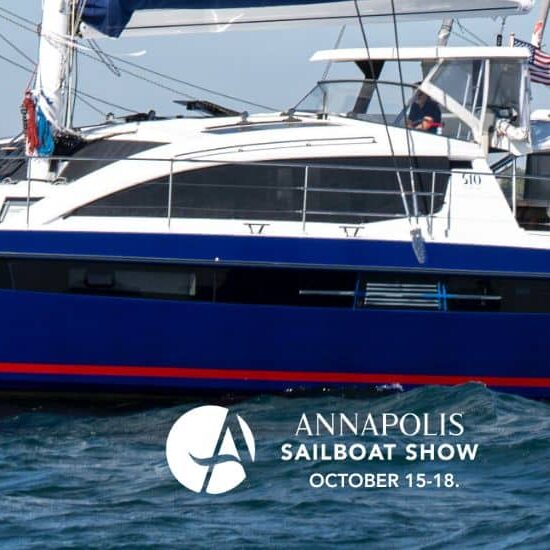
Why upgrading to a Privilège Marine means moving from catamaran ownership to a tailored bluewater home built for distance, comfort and value.
The move from a standard cruising catamaran to a Privilège Marine is not just an upgrade in size. It is a change in philosophy. A typical catamaran asks owners to adapt their habits to an existing layout. A Privilège is built around the owner’s life, route, crew, guests and private routines. That distinction matters once a yacht becomes more than a holiday platform. On a bluewater catamaran 50 feet plus, space, systems, privacy, storage, autonomy and after-sales support become part of the ownership experience. Privilège Marine’s strength lies in combining French craftsmanship, offshore engineering, large owner suites, robust construction and deep personalization. The result is a yacht that behaves less like a production object and more like a long-term private residence. That is also why Privilège catamarans have a credible argument on value retention: they are not merely bought. They are commissioned, lived in and kept.
The real upgrade is not length, but the way the boat fits your life
For many owners, the first catamaran is bought around a dream: more space, easier anchoring, shallow draft, stability at rest, and enough comfort to stay aboard for several weeks. That dream is real. It is also incomplete.
The turning point usually comes later. The owner begins to ask sharper questions. Can the boat cross oceans without feeling improvised? Can it support months at sea without turning every passage into a logistics exercise? Can the interior work for a couple, children, guests, crew, remote work and privacy at the same time? Can the yacht remain elegant after years of salt, sunlight and hard use?
That is where the concept of an upgrade catamaran becomes too narrow. The real question is not whether an owner moves from 43 feet to 49 feet, or from 49 feet to 59 feet. The issue is moving from a boat that accommodates life on board to a boat designed as a life on board.
A Privilège Marine sits in that category. The company builds in Les Sables-d’Olonne, on France’s Atlantic coast, a place shaped by offshore sailing rather than marina theatre. The brand’s origin goes back to Philippe Jeantot, the French solo sailor who created the Vendée Globe and imagined a family cruising catamaran with serious ocean credentials. That history matters because it explains the yard’s bias: comfort is not treated as the opposite of seamanship. It is treated as something that must survive the sea.
This is the central promise of the premium catamaran upgrade: your next boat should fit your life, not the other way around.
The owner suite changes the meaning of privacy at sea
On many catamarans, the owner cabin is a larger version of a guest cabin. It may have more storage, a bigger bathroom and a private desk. It is pleasant, but it remains constrained by a production layout.
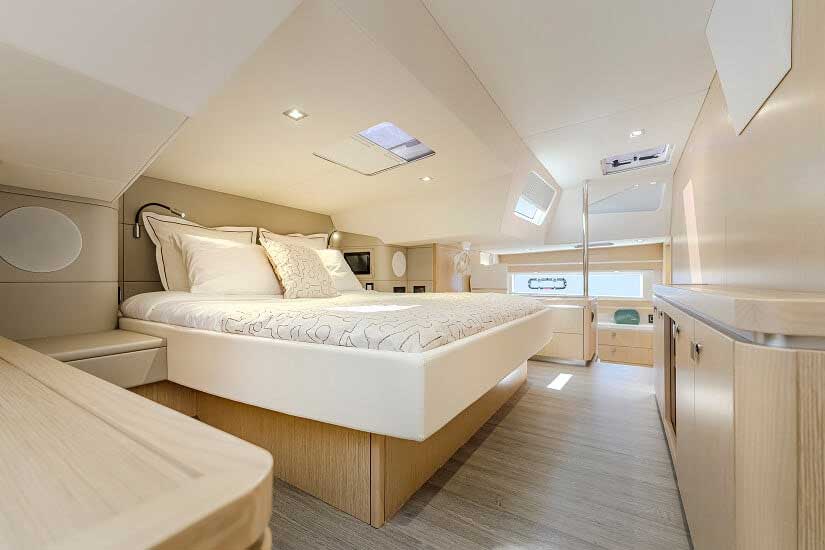
Privilège takes a different approach. Its best-known architectural signature is the central owner’s suite positioned forward in the nacelle. On the Signature 510, the full-beam owner’s suite is presented as the largest in its category. On the Signature 650, the central suite offers panoramic forward-facing views, natural light and the kind of volume rarely found in a sailing catamaran of this size.
That is not a cosmetic detail. It changes daily life.
A proper owner suite gives the owner separation from guests without isolation from the boat. It allows a couple to live aboard for long periods without feeling that the most private space has been sacrificed to maximize charter-style cabin count. It also makes the yacht more emotionally convincing. Owners of large bluewater catamarans do not only buy performance ratios and tankage figures. They buy the feeling of waking up in a private apartment facing the horizon.
This is where Privilège’s customization becomes commercially powerful. A client can choose between fewer cabins with more private volume, or more accommodation for family and guests. On the Signature 510, the layouts include a master suite with two guest cabins, a master suite with three guest cabins, or four double cabins. On the Signature 580, the options include galley-up and galley-down arrangements, with different combinations of master, guest and crew spaces. On the Signature 650, the yacht can be configured with three to five cabins.
This is not decoration. It is architecture around ownership.
The 50-foot-plus catamaran becomes a systems platform
A bluewater catamaran 50 feet plus is not simply a larger leisure boat. It is a small, mobile infrastructure system. It must generate power, manage water, preserve food, support communications, protect navigation equipment, ventilate cabins, store spare parts, handle black water, and remain maintainable far from the shipyard.
The numbers show the shift. The Privilège Signature 510 has a length overall of 17.09 metres (56 ft), a beam of 7.98 metres (26 ft), light displacement of 16.8 tonnes, fuel capacity of 2 x 400 litres and fresh-water capacity of 2 x 300 litres. The Signature 580 moves to 19.10 metres (62.66 ft), 9.18 metres of beam, 29 tonnes light displacement, 2 x 485 litres of fuel and 2 x 450 litres of fresh water. The Signature 650 reaches 21.25 metres (70 ft), with 9.20 metres of beam, 29 tonnes light displacement, 2 x 1,000 litres of fuel and 2 x 650 litres of fresh water.
These figures are not marketing ornaments. They define autonomy, comfort and operational seriousness. Fuel capacity affects motoring range, generator use and safety margins. Fresh-water capacity affects life at anchor, even when a watermaker is fitted. Displacement affects motion, payload and the relationship between luxury materials and sailing performance. Beam affects stability, living volume and deck circulation.
The practical lesson is direct: the larger Privilège models are not just more spacious. They give the owner more room to specify the systems that make long-distance cruising realistic. Solar panels, lithium battery banks, inverters, watermakers, air conditioning, refrigeration, navigation electronics, satellite communication and domestic appliances all require proper integration. A yacht built for the owner must consider not only the list of equipment, but how the owner will actually use it.
A Mediterranean summer yacht, a family circumnavigation yacht and a semi-crewed Caribbean-Pacific yacht do not need the same systems philosophy. Privilège’s value is that these differences can be discussed before the boat exists.
The construction logic matters because luxury must survive movement
The most honest test of a luxury catamaran is not the first boat show visit. It is year five.
Glossy surfaces are easy to admire at delivery. The harder question is whether cabinets stay quiet, doors align, fabrics resist UV, cabins remain acoustically comfortable, and structural elements feel solid after thousands of nautical miles. In yachting, luxury without durability is just decoration with a short warranty.
Privilège’s construction philosophy is built around this problem. The yard’s material describes infusion as part of its composite process, used to balance resin and fibre ratio for strength and weight control. It also states that structural bulkheads are installed, bonded and laminated in the hulls before demoulding, reinforcing the overall structure.
That detail is important. A bluewater catamaran works constantly. The platform twists, lands, accelerates, slows, loads rigging, unloads rigging, and absorbs impact from waves across two hulls and a bridge deck. The owner may experience this as comfort or noise. The boat experiences it as force.
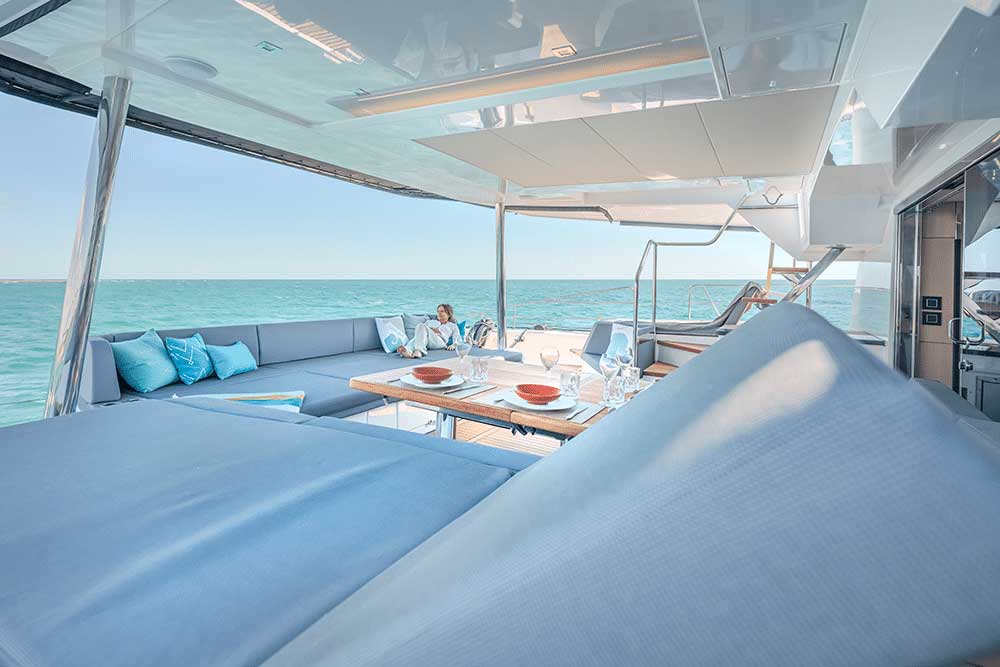
This is why construction, joinery and systems integration cannot be separated. The best interior in the world loses value if it rattles, swells, cracks or becomes impossible to service. Privilège’s approach of hand-fitting cabinets, selecting durable marine fabrics, integrating soundproofing materials and using high-end mattresses is not only about aesthetics. It is about making a yacht that remains livable when the weather is no longer decorative.
That is the difference between a catamaran that looks luxurious and a bluewater home that can stay luxurious.
The CE Category A certificate is a technical signal, not a slogan
The Privilège Signature 510, 580 and 650 are listed with CE Category A-12 certification. This deserves explanation because the term is often used loosely.
Under the European recreational craft framework, Design Category A refers to craft designed for conditions where wind may exceed Beaufort Force 8 and significant wave height may exceed 4 metres, excluding abnormal conditions such as storms, hurricanes, tornadoes, extreme sea states and rogue waves. It is not a licence to behave carelessly. It is not a guarantee against weather. It is a design classification connected to stability, buoyancy, handling and structural requirements.
For an owner considering a premium catamaran upgrade, the relevance is clear. Bluewater ownership is about margin. It is about the ability to leave later, arrive safely, manage fatigue, and cope with the unplanned. A well-designed yacht cannot remove risk. It can make risk more manageable.
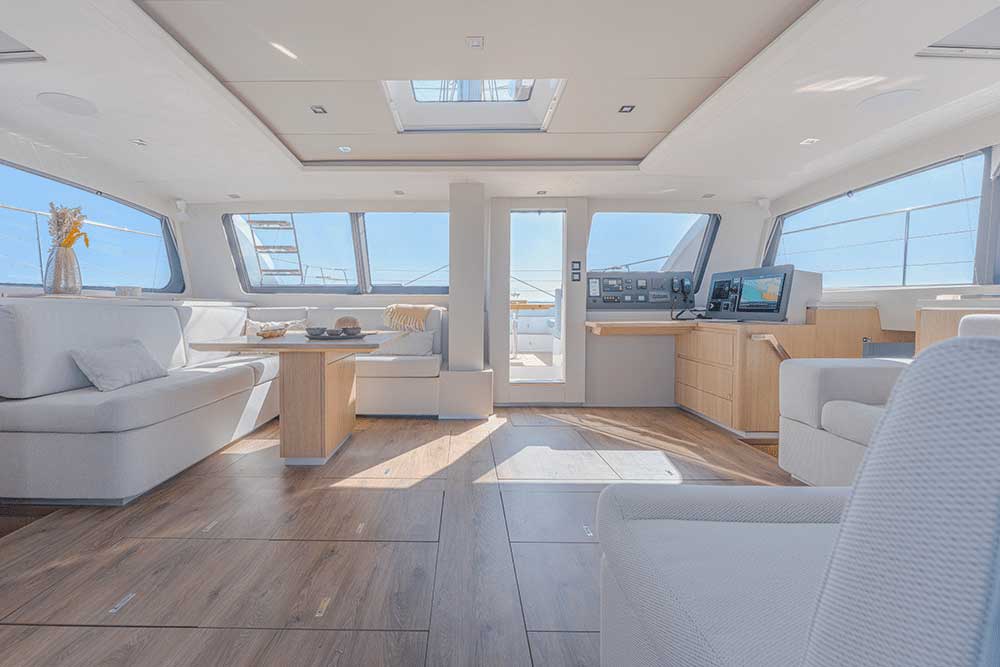
Privilège’s design choices follow that logic: protected helm positions, standard staysails across the range, balanced rigs, intuitive deck plans, strong visibility, and layouts that connect the helm to social areas rather than isolating the person on watch. These are not small matters. On passage, the person handling the boat must be protected, informed and connected.
A home at sea is still a vessel. Comfort has to be earned through naval architecture.
The upgrade changes the relationship between owner and shipyard
Production boat buying is usually transactional. The owner selects a model, chooses from a list of options, accepts the compromises and waits for delivery. That model works well for many buyers. It is efficient. It can also be limiting.
Privilège Marine operates closer to a commission-based relationship. The yacht begins with the owner’s sailing programme, lifestyle and expectations. The question is not simply “Which model?” but “What life must this boat support?”
That question can lead to major decisions. Will the yacht be sailed by a couple, by family, or with crew? Will the galley be central to family life or separated for service? Does the owner need a work area with proper connectivity? Is the forward cockpit a quiet retreat, a guest space, or part of the watch system? Should the boat prioritize long-term autonomy, warm-weather living, charter flexibility, private cruising or resale liquidity?
The best customization is not excess. It is discipline. A badly customized yacht can become personal in ways that harm future resale. A well-customized yacht improves use while keeping the boat coherent for the next owner. This is where an experienced yard matters. The role of Privilège is not to say yes to everything. It is to translate personal requirements into a yacht that remains seaworthy, elegant, serviceable and commercially understandable.
That is why the claim that Privilège is among the strongest builders in customization is credible. The customization is not limited to cushions and veneers. It reaches layout, systems, materials, storage, service access, owner privacy and long-range use.
The resale argument is really a durability argument
No serious buyer should accept vague promises about resale value. Yacht markets move. Currency changes. Interest rates matter. New-build waiting times matter. Brokerage presentation matters. Maintenance records matter even more.
Still, Privilège has a stronger resale story than most because its value proposition ages well. A yacht built for ocean cruising, with a recognizable brand, serious construction, owner-focused layouts and a limited production profile, is less exposed to the commodity logic of high-volume charter platforms. It may not be immune to depreciation, but it is harder to reduce to a generic used catamaran.
Brokerage listings support the point, though they should be read carefully because asking prices are not final transaction prices. Older Privilège models from the 1990s and 2000s still appear in international listings, including Privilège 37, 465, 495 and 615 models. More recent listings show high-value Signature models, including a 2022 Privilège 510 advertised in the Caribbean and a 2025 Signature 580 advertised at multimillion-euro levels. The important signal is not one price. It is the continued market presence of boats across several generations.
The reason is simple. A Privilège does not rely only on trend. It relies on trust. Buyers of used bluewater catamarans look for structural reputation, maintenance access, ocean capability, comfortable owner spaces and evidence that the yacht was not built down to a price. Privilège’s low-volume, semi-custom positioning gives it an advantage here.
The best resale strategy is not speculation. It is building a boat that another serious owner will still want in ten or fifteen years.
The support network becomes part of the ownership product
A premium yacht is only as reassuring as the support behind it. This is especially true for owners moving beyond coastal cruising. Once a boat is in the Caribbean, the Pacific, the Indian Ocean or the Mediterranean, after-sales support becomes part of the boat’s real value.
We state that its ownership experience includes support from design to handover and beyond, with 24/7 after-sales availability. For a bluewater owner, that matters. A yacht is a complex object. Even the best-built vessels need assistance, parts, remote diagnosis, upgrades, maintenance planning and sometimes urgent technical advice.
This is one of the differences between owning a boat and owning a bluewater home. A home has continuity. It has records, upgrades, service history and known systems. The stronger the relationship between owner, shipyard and service partners, the more confidence the owner has to keep sailing.
That confidence is commercially valuable. It reduces friction. It supports future resale. It makes ownership less intimidating for clients upgrading from smaller catamarans. It also gives brokers and future buyers a clearer story: the yacht is not an isolated object, but part of a builder ecosystem.
The Privilège step is for owners who know what they want next
The Privilège Marine buyer is not always a first-time dreamer. Often, the buyer has already owned or chartered catamarans. They know what annoys them. They know what they would change. They know the difference between space and usable space. They know that a beautiful saloon is not enough if storage is poor, systems are inaccessible, or the owner cabin feels like a compromise.
That is why the step up to Privilège is persuasive. It gives experienced owners a chance to correct the boat around their life. It also gives future owners a more mature entry into bluewater sailing: not through fantasy, but through design.
The central idea is frank. If a yacht is going to carry your family, your guests, your possessions, your work habits, your sleep, your privacy and your ambitions across oceans, it should not be treated like a product pulled from a shelf. It should be treated like a home that can sail.
A Privilège Marine is not the cheapest way to own a catamaran. That is not the point. It is a way to own a yacht that has been built around the owner, with the structural, technical and interior seriousness required for distance. For the right buyer, the premium is not just in the materials. It is in the freedom to stop adapting your life to the boat, and start building the boat around your life.