


In Les Sables d’Olonne, Privilège Marine and the Vendée Arctique share a rare stage where offshore racing meets bluewater craftsmanship.
In June 2026, Les Sables d’Olonne will again become one of the most watched harbours in ocean racing. The Vendée Arctique will send nine IMOCA skippers north from Port Olona toward the Arctic Circle, before bringing them back to the Vendée coast. The race is short compared with the Vendée Globe, but it is not soft. It is single-handed, non-stop and without assistance. It covers 2,222 kilometres (1,200 nautical miles), with no fixed route. Each skipper must cross the Arctic Circle at the longitude of his or her choice, then return to Les Sables d’Olonne. For Privilège Marine, based in the same port, the week is more than a sporting moment. It is an opportunity to welcome visitors into a shipyard shaped by offshore culture, while the race village offers direct access to sailors, boats, teams and the start on Sunday, June 7.
The Atlantic port where ocean racing and boatbuilding meet
There are few places where a shipyard and a major offshore race share such a natural relationship. In Les Sables d’Olonne, the connection is not decorative. It is physical, historical and commercial. The Vendée Arctique village will stand on the Vendée Globe esplanade. The IMOCA boats will leave from Port Olona. Privilège Marine builds its bluewater catamarans just 10m away, inside the same maritime ecosystem.
That geography matters. Offshore sailing is not an abstract idea here. It is part of the local economy, the waterfront and the public imagination. Les Sables d’Olonne is the departure and arrival port of the Vendée Globe. It is also the home of a shipyard whose story began in 1985 with Philippe Jeantot, the sailor closely associated with the creation of the Vendée Globe and the original Privilège catamaran vision.
The 2026 Vendée Arctique gives that connection a fresh public stage. Visitors can come for the race village, see the IMOCA fleet, follow the start in the channel and use the same visit to discover a shipyard dedicated not to short-course racing, but to long-distance cruising. That contrast is useful. It shows two answers to the same offshore question. One is radical performance, sailed alone, under race pressure. The other is long-range comfort, safety and self-sufficiency for owners who want to cross oceans with family or guests.
The race that sends IMOCA skippers toward the Arctic Circle
The Vendée Arctique is an IMOCA race. That means the boats are the same class as those used in the Vendée Globe: 18.28-metre (60-foot) monohulls, designed for solo offshore racing at the highest level. They are not yachts in the conventional leisure sense. They are prototypes built around speed, structure, reliability, weather routing and the ability of one sailor to keep moving under extreme fatigue.
The 2026 edition is the third edition of the race. It starts on Sunday, June 7, with the official offshore start scheduled at 13:02 local time in the bay of Les Sables d’Olonne. The public programme begins earlier. The village opens at 08:00, the IMOCA boats are due to leave the pontoons at 10:30, and the public can watch the passage through the famous channel before following the live start on a big screen in the village.
The format is simple to describe and difficult to execute. The skippers leave Les Sables d’Olonne, head north, cross the Arctic Circle at 66 degrees north, then return to Les Sables d’Olonne. The official race distance is 2,222 kilometres (1,200 nautical miles). The expected duration is around eight to ten days, with arrivals projected around mid-June.
That distance may look modest beside the Vendée Globe, which circles the world. It is not a minor race. The North Atlantic can be violent, unstable and tactically unforgiving. The route takes sailors toward cold, fog, short seas and fast-moving low-pressure systems. These conditions can punish a boat that is too exposed, a skipper who sleeps too little or a routing choice made too late.
The open course that changes the strategic problem
The major change for 2026 is the open course. There is no fixed track to follow and no compulsory longitude for crossing the Arctic Circle. Each skipper must decide where to go north, where to cross 66 degrees north and how to return to the Vendée coast.
This matters because offshore racing is often decided before the public sees the obvious result. A skipper who chooses a western option may find more wind, but also harsher sea state. A skipper who sails a more conservative angle may protect the boat but lose hours that cannot be recovered. In a short race, one weather system can create the final ranking.
The Arctic Circle is the symbolic gate, but the real battlefield is meteorology. The sailors must read pressure systems, wind shifts, sea temperature, current, ice restrictions and exclusion zones. They must also manage their own human limits. An IMOCA can cover hundreds of kilometres in a day, but the sailor must remain alert enough to trim, repair, route, eat, sleep and avoid catastrophic mistakes.
This is why the Vendée Arctique is valuable within the Vendée Globe cycle. It is the first major solo test on the road to the 2028 Vendée Globe. It gives skippers a chance to validate systems, stress-test new configurations and measure themselves against rivals under a format that rewards both speed and judgement.
The fleet that mixes new-generation foilers and proven machines
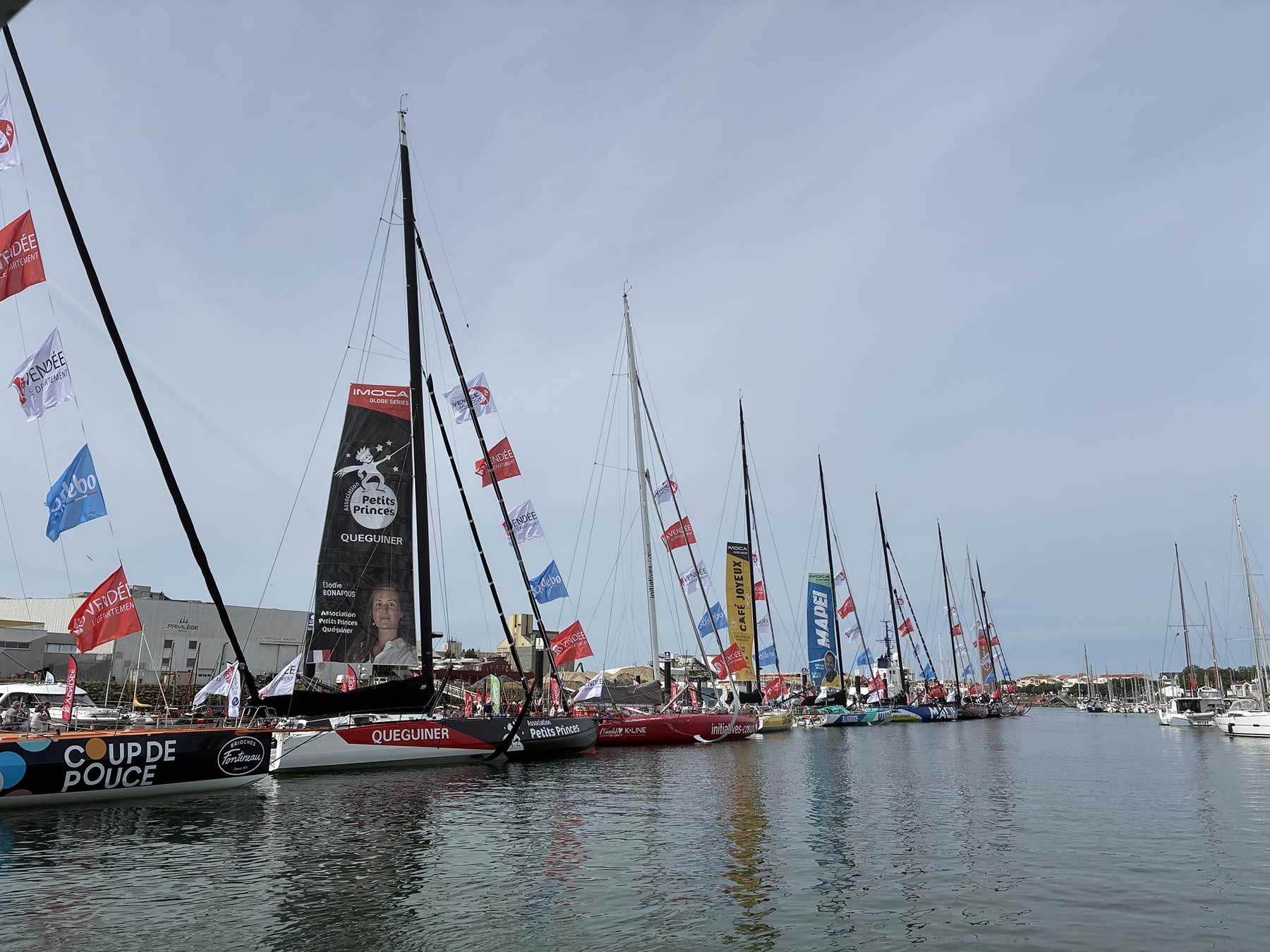
Nine skippers are expected on the start line. The entry list is small but technically interesting. It includes new-generation foiling IMOCAs, recently launched platforms and older boats that have been refitted, renamed and adapted to new programmes.
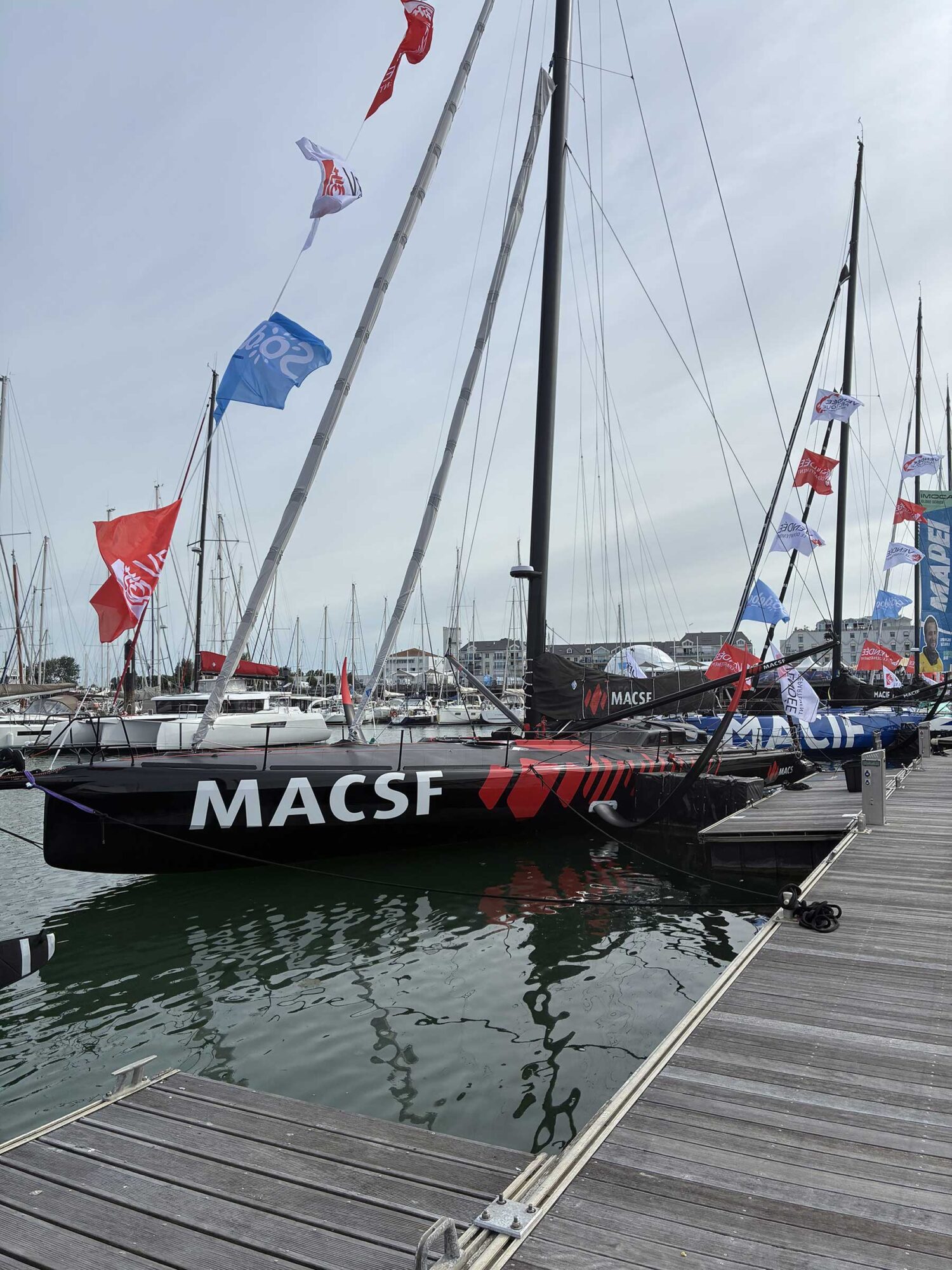
Sam Goodchild will sail MACIF Santé Prévoyance, a Guillaume Verdier design built in 2022 by CDK Technologies and MerConcept, launched in 2023. It is one of the strongest modern references in the fleet, with recent high-level results and a reputation for performance. Corentin Horeau will race MACSF, the former Paprec Arkéa, a 2022 Antoine Koch and Finot-Conq design built by Multiplast and launched in 2023. Ambrogio Beccaria enters with Allagrande Mapei, another 2022-generation foiler, launched in 2023, formerly For People.
Élodie Bonafous brings Association Petits Princes – Quéguiner, one of the newest boats in the race. Built in 2024 by CDK and MerConcept and launched in 2025, it is a sistership of MACIF Santé Prévoyance, designed by Guillaume Verdier. Violette Dorange sails Initiatives-Cœur, a Sam Manuard design built in 2022 and launched the same year. Francesca Clapcich represents 11th Hour Racing on a 2022 VPLP-designed IMOCA, formerly Malizia – Seaexplorer.
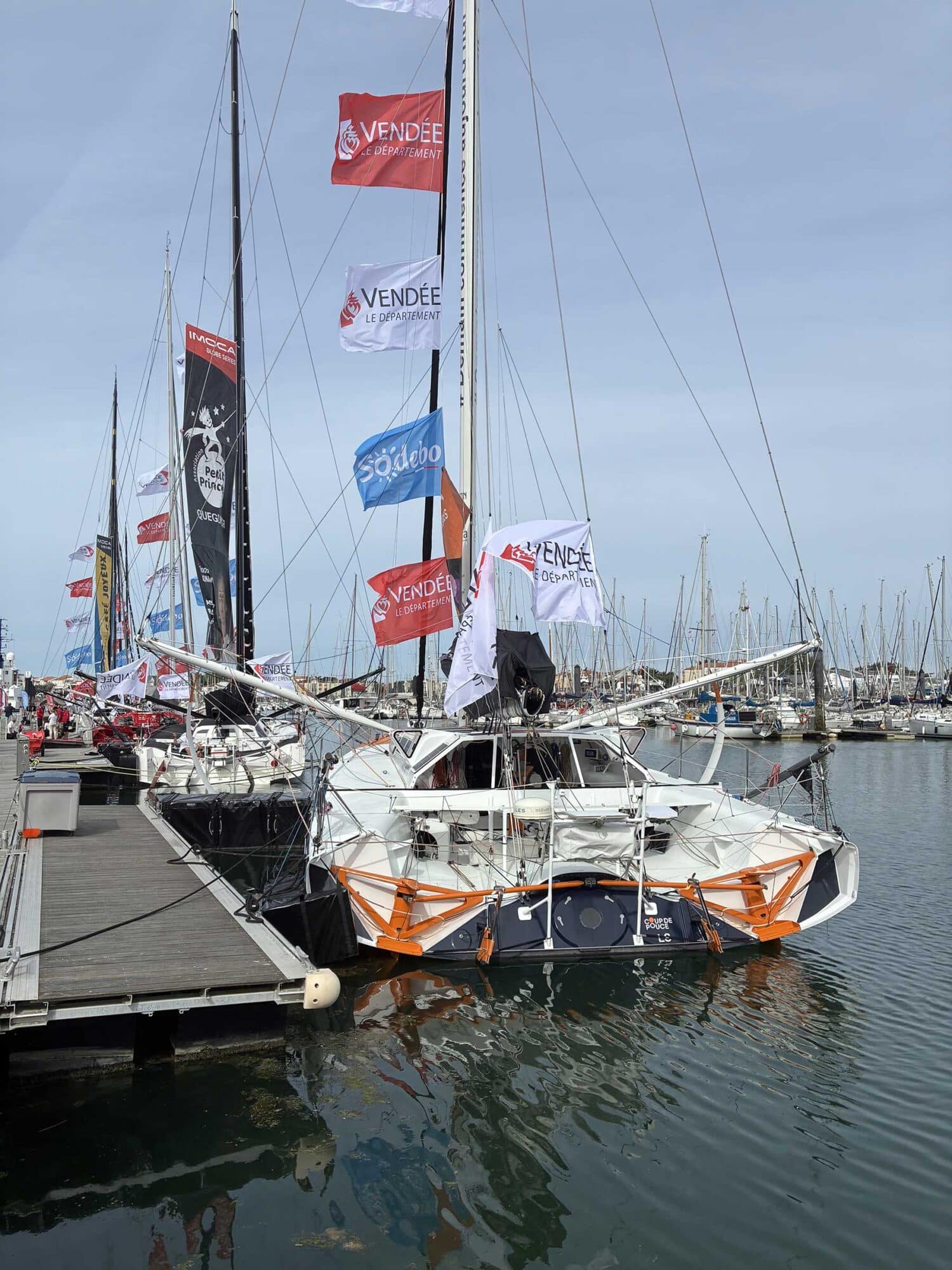
The fleet also includes boats with deeper histories. Nico d’Estais will sail Café Joyeux, the former MACIF of François Gabart, built in 2010 and launched in 2011. It has won the Vendée Globe and the Route du Rhum under previous names. Manuel Cousin’s Coup de Pouce is another VPLP-Verdier design from 2010, launched in 2010 and known through several campaigns. Arnaud Boissières will race April Marine, the former Hugo Boss from 2015, later sailed under several other names.
This mix is one of the strengths of the IMOCA class. New boats carry the latest thinking in foils, cockpit protection, hull shape and ergonomics. Older boats carry miles, data and scars. In offshore racing, new is not automatically safe, and old is not automatically slow. A proven boat in careful hands can remain dangerous. A new foiler can be fast but brutally demanding.
The technical challenge behind the spectacle
To the public, an IMOCA start is colour, sound and movement. To engineers and sailors, it is a stress test. These boats are 18.28 metres (60 feet) long, with a draught of about 4.5 metres (14.8 feet). Their masts rise to roughly 29 metres. Their sail plans can exceed several hundred square metres, depending on configuration. Modern foiling versions can reach about 75 km/h (40 knots) downwind in strong conditions.
Speed is only one part of the equation. The skipper is alone. Every manoeuvre costs energy. Every sail change involves risk. Every fast reach in a rough sea sends shock loads through the hull, foils, rig and sailor. In the far north, cold and fatigue add another layer. Condensation, reduced visibility, electronic reliability and the simple ability to stay dry become performance factors.
The 2026 course also introduces environmental and safety constraints. The skippers must respect ice exclusion areas near Greenland and biodiversity protection zones. These limits are not administrative details. They shape routing. They can close off the most direct line and force sailors to choose between longer distance, stronger wind or safer sea state.
That is why the Vendée Arctique should not be described as a promotional prologue. It is a real race. It may support qualification and preparation for the Vendée Globe, but the risks, decisions and consequences are immediate.
The village that brings the Arctic to Port Olona
From May 30 to June 7, the race village will be open to the public on the Vendée Globe esplanade. Entry is free. The official opening hours are 10:00 to 20:00 during the village week, with a special opening at 08:00 on start day.
The programme is designed for more than spectators. It includes IMOCA speed runs in the bay, meetings with skippers, public animations, food and drink areas, and educational content about the Arctic. Institutions and organisations linked to ocean science and environmental awareness are expected to be present, including IFREMER, the Institut Polaire Français, Plastic Odyssey and Under the Pole.
This is important because the Arctic is not just a backdrop. It is one of the most exposed regions in the climate system. A race that sends sailors toward high latitudes has a duty to explain what that region represents. The village can help turn a sporting event into a public conversation about oceans, ice, biodiversity and human responsibility.
For families, sailing followers and potential yacht owners, the week offers rare access. Visitors can see the teams working, understand the technology and watch the human side of offshore racing before the boats disappear north.
The start day that visitors should plan around
The essential date is Sunday, June 7. Visitors should plan to arrive early. The village opens at 08:00. The IMOCA boats are scheduled to leave the pontoons at 10:30 and pass through the channel, one of the most emotional rituals in French ocean racing. The official start is set for 13:02 offshore in the bay.
The best day is not only about seeing the boats. It is about feeling the town change tempo. The harbour fills. Teams move with purpose. Spectators line the channel. The skippers switch from public figures to sailors under pressure. Within a few hours, the village atmosphere becomes a race atmosphere.
For international visitors, this is also a practical moment to combine experiences. One day can include the Vendée Arctique village, the channel departure, the big-screen start and a visit to Privilège Marine. That combination gives a fuller understanding of Les Sables d’Olonne as a place where ocean racing and boatbuilding are not separated.