


A practical owner’s guide to sailing Hvar, Vis, Korčula, Mljet and the Kornati, with the finest anchorages, restaurants and experiences.
Croatia’s Dalmatian Coast gives a large cruising catamaran an unusual concentration of sailing, culture, food and natural beauty. The classic route from Split through Hvar, Vis, Korčula and Mljet to Dubrovnik moves between historic ports, protected coves and sophisticated restaurants within relatively short passages. Farther north, the Kornati offer the counterpoint: 89 islands, islets and reefs scattered through a stark national park where the yacht itself becomes the destination.
For a 15.2 to 21.3 metre (50 to 70 ft) catamaran, the main advantage is freedom at anchor; the principal constraint is beam when entering marinas. The best journey therefore alternates between berths, buoy fields and nights away from port.
Hvar brings energy. Vis has character. Korčula brings wine. Mljet slows everything down. Dubrovnik supplies the finale. The Kornati deliver silence. Together, they make Dalmatia one of Europe’s most complete cruising grounds.
The Dalmatian Coast is made for a large cruising catamaran
A 50 to 70 ft catamaran fits the geography of Dalmatia remarkably well. The islands sit close enough together for sailing to remain part of the day rather than consume it. Deeply indented coastlines create route choices and shelter. Many of the finest places are better experienced from the water than from a hotel.
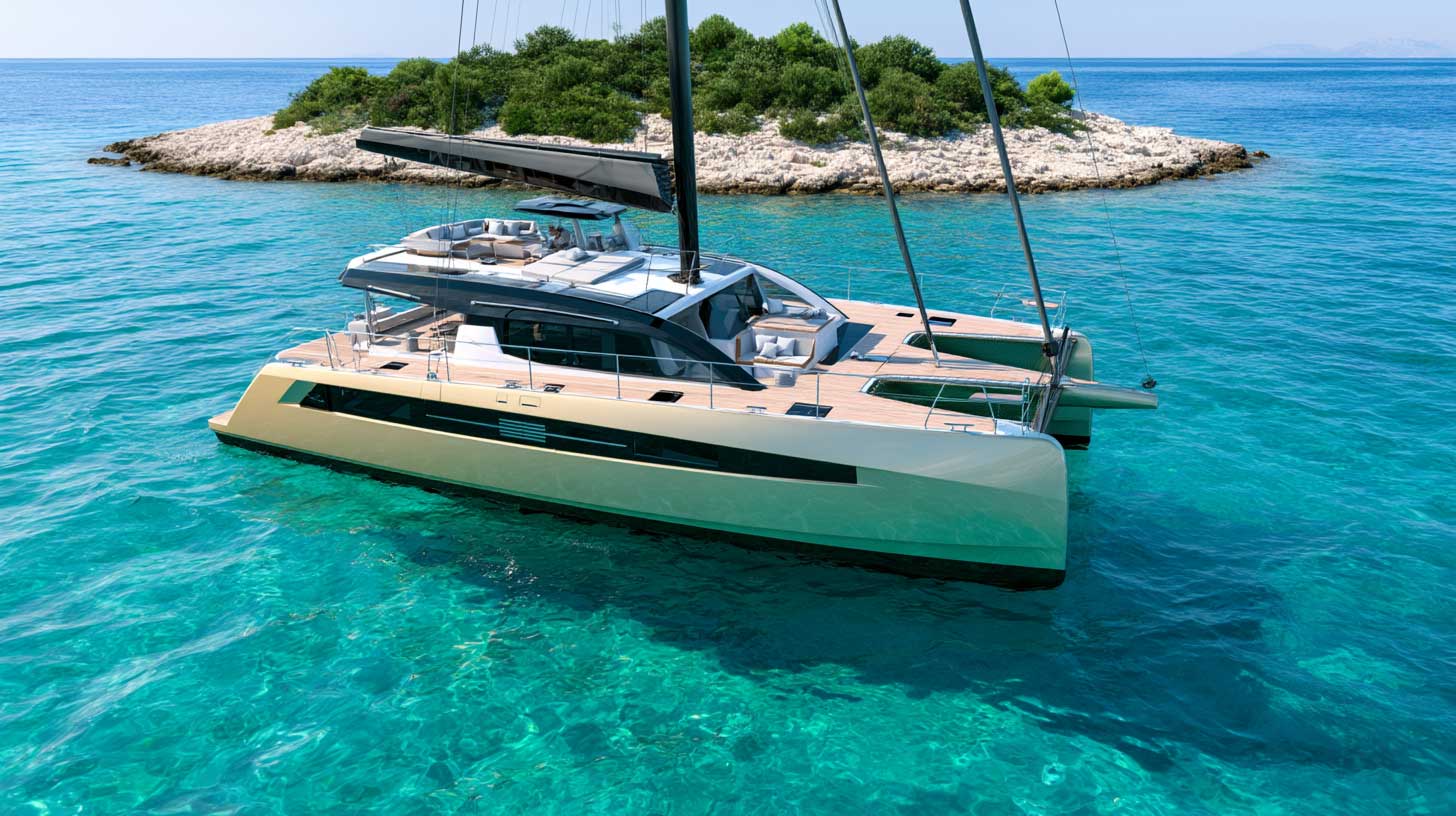
This suits the way we design yachts at Privilège Marine. A Signature 510 has a draft of 1.57 metres (5.15 ft) and a beam of 7.98 metres (26 ft). The Signature 650 draws 2.04 metres (6.7 ft) and spans 9.21 metres (30 ft). The relatively shallow draft opens opportunities at anchor. The beam demands planning in port. A berth capable of receiving a 20-metre monohull does not automatically work for a large multihull.
Croatia has the infrastructure to support serious cruising. In 2025, its coast counted 216 nautical ports, including 86 marinas and 18,850 moorings. Only 1,045 moorings were designed for vessels over 20 metres, however, while average occupancy of sea moorings reached 78 per cent. Large-catamaran owners should reserve the important nights and retain flexibility elsewhere.
The southbound route from Split deserves at least a week
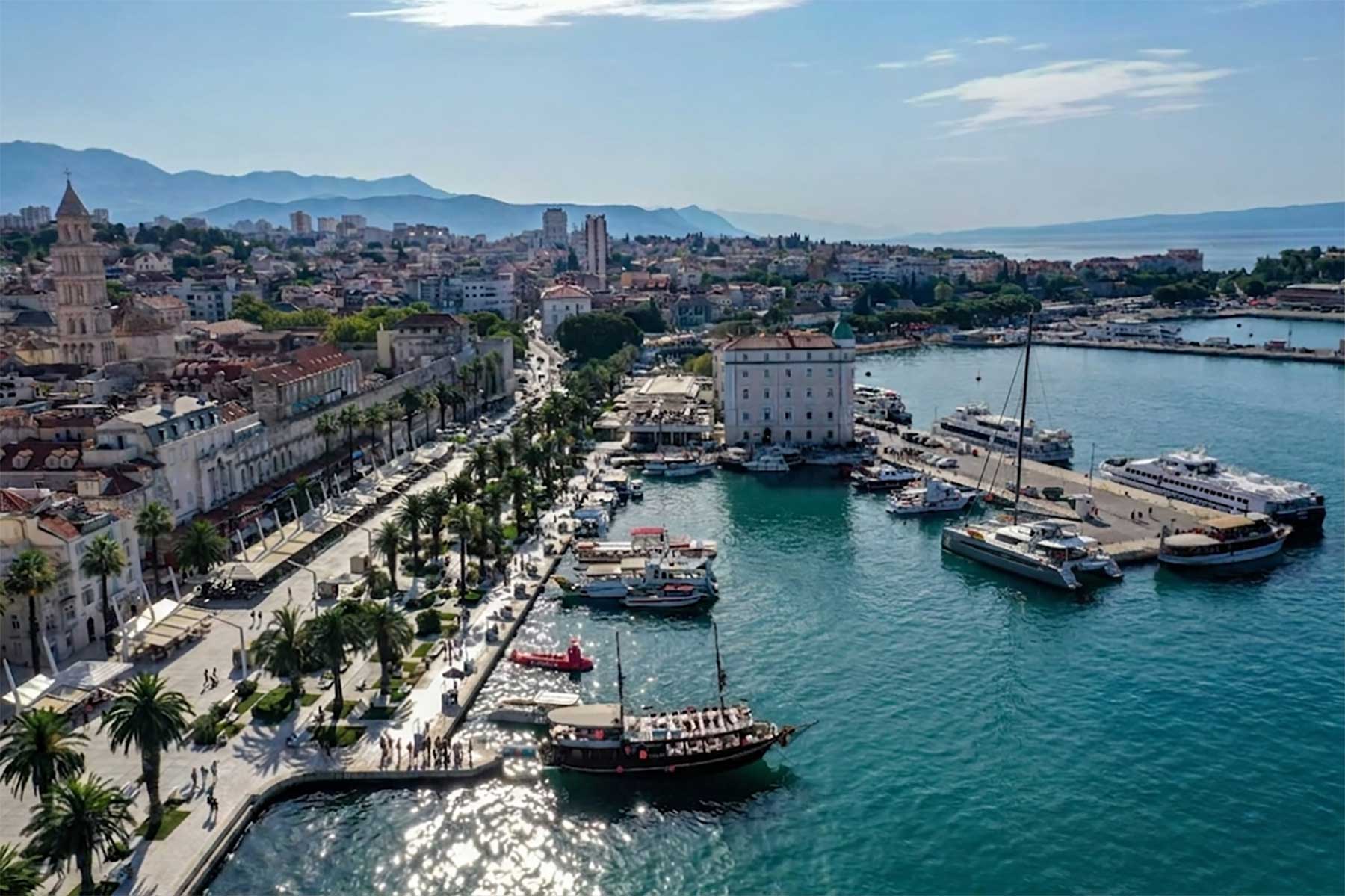
Start in Split. Spend an evening inside Diocletian’s Palace before casting off. The Roman complex dates from around AD 300 and has been UNESCO-listed since 1979. It establishes the pattern for the entire cruise: major European history sits directly beside the quay.
The Hvar and Pakleni Islands combine glamour with real cruising
Hvar works particularly well from a yacht because you can enjoy the town and leave when you choose. Walk to the fortress, have dinner on the waterfront, then move among the Pakleni Islands for swimming and quieter nights.
Vinogradišće Bay on Sveti Klement is an essential stop. Laganini Lounge Bar & Fish House has been operating in Palmižana for more than 50 years. It is the place for a long lunch built around Adriatic fish, scampi and tuna, followed by cocktails close to the water.
Nearby, Carpe Diem Beach Hvar delivers the more energetic side of the island, with cabanas, a restaurant, music and after-beach drinks. Its late-night programme has faced local restrictions, so owners should check the current schedule rather than build an evening around assumed opening hours.
Back in Hvar Town, Gariful remains one of the island’s best-known waterfront institutions for fish and seafood.
Large-catamaran owners should note one important detail. ACI Marina Palmižana publishes a maximum daily vessel length of 15 metres. That is below the length of most 58 to 70 ft catamarans and even marginal for a genuine 50-footer. A marina night there should therefore be confirmed in advance rather than assumed.
Hvar also deserves time ashore. The UNESCO-listed Stari Grad Plain still follows agricultural divisions laid out by Greek settlers in the fourth century BC. Grapes and olives have been cultivated across the same landscape for roughly 24 centuries.
The island of Vis offers the route’s strongest personality
Vis feels more remote. Its coastline is dramatic and development remains relatively restrained.
Visit Stiniva with the tender rather than trying to manoeuvre a large catamaran through its narrow and often busy entrance. The Blue Cave on Biševo also belongs on an early-morning programme, subject to sea conditions and local access arrangements.
For dinner, Pojoda is one of the classic addresses for Dalmatian fish cooking. For sunset drinks and a more polished evening, head to Fort George, the nineteenth-century fort overlooking Vis.
A day ashore can combine the island’s former military tunnels with a winery visit. Vis produces distinctive local whites alongside Plavac Mali reds. This is one island where leaving the waterfront for several hours pays off.
The Korčula and Mljet leg changes the rhythm
Korčula brings another dimension to a Dalmatian sailing itinerary. The old town is compact, elegant and easy to explore from the harbour.
ACI Marina Korčula has 166 berths and can accommodate daily vessels up to 50 metres. Length therefore becomes less problematic here, although a large catamaran should still reserve according to beam.
Wine is central to the island. Pošip and Grk are the varieties to know. Pošip is associated particularly with Čara and Smokvica, while Grk comes from vineyards around Lumbarda. Both are indigenous white grapes and pair naturally with Adriatic fish and shellfish.
For a destination dinner, LD Restaurant holds a Michelin star and combines Dalmatian produce with modern technique.
For something more rooted in the island, drive inland to Konoba Mate in Pupnat. The family-run restaurant works with its own vegetables, cheeses, olive oil and local produce and has earned Michelin Bib Gourmand recognition.
Continue south to Mljet. Use Pomena or Polače as a base, then spend several hours walking, cycling, swimming or kayaking around Veliko Jezero and Malo Jezero.
This is precisely where an owner’s catamaran changes the experience. You can remain surrounded by nature without sacrificing the comfort of home.
The Dubrovnik finale should begin at Šipan
Keep one long lunch before Dubrovnik for Bowa Restaurant on Šipan. Its secluded bay, Adriatic fish, Mali Ston oysters, garden vegetables and island olive oil make it one of those restaurants that makes considerably more sense when approached from the sea.
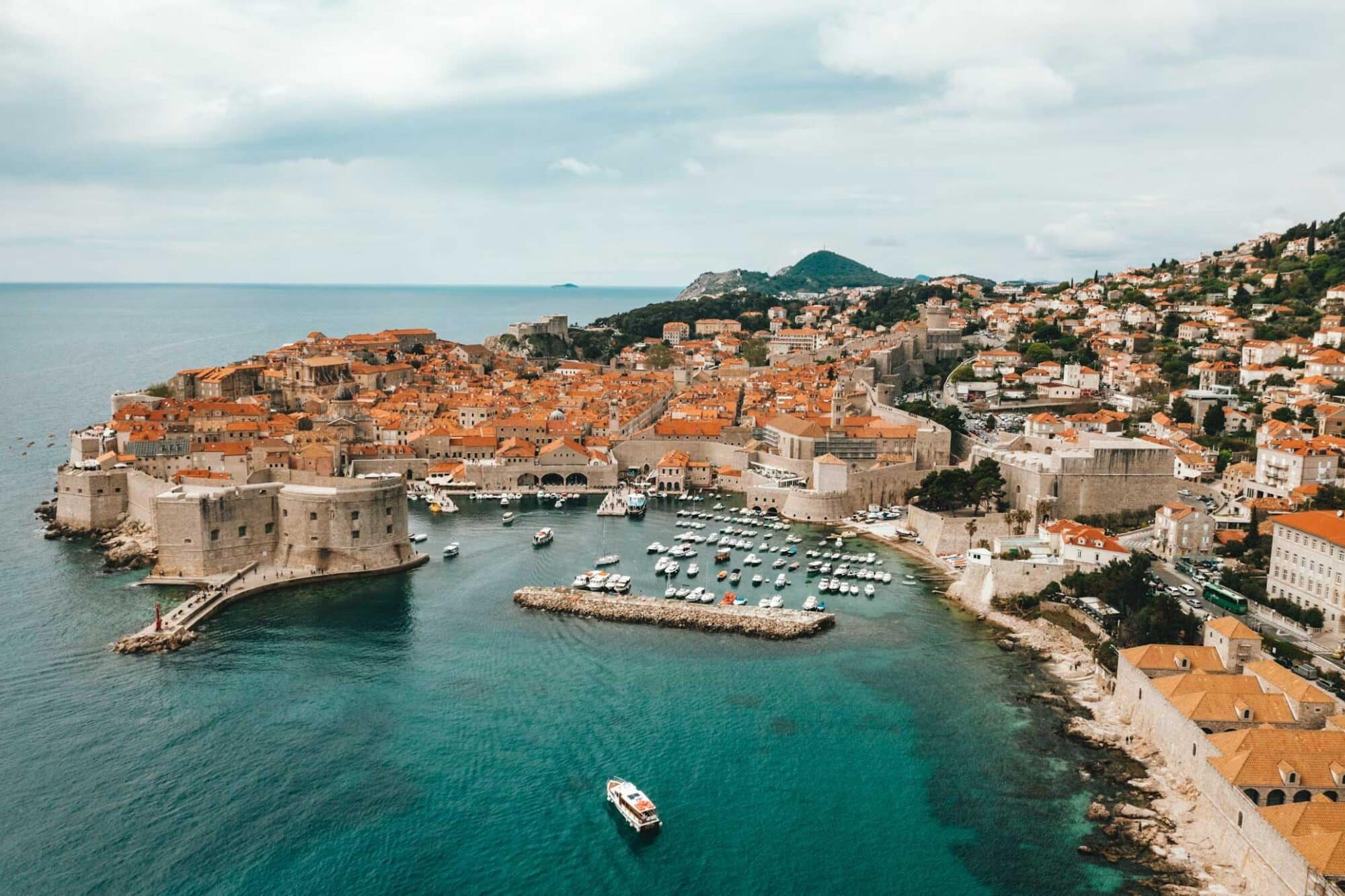
Dubrovnik itself deserves a proper night ashore. Its Old City has been a UNESCO World Heritage site since 1979 and reflects centuries of maritime wealth, trade and political independence.
For dinner, Restaurant 360 is the serious choice. Michelin awards it one star. The restaurant occupies part of the historic walls and maintains a wine cellar of roughly 450 labels.
ACI Marina Dubrovnik has 371 berths and can accommodate daily yachts up to 45 metres, making it a useful service, provisioning and turnaround point for a large catamaran.
The Kornati offer an entirely different Croatia
The Kornati deserve their own cruise rather than a rushed extension of the Dubrovnik route. Approach them from Šibenik, Murter or Zadar.
Kornati National Park covers 217 square kilometres. Its 89 islands, islets and reefs create 238 kilometres of coastline. There are few distractions here. Pale limestone, dry-stone walls and transparent water dominate the landscape.
Sail between Kornat, Levrnaka, Lavsa and Piškera. Take the tender towards Lojena beach. Swim and snorkel. Organised diving is regulated, while anchoring and overnight stays are permitted only in designated locations within the park.
Planning also saves money. During the June to September 2026 season, a one-day park ticket purchased before entry costs €95 for vessels from 11 to 17.99 metres and €160 for vessels from 18 to 24.99 metres. Buying inside the park raises those prices to €190 and €320 respectively.
Then build an evening around Konoba Opat. It is reached by boat and remains one of the defining nautical dining experiences of the Kornati, centred on the day’s catch and simple Adriatic cooking.
The food is best when Dalmatia keeps things simple
Dalmatian cooking needs little decoration. Order grilled whole fish, scampi na buzaru, black risotto, octopus salad and peka when a traditional konoba has time to prepare it properly.
On Hvar, look for gregada, a simple fish stew built around potatoes, onion, olive oil and white wine.
Follow the wine geographically. Hvar and Vis bring island whites and Plavac Mali. Korčula brings Pošip and Grk. Pelješac, opposite Korčula and Mljet, produces some of Croatia’s most serious Plavac Mali reds.
The best meals will not necessarily be the most expensive ones. A fish grilled metres from the yacht in the Kornati can make more sense than an elaborate tasting menu. Dalmatia rewards context.
The Adriatic winds should decide the rhythm
Three names matter: maestral, bura and jugo.
The summer maestral is the welcome north-westerly sea breeze that generally develops through the day and weakens towards sunset. It often creates the most enjoyable sailing conditions of the summer season.
The bura comes from the north-east. It can descend rapidly from the mountains and produce violent gusts, particularly close to the mainland and around exposed channels.
The south-easterly jugo develops more progressively and can build an uncomfortable sea.
For a large catamaran, the lesson is straightforward. Choose the night’s shelter before the afternoon becomes committed. Check the marine forecast continuously. Keep one day unallocated in the programme. A bluewater catamaran provides range, autonomy and security. Local seamanship still determines the quality of the cruise.
The real luxury is deciding where tomorrow happens
Dalmatia is at its best when the yacht remains the centre of the journey.
Sail for three hours. Swim before lunch. Stay another night because the bay is perfect. Leave early because Vis looks better. Move from a quiet anchorage to a Michelin-starred restaurant without changing hotels, packing a bag or following a fixed itinerary.
This is also the logic behind a Privilège. We build ocean-going catamarans capable of crossing oceans, then design them as genuine floating homes once they arrive. Croatia shows why those two ideas belong together.
Offshore capability brings you there. Comfort and autonomy allow you to stay.
The result is freedom of choice: a silent anchorage tonight, a remarkable table tomorrow, and another island waiting beyond the headland.