


A yacht can be personalised during construction or modified after delivery. The difference affects cost, engineering freedom, safety and long-term ownership.
A yacht can be made personal in two fundamentally different ways. One is to build it around its owner from the start. The other is to take a largely standard yacht and adapt it during commissioning or after delivery. The distinction reaches far beyond fabrics and furniture.
On a production yacht, commissioning can add electronics, safety equipment, communications, watermakers, solar panels and other hardware. It can refine the boat. It cannot easily rewrite architecture that has already been engineered and built. Moving structural bulkheads, rerouting major systems or substantially changing weight distribution can create technical, regulatory and financial consequences.
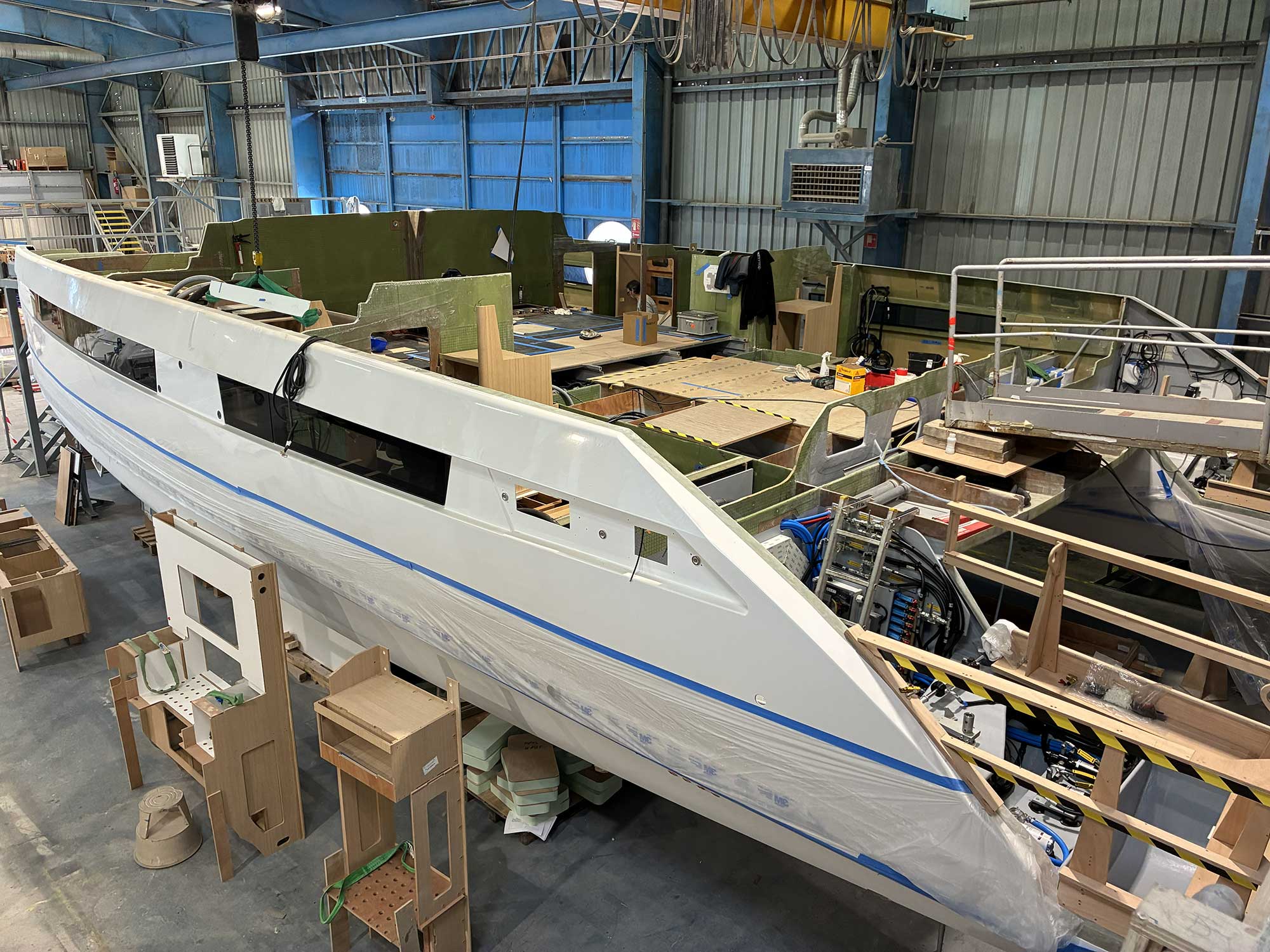
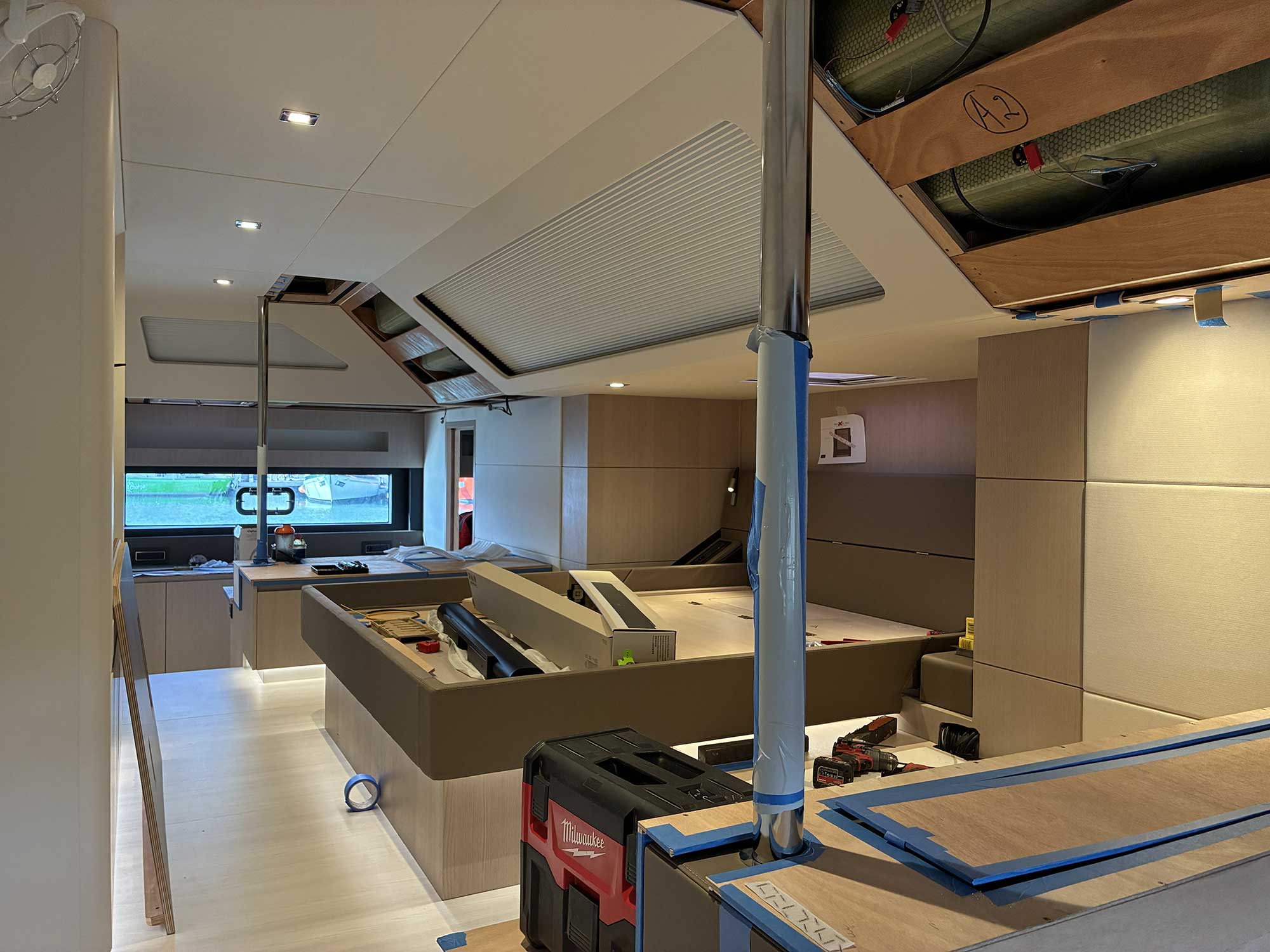
At Privilège Marine, personalization is part of the construction process. Layout, equipment, electrical capacity, storage, materials and living spaces are considered together, before installation makes changes difficult. The yacht is therefore priced and engineered as the yacht the owner intends to use, rather than as a standard platform awaiting another layer of work after purchase.
The difference begins long before the yacht reaches the water
The word “customization” is used loosely in yachting. It can describe anything from selecting upholstery to redesigning a cabin. Those two decisions have almost nothing in common technically.
A production yacht is normally built around a predetermined engineering package. Hull geometry, structural bulkheads, machinery spaces, cable routes, plumbing, tank locations and major furniture modules are largely established. Owners may choose from layouts, finishes and equipment packages. This makes production efficient and keeps delivery times predictable.
New yacht commissioning begins at another stage. It prepares a completed or nearly completed yacht for service. It can include antifouling, mast stepping, sails, navigation equipment, safety equipment, communications systems, tender installation, sea trials and final technical checks.
That process is necessary and valuable. It is simply different from designing a yacht around an owner.
The distinction can be seen in published market pricing. A 2025 Leopard 46 price and option sheet listed a standard yacht at €699,000 before tax. The same document showed €17,439 for transport, documentation and commissioning, plus €8,381 for post-delivery commissioning. Selected options on the example yacht totalled €205,195.
The lesson is broader than one model. A headline yacht price and a ready-to-sail yacht price can describe very different products.
The structure determines what can still be changed
Once a boat is built, physical reality becomes the main constraint.
Moving a sofa is easy. Moving a load-bearing bulkhead is not. Installing a television is straightforward. Creating a cinema room with acoustic treatment, ventilation, dedicated electrical circuits and integrated cabinetry requires considerably more planning.
The same applies to an office, gym, enlarged galley or serious long-range cruising storage.
A sailing catamaran is especially sensitive because equipment affects weight distribution, trim and sailing performance. Batteries, generators, watermakers, refrigeration, tenders and additional furniture all have mass. Their location matters as much as their weight.
Electrical changes also propagate through the yacht. A larger lithium battery bank may require different charging equipment, cable sections, protection devices, ventilation arrangements, monitoring and inverter capacity. More air conditioning can increase generator requirements. More refrigeration changes the daily energy budget.
What appears to be one option can therefore become a chain of engineering decisions.
The American Boat & Yacht Council currently maintains standards covering AC and DC electrical installations, lithium batteries, generators, fuel systems, water systems and numerous other onboard systems. In Europe, substantial post-construction modifications can also have conformity implications when they significantly affect structure, stability, propulsion or safety.
Total personalization still has to respect physics.
That is why the best moment to make a major change is usually before the relevant part of the yacht has been built.
The Privilège approach integrates the owner into the engineering process
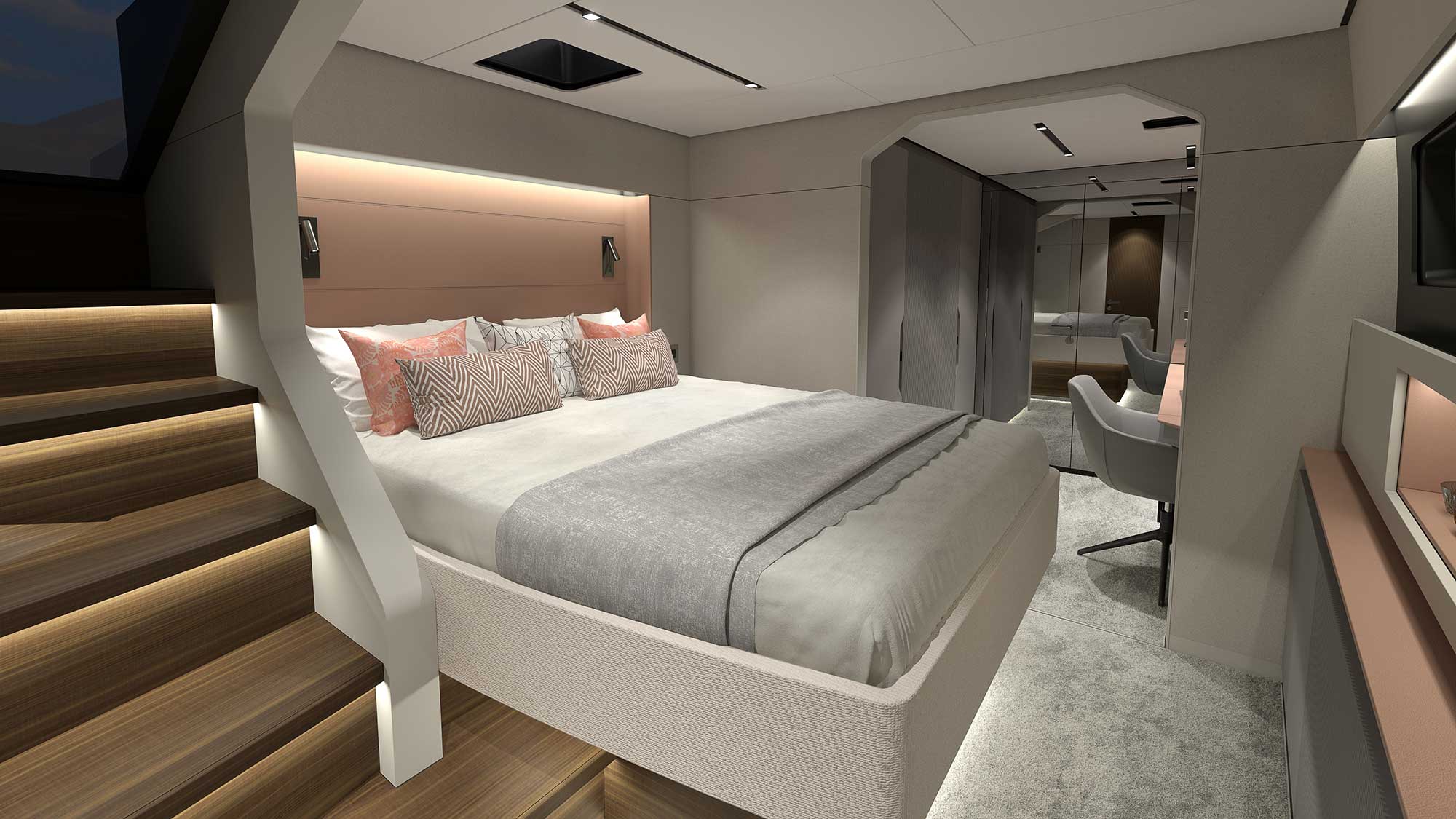
Privilège Marine starts from a proven bluewater platform and develops the yacht around its owner’s programme.
That distinction matters.
The objective is not to create an experimental prototype every time. Offshore reliability depends on proven naval architecture, structural engineering and controlled construction. Personalization takes place within that disciplined technical framework.
The Signature 600 illustrates the principle clearly. At 19.70 metres overall (63 feet), with a beam of 9.18 metres (30 feet), an empty displacement of approximately 29 tonnes and CE Category A certification for 12 people, it remains first and foremost an ocean-going sailing yacht.
Yet its aft portside space is deliberately conceived as an open brief. It can become a cinema, office, gym, studio, substantial storage room or walk-in wardrobe.
That is architectural customization, rather than decoration.
If an owner chooses an office, the discussion begins before cabinetry is installed. Where should the desk face? How much natural light is required? Where should Starlink and network equipment sit? How many 230-volt outlets are needed? Is additional cooling required? Should acoustic insulation separate video calls from adjacent cabins?
A gym produces another specification. Equipment weight matters. So do floor reinforcement, ventilation, clear headroom and safe stowage at sea.
Long-distance storage produces another.
The room may occupy the same physical volume, but the resulting yacht is different because its systems architecture has been developed around its use.
The cost advantage comes from doing work once
Retrofitting is frequently expensive for a simple reason: finished work has to be undone before new work can begin.
Installing additional cabling during construction may involve placing cable runs before liners and furniture are fitted. Installing the same cable later can require dismantling panels, protecting completed interiors, creating access, routing around existing services and rebuilding everything afterwards.
The owner is effectively paying for installation, removal and reinstallation.
The economics become more severe when a change involves plumbing, cabinetry, ventilation ducts, structural reinforcement or large equipment that cannot pass through existing access points.
There is also an opportunity cost. A newly delivered yacht that immediately spends several weeks undergoing modifications is an asset the owner has bought but cannot fully use.
At Privilège, the agreed personalization is incorporated into the specification and into the configured price during the build process. This gives the owner visibility over what the yacht being discussed will actually cost.
That does not mean an owner can change the specification indefinitely without financial consequences. A major request introduced after the design or production freeze may require additional engineering and a change order. Serious yachtbuilding requires that discipline.
The important distinction is that personalization agreed during the project is not treated as an afterthought added to an artificially low headline price.
The real value is a yacht that works as one system
A bespoke sailing catamaran should not feel like a standard boat carrying a collection of expensive additions.
Every major system interacts with another.
A larger tender influences lifting equipment and weight aft. More solar capacity affects deck geometry and charging architecture. Greater refrigeration increases electrical consumption. A watermaker requires power, plumbing, filtration and maintenance access. A professional office depends on communications, power, cooling, seating and acoustic privacy.
For a bluewater cruising yacht, these interactions matter thousands of miles from a shipyard.
Privilège has built ocean-going catamarans in Les Sables-d’Olonne since 1985. Our yachts are intended to cross oceans safely, but they are also designed as homes in which owners may spend months at a time.
Those two functions belong together.
A floating home that cannot tolerate heavy weather has failed as a yacht. An exceptionally capable yacht that does not fit its owner’s life has failed as a home.
The most meaningful form of yacht customization therefore happens before the yacht is finished. It brings the naval architect, designers, electricians, carpenters, systems engineers and owner into the same project.
Commissioning can make a standard yacht more complete. Integrated personalization can make the yacht itself different.
For an owner intending to cross oceans and live aboard for years, that distinction may ultimately matter far more than the length of the options list.