


The Privilège P600 brings BVI charter readiness to an ocean-going luxury catamaran, with premium earning potential and a long-term ownership strategy.
The Privilège P600 brings together two ambitions: owning a personalised ocean-going home and operating a premium crewed charter yacht. Its BVI-compliant specification allows owners pursuing British Virgin Islands commercial registration to avoid additional structural alterations or accommodation changes for the agreed operating profile. Individual certification, qualified crew, insurance and operating permissions remain essential.
Privilège Marine’s intended charter positioning is US$40,000–70,000 per week, depending on season, specification, service and experiences. Achieving those rates requires a complete hospitality operation, supported by the yacht’s comfort and craftsmanship. Stronger weekly earnings can help recover the initial investment faster, provided occupancy and operating margins justify the purchase premium.
Long-term value also depends on maintenance, sensible customisation and documented care. Commercial certification can support deployment in other destinations, subject to local authorisation. The opportunity is a carefully managed yacht business built around a vessel that remains desirable for private ownership.
The BVI-ready specification removes a costly conversion stage
At Privilège Marine, we build yachts for ocean passages and extended life aboard. The P600 applies that philosophy to a commercially useful proposition: a luxury sailing catamaran whose agreed BVI-compliant specification accommodates charter requirements from the outset.
For an owner choosing BVI commercial registration, the practical benefit is no additional structural or accommodation conversion within that specification and operating profile. Decisions affecting construction, escape arrangements and interior configuration can be addressed during the build.
This matters because converting a completed private yacht can involve engineering work, disrupted interiors and lost operating time. Integrating the requirements early makes the delivery budget and commissioning schedule more predictable.
The agreement must identify the applicable code, approved layout, passenger capacity and intended operating area. Changes to these parameters can require further assessment.
The commercial certificate turns readiness into permission to operate
The British Virgin Islands maintain a small-commercial-vessel framework covering yachts of this size. Their maritime authority publishes several relevant codes, including MGN 280 and the Caribbean Small Commercial Vessel Code. The applicable certification route must be confirmed for the individual vessel.
Examination addresses matters including stability, watertight integrity, fire protection, lifesaving equipment and safe operation. These requirements protect guests and crew while establishing the conditions under which the yacht may trade.
BVI registration, commercial certification and charter licensing perform different functions. Registration establishes nationality. Certification establishes technical compliance. Local licensing authorises the commercial activity.
An owner must also arrange appropriate insurance, recognised crew qualifications, inspections and applicable permits. Avoiding structural conversion therefore removes one category of expenditure; survey, equipment, licensing and operating costs remain.
Our guidance on choosing the right flag for your yacht explains why the intended business should inform registration decisions early.
The luxury premium comes from the experience guests receive
The P600 has a beam of 9.18 metres, approximately 30 feet, and a draft of 1.85 metres, approximately 6.07 feet. Its tank capacities include 1,000 litres of fuel and 900 litres of freshwater.
These dimensions and capacities provide a substantial platform for living aboard. Commercial success depends on how that platform serves guests.
Privacy, comfortable sleeping arrangements, attractive communal spaces and careful interior craftsmanship shape the experience throughout the week. Crew need equally practical working arrangements: provisioning space, accessible equipment and an efficient service routine.
Our luxury sailing catamaran collection reflects this relationship between offshore engineering and residential comfort.
The Signature 600 also allows the aft port cabin to become a gym, office, cinema or another owner-defined space. For charter use, that choice deserves commercial scrutiny. A distinctive amenity may attract a particular clientele, while retaining the cabin may suit a broader group market.
US$40,000–70,000 per week is the commercial positioning we envisage for suitably specified and professionally operated programmes. Rates will depend on dates, guest numbers, crew, inclusions and the experiences delivered.
A private chef, carefully planned menus, guided marine activities and well-organised shore excursions can strengthen the proposition. Every advertised service must be supported by the appropriate people, equipment and permissions.
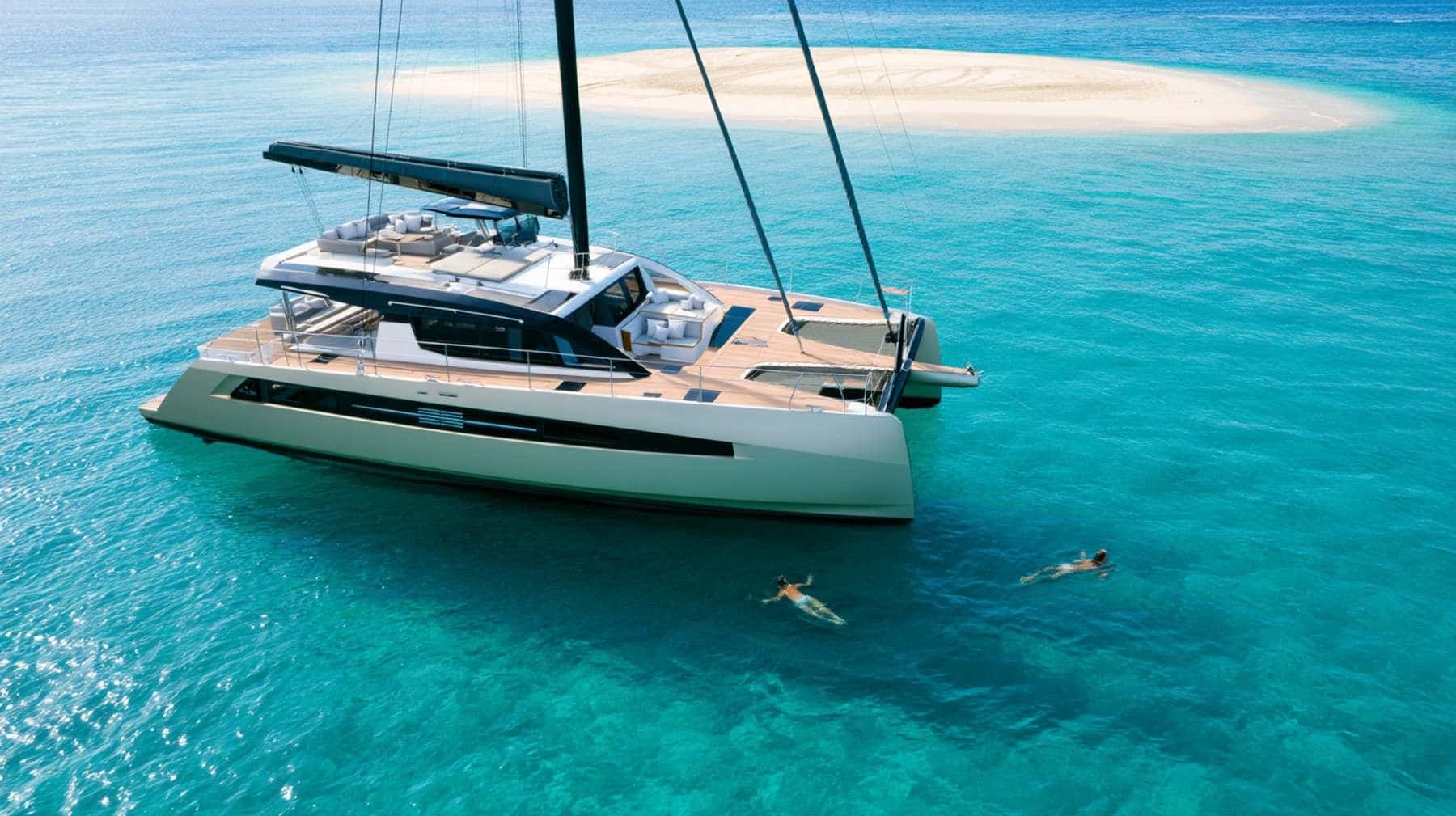
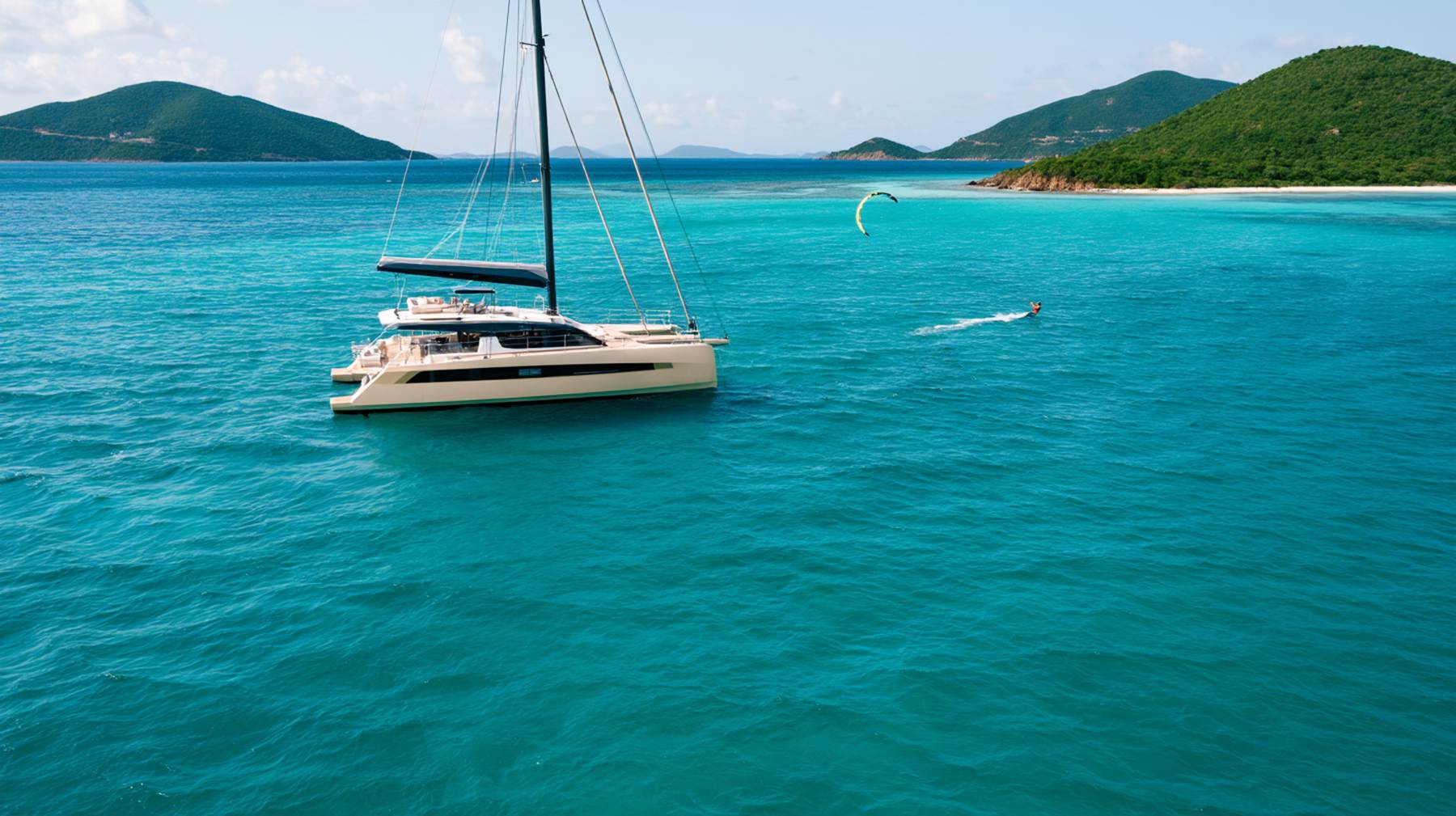
The weekly rate needs a credible market position
Premium charter guests purchase a complete holiday. A yacht with limited privacy, ordinary accommodation or insufficient service infrastructure will struggle to sustain the same price as a carefully managed luxury programme.
Other premium builders also operate in this market with pices from €42,000 per Week for smaller units and from US$72,000 for larger boats.
They establish that a substantial luxury-catamaran market exists. They do not establish achieved P600 revenues or guaranteed demand.
The upper end of our proposed range therefore requires a compelling package and a proven booking strategy. Brokers need precise specifications, excellent photography, clear inclusions and confidence in the crew.
Pricing must distinguish the charter fee from taxes, gratuities and any Advance Provisioning Allowance, the deposit used to meet specified voyage expenses. An inclusive package and a fee quoted plus expenses represent different financial propositions.
The investment case rests on net contribution
A higher purchase price can be recovered faster when the yacht generates enough additional operating contribution.
Consider an illustrative season of 12 booked weeks at an average US$50,000. Gross charter receipts would reach US$600,000. This is an arithmetic scenario, rather than a booking forecast.
If those receipts were 20% higher, at US$60,000 per week, the same calendar would produce US$720,000. The additional US$120,000 would improve returns only after allowing for any extra delivery costs.
Brokerage and management commissions, crew, provisioning, insurance, maintenance, berthing and replacement reserves all affect the result. Financing and tax must then be considered.
A useful comparison isolates the purchase premium. If a yacht costs US$500,000 more and produces US$100,000 more annual net operating contribution, the incremental investment has a simple five-year payback before financing, tax and resale differences. Both figures are illustrative assumptions.
The resale advantage must be maintained throughout ownership
Privilège’s approach gives owners a credible basis for protecting value: enduring accommodation, offshore capability, craftsmanship and a recognisable specialist brand.
Our guide to catamaran resale value explains the importance of configuration, maintenance and scarcity.
A commercial yacht must earn its condition premium. Engine hours, service records, rig inspections, interior wear and equipment replacement history influence what a buyer will pay.
A professionally maintained P600 may remain attractive to both private owners and charter operators. That broader usefulness supports the ownership case.
The opportunity extends beyond the British Virgin Islands
BVI commercial certification can provide a useful technical foundation for operating elsewhere. Each destination retains control over local charter permissions, taxation, customs treatment and crew requirements.
The Bahamas, for example, has a Foreign Yacht Charter Licence procedure. Mediterranean deployment likewise requires country-specific assessment before bookings are accepted.
Seasonal relocation can increase access to demand, but passage costs, crew time, insurance conditions and maintenance windows must enter the budget.
The strongest P600 programme connects these decisions from the beginning: specification, certification, guest experience, operating calendar and eventual resale. The result is an ocean-going home with a considered commercial purpose—and an ownership strategy that can evolve with its owner.