


Performance catamarans chase speed. Cruising cats pursue comfort. A different bluewater philosophy shows why serious sailors increasingly expect both.
Bluewater catamarans have traditionally forced owners towards one of two philosophies. Performance-oriented yachts reduce weight, carry powerful sail plans and use narrow hulls to generate speed. They can be thrilling, yet the same characteristics can demand greater attention from the crew, create higher loads and make exposed watches exhausting offshore. At the opposite end of the spectrum, high-volume cruising catamarans prioritise accommodation, payload and ease of use. Their additional weight and fuller hulls can compromise acceleration and sailing ability, particularly in light conditions.
There is a third approach. Sustainable performance treats speed, seaworthiness and human endurance as parts of the same equation. At Privilège Marine, this means designing an ocean-going catamaran that sails efficiently while protecting the people aboard. A protected helm, balanced sail plan, secure circulation, structural strength and genuine residential comfort all contribute to the same objective: covering serious distances safely and arriving with energy left for the destination.
The traditional choice divides speed from comfort
For decades, sailing yacht design has been governed by an uncomfortable truth: every design decision has consequences.
A performance cruising catamaran wants low displacement, narrow hulls, a generous sail plan and efficient appendages. Carbon construction, daggerboards and tall rigs can extract remarkable speed from relatively little wind.
The current Comar Yachts C-Cat 48 illustrates the philosophy. It has a published light displacement of just 9.7 tonnes and carries 180 square metres (1,938 sq ft) of sail. Carbon daggerboards extend its draft from 0.90 metres (3 ft) to 2.95 metres (9.7 ft), and Comar says the yacht can maintain double-digit speeds. Significantly, the latest C-Cat 48 also incorporates an interior helm station for difficult weather — evidence that performance builders themselves recognise the importance of crew protection offshore.
At the more extreme end, the Gunboat 68 uses all-carbon construction, daggerboards and a light displacement of about 17.8 tonnes. Gunboat has reported sea-trial speeds above 21 knots on one 68 and 15 to 16 knots upwind in 12 to 18 knots of breeze. These figures demonstrate what lightweight multihulls can achieve.
Speed, however, is only one measure of a bluewater yacht.
The fast catamaran asks more from its crew
High performance changes the environment on board.
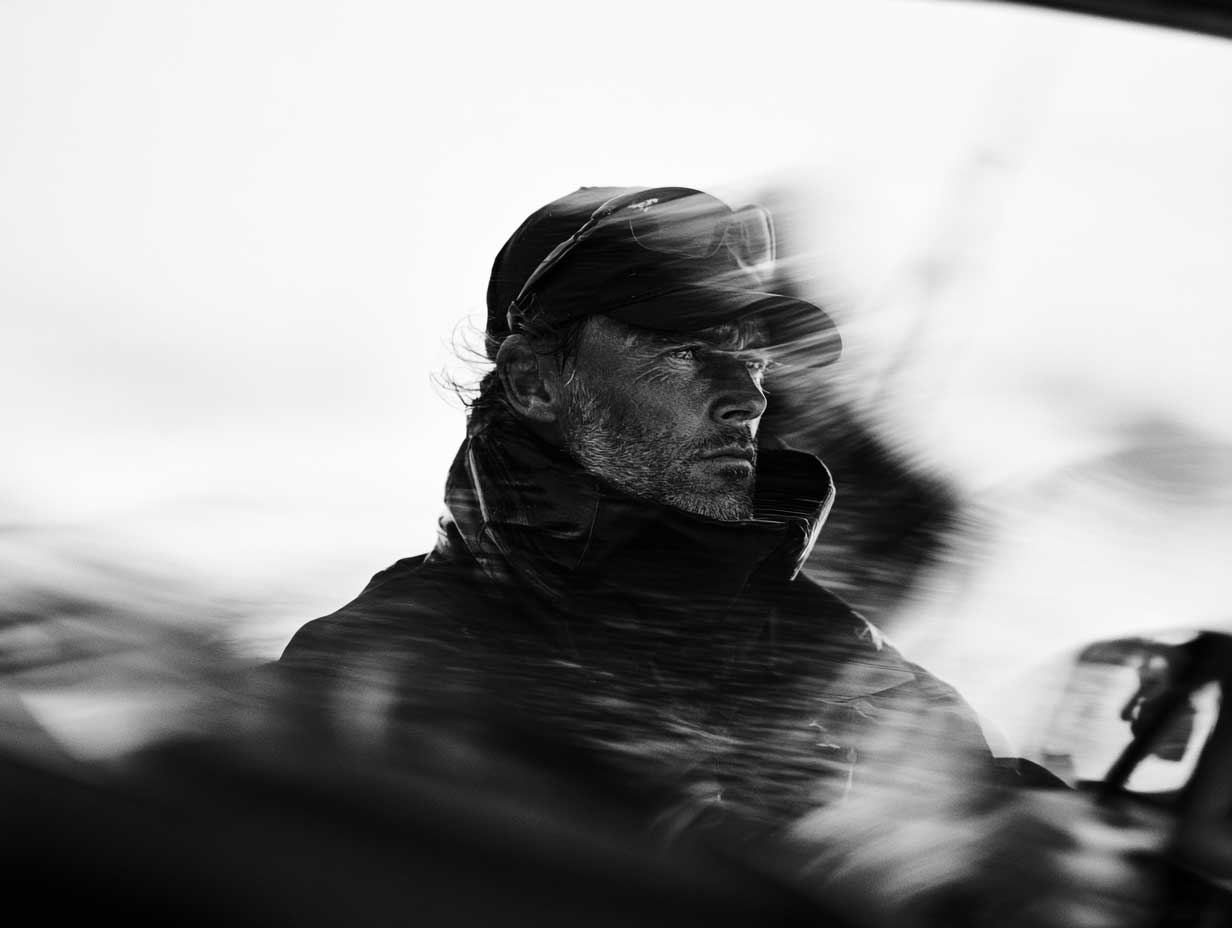
As a yacht accelerates, the apparent wind experienced by the crew changes in both angle and intensity according to the yacht’s course. On a reach, a fast catamaran can bring the apparent wind significantly forward. At an exposed helm, spray, cold air and rain arrive with considerably greater force.
For an afternoon sail, this can be exhilarating. During a three-hour night watch in poor weather, the calculation changes.
Some performance catamarans use exposed aft steering positions because they give the helmsman direct visibility of the sails and an immediate connection with the boat. Others provide dual positions or an internal helm. HH Catamarans, for example, offers its HH52 with either aft swing helms or a forward cockpit and central helm. Gunboat installations have combined internal and external steering positions. These solutions reveal the fundamental design problem: the place that feels superb when actively sailing in good conditions is not always the place where an owner wants to spend the middle of a wet Atlantic night.
The important issue is fatigue management.
Fatigue accumulates through exposure, noise, movement, poor sleep and repeated physical effort. A maritime field study of 198 seafarers found very short sleep periods and classified 22.2 per cent of its pupillometric assessments in a range described as unfit for duty. A private sailing yacht is clearly a different environment from a commercial ship, but the human-factors principle is universal: tired watchkeepers make worse decisions.
On an ocean passage, protecting the skipper is therefore a safety issue as much as a comfort issue.
The sea punishes badly managed speed
There is another consequence of performance: motion.
A catamaran does not heel like a monohull, yet it still pitches, accelerates vertically and interacts violently with short seas. When the water rises into the tunnel between the hulls and strikes the underside of the bridgedeck, the result is wet-deck slamming.
Slamming should not be simplistically associated with fast boats. Hull geometry, loading, bridgedeck clearance, wave direction, speed and sea state all matter. A heavy cruising catamaran with poor clearance can slam badly. A lightweight performance catamaran with carefully designed clearance can behave very well.
The physics, however, are uncompromising. Experimental work published in Ocean Engineering found a strong relationship between relative impact velocity and wet-deck slam force. Other research has shown that increasing wet-deck height can reduce slamming loads in certain sea states. Bridgedeck geometry matters enormously.
This is why chasing the highest possible number on the speed display misses the point offshore. A competent skipper will reduce sail when the sea state demands it. The fastest theoretical boat frequently spends an ocean passage operating well below its potential because crew comfort, structural loads and safety become the governing factors.
The meaningful number is sustainable passage speed.
The comfortable catamaran faces the opposite problem
The other end of the market presents a different compromise.
Large saloons, multiple cabins, enormous flybridges, domestic equipment, oversized refrigerators, air-conditioning systems, water toys and generous tankage all add weight. Wider hull sections create more accommodation but also more wetted surface and hydrodynamic resistance.
Payload matters particularly on a cruising catamaran. Owners rarely sail a long-distance yacht at the lightship displacement printed in the brochure. Food, water, fuel, tender, outboard engine, tools, spare parts, batteries, personal belongings and cruising equipment gradually change the boat.
A design centred mainly on interior volume can therefore become reluctant in light air. The engines start earlier. Sailing becomes something done when conditions are convenient rather than the yacht’s natural mode of transport.
There is nothing inherently wrong with that philosophy. It suits owners whose programme consists mainly of coastal cruising, charter or short passages between marinas.
It is a weaker answer for an owner who genuinely wants to cross oceans.
The third approach treats performance as endurance
At Privilège Marine, our position is deliberately different.
We build bluewater catamarans first. They must be capable of spending weeks at sea. They must also function as real homes once they arrive.
That requirement changes what performance means.
A Privilège is not designed around a record-breaking top-speed figure. It is designed to maintain useful sailing performance while carrying the systems, stores and living spaces required for serious cruising.
The Signature 510 illustrates that balance. It measures 15.24 metres (50 ft) overall, has a light displacement of 17 tonnes and carries 165 square metres (1,776 sq ft) of working sail, including an 88-square-metre (947 sq ft) mainsail, a 57-square-metre (613 sq ft) genoa and a 20-square-metre (215 sq ft) staysail. It is certified CE Category A for 12 people.
Under European rules, Category A means a recreational craft is designed for conditions where wind may exceed Beaufort Force 8 and significant wave height may exceed 4 metres (13 ft), excluding abnormal conditions such as hurricanes, violent storms and rogue waves. Certification does not replace seamanship, but it establishes the seriousness of the design brief.
The larger Signature 600 carries 259 square metres (2,788 sq ft) of sail and has a light displacement of 29 tonnes. Its 1,000 litres (264 US gal) of fuel and 900 litres (238 US gal) of fresh water illustrate another part of the equation: a genuine long-distance yacht must carry useful payload without turning itself into a floating apartment that has forgotten how to sail.
The protected helm changes an ocean passage
One of the clearest expressions of this philosophy is the helm station.
On the Signature 510, the helm is elevated enough to provide strong visibility yet remains connected to the cockpit. It is protected by a windscreen and hardtop. The principal sailing functions can be concentrated around the steering position. The skipper remains close to the people aboard rather than isolated on a flybridge.
This becomes important at 0300.
Rain should not become an endurance test. Spray should not force the watchkeeper to spend hours soaked in foul-weather gear when yacht architecture can provide protection. Reefing should not require unnecessary movement around the deck when conditions deteriorate.
Protection preserves concentration.
It also changes how an owner uses the boat. A couple can consider longer passages with greater confidence. Watch changes become simpler. Sail reduction can happen earlier because controls are accessible. The skipper can remain alert rather than spending energy simply resisting the weather.
That is practical luxury.
The floating home still has to cross an ocean
Comfort begins below deck as well.
A genuinely comfortable offshore yacht needs secure circulation, usable berths, storage, ventilation, manageable noise levels and spaces positioned with motion in mind. A huge cabin has little value if the crew cannot sleep in it at sea.
Privilège’s characteristic full-beam owner’s suite places the owner’s accommodation centrally in the nacelle. The broader philosophy extends through the boat: owners need enough storage for extended cruising, real tank capacity, protected living areas and layouts designed around months aboard rather than a weekend demonstration.
The Signature 650 carries 2,000 litres (528 US gal) of fuel and 1,300 litres (343 US gal) of fresh water in the yard’s current specification. Its working sail area is 264 square metres (2,842 sq ft). It combines those cruising capacities with Category A certification and a helm designed around visibility and protection.
This is where performance with comfort becomes more than a slogan.
The yacht has to sail well with the owner’s life aboard.
The best passage leaves energy for the destination
The sailing industry sometimes treats performance as a race between numbers.
For a bluewater owner, the more useful question is different: how much energy does the yacht require from its crew to cover 1,500 or 3,000 nautical miles?
Peak speed matters. Light-air efficiency matters. Ability to point matters. So do protection, sleep, movement, noise, sail handling and confidence in the structure.
A yacht capable of extraordinary speed can be the right choice for an owner who enjoys an active, technically demanding sailing experience. A spacious cruising platform can be ideal for predominantly coastal use.
Privilège occupies the territory between those extremes deliberately. The objective is serenity at speed, rather than speed at any cost.
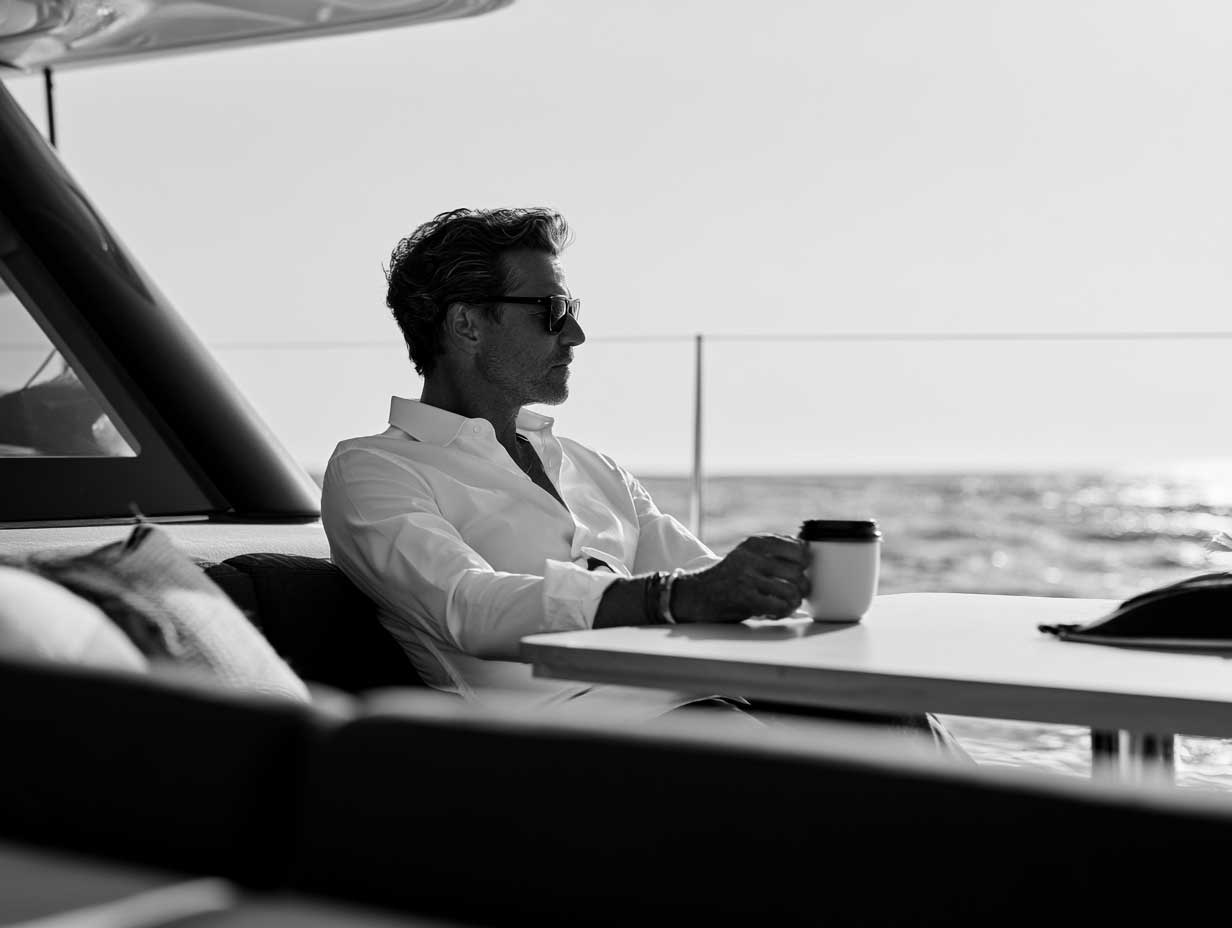
A real bluewater catamaran should make distance easier. It should allow its owners to cross an ocean safely, sail enough to enjoy the journey, live properly while doing it and step ashore ready to explore.
That may be the most relevant definition of performance in long-distance cruising: not simply arriving first, but arriving rested.