


The Privilège rostrum strengthens the forward structure, manages rig loads and creates exceptional space for a private owner’s suite.
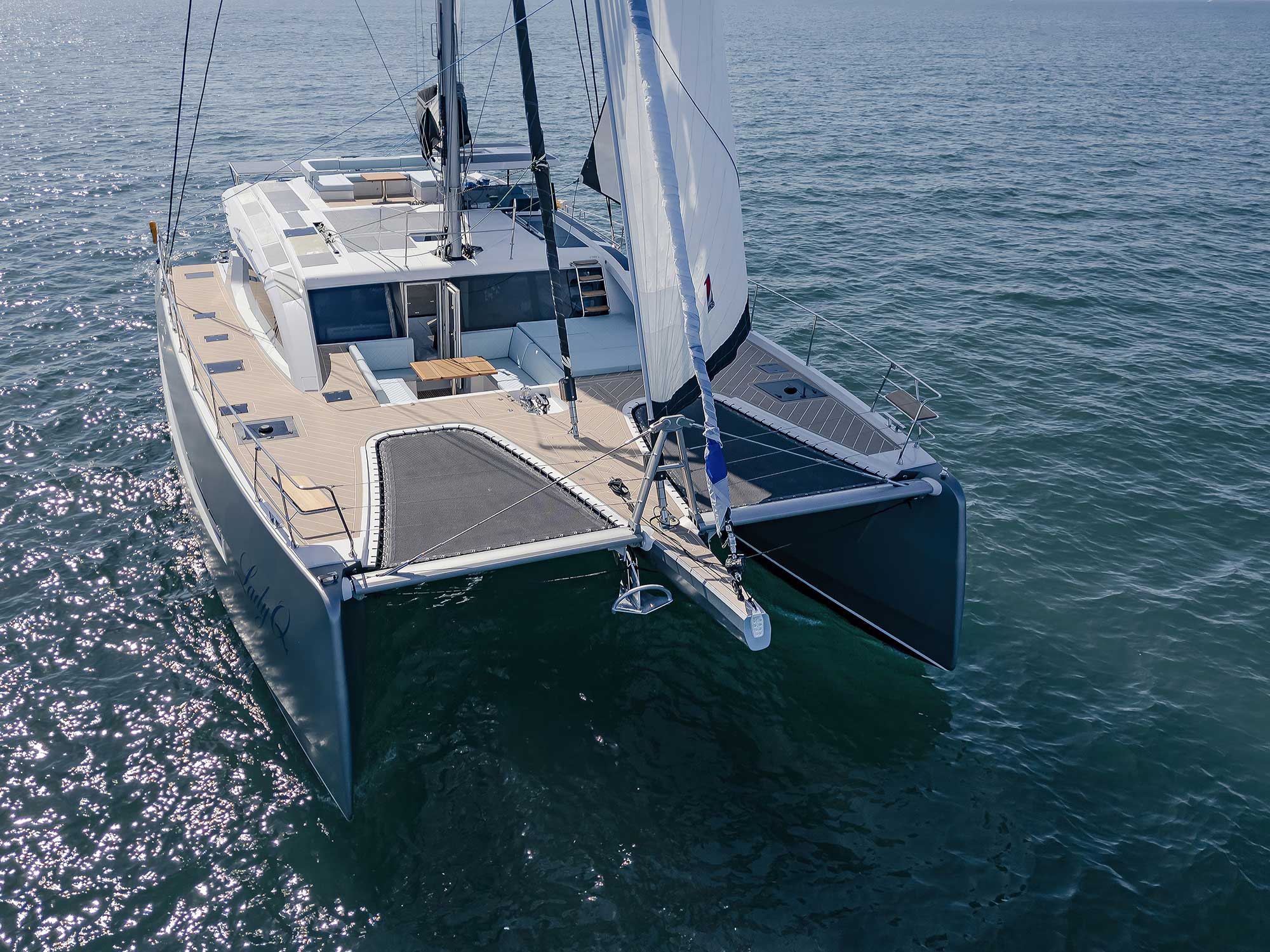
The Privilège rostrum is a forward central pod built into the architecture of the catamaran. In French, the shipyard calls it the rostre. In English, “forward central pod” or “central nacelle” describes its function more clearly. The structure extends forward of the mast between the two hulls. It helps stiffen the yacht longitudinally, supports the forward beam through a third structural point and spreads loads created by the forestay and rig. Its shape can also add reserve buoyancy and reduce spray or bow immersion in demanding seas. The same volume produces a second benefit: real living space above the water. On the Signature 510, it forms the heart of a full-beam owner’s suite. On the Signature 650, the central nacelle creates a private apartment with panoramic forward views. Offshore strength and domestic comfort therefore come from the same piece of naval architecture.
The Rostrum Begins as a Structural Decision
A catamaran places two hulls beneath one wide platform. At sea, that platform works under complex loads. Each hull may rise and fall at a different moment. One bow can meet a wave while the other remains partly unsupported. The mast compresses the main structure, while the forestay, shrouds and sails apply changing forces.
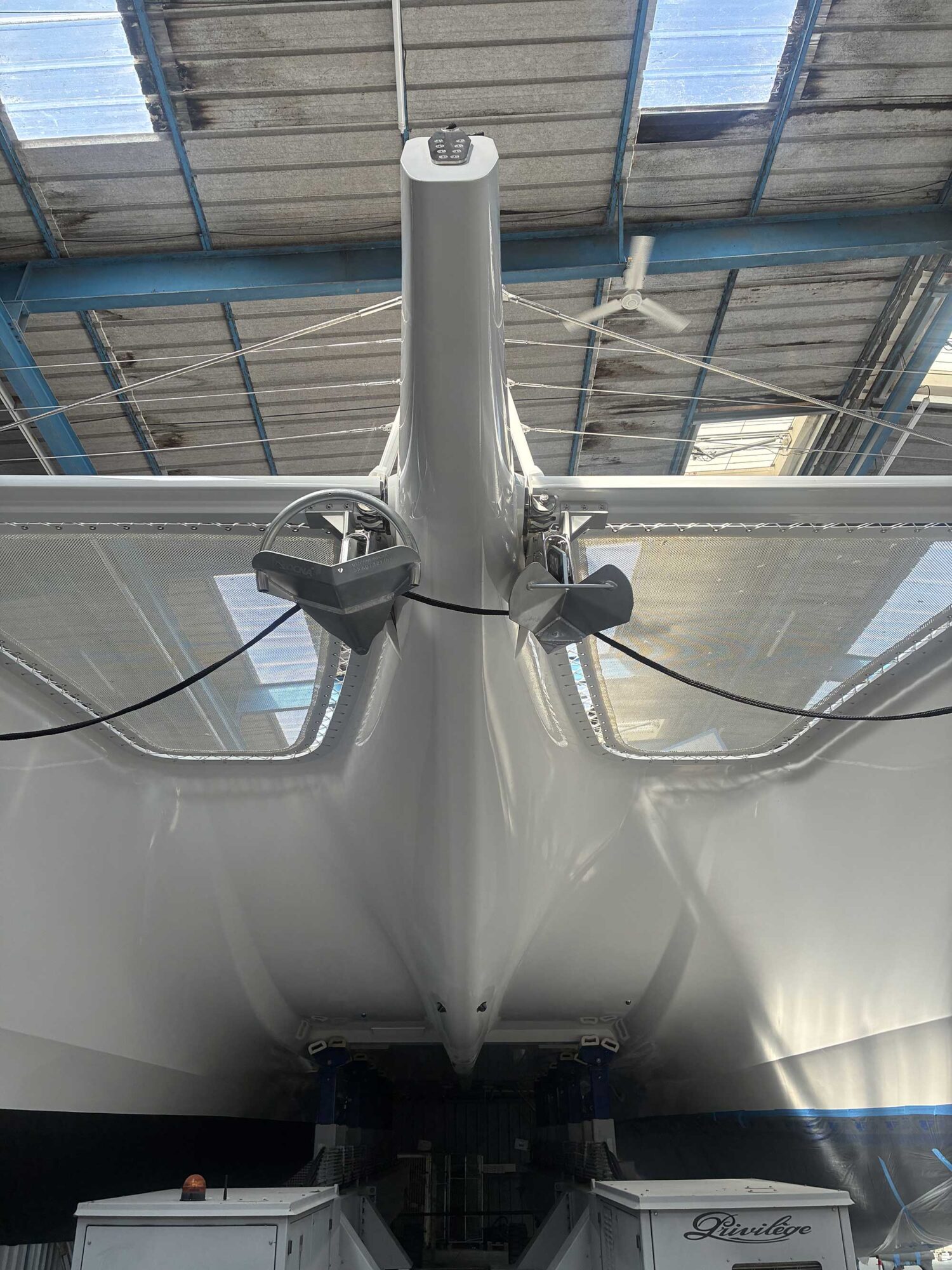
The Privilège rostrum addresses this problem through geometry. The forward central pod extends from the main nacelle towards the forward beam. It adds structural depth along the centreline and connects the forward part of the yacht to the main platform.
The result is greater catamaran structural rigidity in an area exposed to repeated bending, torsion and impact. Privilège introduced this architecture during the brand’s early development and refined it across successive generations. Its recognisable form endured because the engineering remained useful.
The Forward Pod Changes How Loads Travel
Structural strength depends on the route taken by a load. Concentrated forces create local stress. A continuous structure spreads those forces across a larger area.
Historic Privilège technical literature describes the rostrum as reinforcing longitudinal rigidity and diffusing forestay compression forces into the nacelle. The wording requires precision. The forestay works in tension. Its reaction creates high loads at the bow attachment, the mast and the surrounding structure.
The rostrum acts as a load-distribution structure. It provides another substantial route through which rig loads can travel before being absorbed by the nacelle, forward beam and hull connections.
The Third Support Point Reinforces the Forward Beam
A conventional forward beam spans the distance between two bows. Privilège supports this area through the two hull connections and the central pod, creating a third structural support.
The arrangement strengthens the forward structure and provides a coherent location for the dolphin striker, rig attachments, anchor gear and associated reinforcements. On the historic Privilège Série 7, the robust forward beam and mechanically welded dolphin striker were integrated with the nacelle.
The larger Privilège 745 used the same central volume for its anchor locker, windlasses and sail storage. Its technical literature explained that the rostrum increased mechanical resistance while distributing forestay loads through the yacht’s longitudinal structure.
This integration matters offshore. A windlass can experience severe dynamic loads when the yacht pitches. Rig forces change continuously as wind pressure, sail area and sea state evolve. Both systems require foundations designed into the yacht from the beginning.
The Same Structure Creates the Owner’s Suite
The rostrum also creates habitable volume above the water and forward of the saloon.
Many catamarans place the owner’s cabin inside one hull, where width remains constrained by the hull form. Privilège uses the centre of the yacht to create a full-beam owner’s suite with a different sense of space.
The Signature 510 measures 17.09 metres (56 feet) overall and 7.98 metres (26 feet) across the beam. Its forward suite draws on the width of the platform rather than the width of one hull. It offers panoramic views, extensive storage and clear separation from the guest cabins.
The arrangement changes the experience of living aboard. The cabin becomes a private destination with space for wardrobes, drawers, dressing areas and a substantial bathroom. Owners can withdraw from the social areas while remaining connected to the centre of the yacht.
The Signature 650 develops the same principle on a larger scale. Its beam reaches 9.20 metres (30 feet 2 inches). The central owner’s suite sits within the nacelle and gains panoramic forward-facing views. The room functions as a private apartment within an ocean-going catamaran.
The rostrum therefore turns structural volume into useful living space. One piece of naval architecture performs several jobs.
The Sea Decides Whether the Geometry Works
Forward volume must be shaped carefully. Its underside can meet waves before other parts of the bridgedeck. Clearance, curvature, length and immersion influence bridgedeck slamming loads.
Research into catamarans with centre bows shows that changes in centre-bow geometry and wet-deck clearance can alter slamming forces and vertical bending moments. The designer must balance internal space, structural depth, reserve buoyancy and wave interaction.
Privilège uses a suspended central form instead of a third full-length hull. In demanding seas, the volume can provide reserve buoyancy as the bows press into a wave. It can also reduce spray passing through the forward netting and create a more secure working surface near the mast and anchor gear.
The benefit comes from the complete design. Weight distribution, bridgedeck clearance, hull shape and speed remain decisive. The rostrum belongs first in the naval architecture. Its interior possibilities follow from that engineering decision.
The Privilège Approach Makes Comfort Structural
Privilège Marine builds bluewater catamarans for owners who may live aboard for months and cross oceans. Comfort therefore has a technical meaning.
A quiet cabin depends partly on stiffness. Secure movement requires stable surfaces and protected circulation. Reliable anchoring requires reinforced foundations and accessible machinery. Interior volume must coexist with weight control, ventilation, drainage and maintenance access.
The rostrum brings these requirements together. It strengthens the forward platform, supports working areas, provides storage and technical volume, and creates a private room that feels like part of a home.
This is the core Privilège idea: comfort begins with structure.
The owner’s suite is luxurious because the architecture makes it possible. The yacht remains reassuring because the same architecture contributes to the strength beneath it.
The Signature Endures Because It Solves Real Problems
The Privilège rostrum became visually distinctive because it solved several problems at once. It reinforces the yacht. It improves the load path around the forward beam and rig. It creates usable volume above the water. It supports anchoring and sail-handling functions.
On selected models, it also makes possible one of the most recognisable owner’s suites in the bluewater catamaran market.
That combination explains its longevity. The rostrum gives a Privilège a recognisable profile, yet its real value sits beneath the surface. The shape exists because the yacht must remain strong at sea and generous to live in.