Close
Lang selector black
Lang selector
Lang selector

Category: Live Aboard

  • Why a yacht is never just a yacht

    Why a yacht is never just a yacht

    A luxury catamaran is more than an asset. It is a private space for freedom, family, time and long-distance life at sea.

    A luxury bluewater catamaran is often described through length, beam, sail area, finish level and performance. Those figures matter. They define safety, autonomy and value. Yet they do not explain why an owner chooses to build such a yacht. A Privilège is never just a yacht because it carries a larger decision: to change the way time is spent. It becomes a home, a family base, a private retreat, a passage-maker and a life project. It allows owners to cross oceans, but also to recover something rarer than distance: presence. At Privilège Marine, we build safe, robust and refined bluewater catamarans for people who want more than occasional boating. They want a yacht shaped around their family, habits, dreams and future. The true value of a bluewater luxury catamaran lies in what it makes possible.

    The yacht becomes meaningful when it changes daily life

    A yacht can be measured. A life project cannot be measured in the same way.

    A luxury bluewater catamaran has a length overall, a beam, a displacement, an engine specification, a sail plan and a certification category. These details are essential. They tell an owner whether the boat can cross oceans, carry supplies, protect people and remain reliable over time. Yet they do not explain why a person decides to build one.

    The deeper reason is rarely technical at first. It is personal.

    People do not come to Privilège Marine only because they want a boat. They come because they want time differently arranged. They want mornings at anchor with their family. They want distance from schedules that have become too full. They want to cross the Atlantic with confidence. They want to show their children another map of the world. They want a private place where life slows down without becoming smaller.

    This is why a yacht is never just a yacht. At this level, a yacht becomes a decision about freedom, family and the future.

    The word freedom is often used carelessly in yachting. It should be used with precision. Freedom at sea does not mean the absence of discipline. It means the ability to choose your route, your rhythm and your horizon while trusting the platform beneath you. It means having the autonomy to stay longer. It means having the space to live properly. It means feeling secure when land disappears.

    For Privilège Marine, this emotional promise must rest on engineering. A bluewater catamaran must first be strong, seaworthy and coherent. Romance at sea lasts only when the yacht is reliable.

    The family becomes the real destination

    Many owners first speak about destinations. The Caribbean. Corsica. The Balearic Islands. Polynesia. The Mediterranean in summer. The Atlantic crossing. The Pacific dream. These places matter. They provide the first images. Yet after years of conversations with owners, one truth becomes clear: the destination is often secondary.

    The true destination is the family gathered aboard.

    A yacht creates a rare form of shared time. At home, family life is fragmented by school, business, travel, phones, meetings and social obligations. On a bluewater catamaran, the environment changes. Meals last longer. Conversations return. Children help with lines, watches, dinghy trips and navigation. Friends become part of a journey rather than a dinner. The day is shaped by weather, light, water and movement.

    This is not nostalgia. It is a practical observation. Modern wealth often creates access to many places, but less access to uninterrupted time. A luxury yacht can answer that problem if it is designed as a real home at sea.

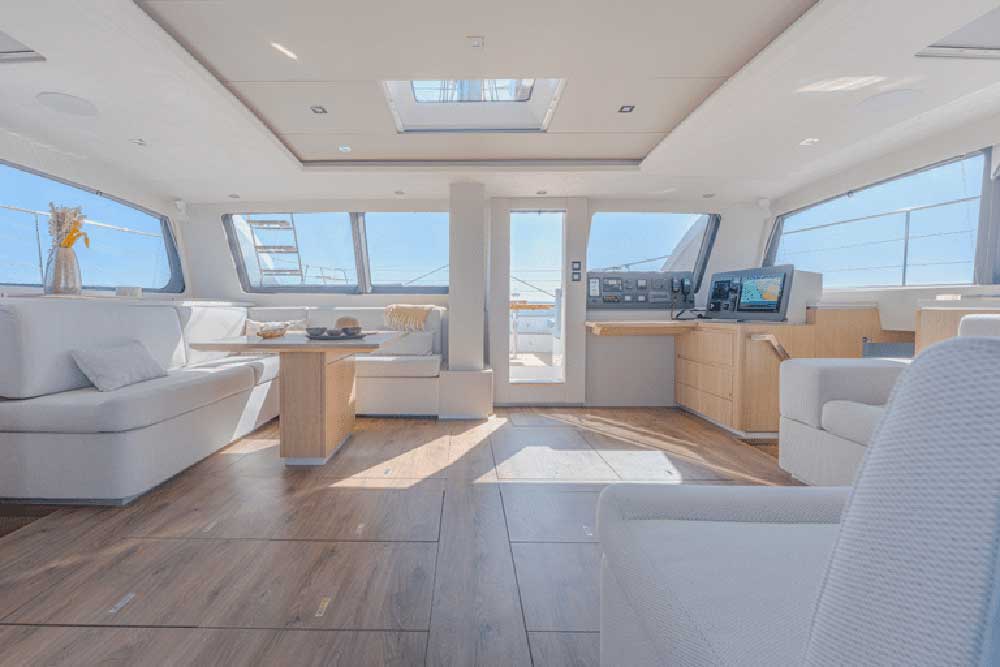
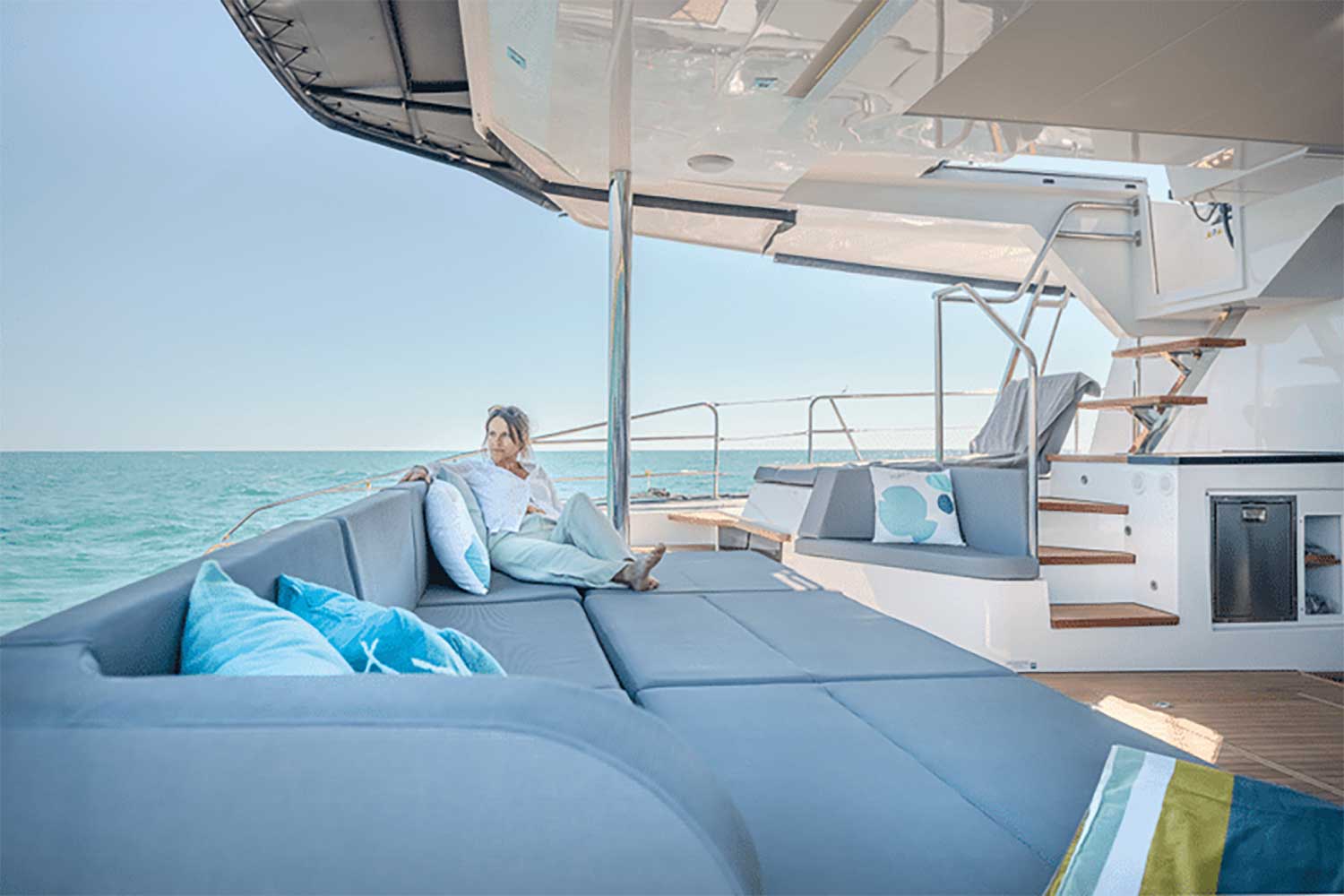
    A Privilège must therefore support intimacy as much as adventure. Cabins must offer privacy. The saloon must gather people naturally. The cockpit must be protected and generous. Circulation must be safe. Storage must be serious. The galley must support real meals, not occasional service. The owner’s suite must allow rest. The helm station must keep the skipper connected to life on board.

    Family life at sea is beautiful when the yacht makes it easy. It becomes tiring when the yacht has been designed only for photographs.

    This is why family cruising is a technical subject. It affects layout, safety, storage, access, visibility and autonomy. A child moving between cockpit and saloon needs safe steps. A guest staying for two weeks needs proper storage. A couple crossing an ocean needs protected watchkeeping and a cabin that restores energy. Comfort is not softness. Comfort is the intelligent removal of daily friction.

    The bluewater catamaran turns distance into confidence

    A bluewater catamaran is built around distance. It must carry people across open water and allow them to live well while doing so. This is where the emotional idea of freedom meets the hard reality of naval architecture.

    The Privilège Signature 510 gives a clear example. With a length overall of 17.09 metres (56 feet), a beam of 7.98 metres (26 feet), 800 litres (211 US gallons) of fuel and 600 litres (158 US gallons) of fresh water, it is conceived for autonomous bluewater sailing. Its CE A-12 certification places it in a category intended for serious offshore use. Its protected helm station, large storage capacity and full-beam owner’s suite are not decorative gestures. They support real long-distance living.

    The Signature 580 moves the same philosophy into a larger volume. It measures 19.10 metres (about 62 feet 8 inches) with a beam of 9.18 metres (30 feet 1 inch), a full-load displacement of 35 tonnes (77,162 pounds), 2 x 485 litres of fuel and 2 x 450 litres of fresh water. Its 259 m² (2,787 square feet) sail plan and CE A-12 certification underline its ocean-going purpose. The flybridge, forward cockpit access and fluid connection between interior and exterior spaces create a more residential experience without abandoning offshore logic.

    These figures matter because they turn emotion into trust. Owners can dream about islands, but they need confidence in the boat. A yacht that invites a family to cross oceans must earn that trust through structure, systems, ergonomics and experience.

    The ocean is not impressed by luxury language. It respects preparation.

    The floating home must be built around real routines

    A luxury bluewater catamaran is a floating home only if it supports life every day.

    This is where Privilège Marine’s approach becomes distinct. We do not see the yacht as a weekend object enlarged into luxury. We see it as a private residence that must move safely through open water. That difference changes every design decision.

    A real floating home needs storage for provisions, clothing, tools, spare parts, water toys, bedding, books, medical supplies and technical equipment. It needs ventilation. It needs quiet cabins. It needs a galley that can be used underway. It needs service access. It needs safe movement at night. It needs places where people can be together and places where they can be alone.

    A fashionable interior can make a strong first impression. A good floating home becomes more valuable with use.

    Owners quickly learn that the yacht is judged through repetition. Where do shoes go after a wet tender ride? Where does the laptop go during dinner? Can a child sleep while adults remain in the cockpit? Can the owner work privately during a crossing? Can guests move without disturbing the owner’s suite? Can technical maintenance happen without dismantling living spaces?

    These questions define liveaboard comfort. They also explain why a yacht built around the owner’s life has more emotional value than a standard layout decorated with expensive materials.

    A colour scheme can be changed. A cushion can be replaced. The way a yacht holds a family’s daily life is much harder to correct later.
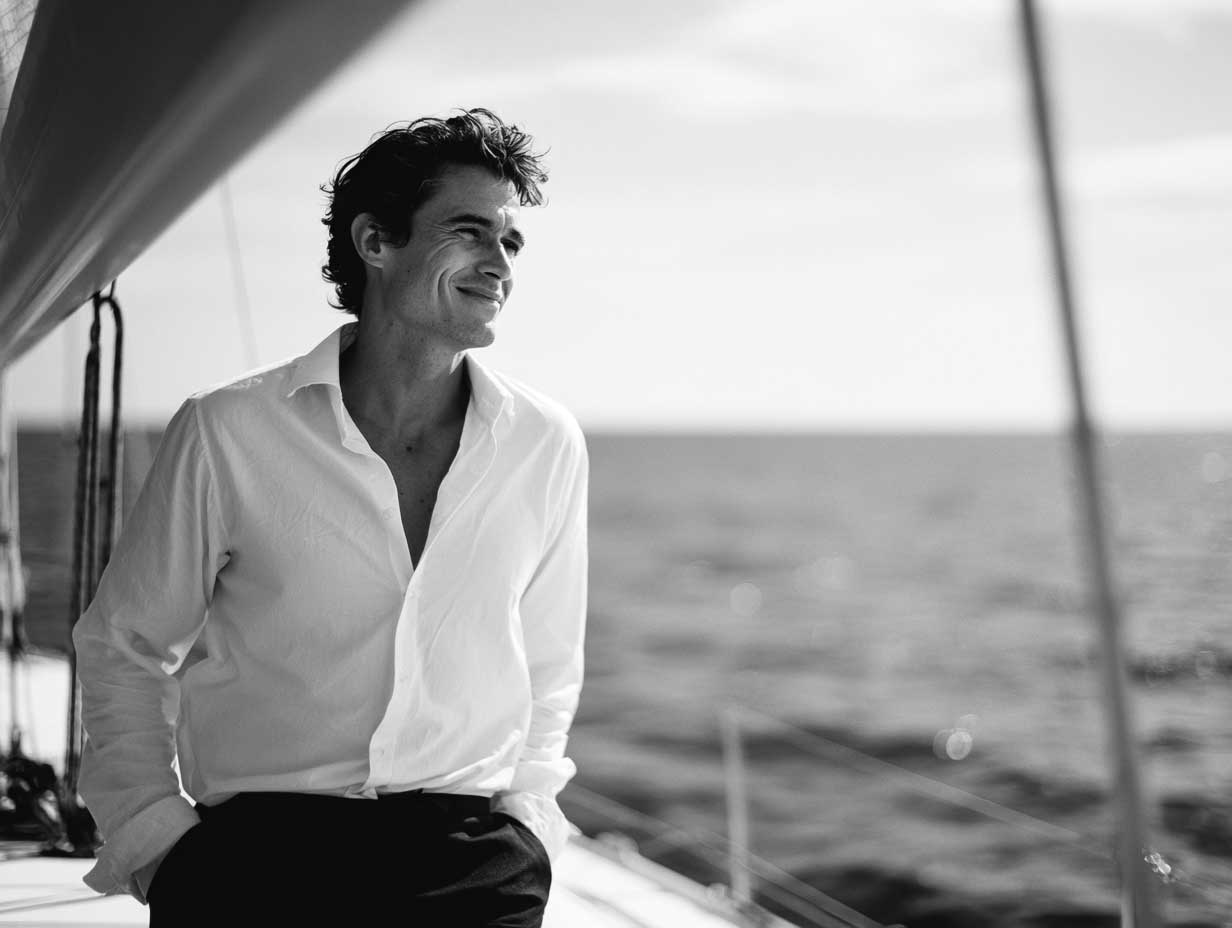
    sailing yacht

    The owner’s yacht reflects a private idea of success

    The global yacht market is growing because more people can afford private marine assets. Grand View Research estimated the global yacht market at USD 10.34 billion in 2025 and projected it to reach USD 15.52 billion by 2033. Capgemini reported that global high-net-worth individual wealth reached USD 98.3 trillion by the end of 2025, with 25.3 million HNWIs worldwide.

    Those numbers explain demand. They do not explain meaning.

    A yacht is one of the few luxury assets that can change how a family lives. A watch marks time. A house anchors status. A car gives movement. A yacht combines shelter, mobility, privacy and adventure. It can host a family for dinner in Les Sables-d’Olonne, cross the Bay of Biscay, spend a season in the Mediterranean, then make a transatlantic passage toward the Caribbean.

    This is why many owners approach a yacht with a different seriousness. They are not only buying an object. They are designing a chapter of life.

    For some, the yacht is a reward after years of work. For others, it is a transition into a more mobile existence. For a couple, it may be a shared project after children have left home. For a family, it may become the place where children remember their parents most vividly. For an entrepreneur, it can be a rare private space beyond the speed of business.

    The best yacht builders understand this. They do not reduce the owner to a buyer. They listen to the life behind the purchase.

    The Privilège story has always been tied to family and ocean life

    Privilège Marine was founded in 1985 by Philippe Jeantot, a renowned solo sailor and creator of the Vendée Globe. The origin of the shipyard matters because it connects ocean experience with family cruising. Jeantot did not imagine only a fast boat. He imagined a catamaran capable of taking his family across the seas with confidence and comfort.

    That founding idea still matters today.

    Privilège Marine builds in Les Sables-d’Olonne, a place deeply associated with offshore sailing. The local culture is not ornamental. It shapes the way boats are understood. The Vendée coast has a direct relationship with open water, weather, preparation and departure. A yacht built there carries more than a brand address. It carries a maritime context.

    This is important because bluewater cruising cannot be faked. It requires serious thinking about structure, protection, system access, sail handling, visibility, load-carrying capacity and the balance between performance and comfort. The yacht must reassure its owners without making the sea feel remote.

    Our catamarans are designed as spaces of freedom, but that freedom depends on robust decisions. The owner’s suite, protected helm, large cockpit, storage capacity, interior volume and offshore certification all serve the same purpose: to allow people to go further and stay longer.

    The emotional promise is real because the technical foundation is real.

    The new generation of owners wants more than escape

    It would be too simple to say that yacht owners want to escape. Many want the opposite. They want to reconnect.

    They want to reconnect with family. With time. With nature. With silence. With movement. With a more direct relationship to weather and place. They want life to feel less abstract.

    This shift is visible in the way owners now discuss yachts. They ask for office space because they do not want to choose between business and distance. They ask for larger storage because they want longer autonomy. They ask for flexible cabins because family needs change. They ask for better owner privacy because they spend more time aboard. They ask for natural light, sound comfort and fluid circulation because they are thinking about daily life, not only occasional use.

    The Privilège Signature 600, unveiled in 2026, reflects this evolution. Developed as a natural evolution of the Signature 580, it keeps the offshore capability of the platform while refining interior design, spatial continuity and the perception of volume. It also pushes personalization further, with spaces conceived around owner use rather than fixed convention.

    That is the direction of serious luxury. Less spectacle. More relevance.

    A yacht that supports a life project must accept that owners evolve. Children grow. Work patterns change. Guests come differently. Cruising programmes expand or contract. The yacht must remain coherent through these changes. This is why adaptable spaces, intelligent layouts and durable design matter so much.

    The future of luxury yachting will belong to boats that feel personal without becoming fragile.

    The ocean gives time a different value

    At sea, time changes. It is less compressed. The day is built around weather, light, meals, watches, swimming, maintenance and rest. This rhythm can feel unfamiliar at first. Then it becomes one of the greatest privileges of ownership.

    A bluewater catamaran gives an owner the ability to choose this rhythm more often. It creates a private world where time is not only managed, but lived.

    This is the emotional heart of the subject. A yacht is never just a yacht because it touches the way people spend the most finite resource they have. Time with children. Time with a partner. Time away from interruption. Time to cross an ocean slowly enough to feel its scale. Time to arrive somewhere by effort, not only by ticket.

    Luxury often speaks about rarity. In modern life, uninterrupted time may be the rarest luxury of all.

    This is why the yacht must be designed with honesty. If the owner wants to cook, the galley must support it. If the owner wants solitude, the suite must protect it. If the owner wants to host, the cockpit and saloon must make it natural. If the owner wants ocean passages, the yacht must be ready for them. If the owner wants family life, the boat must welcome family life with practical intelligence.

    A beautiful yacht that fails these tests becomes a possession. A yacht that passes them becomes part of a family’s story.

    The best yachts are remembered through moments

    Owners rarely remember only specifications. They remember departures before sunrise. They remember a child taking the helm. They remember the first night watch. They remember dinner in a quiet anchorage. They remember the relief of a protected cockpit in weather. They remember the silence after land disappears. They remember laughter in the saloon and the simple dignity of arriving by sea.

    This does not reduce the importance of engineering. It proves its value. The technical quality of the yacht makes these memories possible. Safety, comfort, autonomy and reliability are the quiet foundations beneath the emotional life of the boat.

    At Privilège Marine, this is the responsibility we accept. We build luxury bluewater catamarans for owners who want to live more fully at sea. The yacht must be elegant, but elegance alone is too small an ambition. It must be safe. It must be personal. It must be robust. It must be calm. It must have the humility to serve the owner’s life rather than dominate it.

    The most meaningful yachts do not ask owners to adapt their dreams to a catalogue. They make room for the dream to become practical.

    A Privilège is built for crossings, anchorages, family dinners, quiet mornings, hard weather, long horizons and ordinary days made extraordinary by place. That is why the yacht is never just a yacht. It is the architecture of a life chosen at sea.
  • The New Office at Sea: Working Remotely from a Catamaran

    The New Office at Sea: Working Remotely from a Catamaran

    How remote work, offshore internet and bluewater catamarans are changing the way owners live, sail and run their professional lives.

    Working from a catamaran has moved from fantasy to practical reality. The change has come from three forces: remote work culture, better satellite internet and yachts designed as genuine homes at sea. For many owners, the attraction is direct. They want professional continuity without being tied to one city, one office or one season. Yet the idea only works when the yacht is prepared as a workplace, not only as a place to sail. Internet, power, desk ergonomics, sound control, redundancy, data security and weather planning matter as much as comfort. At Privilège Marine, this is where the concept becomes serious. A bluewater catamaran must cross oceans safely. It must also support daily life with calm, privacy and technical reliability. The modern owner does not simply want escape. The modern owner wants freedom with structure, and a yacht capable of making that freedom work.

    The desire to work from sea has become a serious lifestyle choice

    The desire behind working from a catamaran is easy to understand. It is the wish to keep one’s professional life while changing the frame around it. A call begins with a horizon outside the window. A report is written while the boat lies at anchor. A strategic decision is made after a morning swim. The office has not disappeared. It has moved.

    This desire became stronger after remote work became normal in many professional sectors. Gallup’s 2026 data on remote-capable jobs in the United States shows 26% of employees working fully remotely, 52% working in a hybrid model and 22% working on site. The same research indicates that six in ten remote-capable employees want hybrid work, while about one-third prefer fully remote work. That is a large cultural shift. It explains why the yacht is no longer seen only as a holiday object.

    For entrepreneurs, investors, consultants, designers, senior executives and owners of international businesses, work is already mobile. Many no longer measure productivity by presence in a building. They measure it by output, decisions, trust and availability. This is why the image of the digital nomad sailor has matured. It is no longer limited to a young freelancer on a small boat with a laptop. It can describe an owner managing a company, a family office, a portfolio, a creative studio or a professional practice from a bluewater catamaran.

    The attraction is strong, but it must be treated with honesty. Working remotely from a cat is not a permanent holiday. It requires discipline. Calls still happen at fixed times. Deadlines still apply. Clients still expect clarity. A yacht creates freedom, but it also creates constraints: weather, power, time zones, maintenance, anchorage rules and connectivity limits. The owners who succeed are the ones who respect both sides of the equation.

    The catamaran changes the feeling of remote work

    A sailing catamaran offers a different experience from a monohull. The wide beam gives more living space. The platform is more stable at anchor. The saloon is bright. Cabins are separated by two hulls. Outdoor and indoor spaces connect naturally. These details matter when work becomes part of life on board.

    Remote work is sensitive to space. A laptop on a dining table may be enough for one email. It is not enough for a full working week. A proper workspace needs privacy, ventilation, good light, seating comfort, charging points and a surface that stays useful when the boat moves. It also needs acoustic separation. Nobody wants to join a board call from the middle of a busy saloon while guests prepare lunch.

    This is where the design of a true bluewater catamaran becomes decisive. At Privilège Marine, we build yachts as safe, capable ocean-crossing platforms. We also build them as homes. This balance is essential for remote work. The owner needs safety at sea, but also domestic intelligence. A yacht used for work must allow different parts of life to coexist. One person may be on a video call. Another may be reading. Children may be studying. Guests may be resting. The boat must absorb these routines without constant compromise.

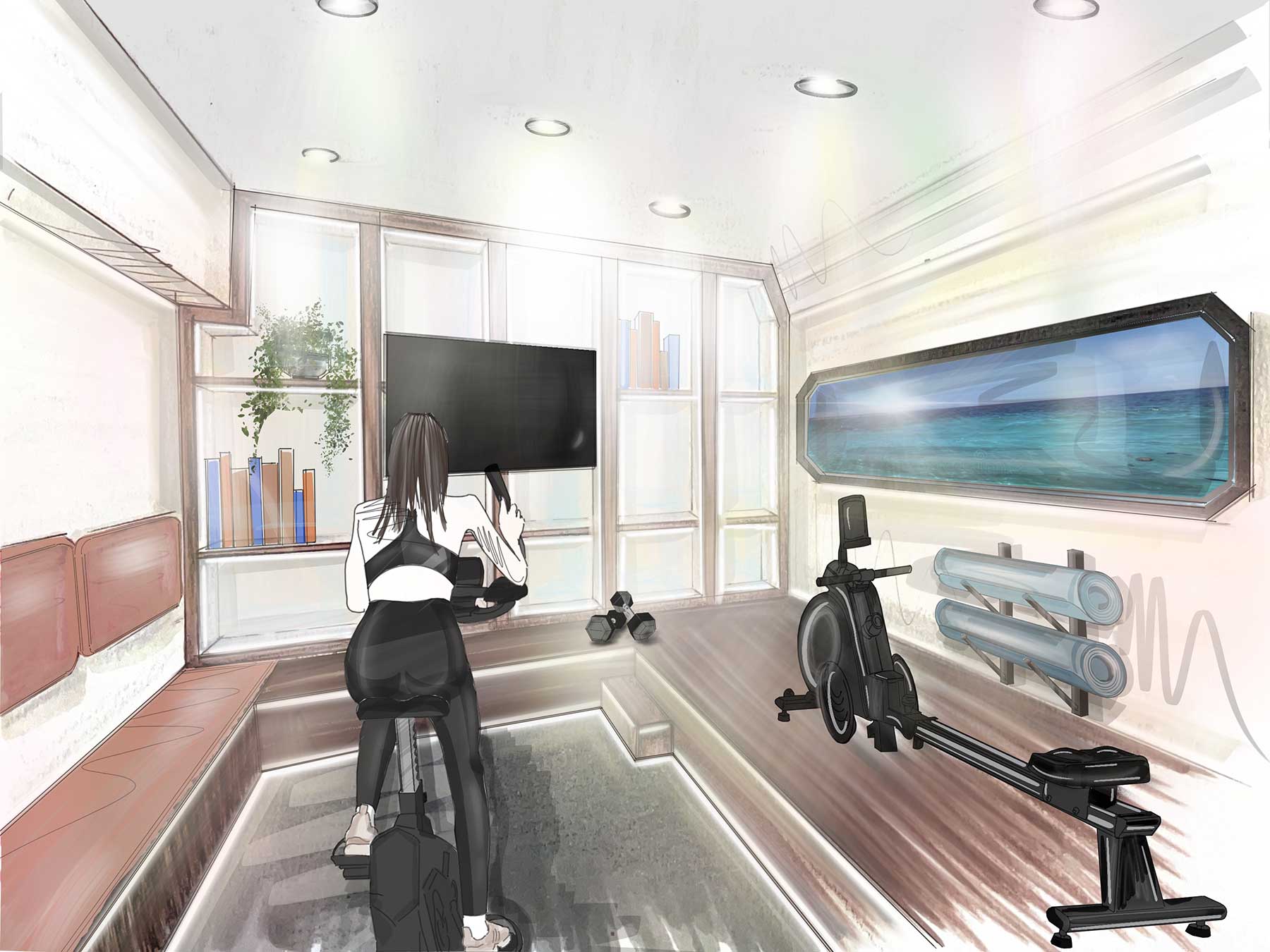
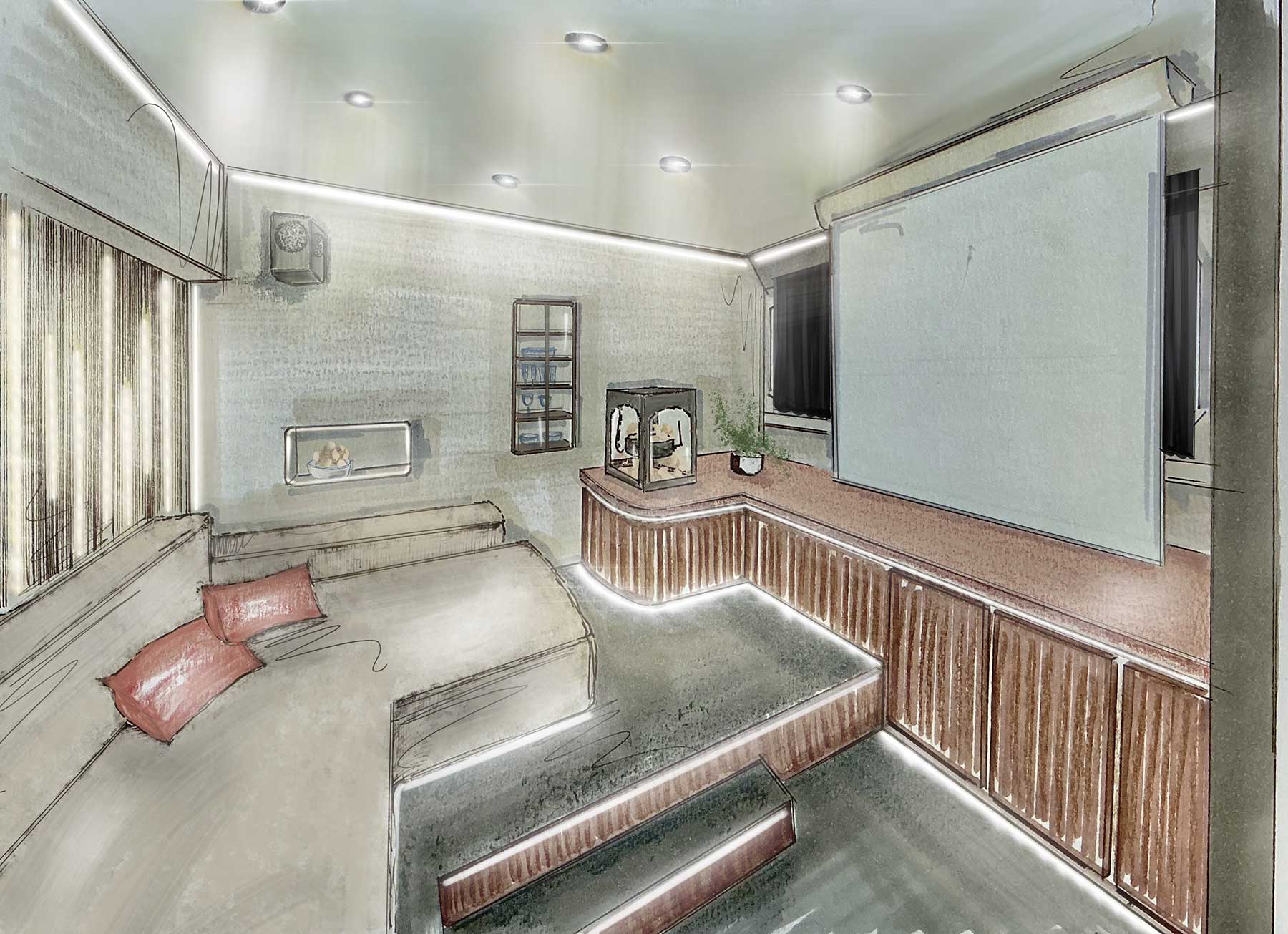
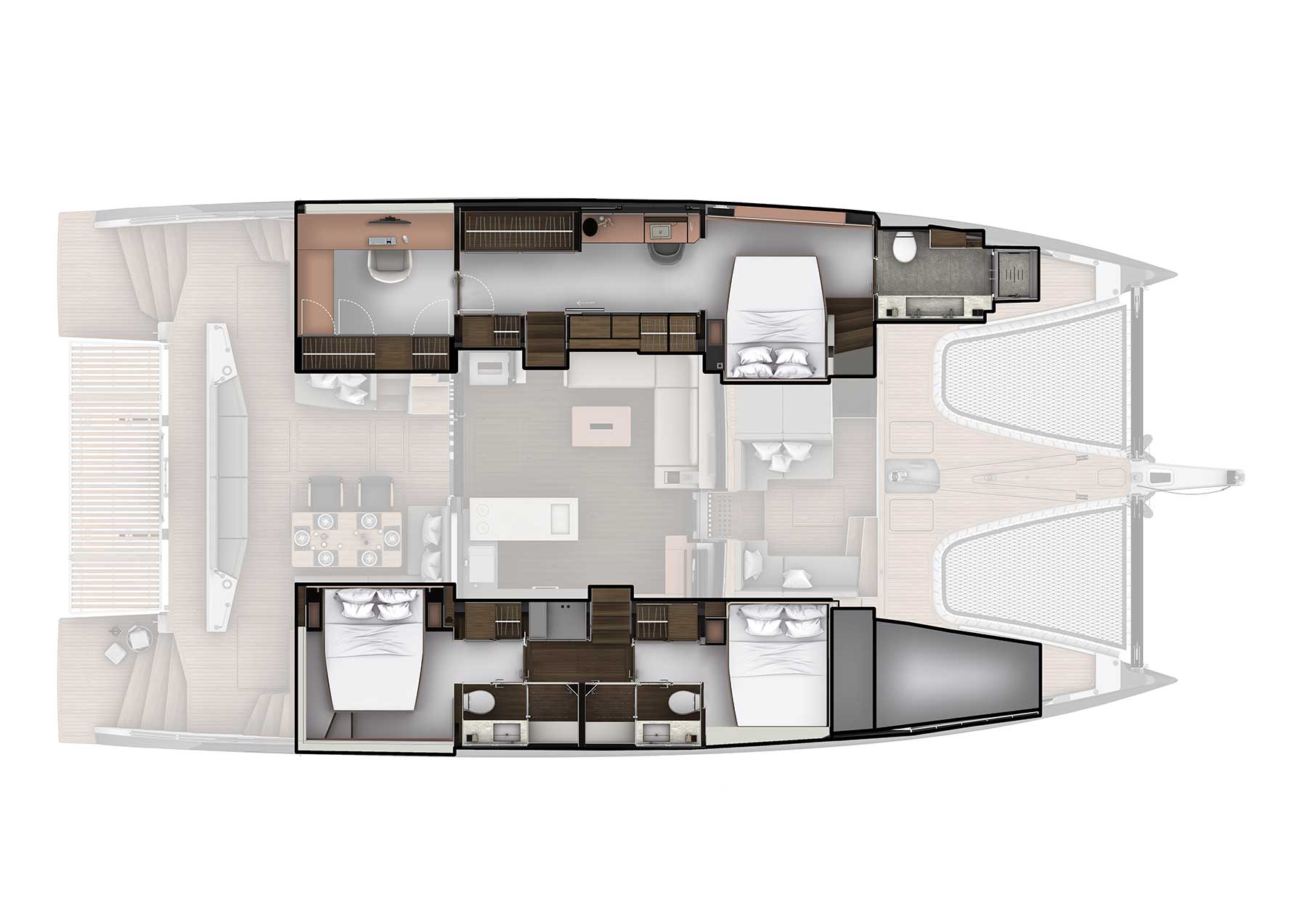
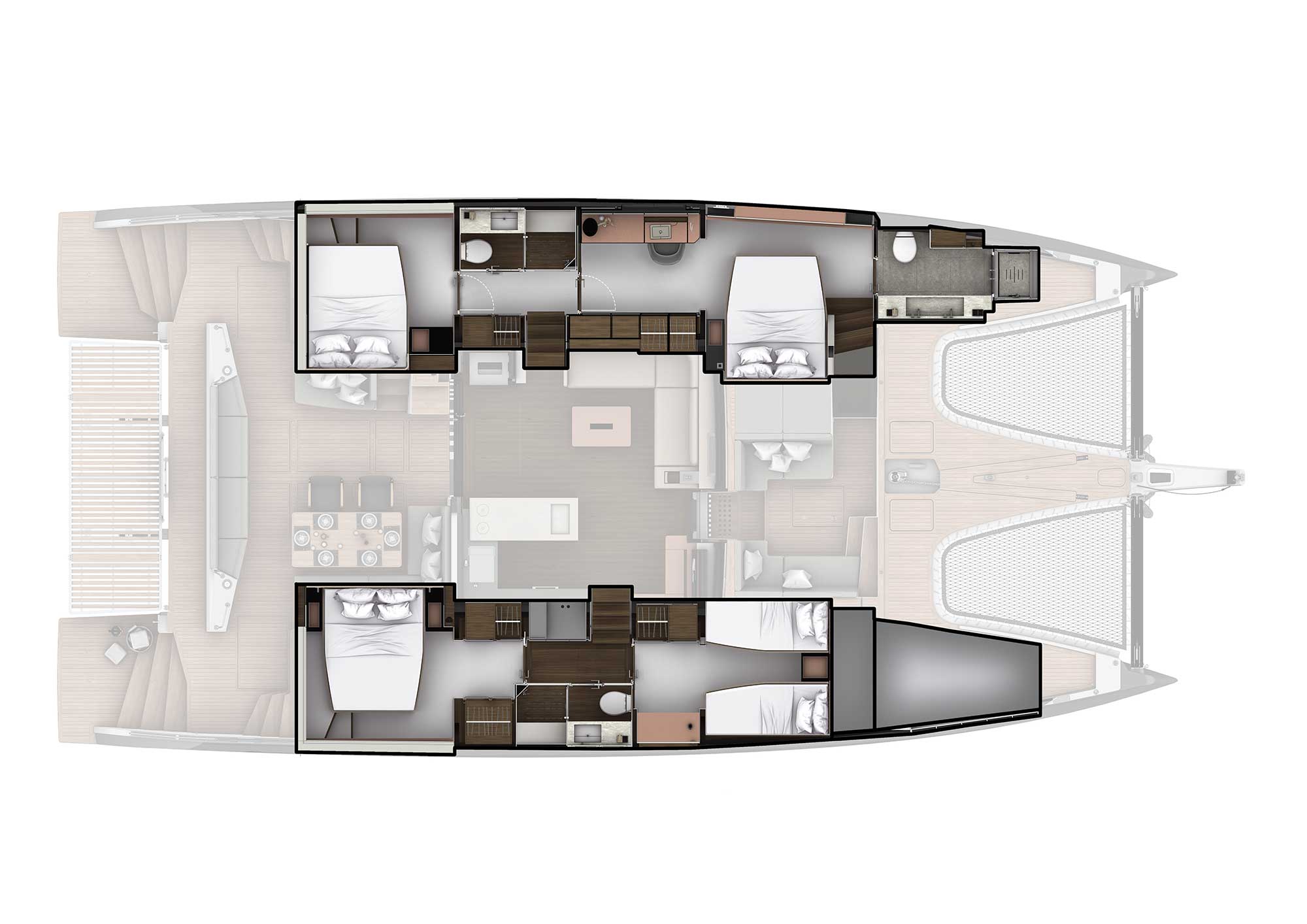
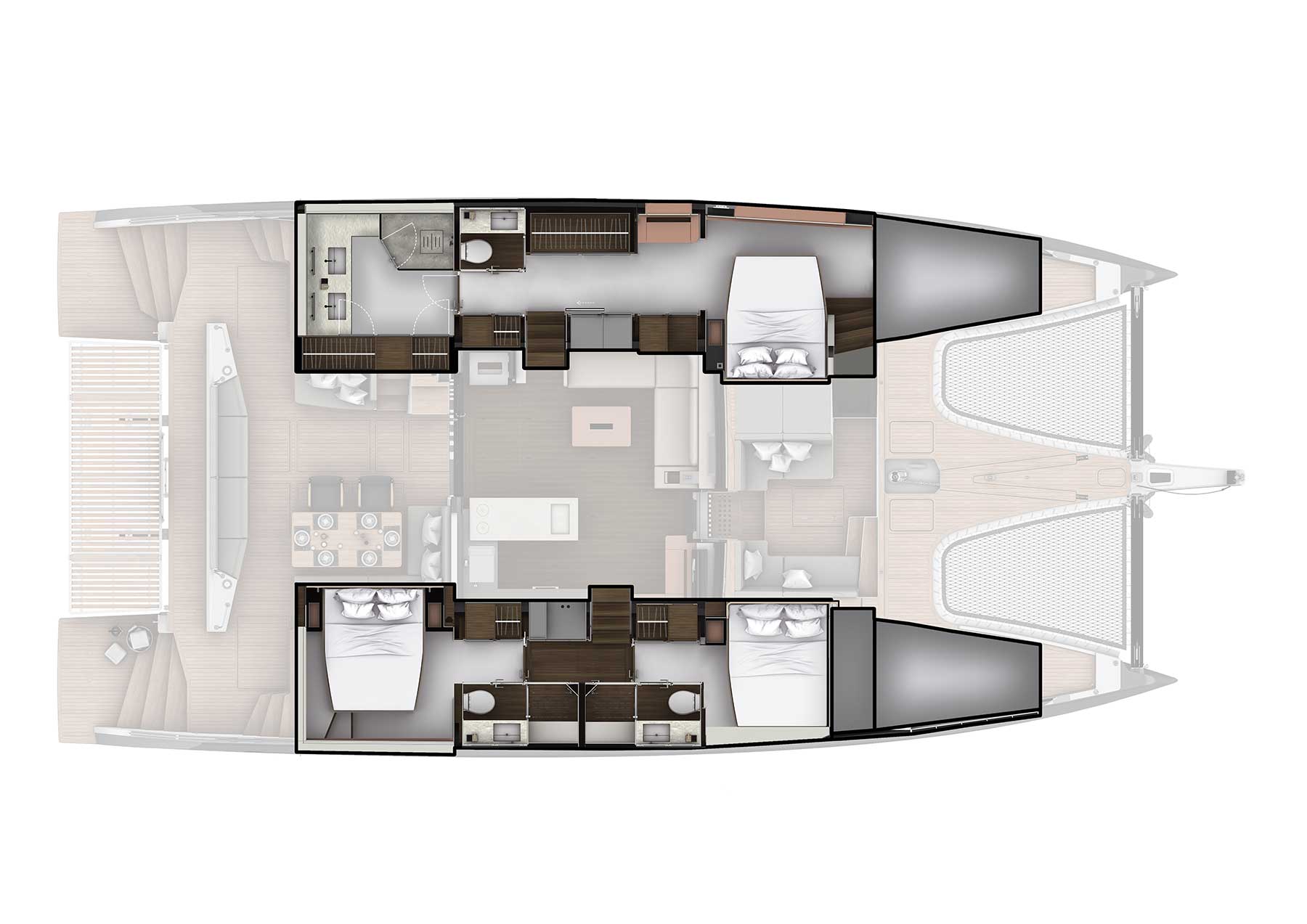
    The Privilège Signature 600 shows this evolution clearly. Its aft portside cabin can be designed as a dedicated office, private cinema, gym, storage room, artist’s studio or walk-in wardrobe. In a remote-work context, that flexibility is not decorative. It is structural. A dedicated office changes the quality of life on board. It separates work from leisure. It makes concentration easier. It gives the owner a real professional space inside a home at sea.

    The internet connection is the new technical backbone

    The central question is no longer whether a boat can connect to the internet. The question is how well it connects, where it connects and what happens when the main system fails. Working from boat internet must be designed as a system, not as a gadget.

    A modern catamaran can use several layers of connectivity. Near land, 4G and 5G routers can provide fast service, depending on local coverage and antennas. Some marine systems advertise useful coastal range up to about 46 kilometres (25 nautical miles) from shore. In a marina, shore Wi-Fi may be useful, although it is often crowded and inconsistent. Offshore, satellite becomes the primary solution.

    Low Earth orbit satellites have changed expectations. Starlink Maritime, using Global Priority plans, is marketed for maritime and global connectivity, with plans starting from $250 per month and hardware listed at $1,999 in the United States. The system has made high-speed internet at sea more accessible than traditional VSAT for many yacht owners. For people trying to work from sailing catamaran remotely, this is a major development.

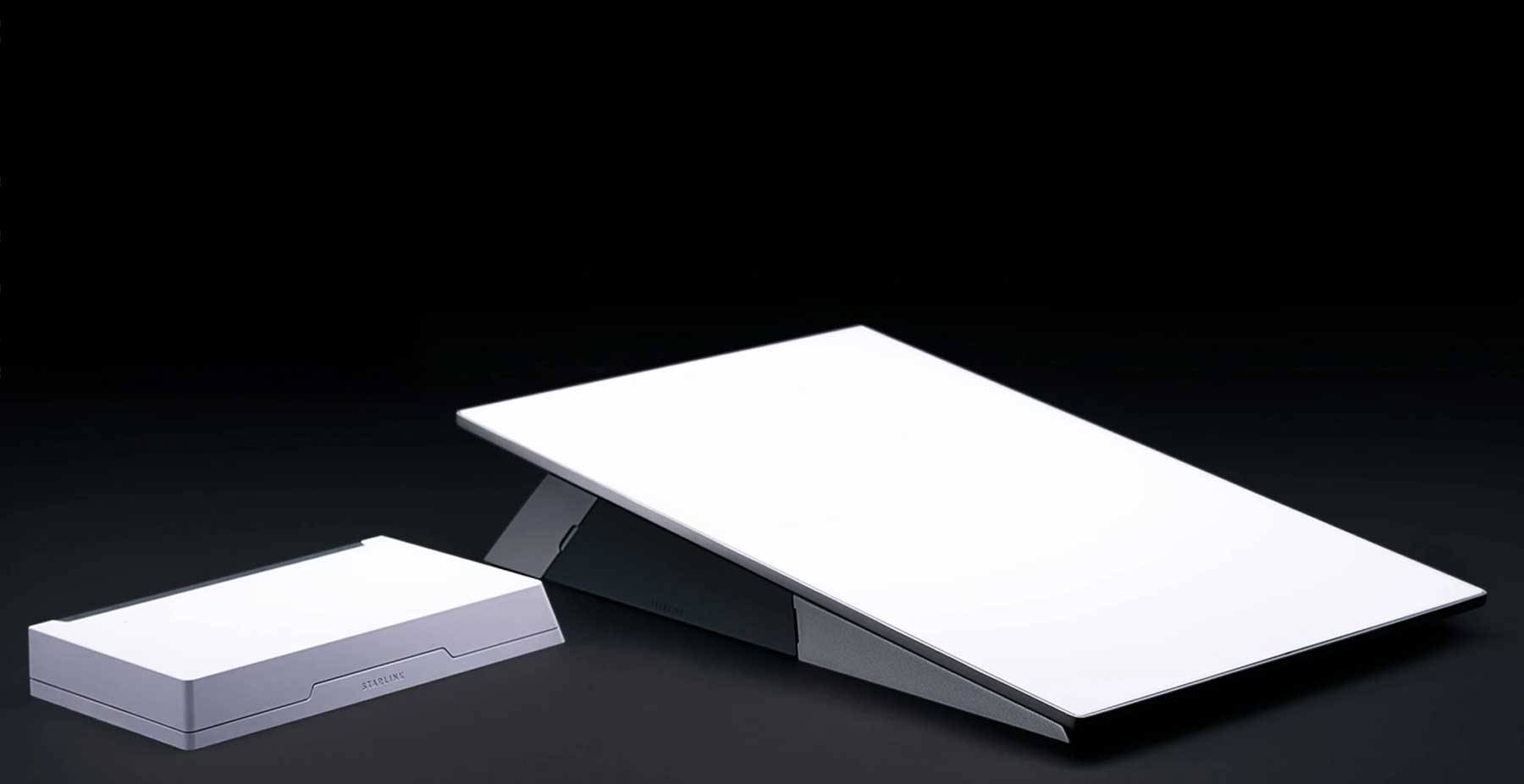
    The Starlink Mini also illustrates how compact satellite hardware has become. Its official specification sheet lists a terminal of 298.5 x 259 x 38.5 millimetres (11.75 x 10.2 x 1.45 inches), a weight of 1.10 kilograms (2.43 pounds), an IP67 environmental rating when installed with the DC cable and plug, and average power consumption of 25 to 40 watts. It can connect up to 128 devices. These numbers matter because space, weight and power are always serious on a yacht.

    Yet a serious offshore work setup should not depend on one system alone. Catamaran Wi-Fi offshore needs redundancy. A common architecture may include Starlink or another high-speed satellite service, a 4G or 5G marine router, marina Wi-Fi capture, an Iridium GO! exec or similar L-band backup, and a separate emergency communications system. The Iridium GO! exec, for example, uses Iridium Certus 100 and offers IP data speeds up to 88 Kbps. That is not enough for video meetings. It is enough for essential messaging, weather files, compressed email and emergency communications.

    The lesson is direct. Offshore internet should be fast enough for work and robust enough for failure.

    The bandwidth required for real work is measurable

    Video calls are often the first test. Zoom states that 1080p video can require 3.8 Mbps upload and 3.0 Mbps download. A 720p group video call can require 2.6 Mbps upload and 1.8 Mbps download. Google Meet lists up to 3.6 Mbps outbound and 3.6 Mbps inbound for 1080p video. These are not extreme numbers by land standards. At sea, they are serious because bandwidth may fluctuate.

    This is why the owner should define work needs before choosing equipment. A writer, investor or consultant who mainly uses email, cloud documents and voice calls needs one level of connectivity. A founder who runs daily video calls, transfers large files and manages a distributed team needs another. A designer, architect or engineer working with heavy files needs a more disciplined data plan.

    The practical rule is simple. The boat should be prepared for peak work, not average work. A system that handles email at anchor may fail during a three-hour video call in bad weather. The planning should include data allowance, antenna placement, router quality, onboard Wi-Fi distribution, cybersecurity and power.

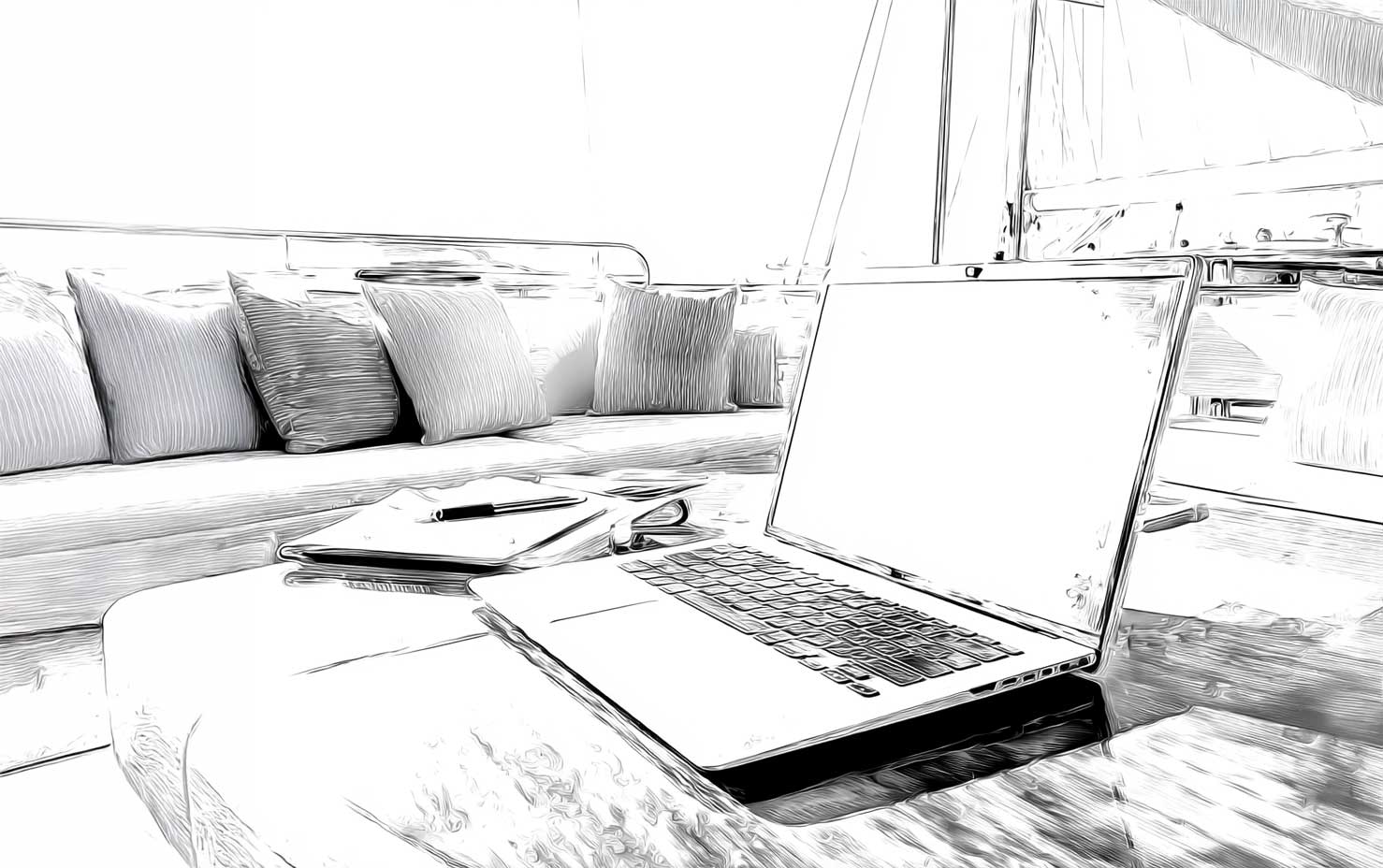
    digital nomad at sea

    The onboard network should be built like a small office

    A yacht that supports remote work needs a network architecture. The satellite terminal is only the start. The data must reach the desk, the saloon, the cabins and the cockpit. It must do so without weak zones, repeated resets or improvised cables.

    A practical setup includes a marine-grade router, external antennas, network switching, separate guest and work networks, password management and automatic failover between sources. Products such as Peplink’s MAX BR1 Pro 5G, Raymarine YachtSense Link, Digital Yacht 5G Xtream and KVH hybrid systems show how the market has moved toward multi-source connectivity. The aim is to combine satellite, cellular and shore Wi-Fi rather than depend on one path.

    The owner should also separate professional data from leisure traffic. Family streaming, children’s tablets, navigation updates and guests’ phones can consume bandwidth quickly. A professional call should not compete with a film download. Network rules can prioritise work devices, limit streaming, and reserve bandwidth for calls, cloud access and navigation.

    Cybersecurity deserves the same attention. A floating office still handles sensitive information. A remote-working owner should use a VPN when appropriate, strong passwords, multi-factor authentication, device encryption and regular updates. Cloud backups should be scheduled when bandwidth is stable. A local backup drive should remain on board. Sensitive calls should be taken in a private space with a headset, not in the cockpit during a crowded anchorage.

    The workspace must be designed before the first long passage

    A real office on a catamaran needs physical planning. The desk should face a calm visual field. The chair should support long sessions. The screen should be visible in daylight. The lighting should work at night without glare. Ventilation should be quiet. The microphone should not pick up wind, pumps, galley noise or cockpit conversation.

    The details are small, but they decide whether the owner works well. A second monitor may improve productivity. A headset with noise reduction can save a difficult call. A docking station can reduce cable clutter. A document scanner may be useful for legal and administrative tasks. A printer is rarely essential, but some owners still want one for contracts, forms or customs documents.

    Power outlets must be placed where work actually happens. USB-C charging, 230V or 110V sockets, inverter capacity and battery reserve should be planned together. This is where yacht design and electrical engineering meet daily life.

    The power system becomes part of the working day

    Remote work consumes energy. A laptop may draw 30 to 100 watts, depending on model and load. A Starlink Mini draws 25 to 40 watts on average. A router, display, phone chargers, lighting and ventilation add more. A full workday may look modest compared with air conditioning or galley equipment, but it still matters during long periods at anchor.

    This is why energy management is central to working from a boat. Solar panels, battery capacity, alternators, hydrogeneration, inverters and monitoring systems define the real autonomy of the office. The owner should know how long the network can run without engines or generator. The answer should be measured in practice, not guessed.

    On a serious bluewater catamaran, power is a safety issue as well as a comfort issue. Navigation, communications, autopilot, refrigeration, water pumps and bilge systems all depend on electrical discipline. Remote work should be integrated without weakening the yacht’s core systems.

    A practical schedule helps. Heavy uploads can be done when power generation is strong. Video calls can be grouped. Cloud backups can run at anchor during daylight. Non-essential devices can be disconnected during passages. This is not a downgrade of comfort. It is seamanship applied to digital life.

    The working rhythm must respect weather and time zones

    The sea changes the working day. Time zones shift during ocean passages. Weather windows dictate departures. Maintenance interrupts plans. A squall line does not care about a client meeting. A marina check-in may take longer than expected. A customs visit can break an afternoon.

    The successful remote-working owner builds margin into the week. Critical meetings should not be scheduled during landfall, departure or complex pilotage. Long passages should include lower-bandwidth days. Team members should understand when the owner is available and when the boat has priority. The calendar should follow the sea, not fight it.

    This does not mean work becomes less serious. It becomes better planned. A founder on a catamaran may be highly productive because distractions are fewer and the environment is calm. Gallup data shows that hybrid employees cite improved work-life balance, more efficient use of time and less burnout among the main benefits of flexible work. Those benefits can be amplified at sea, provided the owner has structure.

    The emotional side is also real. There is a special clarity in working from a quiet anchorage. There is also loneliness in long-distance remote work if routines are weak. The yacht should support both concentration and connection. Family time, exercise, reading, sailing and rest should have their place. A remote-working catamaran is a platform for life, not a machine for answering emails in exotic places.

    The Privilège approach turns freedom into a working environment

    At Privilège Marine, the starting point is always the owner. Every yacht must answer a specific way of living. For remote work, that means asking direct questions before the boat is built.

    Where will the owner work? How many hours per day? How many video calls per week? Will two people work at the same time? Is privacy essential? Will the yacht cross oceans? Will it stay mainly in the Mediterranean, Caribbean or Pacific? Is the owner managing confidential information? Does the boat need a dedicated office, or can the workspace be integrated into a cabin or saloon zone?

    These questions shape the yacht. They affect layout, electrical capacity, antenna placement, ventilation, acoustic comfort, lighting, storage and network architecture. They also affect the owner’s satisfaction years later. A yacht designed for occasional holidays will not support the same life as a yacht designed for work, family and offshore movement.

    The Privilège Signature 600 gives a clear example. With an overall length of 18.28 metres (60 feet), a beam of 9.18 metres (30 feet 11 inches), 259 square metres of total sail area (2,787 square feet), 2 x 485 litres of fuel capacity and 2 x 450 litres of freshwater capacity, it remains a serious long-distance cruising catamaran. Its customizable aft portside cabin makes the professional dimension concrete. It can become a proper office rather than an improvised corner.

    That is the difference between adding internet to a yacht and designing a yacht that can support a professional life.

    The future office will be designed around relevance

    The ability to work from sea changes what owners expect from luxury. Finish quality still matters. Materials still matter. Silence, light, storage and craftsmanship still matter. Yet relevance matters more. A yacht becomes more valuable when it supports the owner’s real life.

    For one owner, that means a private office with redundant connectivity and acoustic control. For another, it means a family learning space. For another, it means a cockpit table that works for morning emails and evening dinner. The best solution is not the most spectacular one. It is the one that fits the routine.

    The dream of working from a catamaran is powerful because it connects two modern desires. One is freedom from fixed geography. The other is the need for a stable, beautiful and reliable place to live well. A Privilège catamaran can bring those two desires together because it is built for distance and designed around the owner.

    The sea gives perspective. The yacht gives structure. The work continues. The office becomes quieter, wider and closer to the horizon.

  • The Privilège 600: How a Custom Cabin Redefines Life Aboard

    The Privilège 600: How a Custom Cabin Redefines Life Aboard

    The Privilège Signature 600 transforms its aft portside cabin into a fully customizable room, extending the idea of a true home at sea.

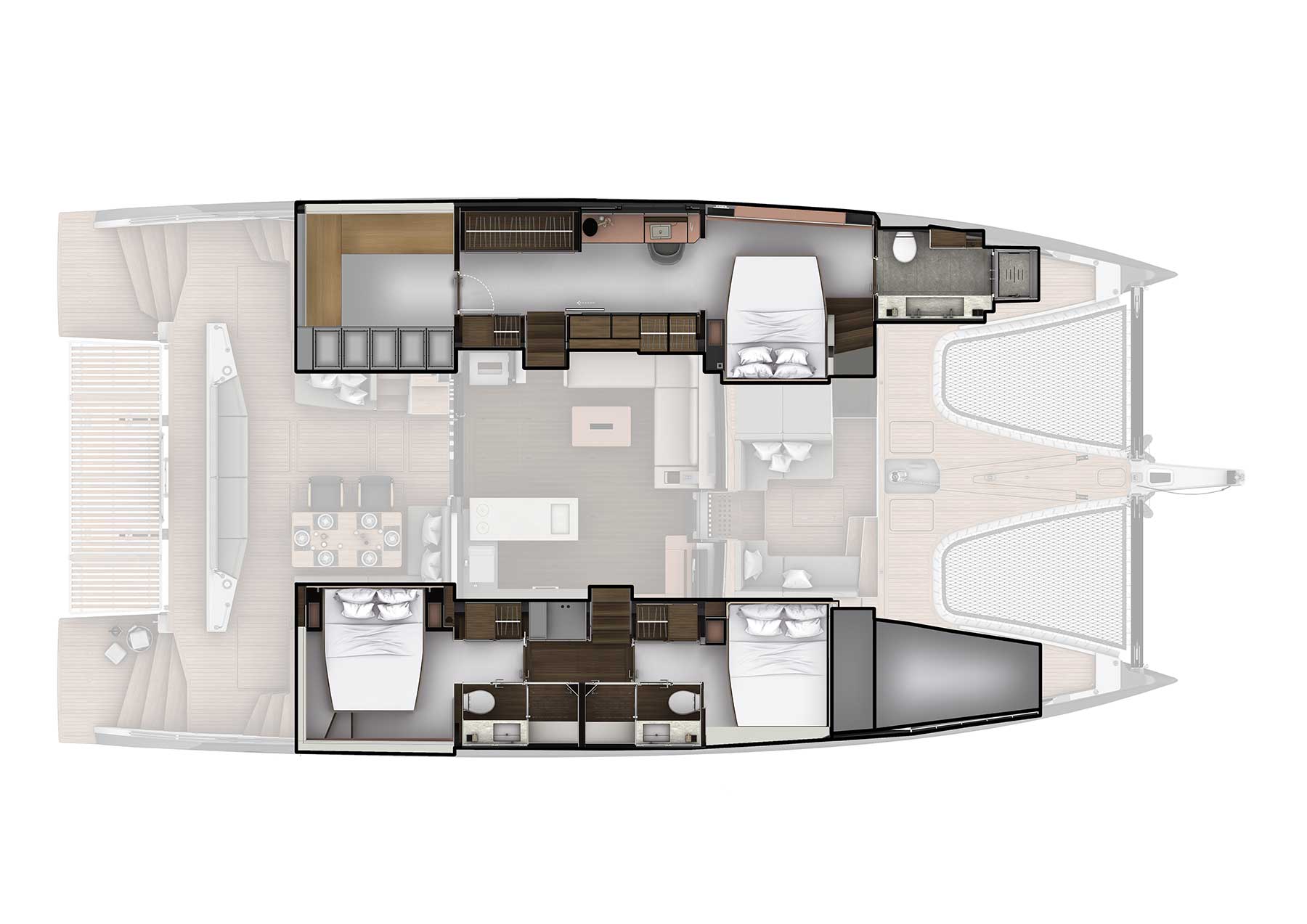
    The Privilège Signature 600 marks a precise evolution in the way a luxury bluewater catamaran can be designed around its owner. Built as the natural successor to the Signature 580, it keeps the proven offshore platform, the 18.28-metre length (60 ft), the 9.18-metre beam (30 ft 11 in) and the owner-focused DNA that define Privilège Marine. Its most distinctive innovation is the aft portside cabin, which becomes a fully customizable room rather than a fixed guest cabin. It can be designed as a private cinema, gym, office, storage room, artist’s studio or walk-in wardrobe. Combined with the full owner’s hull concept, this flexible space pushes the yacht closer to the idea of a house at sea. The result is not decorative personalization. It is a deeper way to shape life on board.

    The Signature 600 reflects a more mature idea of personalization

    The new Privilège Signature 600 is not a radical break from the Privilège philosophy. It is a more refined expression of it. The model builds on the Signature 580, one of the shipyard’s important bluewater catamarans, and develops the concept further with a calmer interior language, more architectural continuity and a stronger sense of private ownership.

    At Privilège Marine, personalization has never meant choosing only fabrics, veneers or decorative details. It means designing a yacht around the way its owner lives. This difference matters. Many yachts offer options. A true bespoke catamaran asks a deeper question: how will the owner use the yacht at anchor, at sea, with family, with guests, during long passages, during work, and during months away from land?

    The Signature 600 answers that question with a specific architectural choice. The aft portside guest cabin becomes a flexible, open-ended room. It is no longer treated only as a sleeping space. It becomes a blank page.

    That choice changes the conversation between shipyard and owner. The yacht is no longer only arranged around a standard accommodation plan. It becomes a more personal environment, where one area can be assigned to a passion, a routine, a professional use or a practical need. This is a significant development in the 60-foot catamaran segment, where many interiors still follow predictable patterns.

    The aft portside cabin becomes a room with a purpose

    The aft portside cabin on the Signature 600 is the centre of this evolution. It can remain a guest cabin if the owner wants maximum accommodation. It can also become something far more personal.

    A private home cinema is one possible direction. It gives the owner a quiet, enclosed space for films, sport, family evenings or music, away from the main saloon. At anchor, this creates a different rhythm on board. The yacht gains a retreat that does not compete with the cockpit, flybridge or dining area.

    A gym is another practical option. Long-distance cruising often changes daily routines. Owners who spend months on board need ways to maintain strength, mobility and balance. A dedicated fitness room can include compact equipment, resistance systems, yoga mats, ventilation and secure storage. On a catamaran designed for extended cruising, health is not a luxury detail. It becomes part of endurance.

    A dedicated office is also increasingly relevant. Many owners now expect to work from the yacht. Satellite communications, remote management, video calls and digital business have changed how people use private yachts. A proper office needs more than a desk. It needs sound control, storage, charging points, lighting, seating comfort and privacy. The Signature 600 can turn this area into a serious workspace, not a temporary corner of the saloon.

    For long-distance cruising, additional storage can be equally valuable. A yacht that crosses oceans needs spare parts, tools, safety equipment, food stores, dive equipment, technical supplies and personal belongings. The difference between a beautiful yacht and a practical offshore home often appears in storage discipline. A dedicated storage room can make life at sea calmer and safer.

    The same space can become an artist’s studio, a dressing room, a children’s learning room, a hobby room or an expansive walk-in wardrobe. The point is not to multiply ideas for their own sake. The point is to give the owner a useful room with a defined role.

    The full owner’s hull changes the hierarchy on board

    The Signature 600 also pushes forward the idea of the full owner’s hull. In a conventional layout, guest accommodation often dominates the design logic. Cabins are multiplied. Berths are counted. The yacht is judged by how many people it can sleep.

    Privilège Marine takes a different view. A yacht designed for an owner should first serve the owner’s life on board. Guest comfort remains important, but it should not dilute the private experience.

    The owner’s hull concept creates a stronger personal territory. It gives the owner a more generous and coherent suite, with privacy, storage, circulation and daily comfort. On a 60-foot bluewater catamaran, this matters because the yacht is large enough to be lived in for long periods, yet still compact enough to remain personal and manageable.

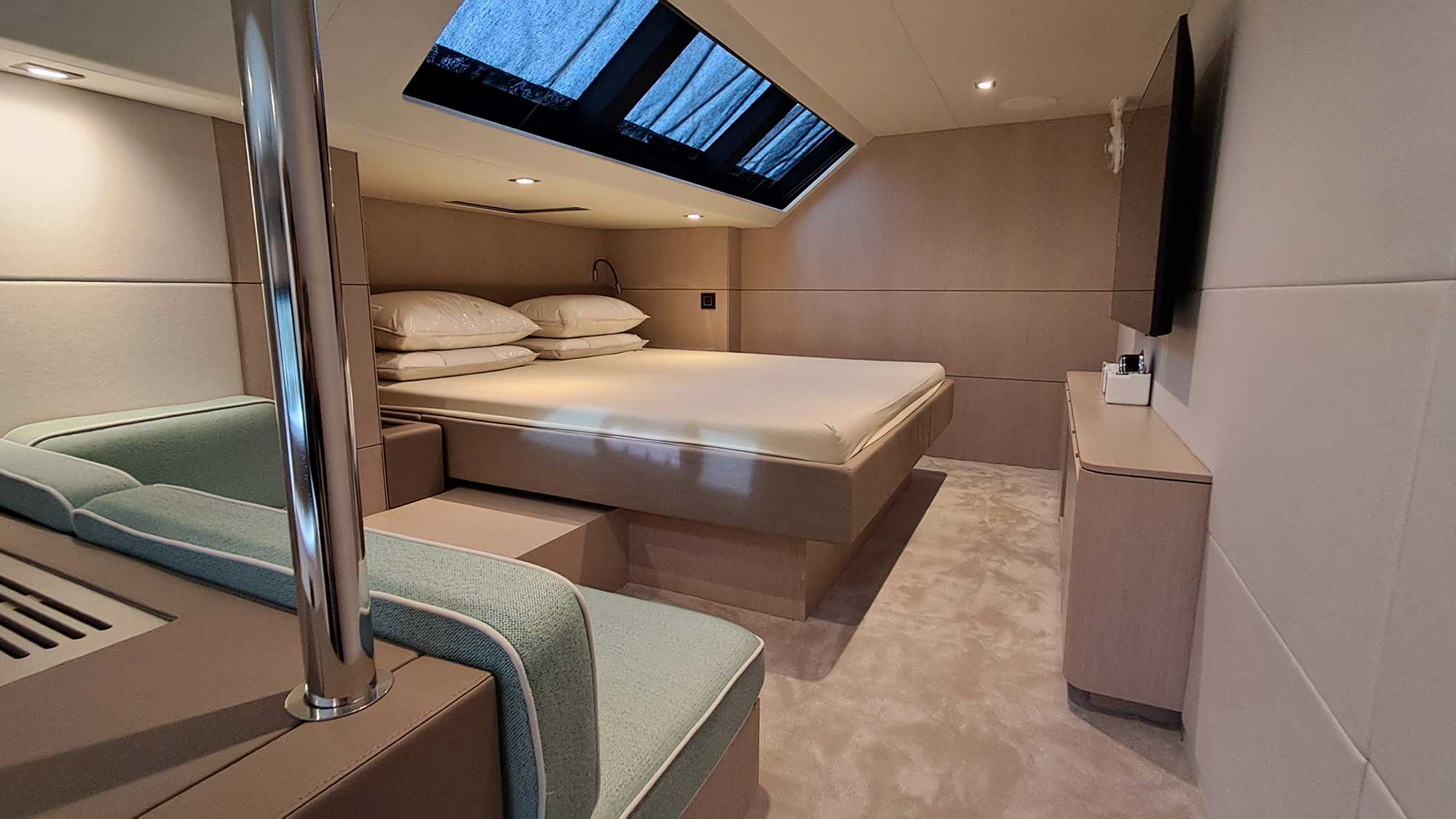
    The aft portside customizable room reinforces this logic. It gives the owner another way to shape the private side of the yacht. A guest cabin is useful for some owners. A personal cinema, gym, office or wardrobe may be far more valuable for others. This is the key point. The best layout is the one that fits the real owner, not an imaginary market average.

    This approach is frank. A yacht should not pretend to be all things to all people. It should be designed around the people who will actually live aboard.

    The house at sea concept becomes more concrete

    The phrase “house at sea” is often used too easily in yachting. Many interiors look residential at boat shows. That does not mean they function as homes during real cruising.

    A house at sea must support daily life. It must offer private areas, shared areas, storage, light, ventilation, movement, quietness and practical routines. It must work at anchor and underway. It must remain comfortable during a passage, not only during a marina visit. It must let people read, sleep, cook, work, train, rest and receive guests without turning every activity into compromise.

    The Signature 600 moves this concept forward because the customizable aft portside cabin gives the yacht a room that would normally exist in a house. It may be a media room, a dressing room, a studio or an office. These are not typical yacht categories. They are domestic categories. They belong to the language of private homes.

    This is important for owners who spend long periods on board. A yacht used for weekends needs beds and bathrooms. A yacht used as a floating residence needs a richer spatial logic. It needs places for different parts of life.

    The Signature 600 remains a sailing catamaran. Its 259 square metres of total sail area (2,787 sq ft), including a 121-square-metre mainsail (1,302 sq ft), a 92-square-metre genoa (990 sq ft) and a 46-square-metre staysail (495 sq ft), confirm that this is still a yacht built for passage-making. Yet the interior evolution shows that offshore capability and residential comfort can be developed together.

    The technical platform keeps the customization serious

    Personalization has value only when the technical platform can support it. A customizable room on a weak or confused yacht is a marketing gesture. On the Signature 600, the concept rests on a proven bluewater base.

    The yacht has an overall length of 18.28 metres (60 ft), a beam of 9.18 metres (30 ft 11 in) and a draft of 1.85 metres (6.07 ft). Empty displacement is listed at 29 tonnes (63,934 lb), rising to 35 tonnes (77,162 lb) at full load. The fuel capacity is 2 x 485 litres (256 gal), and freshwater capacity is 2 x 450 litres (237 gal). The model is designed with 4 to 5 cabins and carries CE A-12 certification.

    These numbers matter because the Signature 600 is not only an interior project. It is a long-distance cruising catamaran. The custom room must be integrated into the yacht’s balance, weight distribution, systems, ventilation, electrical load, safety plan and maintenance access.

    A cinema may require screen placement, acoustic treatment, power management and sound isolation. A gym needs secure equipment, non-slip flooring and ventilation. An office needs lighting, connectivity, power outlets and privacy. Storage needs weight discipline and safe access. A walk-in wardrobe needs humidity control, materials that tolerate marine life and practical organisation.

    A true customized yacht layout cannot be improvised late in the process. It must be planned with design, engineering and use in mind. This is where a shipyard with a hands-on, artisanal culture has an advantage. The owner’s idea can be translated into a working room rather than a decorative concept.

    The design language supports calm rather than spectacle

    The Signature 600 was developed in continuity with Cabinet Marc Lombard and Darnet Design. This matters because the boat’s evolution is not only technical. It is also architectural.

    The interior approach focuses on softened lines, harmonized materials, indirect light and a greater sense of continuity between spaces. The goal is not visual drama for a first impression. It is a calmer onboard atmosphere for long-term living.

    This is an important distinction. Many yacht interiors are designed to impress quickly. Long-distance owners need something different. They need spaces that remain pleasant after weeks on board. They need light that is comfortable. They need surfaces that do not feel aggressive. They need circulation that does not interrupt life. They need storage that disappears into the design.

    The aft portside custom room benefits from this wider language. Whether it becomes a cinema, office, gym or wardrobe, it can be integrated into the yacht’s overall atmosphere. It does not need to feel like an added module. It can feel like part of the home.

    This is where personalization becomes subtle. The room may be highly specific, but it should still belong to the boat.

    The owner’s lifestyle becomes the design brief

    The most serious design question is simple: what does the owner actually do on board?

    Some owners sail as a couple and receive guests occasionally. Others travel with children. Some want to cross the Atlantic. Others want to move between the Mediterranean and the Caribbean. Some need privacy for remote work. Some want a yacht that can host family for several weeks. Some want to live aboard for extended periods and need storage, wardrobe space and personal routines.

    The Signature 600 allows the shipyard to turn these answers into architecture. A remote-working owner may choose a calm office with professional lighting, charging stations, sound insulation and dedicated communications equipment. A family may prefer a media room for children and guests. A sport-focused owner may choose a gym. A long-distance cruising owner may prioritise stores and technical organisation. An owner who treats the yacht as a true residence may want a wardrobe large enough to support changing climates and longer seasons.

    This is why the aft portside cabin is more than a design feature. It is a planning tool. It forces a useful conversation before the yacht is built. It asks the owner to define priorities.

    That conversation creates a better yacht. It also reduces disappointment later. A standard layout may look efficient on paper and still fail the owner’s life. A tailored layout begins with life and then shapes the yacht around it.

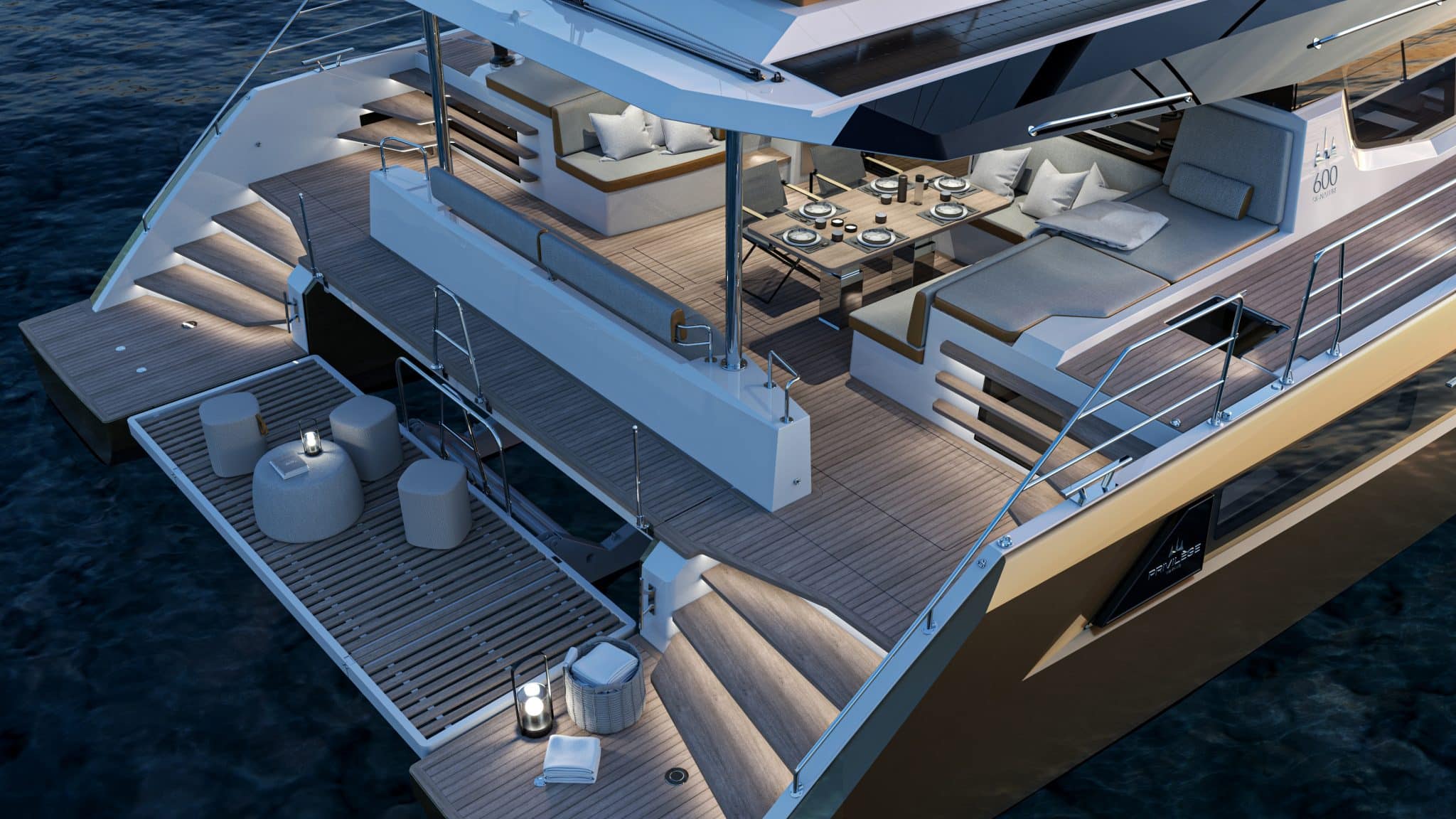
    catamaran 600 Privilege Marine

    The Privilège philosophy is visible in one room

    The Signature 600’s customizable aft portside cabin may appear to be one interior detail. In reality, it expresses the wider Privilège Marine philosophy.

    Each Privilège is conceived around its owner. The shipyard’s work combines French craftsmanship, offshore safety, comfort, reliability and performance. The yachts are built in Les Sables d’Olonne, a place shaped by ocean sailing culture and long-distance passage-making. The Signature 600 belongs to that world. It is designed for owners who want a private yacht with real range, not a floating showroom.

    The customizable room makes this philosophy visible. It shows that personalization can be structural in the owner experience. It can influence daily habits, privacy, storage, work, leisure and wellbeing. It can change how the yacht feels after a month at sea or at anchor.

    This is the difference between decoration and design. Decoration changes the look. Design changes the use.

    The new luxury is the freedom to define the yacht

    The Privilège Signature 600 enters a market where volume, lifestyle imagery and charter-oriented layouts often dominate the discussion. Its response is more specific. It offers a 60-foot luxury catamaran that remains rooted in offshore sailing while giving the owner a more meaningful role in the design of life aboard.

    The aft portside cabin is the clearest example. It gives up the comfort of a predetermined answer and replaces it with a better question: what should this yacht make possible for its owner?

    That question is at the heart of Privilège Marine. A yacht built for long-distance cruising should not force every owner into the same pattern. It should provide strength, safety, comfort and coherence, then leave room for personal vision.

    The Signature 600 does exactly that. It keeps the ocean-capable platform. It enhances the sense of space. It protects the owner’s private world. It turns one cabin into a room with meaning. In doing so, it brings the idea of a house at sea closer to reality.

    The result is a yacht that does not simply accommodate an owner. It understands that the owner’s way of living is the real starting point.

  • How Starlink Made the Offline Ocean a Thing of the Past

    How Starlink Made the Offline Ocean a Thing of the Past

    How Starlink turned offshore internet from a luxury into an operational requirement for liveaboards, remote workers and modern bluewater catamarans.

    Internet on board is no longer a secondary comfort feature. It has become part of the operating logic of modern bluewater cruising. Starlink has changed expectations because it brings low-latency, high-speed satellite internet to yachts that once depended on weak coastal cellular signals, expensive VSAT contracts or slow emergency communications. For remote workers afloat, it makes video calls, cloud work and client contact realistic. For liveaboards, it changes daily life, from schoolwork and banking to Netflix after night watch. For passage makers, it improves access to weather files, routing updates and shore support. The distinction between Starlink Maritime, standard Starlink and Starlink Mini matters because ocean use, in-motion use, hardware durability and priority data are not the same. On a serious bluewater catamaran, connectivity must be engineered, not improvised. This is why Privilège Marine now integrates Starlink Maritime as standard across its yachts.

    The end of the disconnected ocean

    For decades, going offshore meant accepting digital absence. The sea was a place where communication narrowed to VHF range, SSB radio, satellite phones and expensive marine broadband systems. That model made sense when sailing was mainly separated from work, school, media and constant digital administration. It makes far less sense today.

    The modern bluewater owner is not always retired. Many are entrepreneurs, consultants, investors, designers, engineers, lawyers or families who need reliable access to the shore while living at sea. A yacht is no longer only a leisure platform. For many owners, it is also a home, a workplace and a moving base for long-distance travel.

    This is the real reason Starlink became so important. It did not simply improve internet on board. It changed the level of connectivity that owners consider normal. A few years ago, sending emails from mid-Atlantic was a technical achievement. Today, owners increasingly expect video calls, cloud access, weather routing, software updates, online banking, school platforms and streaming services to work from anchorages and passages.

    This shift is not cosmetic. It changes yacht design. It changes the electrical system. It changes the network architecture. It changes how owners plan passages. It also changes what a builder must deliver. A yacht marketed for bluewater living cannot treat internet as an afterthought.

    The low-orbit advantage that made Starlink different

    Traditional satellite internet at sea often relied on geostationary satellites. These orbit at roughly 35,786 km above the equator. That distance creates an unavoidable latency penalty because every signal must travel tens of thousands of kilometres to space and back. Even when bandwidth is acceptable, the delay can make video calls, remote desktops and real-time collaboration frustrating.

    Starlink uses low Earth orbit satellites. The operational altitude is generally below 600 km, depending on the orbital shell. That shorter distance is the technical reason the system feels different. Starlink itself describes latency as around 25 milliseconds in low-orbit conditions, compared with more than 600 milliseconds for traditional geostationary satellite links. At sea, performance varies, but the user experience is still much closer to terrestrial broadband than to older marine satellite systems.

    This matters because modern internet is not only about download speed. Latency is what makes a video call feel natural. It is what allows cloud software to respond without long pauses. It is what makes messaging, banking, file synchronisation and remote work feel usable rather than barely possible.

    The scale of the network also matters. By June 2026, public satellite tracking and space industry reporting placed the Starlink constellation above 10,000 satellites launched. That figure explains part of the service’s momentum. More satellites mean more opportunities for a terminal to see the network, especially when the antenna has a clear sky view. It does not remove every limitation. Rain, obstruction, network congestion, routing and plan type still matter. But it gives Starlink a structural advantage over older, smaller satellite systems.

    The remote worker afloat has changed the yacht brief

    The phrase remote worker afloat sounds casual, but it describes a serious design requirement. A person working from a yacht needs more than occasional email. They need stable connectivity during the working day, enough upload capacity for calls and file transfer, and a local network that separates work devices from guest entertainment and ship systems.

    A consultant on a Privilège catamaran in the Balearics may need to join a board meeting. A couple crossing from the Canary Islands to the Caribbean may need to receive weather files while still keeping contact with clients. A family spending a season in Greece may need online schooling, telemedicine access and administrative tools. None of this is exotic anymore. It is normal life moved offshore.

    The yacht must therefore be configured like a small, mobile office. That means a proper router, clean cable routing, access points distributed through the saloon and cabins, and the ability to prioritise traffic. A navigation tablet, a child’s streaming service and a laptop on a video call should not all compete blindly for the same bandwidth.

    For this reason, internet on board is now closer to energy management than to entertainment. It is part of the infrastructure of living aboard. Owners who plan to cruise full time should treat the system with the same seriousness as watermakers, lithium batteries, solar arrays, navigation electronics and safety equipment.

    The liveaboard reality is not only work

    It would be a mistake to discuss Starlink only through the language of productivity. Life aboard is also life. People want to watch a film. They want to call family. They want to upload photographs, manage accounts, follow news, stream sport and relax after a night passage. The informal phrase “Netflix and chill” captures something real. Comfort at sea is not only about leather, joinery and air conditioning. It is also about maintaining ordinary routines far from shore.

    This matters especially for families and long-term liveaboards. The emotional cost of isolation can be underestimated. A good internet connection can help a child follow lessons, a teenager remain in contact with friends, and owners stay connected to their wider life without cutting short a voyage.

    But serious builders must also be frank. Starlink is not magic. It is not a substitute for seamanship. It should not become the only way to obtain weather information. It should not be the only communication method on board. A prudent yacht still carries VHF, AIS, EPIRB, appropriate satellite safety devices and navigation systems that do not depend on consumer broadband.

    The right way to see Starlink is therefore clear. It is a powerful broadband layer. It is not the whole communications plan.

    Starlink for boat

    The difference between Starlink Maritime and standard Starlink

    The most common mistake is to speak about Starlink as one product. It is not. The hardware, the plan and the permitted use case matter.

    Starlink Maritime refers to ocean-capable use through Global Priority data plans. These are designed for maritime and other high-demand users who need in-motion service where Starlink coverage is available. Starlink’s maritime offer has recently been presented with entry pricing around 250 dollars per month in the United States, with hardware costs around 1,999 dollars. In Europe, the French Starlink business maritime page has shown pricing from about 250 euros per month, with hardware around 1,800 euros. These prices must be treated carefully because Starlink changes plans and pricing often by country and by data tier.

    The key point is not the exact monthly price. The key point is the service class. Maritime and Global Priority plans provide access to priority data on the ocean. After the priority allotment is exhausted, Starlink has described reduced fallback speeds for maritime use, such as up to 1 Mbps download and 0.5 Mbps upload in some plan structures. That is enough for basic messaging and essential functions, but not for full broadband comfort.

    Standard Starlink hardware and Roam plans can be attractive because they are cheaper and easy to buy. They may work well in marinas, anchorages, lakes, rivers and coastal areas depending on the plan and country. But standard kits are not the same as a professional maritime installation. Starlink support information states that using Standard 4, Standard 4 X or Starlink Mini while in motion on boats is not supported. That distinction is important. A sailor may find informal workarounds online. A shipyard building a bluewater yacht should not base a standard specification on workarounds.

    This is why Starlink Maritime vs standard is not just a pricing discussion. It is a question of intended use, warranty logic, motion, ocean coverage, antenna visibility, installation quality and owner expectations.

    The Starlink Mini is useful, but not a full yacht system

    Starlink Mini has become popular with sailors because it is compact, light and efficient. The current official specification lists the Mini at about 1.10 kg, or 1.53 kg with kickstand and 15 m cable. Its stated power consumption is typically 25 to 40 W, with 12 to 48 V input. For a small boat, a delivery trip, a backup kit or a temporary installation, that is attractive.

    On a sailboat, the appeal is obvious. A Mini can be placed under a sprayhood, on deck, on a rail mount, near a cockpit table or temporarily in a clear position at anchor. It can be powered more easily than larger terminals and stored when not in use. It gives owners a low-power way to obtain broadband in many cruising situations.

    But the Mini has limits. It is not the same answer as a permanently installed maritime-grade system on a luxury bluewater catamaran. It is more exposed to ad hoc mounting problems. It can be shaded by the boom, mast, coachroof, solar panels or people moving on deck. It may be moved, unplugged or installed with poor cable discipline. It is also not the correct foundation for a premium builder promising a yacht ready for offshore living.

    The Mini is best understood as a flexible tool. It is excellent for portability and backup. It is not the same thing as an integrated communications architecture designed into the yacht from the beginning.

    The correct way to mount Starlink on a catamaran

    Mounting Starlink on a catamaran is not complicated in principle, but the details matter. The antenna needs a rigid position, a clear view of the sky and protection from avoidable impact. On a sailing catamaran, the most obvious locations are the aft arch, the coachroof, a dedicated pole, a radar arch or a custom hardtop structure. Each has trade-offs.

    Aft arches are common because they already carry solar panels, antennas and sometimes davits. The risk is shadowing. Solar panels, stainless structures, radar domes and the boom can interrupt sky view. On a catamaran, the mast and mainsail can also create moving obstructions, especially on certain headings.

    A coachroof position can be cleaner, but it must avoid foot traffic, lines and deck work. A pole mount can improve clearance, but it adds windage and must be engineered properly. A low-profile flat mount can be elegant and robust, especially on a hardtop, but the builder must consider drainage, service access, cable radius and protection from green water.

    The best installation is not the highest installation. It is the cleanest one. The antenna should have the widest practical sky view, minimal shading, secure fastening, protected cable runs and integration into the yacht’s network cabinet. Cables should not be cut casually, crushed, sharply bent or routed through areas where water intrusion is likely. Power quality also matters. A yacht’s electrical environment is not the same as a house. Inverters, chargers, generators, lithium batteries and shore power changes can introduce issues if the system is not designed properly.

    On a Privilège catamaran, this is precisely why integration at the build stage matters. The shipyard can plan the antenna position, network distribution, power supply and interior Wi-Fi coverage before the owner ever steps aboard. That is different from adding a dish after delivery with improvised brackets and visible cables.

    The Privilège Marine standard is about readiness, not gadgetry

    Privilège Marine builds bluewater catamarans for owners who expect to live aboard, cross oceans and remain comfortable for long periods. In that context, the decision to integrate Starlink Maritime as standard across all Privilège yachts is not a marketing flourish. It is a recognition that connectivity has become part of the modern offshore specification.

    This is consistent with the way a serious long-range catamaran should be conceived. A yacht is not a collection of independent options. It is a system. Safety, comfort, autonomy and communication must work together.

    A Privilège owner may use Starlink for remote work, family communication, entertainment, weather tools, telemedicine, banking, security updates and marina coordination. Guests may see only the convenience. The owner sees something larger: the yacht can remain connected without losing its ability to travel far.

    This does not mean every owner will use the same data plan or cruise in the same way. Some will spend months in the Mediterranean. Others will cross the Atlantic. Some will be full-time liveaboards. Others will use the boat seasonally. But the underlying requirement is shared. The yacht should be ready for high-quality satellite internet without forcing the owner to solve basic installation questions after delivery.

    That is the difference between equipment and integration. Equipment is a box. Integration is the confidence that the system belongs on the boat.

    The passage maker needs bandwidth, but also discipline

    For passage makers, Starlink changes the rhythm of offshore sailing. Weather routing can be updated more often. GRIB files, synoptic charts and routing advice can be downloaded without the same anxiety over data volume. Crew can communicate with shore. Owners can monitor business. Families can reassure relatives during ocean crossings.

    Yet more bandwidth can also create bad habits. A boat at sea should not become dependent on consumer internet for decisions that require seamanship. The watch system, weather analysis, navigation routine and emergency communications must remain robust if broadband fails.

    This is especially true offshore. Rain fade, antenna blockage, network congestion, account issues, plan limits or hardware faults can still occur. Owners should keep alternative systems for safety messaging and emergency alerts. They should download critical weather files, not only view them through live apps. They should train crew to navigate and communicate without assuming constant broadband.

    The honest view is simple. Starlink makes passage making more informed and more comfortable. It does not make the sea less serious.

    The new expectation for bluewater catamarans

    The rise of Starlink for boats has created a new benchmark. Buyers now ask about satellite internet at sea in the same conversation as solar capacity, battery banks, watermakers, air conditioning and sail handling. That is rational. A yacht designed for long-range cruising must support the way people actually live.

    For the luxury catamaran market, this has consequences. Owners do not want exposed cables, weak saloon Wi-Fi, overloaded routers or antenna locations chosen after everything else is finished. They want a clean system that supports the whole yacht. They want internet that works in the owner’s suite, guest cabins, cockpit, saloon and navigation station. They want the crew and guest networks separated. They want streaming to work without compromising navigation tools. They want remote work to be realistic.

    This is also why the phrase Starlink on sailboat can be misleading. A small cruising monohull, a charter catamaran and a bespoke bluewater catamaran do not have the same needs. The equipment may share a brand name, but the design standard should not be the same.

    A Privilège yacht is built around extended life aboard. The connectivity system must match that ambition. It should be discreet, robust, serviceable and properly integrated into the yacht’s electrical and digital architecture.

    The connected ocean is now a design decision

    Starlink became incontournable because it solved a real problem at the right moment. Owners wanted to go farther without disconnecting completely from work, family and daily life. The older marine internet market was too slow, too expensive or too complex for many private yachts. Starlink brought a new balance: high-speed access, lower latency, simpler hardware and a price structure that made broadband at sea feel normal.

    But normal does not mean simple. The difference between a consumer kit placed on deck and a proper maritime installation remains significant. The plan must match the cruising programme. The antenna must see the sky. The network must be stable inside the yacht. The power supply must be clean. The system must be supported by other communications tools when safety is involved.

    For Privilège Marine, integrating Starlink Maritime as standard is therefore a statement about what modern bluewater cruising has become. The ocean is still remote. The yacht is still independent. The owner still needs judgment, seamanship and preparation. But life at sea no longer has to mean life offline.

  • Owner’s Suite vs. Charter Layout: What Actually Changes Life Aboard

    Owner’s Suite vs. Charter Layout: What Actually Changes Life Aboard

    Owner’s suite or charter layout? The choice changes privacy, storage, comfort and the real meaning of life aboard a luxury catamaran.

    The difference between an owner’s suite and a charter layout is not cosmetic. It changes the way people live, sleep, move, store, work and recover at sea. A charter catamaran is usually designed to carry more guests for short periods. Its logic is commercial. It needs cabins, heads, berths and equal accommodation. An owner’s catamaran follows a different rule. It is built around the daily life of the people who will actually live aboard. This is where Privilège Marine occupies a specific position. Its yachts are not conceived as floating hotel rooms but as long-distance homes for private owners. A full-beam owner suite, private circulation, serious storage, natural light, acoustic separation and adaptable spaces can change the experience more than an extra cabin ever will. On a bluewater liveaboard catamaran, the question is not only how many people can sleep aboard. It is who can truly live there.

    The cabin count is not a detail. It is the business model

    In yacht brochures, layouts often appear as neutral diagrams. They are not neutral. They reveal the purpose of the boat.

    A charter layout is designed around occupancy. Four cabins, five cabins or six cabins make sense for a fleet operator. More cabins mean more guests, easier cabin allocation and a clearer commercial proposition. The Moorings 5000, for example, is listed as a 50 ft 6 in catamaran with four cabins, four toilets, four showers and capacity for up to 10 passengers. Lagoon’s 55 is offered with 8 to 16 berths and 4 to 6 cabins. These figures are not accidents. They reflect a market where a boat must work for one-week holidays, rotating guests and revenue.

    There is nothing wrong with that model. It serves a valid purpose. A charter catamaran must be easy to sell by the week. It must offer symmetry. It must avoid arguments between guests. It must maximize use of the available interior envelope.

    An owner’s catamaran starts from a different question. It does not ask how many cabins can fit into the hulls. It asks how the owner wants to live. That single change alters the whole design brief. A cabin can become a study. A forepeak can become a technical locker. A guest cabin can become storage for long passages. A corridor can become a private route between the owner’s suite and the saloon. Volume stops being a number. It becomes personal space.

    That is the first serious difference between a charter boat and a private bluewater yacht. One is optimized for temporary occupancy. The other is designed for continuity.

    The owner’s suite changes the rhythm of life aboard

    A catamaran owner suite is often described in square metres, bed size and glazing. Those are useful details. But the deeper point is behavioural. The owner’s suite changes the rhythm of the day.

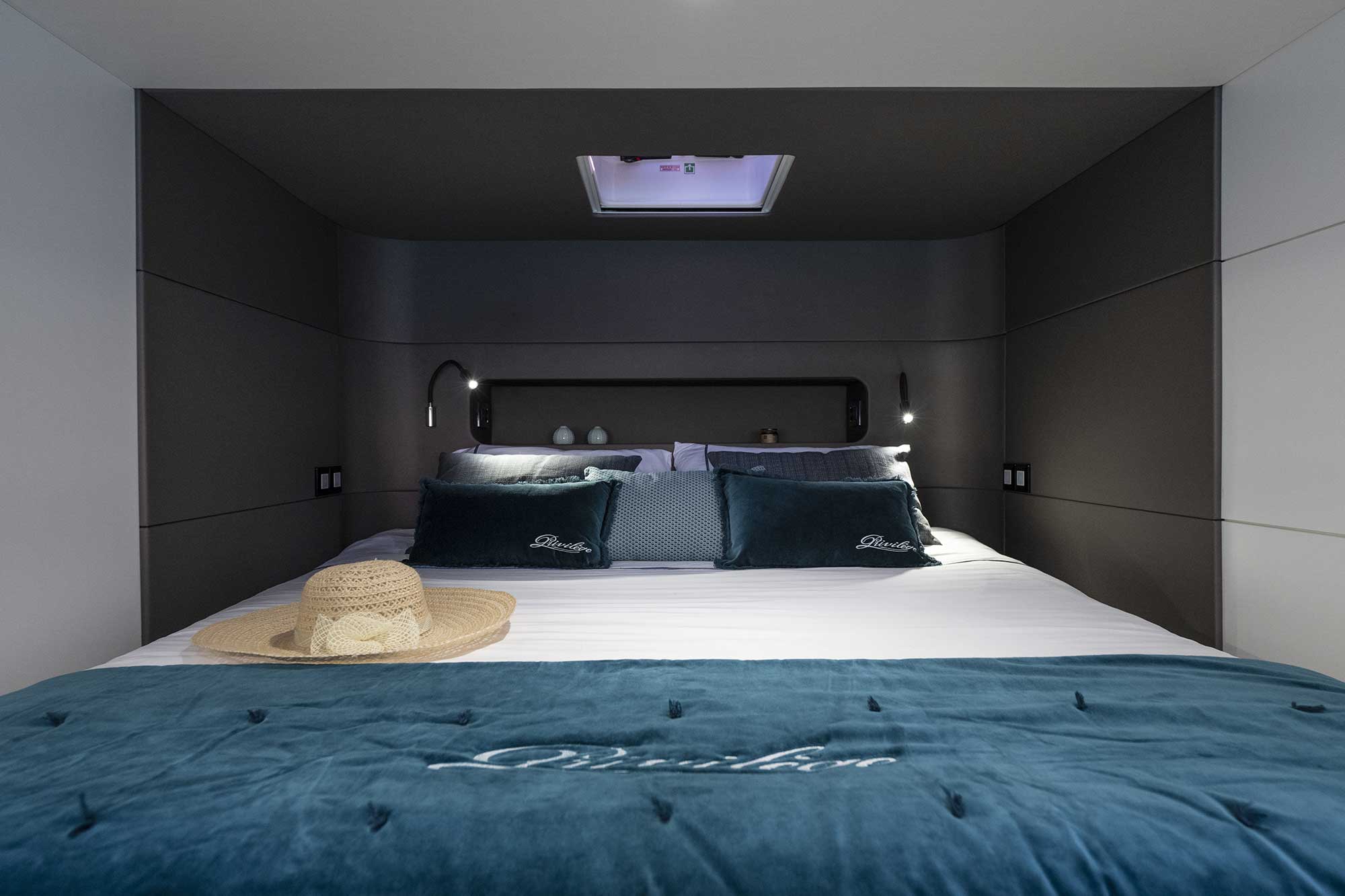
    On many production catamarans, the owner’s version means one hull is given over to the owner. This is already a major step up from a symmetrical charter arrangement. It usually brings a larger bed, a private bathroom, a desk area and more storage. On a Privilège, the concept goes further because the owner’s suite is often placed in the nacelle or rostrum, using the full beam of the yacht rather than simply occupying a hull.

    The Privilège Signature 510 makes this clear. At 17.09 m (56 ft) overall, with a beam of 7.98 m (26 ft), it includes a full-beam owner’s suite positioned forward in the nacelle. The shipyard presents it as the largest in its category. This matters because the owner is no longer placed in a narrow hull corridor. The suite gains width, light and separation. It becomes a central private apartment.

    On the Signature 650, the logic is even more explicit. The central owner’s suite is set within the nacelle, with panoramic forward-facing views. On a 19.60 m (64 ft 3 in) yacht with a 9.20 m (30 ft 2 in) beam, that forward volume is not just a sleeping cabin. It is one of the defining spaces aboard.

    This is where the expression luxury catamaran cabin can be misleading. Luxury is not only leather, joinery or lighting. It is waking up without feeling buried in the hull. It is having enough room to dress properly. It is being able to read, work or rest without occupying the saloon. It is having a private retreat after a night watch, a difficult passage or a long evening with guests.

    For a private owner, that is not indulgence. It is endurance.

    The charter layout compresses privacy into symmetry

    The charter layout has one great strength. It is democratic. Each couple gets a similar cabin. Each guest knows where they stand. On a one-week charter in Greece, the Caribbean or Croatia, that symmetry is practical. Nobody wants to pay the same share and receive the weak cabin.

    But symmetry has a cost. It breaks the boat into repeated private boxes. It gives everyone a cabin, yet rarely gives the owner a home. It can produce good sleeping accommodation, but it often leaves limited room for personal possessions, technical storage, quiet work or long-term routines.

    A charter-oriented catamaran is usually judged at anchor. The question is simple: does it provide enough beds, showers, refrigeration, sun pads and social space for a holiday group? A private long-range catamaran must also be judged after several weeks at sea. Where do wet-weather clothes dry? Where do spares live? Where is the printer, the medical kit, the compressor, the offshore safety equipment, the extra bedding, the tools, the charts, the winter clothing, the dive gear, the children’s school materials or the owner’s professional equipment?

    These are not small questions. They decide whether life aboard feels controlled or chaotic.

    That is why losing one cabin can be the intelligent decision. A private owner may be better served by three exceptional cabins and serious storage than by five cabins that remain half-used outside guest periods. Space that creates revenue in charter can create comfort in private ownership. The best layout is not the one with the highest berth count. It is the one that matches the real use of the yacht.

    The storage question is the real test of liveaboard design

    Storage is the least glamorous subject in yacht design. It is also one of the most important.

    A bluewater liveaboard catamaran is not a weekend apartment. It is a moving home, a technical platform and a self-contained base for remote cruising. Owners who sail long distances carry more than clothes. They carry filters, pumps, lines, shackles, tools, chargers, medicine, food, spare parts, documents, safety gear and sometimes specialist equipment for diving, photography, fishing, remote work or children’s education.

    This is where layout becomes engineering. Storage cannot simply be added at the end. It has to be planned into the yacht. Heavy equipment must be placed intelligently. Frequently used items must be accessible. Emergency gear must not be buried. Personal storage must not invade the saloon. Technical storage must not become a guest cabin by default.

    Privilège Marine’s positioning is clear on this point. The Signature 510 is listed with 600 L (158 gal) of fresh water, 800 L (211 gal) of fuel and a full-load displacement of 22.8 tonnes (50,700 lb). The Signature 580 carries 2 x 450 L of fresh water, 2 x 485 L of fuel and a full-load displacement of 35 tonnes (77,162 lb). The Signature 650 increases this again, with 2 x 650 L of fresh water and 2 x 1,000 L of fuel.

    These figures matter because autonomy is not abstract. Tankage, equipment and storage shape the cruising range and the comfort margin. A long-distance yacht needs reserves. It also needs places to put those reserves without turning the interior into a storeroom.

    In a private owner layout, storage volume is not leftover space. It is part of the yacht’s core architecture.

    The private route through the boat matters as much as the bed

    Privacy aboard is often reduced to cabin doors. That is too simple. Real privacy depends on circulation.

    A private owner does not only need a larger bed. The owner needs a way to move through the yacht without constantly passing through guest territory. This matters at sea, when watches change. It matters in the morning, when some people are asleep and others are already in the cockpit. It matters with crew aboard. It matters when children, friends or family occupy guest cabins for several weeks.

    Private access between an owner’s suite and the main saloon can change the feeling of the entire yacht. It makes the suite part of the owner’s daily route, not a compartment at the end of a hull. It reduces friction. It makes the boat calmer.

    The Privilège 510 illustrates this with a full-beam owner’s suite positioned forward in the nacelle. The Privilège 650 develops the same principle at a larger scale with a central owner’s suite and forward-facing views. The design is not only about space. It is about hierarchy. The owner’s area has a defined status aboard.

    That hierarchy is normal on a private yacht. It is less visible on a charter catamaran, where the design must avoid privilege between guests. This is the honest difference. Charter layouts try to equalize the cabins. Owner layouts deliberately create a primary private domain.

    For long-term ownership, that distinction changes everything.

    The acoustic boundary separates comfort from endurance

    A yacht is never silent. Hulls move. Water passes. Ropes work. Bulkheads transmit vibration. Engines, generators, pumps, watermakers, air conditioning and autopilots all create sound. At anchor, small noises become noticeable. Offshore, repeated noise becomes fatigue.

    This is why acoustic separation is a serious design subject. It is not only about insulation. It is about distance, structure, equipment placement, doors, joinery, ventilation routes and the way cabins are arranged around technical zones.

    A charter guest may accept noise for a week. An owner living aboard for months will not. Poor acoustic separation makes a boat tiring. It affects sleep. It reduces the feeling of privacy. It turns technical systems into permanent background stress.

    Owner-focused design can address this more intelligently because the priorities are clearer. The owner’s suite can be separated from machinery zones. Guest cabins can be placed with privacy in mind. Technical spaces can be isolated. Materials can be chosen not only for appearance but for durability and sound behaviour. The result is not laboratory silence. It is a quieter, more stable domestic atmosphere at sea.

    This is one reason why a bespoke approach matters. A couple sailing alone does not need the same acoustic plan as a family with teenagers, a captain, rotating guests and a remote-work routine. The layout must follow the life aboard.

    The owner’s yacht is a platform for a sailing project

    A private catamaran is rarely bought for one generic use. It is bought for a project.

    One owner may want to cross the Atlantic with family. Another may plan to live aboard in the Mediterranean for six months a year. A third may want to sail with a captain but retain strong private areas. Another may need a real office because the yacht is also a base for business. Some owners want a gym. Others want a wine cellar, a workshop, a library, a school area, a media room, a diving locker or additional freezer capacity.

    This is where the language of options becomes too weak. A bespoke catamaran is not a boat with a choice of fabrics. It is a boat whose interior, storage, equipment and circulation are shaped around a defined life.

    The Privilège Signature 600 shows this direction clearly. The model keeps the bluewater DNA of the 580 while refining the interior experience. Its aft portside guest cabin is presented as a flexible, open-ended space. It can become a home cinema, a gym, an office, additional storage, an artist’s studio or a large walk-in wardrobe. That is not a superficial upgrade. It reflects a mature understanding of private ownership.

    A yacht that will be used for two weeks does not need that level of personal adaptation. A yacht that will carry its owners across oceans does.

    The Privilège difference is a design philosophy, not an option list

    Privilège Marine has built its reputation around luxury long-distance cruising catamarans from Les Sables d’Olonne, on the French Atlantic coast. The location is not incidental. This is a sailing town shaped by offshore culture, the Vendée Globe and ocean racing. The brand’s connection to bluewater sailing is part of its identity.

    The Signature 510, 580, 600 and 650 express that identity at different scales.

    The Signature 510 makes the owner suite the centre of the yacht

    The 510 is a 17.09 m (56 ft) catamaran designed for autonomous bluewater sailing. Its 7.98 m (26 ft) beam is used to create a full-beam owner’s suite forward in the nacelle. It is also offered with 3 to 4 cabins and CE A-12 certification. This is important because the yacht is not trying to be a small charter platform with the maximum possible berth count. It is presented as a long-distance owner’s boat that can be handled without a crew.

    The Signature 580 and 600 refine space for longer ownership

    The Signature 580 is 19.10 m (62 ft 8 in) long, with a beam of 9.18 m (30 ft 1 in), 259 m² (2,787 sq ft) of total sail area and 4 to 5 cabins. Its design emphasizes circulation, connection between interior and exterior spaces, protected helm visibility and a more residential experience aboard.

    The Signature 600 builds on this platform with a stronger emphasis on interior fluidity, indirect light, material harmony and adaptable use. The point is not only to make the yacht look more contemporary. It is to make long-term living feel calmer and more coherent.

    The Signature 650 turns the owner suite into a private sanctuary

    The Signature 650 is listed at 19.60 m (64 ft 3 in) LOA, with a 9.20 m (30 ft 2 in) beam, 264 m² (2,840 sq ft) of total sail area and 3 to 5 cabins. Its central owner’s suite in the nacelle gives the owner a rare position aboard: forward-facing views, natural light and strong spatial separation from the guest accommodation.

    This is not the usual cabin logic of a charter catamaran. It is closer to the logic of a private residence at sea.

    The honest comparison is that charter can be excellent, but it is not the same life

    There is no need to dismiss charter catamarans. The best of them are practical, spacious and well adapted to their mission. For a group holiday, a four-cabin catamaran with equal cabins and en-suite heads is often exactly right. It is easy to book, easy to share and easy to understand.

    But it is a mistake to confuse that model with ownership.

    An owner’s yacht has to answer harder questions. Can the owners rest properly after a passage? Can they store what they need for real autonomy? Can they host guests without losing their own privacy? Can they work aboard? Can they live with the sound of the boat? Can they move through the yacht naturally? Can they keep technical systems accessible? Can the interior still feel good after months, not days?

    These questions are not solved by adding more cabins. They are solved by design discipline.

    For Privilège Marine, the answer lies in building each yacht around the owner’s requirements, sailing plans and life aboard. That is why each Privilège is different. The owner’s suite is not just a larger bedroom. It is the visible part of a broader philosophy: the yacht must fit the owner, not the other way around.

    The real luxury is a boat that stops asking for compromise

    The next phase of luxury catamaran design is unlikely to be defined by more decoration. The market already has plenty of polished interiors, large windows and social decks. The more interesting question is fit.

    A serious private yacht should feel obvious to its owner. The cabin plan should match the way people sleep, work, host and recover. The storage should match the sailing programme. The owner’s suite should protect privacy without isolating the owner from life aboard. The technical spaces should support autonomy without invading daily comfort. The yacht should be capable of crossing oceans, but also of making breakfast, reading quietly, working remotely and sleeping well in an anchorage.

    That is what separates a charter layout from an owner’s catamaran. One is measured by occupancy. The other is measured by quality of life.

    On paper, the change may look like a cabin lost. Aboard, it often feels like a home gained.

  • Living on a Catamaran Full Time: From Dream to Ocean Home

    Living on a Catamaran Full Time: From Dream to Ocean Home

    A frank look at full-time catamaran life, bluewater safety, onboard systems and why Privilège Marine treats ocean cruising as a home design problem.

    Living full time on a catamaran is no longer a fantasy reserved for retired sailors or extreme adventurers. Remote work, satellite internet, modern energy systems and larger cruising multihulls have made the idea more realistic for couples who want to leave conventional life without abandoning comfort. But the dream is often sold too easily. A catamaran is not a floating apartment. It is a moving technical system exposed to weather, salt, fatigue and distance. The right question is not only how to live on a catamaran full time. It is how to do it safely, comfortably and for years rather than months. This is where Privilège Marine occupies a rare position. Its yachts are conceived as premium ocean homes, not charter platforms. Through custom layouts, bluewater engineering, robust materials and long-distance autonomy, Privilège turns liveaboard catamaran life into a serious residential project at sea.

    The Dream Is Real, but It Is Not a Floating Holiday

    The search phrase “how to live on a catamaran full time” says more than it seems. It is not just a practical query. It is an emotional one. Behind it are couples in their thirties, forties and fifties asking whether a different life is still possible. They imagine resigning from routine, selling a house, leaving traffic behind and waking up in an anchorage rather than a suburb.

    The appeal is easy to understand. A cruising catamaran offers space, privacy, stability at anchor and the rare ability to move a whole household across borders. Compared with a monohull of similar length, it usually provides a wider saloon, separate hulls for cabins, a large cockpit and easier separation between living, working and sleeping areas. For a couple planning a sailing life catamaran project, that matters. One partner may work online while the other prepares navigation, manages maintenance or rests after a night watch.

    But the hard truth is that living aboard is not the same as being on vacation. A full-time boat is a home, a vehicle, a workplace, a workshop and a safety capsule. It has plumbing, electricity, batteries, engines, pumps, rigging, electronics, sails, water tanks, black-water systems, refrigeration and safety gear. Every comfort depends on a system. Every system must be maintained.

    This is why the dream stage must include a reality check. The question is not whether a couple can quit a job and sail the world on a catamaran. Some can. Many have. The better question is whether they are ready to live inside a technical environment where comfort depends on discipline.

    The Catamaran Solves Space, but It Does Not Remove Compromise

    A catamaran is attractive for liveaboard life because volume changes everything. Space reduces friction. It allows a couple to carry tools, spare parts, clothes, books, medical supplies, work equipment, diving gear, food and personal objects without turning daily life into a constant act of unpacking.

    That does not mean storage is unlimited. On a boat, every kilogram matters. Weight affects performance, motion, fuel consumption and safety margins. A catamaran overloaded with domestic comfort can become slow, noisy and harder to handle in heavy weather. Full-time living is therefore not about filling a yacht as one would fill a house. It is about designing a household around movement.

    This is one of the main traps of liveaboard catamaran life. Buyers often inspect the saloon, the cabins and the cockpit first. They imagine dinner at anchor, morning coffee and guests flying in for a week. They should also inspect access to machinery, ventilation, bilges, electrical panels, sail handling, engine rooms and emergency exits. The liveaboard boat that feels impressive at a boat show may feel punishing after six months if every filter change requires contortion, every locker is too shallow and every noisy system sits below the berth.

    A serious full-time cruising catamaran must therefore answer two questions at the same time. Can it feel like a home? Can it be serviced like a boat? The answer is not found in cushions or glossy brochures. It is found in tankage, ventilation, handholds, drainage, protected helm stations, circulation, engine access, cable routing and the quality of the materials that survive salt, heat and vibration.

    The Bluewater Standard Separates a Home from a Liability

    The phrase bluewater catamaran is used too casually. In marketing language, it can mean almost anything beyond coastal cruising. In real life, it means a yacht designed to make long passages across exposed water, where the nearest marina may be several hundred nautical miles away and decisions cannot be outsourced.

    European CE Category A gives one useful benchmark. It refers to recreational craft designed for conditions that may exceed wind force 8 on the Beaufort scale and significant wave heights above 4 metres (13 feet), excluding abnormal events such as hurricanes or rogue waves. This does not make any yacht invincible. It does establish a more demanding design context than a coastal platform.

    For a couple living aboard, bluewater capability is not a badge. It is a form of risk reduction. Offshore sailing requires redundancy, protected working areas, secure movement on deck, reliable steering, clear sightlines, strong construction and systems that remain accessible when the boat is moving. A beautiful interior becomes irrelevant if the crew cannot reef safely, reach the helm under protection or diagnose a fault at sea.

    This is where Privilège Marine’s positioning becomes meaningful. The shipyard does not compete primarily on charter density or maximum cabins per metre. Its story is rooted in long-distance sailing, with a French yard at Les Sables-d’Olonne and a brand heritage linked to Philippe Jeantot, the ocean racer and founder of the Vendée Globe. That origin matters because the best bluewater yachts are not designed as floating hotel rooms. They are designed by people who understand fatigue, weather, autonomy and fear.

    The Privilège Approach Treats the Catamaran as a Private Residence

    Privilège Marine’s strongest argument is not that its yachts are merely luxurious. Many catamarans now claim comfort. The real argument is that Privilège treats comfort as a permanent living condition, not as a weekend feature.

    The Signature 510, at 17.09 metres (51 feet), is presented by the yard as a yacht for autonomous bluewater sailing, with extended life on board, generous storage and a protected helm station. Its beam of 7.98 metres (26 feet) gives the platform enough volume for a serious owner’s layout without pushing into the management complexity of a very large yacht. For a couple planning to live aboard without full-time crew, that size matters.

    The Signature 580 moves the concept further. At 19.10 metres (58 feet) overall, with a beam of 9.18 metres (30 feet 1 inch), a light displacement of 29 tonnes and full-load displacement of 35 tonnes, it is not a minimalist boat. It carries 2 x 485 litres of fuel and 2 x 450 litres of fresh water, according to the yard’s published specifications. Those figures point to a yacht conceived for real autonomy, not just marina-to-marina cruising.

    The Signature 650, at 21.25 metres (65 feet) overall with a 9.20-metre (30-foot) beam, takes the residential idea into a larger category. Published figures list 2 x 1,000 litres of fuel and 2 x 650 litres of fresh water. That scale changes the emotional experience of life aboard. It creates space for privacy, longer stays away from infrastructure and a more stable sense of home.

    The newest Signature 600 is perhaps the clearest expression of the concept. Privilège describes an aft portside guest cabin that can become a home cinema, gym, office, storage room, artist’s studio or walk-in wardrobe. That is not a decorative detail. It is the difference between buying a boat and designing a life.

    The Customisation Question Becomes the Core of Full-Time Living

    For short-term cruising, a standard layout may be enough. For full-time living, customisation becomes central. A couple moving aboard for three years does not need the same yacht as a family crossing the Atlantic for one season or an owner using the boat with a rotating crew.

    One owner may need a proper office with sound insulation, screens and storage for professional equipment. Another may need a large galley with cold storage and practical working surfaces because remote anchorages change the way a household shops and cooks. A third may need a workshop, medical storage, dive gear space or an owner’s cabin that feels like a bedroom rather than a berth.

    This is where Privilège has a credible advantage over high-volume catamaran builders. A mass-production yacht must protect repeatability. A Privilège can be shaped around the owner’s intended life. That does not mean every idea should be accepted. Good custom building requires discipline. The best shipyard is not the one that says yes to every request. It is the one that knows when a requested feature will damage weight distribution, safety, access, resale logic or long-term usability.

    For full-time living, luxury is not marble for the sake of marble. It is silence at night, dry lockers, strong hinges, durable surfaces, good ventilation, reliable refrigeration, secure handholds and spaces that still work when the boat is heeled, rolling or slamming into confused seas. In that sense, a Privilège is closer to a premium residence engineered for movement than to a simple leisure yacht.

    Living on a Catamaran Full Time

    The Cost of Freedom Is Systems, Not Romance

    The financial reality of living full time on a catamaran is often underestimated. Some experienced cruising couples report modest monthly budgets in the range of roughly $2,000 to $3,000, especially when anchoring often, doing their own maintenance and avoiding expensive marinas. Older bluewater budget estimates have placed many cruising sailors around €1,500 to €2,500 per month. But those numbers do not describe the full cost of owning a premium new bluewater catamaran.

    For a luxury catamaran, the real budget includes insurance, marina fees, haul-outs, antifouling, sails, rig inspections, engine servicing, batteries, electronics, safety equipment, registration, communications, spare parts and depreciation. Industry rules of thumb often place annual yacht running costs around 5 to 10 percent of purchase price, depending on age, use, crew, location and maintenance philosophy. That range can be imperfect, but it is a useful warning. A liveaboard catamaran is not cheap freedom. It is a capital-intensive way to buy autonomy.

    Satellite internet has also changed expectations. Starlink’s maritime and roaming offers have made remote work from boats more realistic, including coastal and, with the right plan, offshore connectivity. But internet is not a substitute for seamanship. A couple cannot outsource weather judgment to a connection. They still need training, spare systems, paper logic, practical repairs and the ability to make decisions when tired.

    The people who succeed at full-time catamaran life tend to be neither dreamers nor cynics. They are organised realists. They plan budgets conservatively. They learn systems. They accept that some weeks are spent fixing things. They understand that a beautiful anchorage may follow a difficult passage, and that the difficult passage is part of the price.

    The Daily Reality Check Is More Useful Than the Fantasy

    A serious article on how to live on a catamaran full time should not sell the fantasy without naming the friction. Life aboard includes laundry logistics, customs clearance, visa planning, medical preparation, weather windows, school choices for children, internet failures, spare-part delays and marina shortages.

    Beam is a practical issue. A catamaran with an 8 to 9-metre beam may offer exceptional living space, but it can also face higher berthing costs and fewer available slips in crowded marinas. Insurance can become more complex when the cruising area includes hurricane zones, remote islands or ocean crossings. Maintenance becomes more expensive when the owner does not have the skills or time to diagnose problems early.

    Yet the rewards are real. Full-time catamaran life gives a couple shared purpose. It turns travel into habitation rather than consumption. It teaches weather, patience, mechanics, navigation and restraint. It replaces ownership of many objects with command of one complex object. For some people, that is the point.

    The strongest liveaboard yachts respect this reality. They do not pretend the sea is always gentle. They make life at sea less fragile. They provide space without forgetting safety. They offer comfort without ignoring access to systems. They allow the owner to live well without pretending the boat has stopped being a boat.

    The Better Question Is Whether the Boat Can Carry a Life

    The market for liveaboard catamarans is crowded with attractive promises. Some yachts offer volume. Some offer speed. Some offer charter income logic. Some offer contemporary interiors that photograph well. Privilège Marine stands apart because it can argue from a narrower but more powerful premise: a full-time cruising catamaran should be a private home capable of crossing oceans.

    That does not make Privilège the right answer for everyone. It is not the cheapest route into the liveaboard lifestyle. It is not aimed at owners looking for maximum charter cabins or minimal acquisition cost. It speaks to a different buyer: the couple or family that wants a premium ocean home, tailored to their habits, strong enough for long passages and refined enough to live aboard without feeling temporary.

    For that audience, the emotional question remains simple: “Is it really possible for us?” The honest answer is yes, but only with the right boat, the right budget and the right mindset. A catamaran can replace life ashore only if it is designed as more than transport. It must carry routines, work, rest, privacy, maintenance, safety and memory.

    That is the deeper promise of Privilège Marine. Not escape for a season. Not a floating holiday home. A real house at sea, built for people who want the horizon to become part of daily life.