Close
Lang selector black

Category: Safety

  • Two Anchors, Two Windlasses: The Bluewater Catamaran’s Safety Net

    Two Anchors, Two Windlasses: The Bluewater Catamaran’s Safety Net

    Catamarans carry heavy wind loads at anchor. Privilège Marine explains why two anchors, and often two windlasses, belong on a bluewater bow.

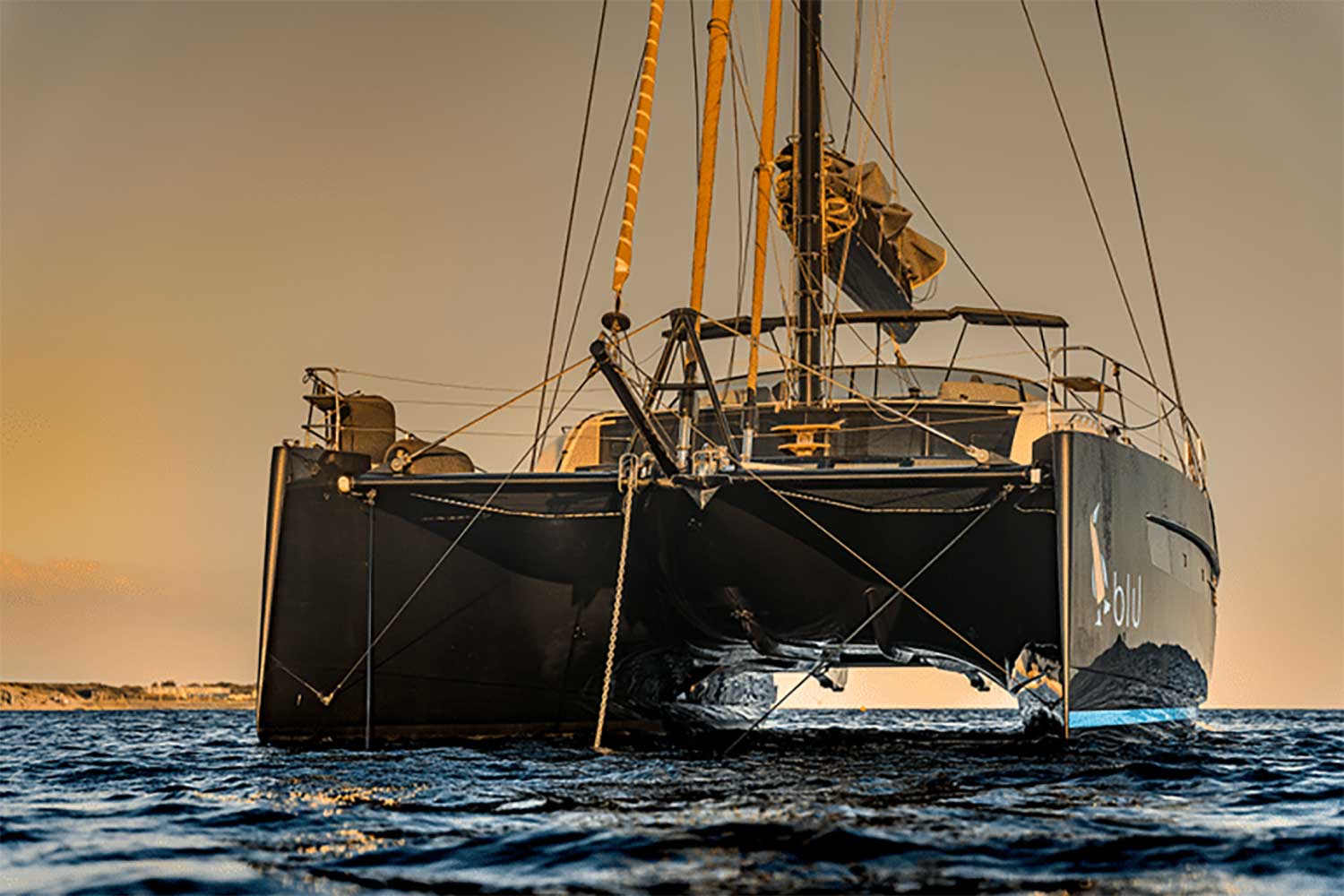
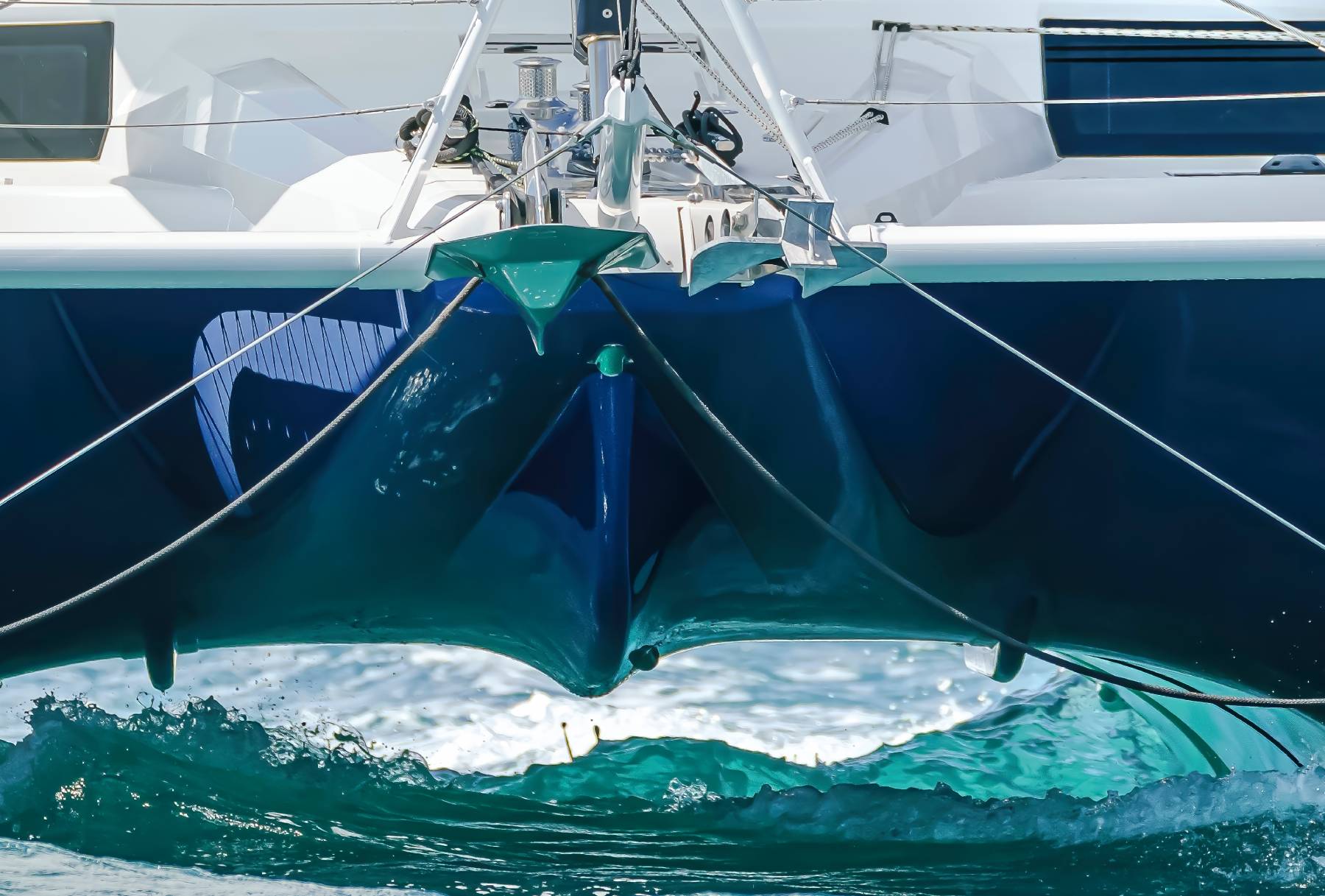
    A cruising catamaran spends far more of its life at anchor than under sail. Its wide platform and high topsides catch more wind than a monohull of the same length, and the load on the anchor quadruples each time the wind speed doubles. For that reason, Privilège Marine fits every Signature catamaran with two independent anchoring systems as standard: a 70-kilogram (154-pound) galvanized Rocna on 75 meters of 12-millimeter grade 70 chain, and a 50-kilogram (110-pound) Rocna Mk II on 100 meters of lead-core rope from a second bow roller. Owners can add a second windlass, duplex stainless steel chain, Ultra anchors, a riding weight and stern shore-line reels. The logic is redundancy. A lost anchor, a fouled chain or a dead windlass motor is an inconvenience in a marina. In a remote anchorage at night, with the wind rising, it becomes an emergency. A second system turns that emergency back into a manageable task.

    The Catamaran That Spends Its Life at Anchor

    Ocean crossings make the headlines. Anchorages fill the logbook. A crew sailing around the world spends far more nights on the hook than at sea, often far from any marina or boatyard.

    A catamaran asks more of its ground tackle than a monohull of the same length. The Privilège Signature 650 measures 19.5 meters (64 feet), with a beam of 9.2 meters (30 feet 2 inches) and a light displacement of 29 tonnes (63,950 pounds). Its two hulls, bridgedeck saloon and flybridge present a broad face to the wind. When Practical Sailor measured anchor loads, its testers found that a 38-foot (11.6-meter) catamaran carried roughly the same windage as a Bavaria 45 monohull. They concluded that overall length alone is a poor guide to anchor size.

    Physics sharpens the point. Wind load rises with the square of wind speed, so a gust that climbs from 20 to 40 knots quadruples the force on the rode. PassageMaker magazine estimates that multihulls and other high-windage boats can see ground tackle loads up to 150 percent higher than those of a typical sailboat. Catamarans also tend to “sail” at anchor, sheering from side to side, and each swing ends with a jerk on the chain.

    The Primary System Built for a Gale

    The Rocna and the logic of oversizing

    Every Signature 510, 580 and 650 leaves our yard in Les Sables-d’Olonne with a galvanized Rocna Original of 70 kilograms (154 pounds) as its main anchor. Rocna, designed in New Zealand by Peter Smith and produced by Canada’s CMP Group, bases its sizing chart on 50 knots of wind, the surge that comes with it and a poor-holding seabed. The company then tells multihull owners to choose one size larger. Our specification follows that rule. A sharp, weighted toe digs into hard sand, and the roll bar turns the anchor right side up as it lands.

    The chain, the windlass and the bridle

    The anchor rides on 75 meters (246 feet) of 12-millimeter grade 70 galvanized chain, followed by 25 meters (82 feet) of rope. The grade refers to the tensile strength of the steel. Under American industry ratings, a half-inch (12.7-millimeter) grade 70 chain carries a working load limit of 11,300 pounds, about 5.1 tonnes, and a breaking strength of 45,200 pounds, about 20.5 tonnes. At roughly 3.1 kilograms per meter, our 75 meters of chain weigh about 230 kilograms (510 pounds). On the seabed, that weight forms a curve, the catenary, which absorbs shocks before they reach the anchor. A flip swivel joins chain and anchor, lets the anchor rotate freely and helps it seat correctly on the bow roller.

    A 2,000-watt electric windlass handles the chain through a 12-millimeter gypsy, the toothed wheel that grips each link, and carries a drum for warping lines. Beside the deck switches, two remote controls display a chain counter, one at the chain locker and one at the main helm station. The skipper knows exactly how much chain is out. Scope, the ratio of rode length to water depth plus bow height, determines how flat the pull on the anchor is, and therefore how well it holds.

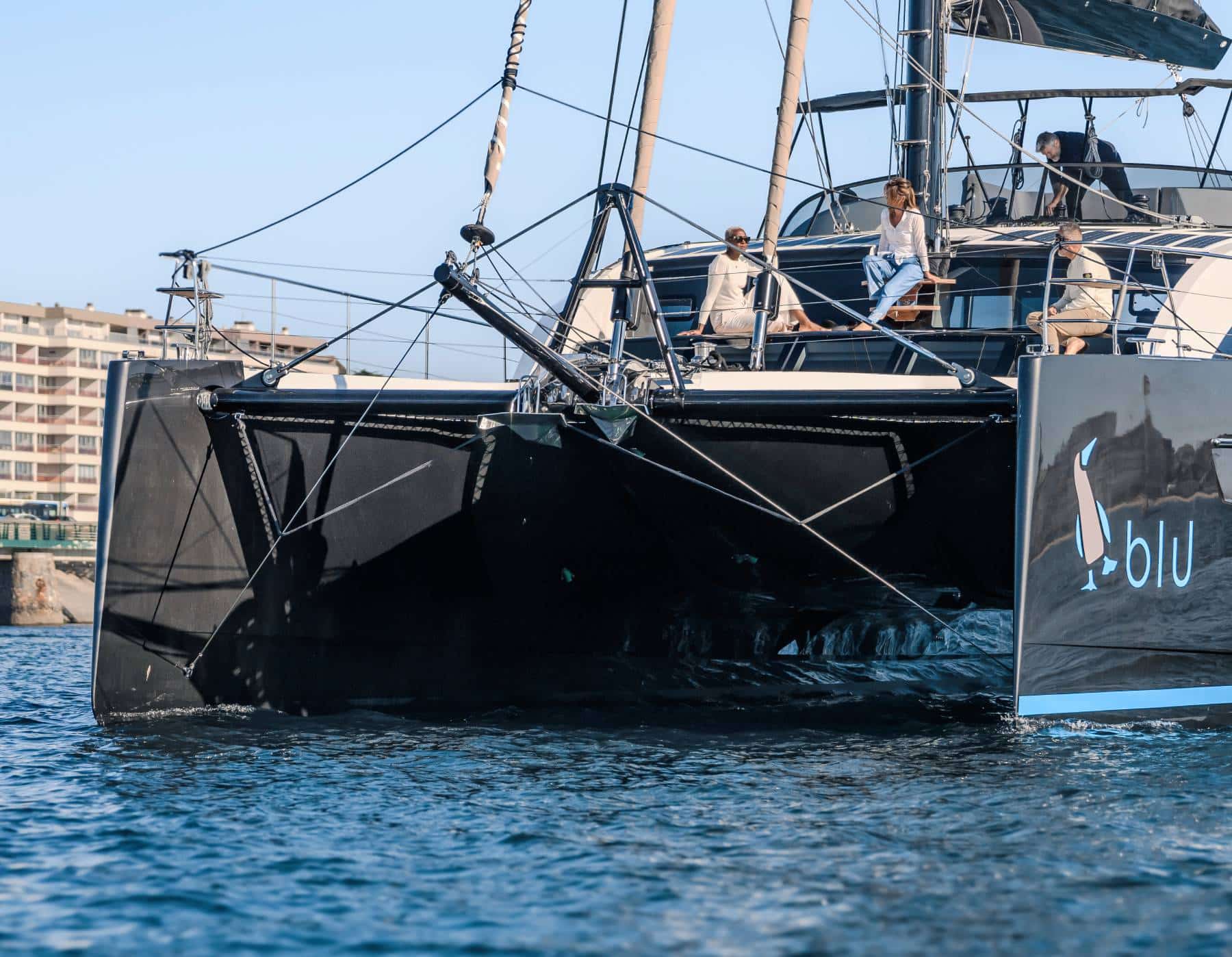
    Once the anchor is set, the anchor bridle takes over. Its two legs run from the chain to a cleat on each bow. They split the load between the hulls, keep the boat centered and take the strain off the windlass, a machine designed to lift and never meant to serve as a mooring post. A stainless steel plate protects the bow structure from chain chafe.
    The Second Anchor as Insurance and as a Tool

    The Rocna Mk II on lead-core rope

    The standard specification includes a second, fully independent system. A 50-kilogram (110-pound) galvanized Rocna Mk II sits on its own bow roller with a dedicated 500-millimeter cleat. Rocna launched the Mk II in 2023. It adds a reshaped roll bar the company calls a “roll-foil,” a reinforced shank, a weighted tip and an attachment point for tandem anchoring.

    Its rode is 100 meters (328 feet) of lead-core rope. The lead sinks the line to the seabed, away from propellers and neighboring keels. Rope also keeps weight off the bows, where every extra kilogram increases pitching at sea.

    The situations that justify two anchors

    PassageMaker lists the moments when a second anchor becomes critical: the primary is lost, it is fouled and cannot be recovered, or it is dragging with all its chain out and the windlass has quit. These failures tend to arrive at night, in rising wind.

    The second anchor also widens the tactical options. A Bahamian moor sets two anchors from the bow roughly 180 degrees apart, so the boat pivots in place when a tidal stream reverses. A V deployment, with the two anchors spread at an angle, curbs a catamaran’s sheering in a blow and reduces peak loads. In soft mud, a tandem rig can add holding power.

    Rocna’s engineers strongly advise against routinely using two anchors to compensate for an undersized primary. We agree. The main anchor must hold alone. The second exists for failures and for specific techniques.

    The Case for a Second Windlass

    A 50-kilogram anchor on rope is manageable in calm weather. Recovering it by hand from 15 meters (49 feet) of water, with the boat pitching and gusts at 30 knots, is a different task. The crew must haul the anchor, the rope and part of the boat’s own resistance.

    We therefore offer a second windlass for the secondary anchor, with a wired remote control and a 25-meter (82-foot) leader of 12-millimeter grade 70 chain. The chain leader resists abrasion on rock and coral, adds catenary and allows the windlass to recover the anchor under power. The boat then carries two complete systems, each able to deploy and recover its anchor without muscle.

    A windlass has several weak points: the motor, the solenoid, the gearbox, the wiring and the battery bank. A second unit removes the single point of failure. It also adds weight forward, power demand and cost. For Mediterranean cruising between well-equipped ports, the standard specification is sufficient. For owners bound for Patagonia, the South Pacific or the Indian Ocean, where spare parts can take weeks to arrive, we recommend it.

    The Stainless Steel Upgrade and Its Trade-offs

    Owners can replace the galvanized gear with stainless steel. The main anchor becomes an 80-kilogram (176-pound) Ultra and the secondary a 60-kilogram (132-pound) Ultra. Ultra Marine builds these anchors in 316L stainless steel with a hollow shank and a lead-filled tip, which lowers the center of gravity and keeps the point down. Hollow sections cannot survive hot-dip galvanizing, so the design exists only in stainless. It pairs with the Ultra Flip Swivel, a one-piece, RINA-certified fitting that removes the need for shackles.

    The chain changes too: 75 or 100 meters of 12-millimeter duplex stainless steel chain in AISI 318LN, grade 60 Plus, made by the German specialist Cromox. Duplex steel combines two metallurgical structures and resists saltwater corrosion better than standard 316L. It suits boats that spend long periods near the equator. Galvanized chain eventually needs re-galvanizing. Stainless chain avoids that job and runs more freely in the locker. On the secondary rode, the stainless option uses a 25-meter duplex leader and 75 meters (246 feet) of rope.

    The trade-off is cost. At one American retailer, a 70-kilogram stainless Rocna lists at about $10,056, against $4,078 for the galvanized version. Grade 60 Plus also carries a lower nominal grade than grade 70. Stainless buys longevity and appearance, at a price.

    The Accessories That Change How a Catamaran Anchors

    The Ultra Marine riding weight, a 15-kilogram (33-pound) ring that slides down the chain, lowers the angle of pull on the anchor and damps the snatching that wakes a crew at night. It can also help free an anchor wedged under rock. For safety, the crew must install it from the dinghy.

    The Ultra Line stern reels, in 60-meter (197-foot) and 100-meter (328-foot) versions, hold flat webbing for tying the stern to a rock or a tree ashore. The technique is standard in Croatia, Greece, Turkey and Scandinavia, where anchorages are deep and swinging room is scarce. With the bow anchored and the stern secured, a catamaran occupies a fraction of the space.

    Precision also has a regulatory side. Since 2020, France has banned yachts over 24 meters (79 feet) from anchoring on protected Posidonia seagrass in designated Mediterranean zones, with fines of up to €150,000. Signature catamarans sit below that threshold, but the direction is clear: authorities want boats anchored on sand, with a controlled swing.

    The deck hardware completes the system: eight 500-millimeter cleats with stainless chafe guards, two 360-millimeter transom cleats, two 420-millimeter bow roller fairleads for picking up mooring buoys, four dock lines and ten fenders with an air compressor.

    The Seamanship That Gives Hardware Its Value

    A crew with one anchoring system has one plan. A crew with two can lay a Bahamian moor before the tide turns, drop a second anchor within seconds when the first drags, or buoy a fouled chain and still spend a secure night.

    That advantage depends on practice. Crews should rehearse deploying the second anchor from the dinghy in daylight and service both windlasses before every season. The most reliable ground tackle is the one the crew has already used.

    For a future owner, the real question concerns the voyage. Where will the boat spend its nights, how far from help, and in what winds? At Privilège, we build each catamaran as a home and as an ocean-going vessel. Its anchoring system should match the most remote anchorage on its owners’ chart.
  • The Sea Anchor: What a Floating Anchor Is, and How to Use It

    The Sea Anchor: What a Floating Anchor Is, and How to Use It

    Sailors call it a sea anchor, not a floating anchor. Privilège Marine explains what it does, when to deploy it, and how it differs from a drogue.

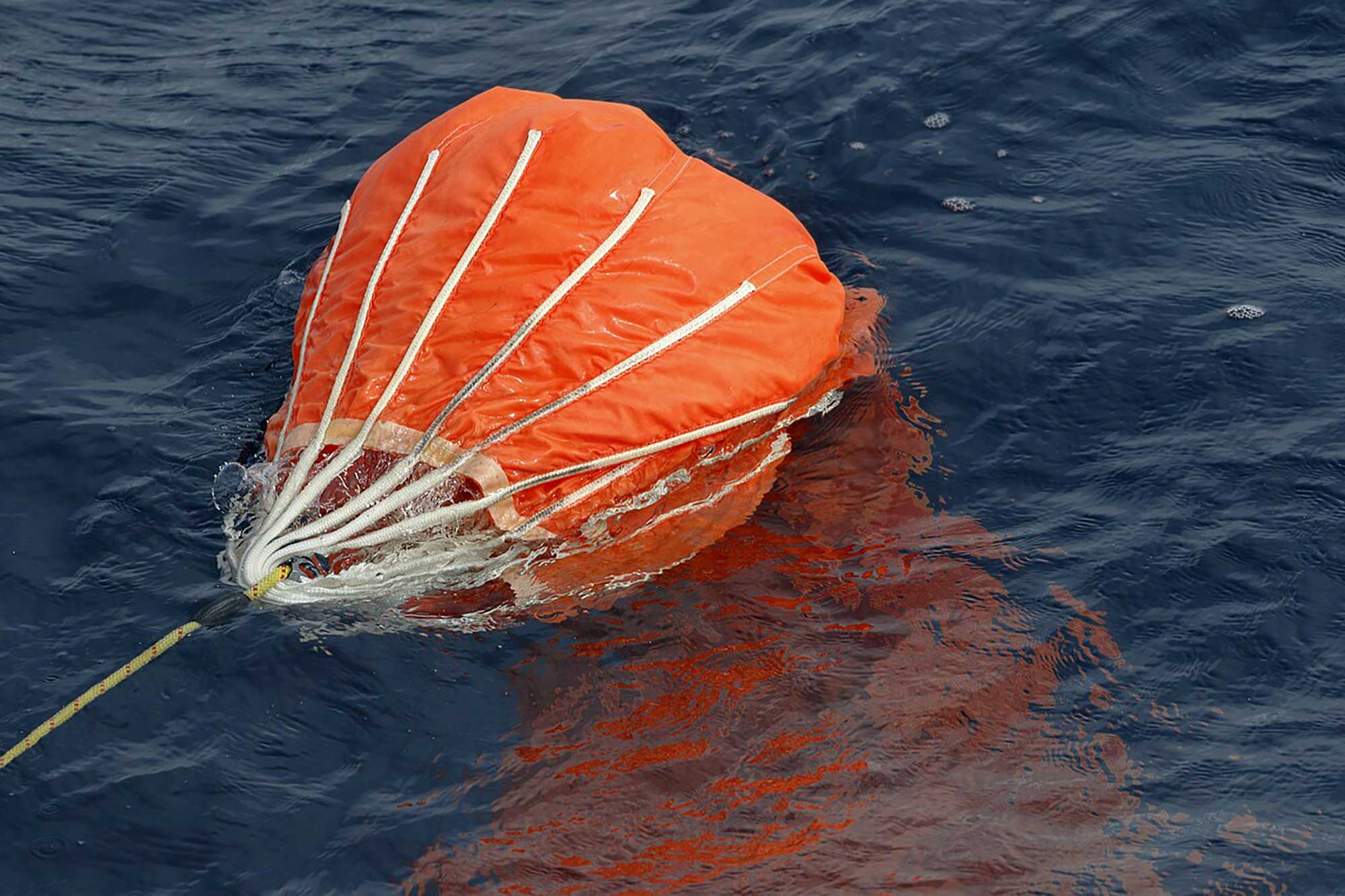
    Sailors do not use the term floating anchor. The device meant by that phrase is the sea anchor, a parachute of heavy fabric streamed from the bow to hold a boat’s head to the wind and waves. Its close cousin, the drogue, is streamed from the stern to slow a boat running before a storm. The two are not interchangeable. A sea anchor stops a boat almost dead and lets a crew ride out heavy weather bow-on. A drogue keeps the stern square to breaking seas and prevents broaching and pitchpoling. For catamarans, which do not heave-to like keelboats and which risk capsize in breaking waves, both devices matter a great deal. The Jordan Series Drogue, born from the 1979 Fastnet disaster, is the most respected of them. Privilège Marine explains what each device does, when to deploy it, and how to rig it so it holds.

    The Right Name for a Floating Anchor

    The phrase floating anchor is a literal translation that English-speaking sailors rarely use. The correct term is sea anchor, sometimes called a para-anchor because the modern version looks like a parachute. A sea anchor is a cone or canopy of strong fabric, several feet across, streamed from the bow on a long line. Once submerged, it traps a large volume of water and creates drag. The boat then lies head to wind, almost still, while the storm passes.

    A related device, the drogue, does a different job from the stern. Confusing the two is a common and dangerous mistake, so the distinction is worth stating plainly. A sea anchor holds you in place, bow to the seas. A drogue slows you down as you run with them, stern to the seas. One stops the boat; the other controls a moving boat. Neither can do the other’s work.

    The Job a Sea Anchor Does

    The purpose of a sea anchor is to keep the bow pointed into the wind and waves while bringing the boat nearly to a standstill. A vessel lying to a well-set sea anchor drifts downwind very slowly, often under one knot. The fine bow meets the seas head-on, which is the safest and most comfortable angle in a gale.

    The uses reach beyond storms. A sea anchor holds a disabled boat off a lee shore after an engine failure. It steadies a boat during a man-overboard recovery. It gives a short-handed or exhausted crew a way to stop and rest in open water, far from shipping lanes. It is, in effect, a way to heave-to where the water is too deep for ground tackle. The one firm requirement is sea room, since the boat still makes slow leeway toward the danger downwind. Several makers, among them Para-Tech and Fiorentino, sell sea anchors sized by a vessel’s displacement.

    The Drogue and the Art of Running Before a Storm

    A drogue answers a different question. When a crew chooses to run before a storm rather than stop, the danger becomes speed. A boat surfing down a steep wave can bury its bow and pitchpole, or slew sideways and broach. A drogue, streamed from the stern, adds drag that holds the speed down and keeps the stern square to the seas.

    The most respected design is the Jordan Series Drogue, developed by the aeronautical engineer Don Jordan with the United States Coast Guard after the 1979 Fastnet Race disaster, which cost 15 lives and saw 24 boats sunk or abandoned. Rather than one large cone, it strings 100 to 200 small cones of 13 centimetres (5 inches) along a tapered line of 90 to 180 metres (300 to 600 feet), with a weighted tail of 7 to 11 kilograms (15 to 25 pounds). Because cones are always in the water, the load stays steady and the snatching shock that tears fittings from a deck is avoided. In fatigue testing the design survived 15,000 load cycles, the equivalent of a long hurricane, without failure. None of the boats lost in the 1979 Fastnet or the 1998 Sydney–Hobart race carried one.

    Sea Anchor

    The Choice for a Catamaran

    Catamarans need this subject more than most boats. A multihull has no deep keel, so it does not heave-to and fore-reach the way a monohull does. Its great stability is also its risk: caught beam-on in large breaking seas, a catamaran can capsize. Drag devices are therefore central to multihull storm tactics.

    A sea anchor can be set from a bridle led to both bows, holding the catamaran head to wind. Many offshore multihull sailors instead favour the Jordan Series Drogue on a stern bridle, which gives strong protection against capsize while running. Because multihulls carry more windage and less grip in the water, they generally need 20 to 30 per cent more cones than a monohull of similar weight. Each bridle leg should run about 2.5 times the transom width, to spread the load and hold the boat square. The custom catamaran Rum Doxy, 14 metres (46 feet) long, rode to a 150-cone series drogue off Japan in 45 to 50 knots and 7-metre (23-foot) breaking seas, drifting 56 kilometres (30 nautical miles) in twelve hours and coming through intact.

    The Practical Side of Deploying One

    Good gear fails through poor rigging, so the details decide the outcome. Use a nylon rode, never polyester or plain chain, because nylon stretches and absorbs the shock of each wave. Make it long, often around ten times the boat’s length and rarely less than 100 metres (330 feet), and tune that length so the boat and the device stay in step with the wave train, the boat on one crest while the anchor sits in the next.

    Rig a bridle to share the load between two strong points. The single most common failure is chafe, so protect the rode at every fairlead and chock with leather or heavy hose, and inspect it often through the storm. Fit a swivel to stop the line twisting. Rig a trip line and a float to recover a sea anchor, which is otherwise almost impossible to haul back once it is full of water. When lying to a sea anchor, lock the rudder amidships, since the slow sternway can force an unsecured rudder hard over and break it. Stow the whole system in a dedicated bag, flaked and ready to run, because the time to learn deployment is a calm afternoon, not a rising gale.

    The Calm That Comes From Being Ready

    The deeper value of these devices is confidence. A crew that owns the right drag device for its boat, has practised setting it, and knows which tactic suits the conditions can meet heavy weather as a problem to manage rather than a crisis to survive. Choose the device that matches your hull and your likely sea room. Carry it where it can be reached fast. Rig it once in light air so the motions are already familiar.

    At Privilège Marine, we build catamarans to cross oceans and to bring their people home, and we regard storm gear as part of that promise. A sea anchor or a drogue, properly chosen and properly set, can turn the worst night at sea into one that a sound boat and a ready crew are built to outlast.

  • Securing the Tender at Sea: A Rule You Break at Your Peril

    Securing the Tender at Sea: A Rule You Break at Your Peril

    A dinghy that breaks loose in a seaway becomes a hazard, and fixing it at sea is dangerous. Privilège Marine on securing the tender before the weather turns.

    A tender that breaks free in a rising sea turns from a convenience into a hazard. Davits and swim-platform cradles are built for calm water, not for the shock loads of a pitching stern. A loose dinghy swings, slams against the hull and can be torn from its mounts. Worse, it tempts a crew member aft to fix it just as the deck becomes most dangerous. The remedy is simple and unglamorous: secure the tender as if a rough passage is coming, every time, before leaving the dock. Lash it so it cannot move, drain it, and remove the outboard for long passages. In heavy weather, the safest place for a dinghy is often on deck or below, not hanging astern. At Privilège Marine, we treat hull, rig and tender as one safety system. A well-stowed tender protects the boat and the people aboard.

    The Moment a Secured Tender Earns Its Keep

    Weather changes fast at sea. A flat anchorage at dusk can become a wind-against-tide chop by dawn. The tender that rode quietly on the davits all summer becomes a liability the instant the boat starts to pitch. It swings on its lashings, snatches at its mounts and beats against the transom. If a wave fills it or a single fixing lets go, it hangs from one point and flails.

    An 18-metre (60-foot) catamaran sailing off Marseille under bare poles at 11 knots had exactly this happen. A wave tore one fixing off the RIB, the remaining lashings worked free, and the tender hurled itself about on its last two tethers. The crew came close to cutting it loose, judging it too dangerous to save. That is the heart of the matter. Securing a dinghy on davits is not about tidiness. It is about not manufacturing a problem that has to be solved later on a wet, moving deck. Sound tender safety at sea begins long before the wind rises.

    The Forces a Davit and Its Lashings Must Survive

    The Weight You Are Actually Carrying

    Common rail- and transom-mounted davits carry safe working loads from roughly 91 to 340 kilograms (200 to 750 pounds). Larger yacht davits run from 500 kilograms to 3 tonnes. The trap is the true weight of a loaded tender. A 3.4-metre (11-foot) RIB weighs around 100 kilograms (225 pounds). Add a modern four-stroke outboard at 50 to 70 kilograms (110 to 155 pounds), a fuel tank, an anchor and a few oars, and the load passes 160 kilograms (350 pounds). Many off-the-rack davits are rated at exactly that figure, in flat water, lifted gently. They were never meant to hold it through a seaway.

    The Water That Multiplies the Load

    Seawater weighs about 1,025 kilograms per cubic metre. A tender that takes aboard 200 litres of green water, easily done when a following sea breaks over a low transom, gains roughly 205 kilograms (450 pounds) in an instant. The davits then carry double their design load, swinging on the ends of two arms. Motion makes it worse. As the stern rises and drops, the lashings and mounts see shock loads that briefly reach several times the static weight. This is how fittings shear, welds crack and tenders depart.

    The Right Way to Lash a Tender on Davits

    Start from one principle: the tender must not move at all. A dinghy left to dangle is the one that fails. Haul it firmly against its chocks or the transom and lash it in several directions so it cannot swing fore and aft or cant sideways.

    Cruisers who cross oceans with the dinghy on davits describe a reliable method. Lash the bow slightly higher than the stern, remove the drain bung so any water runs straight out, and fit a full cover to keep spray from pooling inside. Run a line from the outboard side of the dinghy, under its keel, to the toe rail, so a beam gust cannot lift and flip it. Several ratchet straps to strong points beat a single rope every time. For a passage, take the outboard off and stow it low and secure, with the fuel line shut. The smaller the windage and the lower the weight, the kinder the load on every fitting. Experienced crews advise stowing the engine separately once the wind reaches around 30 knots and the seas build to 1.2 to 1.8 metres (4 to 6 feet).

    tender

    The Choice Between Davits, Deck and Towing

    Davits suit coastal hops and calm seas. For an offshore passage, or when heavy weather is forecast, the dinghy belongs on deck, inverted and strapped down, or deflated and stowed below to cut windage. A platform-mounted tender must sit high enough that following seas and the boat’s own wake cannot wash it at low speed.

    Towing is the weakest option offshore. A towed dinghy can surf down a wave into the transom, snatch its painter until it parts, or fill and behave like a sea anchor. One sailor measured half a knot or more of lost speed towing a RIB behind a smaller yacht. If you must tow for a short hop, use a bridle, guard hard against chafe, and stream a small drogue from the dinghy’s transom to keep it tracking straight. The honest rule from people who sail far is the simplest one. Prepare the tender as though the passage will be rough, because forecasts are wrong often enough to matter.

    The Danger of Going Aft in a Seaway

    The real reason to secure the tender early is human. The most dangerous place on a boat in heavy weather is the deck, and the worst moment to be there is mid-gale, reaching aft to wrestle a swinging dinghy over a pitching transom.

    The figures are sobering. The Marine Accident Investigation Branch recorded 308 man-overboard occurrences in British waters between 2015 and 2023, of which 40 per cent were fatal. Across recreational craft, 47 per cent of people who go overboard do not come back. In cold water, crews have under 11 minutes on average to recover a casualty before they stop responding, and as little as 4 to 5 minutes in the coldest, roughest conditions. A person sent aft to free a flailing tender meets that exact risk. Anyone on deck in such weather should wear a 275-newton offshore lifejacket and clip on with a harness and tether. The surer protection is to give them no reason to be there at all. Real man-overboard prevention starts with removing the task.

    The Habit That Keeps Crews Safe

    Good seamanship makes this a routine rather than a decision. Secure the tender properly before you leave the dock, every time, and the question of whether to risk the deck later never arises. Check the lashings at dusk and ahead of any front. Treat the davit’s safe working load as a hard limit, not a target. See the hull, the rig and the tender as one system, each able to endanger the others when neglected.

    At Privilège Marine, we build boats to carry their owners across oceans in comfort and confidence, and we hold that the small disciplines decide the safe voyages. A tender that stays exactly where you put it, through the worst the sea can offer, is one of those quiet disciplines worth keeping.

  • Why the Privilège Signature 510 Has One of the Best Helm Stations

    Why the Privilège Signature 510 Has One of the Best Helm Stations

    The Signature 510 helm station brings protection, control, visibility and cockpit connection into one serious bluewater sailing position.

    The Privilège Signature 510 helm station is one of the clearest examples of how intelligent design changes life at sea. On many catamarans, the helm is treated as a steering position. On the 510, it becomes the operational centre of the yacht. It offers two access routes, one from the cockpit and one from the interior, which improves movement and safety in bad weather. It keeps the skipper connected with guests and family in the cockpit. It brings the running rigging back to the helm, allowing sail handling from one protected position when the yacht is specified with electric systems. It shelters the watchkeeper behind a hardtop and windscreen. It also offers an unusually complete view of the boat, including the four corners. This is why the 510 helm station is not a detail. It is a defining feature of a serious luxury bluewater catamaran.

    The helm station defines the real character of a bluewater catamaran

    A luxury bluewater catamaran is judged by many visible elements. Buyers notice the owner’s suite, the cockpit, the saloon, the finishes, the galley and the general feeling of space. These points matter. They shape comfort and emotion. Yet the helm station tells the deeper truth about the yacht.

    The helm shows how the boat is meant to be sailed. It reveals whether the yacht was designed for occasional fair-weather use or for serious time at sea. It shows whether the shipyard understands short-handed sailing, fatigue, weather, family life, visibility, protection and fast decision-making.

    On the Privilège Signature 510, the helm station is not an accessory placed on the deck. It is the command centre of the yacht. It sits at the heart of the boat’s bluewater logic. It allows the skipper to steer, trim, reef, monitor systems and stay connected with the cockpit. It also protects the person on watch when conditions deteriorate.

    This is why we can speak frankly. The protected helm station of the Signature 510 is one of the strongest in the luxury catamaran market. It brings together ideas that are often separated on other boats: safety, comfort, visibility, sail handling and social connection.

    The numbers give the context. The Signature 510 measures 17.09 metres (56 feet) overall, with a beam of 7.98 metres (26 feet). It carries a 165 m² (1,775 square feet) sail area, including an 88 m² (947 square feet) mainsail, a 57 m² (613 square feet) genoa, a 20 m² (215 square feet) staysail and an optional 120 m² (1,292 square feet) gennaker. This is a real sailing platform. It requires a helm station that can manage power, loads and visibility with confidence.

    The 510 answers that requirement with a simple idea: the helm must make the boat easier, safer and more enjoyable to sail.

    The double access changes safety in bad weather

    The first advantage is also one of the most important. The Signature 510 helm station has two ways in. One access comes from the cockpit. The other comes from the inside. This is a major point for offshore sailing.

    In calm weather, this may sound like a detail. In a squall, at night, in cold rain, during a reefing manoeuvre or on a long passage, it becomes essential. A watchkeeper can reach the helm without exposing himself unnecessarily. Movement between the saloon, cockpit and helm remains controlled. The crew does not need to cross large open deck areas to take action.

    This matters because bad weather rarely announces itself politely. A cloud line builds. The wind increases. A reef must be taken. A sail needs trimming. A course must be adjusted. The skipper needs safe access, not a dramatic climb.

    The two routes to the helm improve the yacht’s operational safety. They also reduce fatigue. On long passages, the crew may rotate watches every two or three hours. If each watch change is exposed, wet and physically demanding, fatigue builds faster. The 510’s helm design reduces that friction.

    This is a serious bluewater advantage. Safety at sea is not only about emergency equipment. It is also about the way people move every day. A yacht becomes safer when its layout allows calm, direct and protected action.

    The Signature 510 understands that.

    The cockpit connection keeps the skipper inside the life of the boat

    Many catamarans separate the skipper from the social life of the yacht. Some flybridge helms give a commanding view, but they can place the person on watch far from the cockpit. Some bulkhead helms keep the skipper lower, but reduce visibility. Some exposed stations work well in the sunshine and become uncomfortable in spray or rain.

    The Privilège 510 takes a more intelligent route. The helm station remains connected to the cockpit. The skipper can speak with guests. He can see what is happening behind him. He remains part of the life on board.

    This matters because a bluewater catamaran is often sailed by an owner couple or a family. The helm should not isolate the person responsible for the yacht. On a long passage, communication matters. At anchor, it matters. During coastal sailing, it matters. When guests are aboard, it matters.

    The cockpit connection also improves practical safety. The skipper can coordinate with someone preparing lines. He can watch children moving between spaces. He can speak naturally with the crew during sail handling. He can remain aware of the atmosphere on board.

    This is one of the great strengths of the Signature 510. The helm position feels protected and serious without becoming remote. It supports command without removing the skipper from the human centre of the yacht.

    A luxury bluewater catamaran must do both. It must be a sailing machine and a floating home. The helm station must respect both roles.

    The running rigging creates real command from one place

    The second major advantage is sail control. On the Signature 510, the running rigging is led back to the helm area. This includes the key lines needed to manage the sail plan. The boat’s equipment descriptions refer to electric two-speed Antal winches at the helm area for the mainsail halyard, reefing lines, gennaker, Code 0 or spinnaker furling lines, topping lift, genoa and staysail sheets, mainsheet and traveller control.

    This arrangement changes the way the yacht is sailed. The skipper can manage major sail functions from a single protected position. This is especially important for short-handed cruising.

    A 17.09-metre (56-foot) catamaran with a large square-top mainsail carries serious loads. The 510 has an 88 m² (947 square feet) mainsail and a 57 m² (613 square feet) genoa. Add the optional 120 m² (1,292 square feet) gennaker, and the need for efficient control becomes obvious. Sail handling must be simple, logical and safe.

    The advantage of all lines led to hand is clear. The skipper does not need to run from one winch to another. The crew does not need to work exposed at different stations for routine manoeuvres. The yacht can be trimmed, reefed and managed with fewer people.

    When the yacht is specified with electric winches and electric furling options, the helm station becomes even more powerful. The owner can control sheets, halyards, reefing and furling with a level of ease that suits real cruising. This does not remove seamanship. It makes seamanship more controlled.

    The point is not laziness. The point is safety. A yacht that is easy to reef early is a safer yacht. A yacht that allows one person to reduce sail from a protected position is a calmer yacht. A yacht that centralizes loads reduces unnecessary movement in difficult conditions.

    This is why the Privilège 510 helm station deserves attention. It turns sail management into a coherent system.

    The protected position keeps the watchkeeper dry and focused

    Protection is one of the most underrated luxuries at sea. It becomes important when weather changes, when temperatures drop, when spray comes over the deck, when rain arrives, or when a night watch lasts longer than expected.

    The Signature 510 helm station is protected by a hardtop and windscreen. With enclosure options, it becomes a genuine all-weather command area. The watchkeeper can remain dry. Instruments stay readable. The skipper can concentrate on the sea, the sails and the course instead of fighting discomfort.

    This is not only about comfort. It is about performance and judgment. A cold, wet and tired skipper makes poorer decisions. A protected skipper sees better, thinks better and reacts faster.

    The bad-weather security of the 510 helm station comes from this combination of shelter and access. The helm is outside enough to feel the boat and see the environment. It is protected enough to make long watches realistic. It is connected enough to remain part of the cockpit. It is centralized enough to control the sail plan.

    This balance is difficult to achieve. A fully exposed helm can be exciting in perfect weather and punishing offshore. A fully internal station can feel secure, but disconnected from sail trim and the sea. The 510 finds the right middle ground.

    The result is a helm station designed for owners who actually sail.

    The all-round view gives the skipper control of the whole boat

    Visibility is another decisive point. A catamaran is wide. The Signature 510 has a beam of 7.98 metres (26 feet). That width gives stability, volume and comfort, but it also creates a visibility challenge. The skipper must understand the four corners of the yacht, especially when docking, anchoring, manoeuvring in a marina or moving in tight spaces.

    The 510 helm station offers a rare advantage: the skipper can see the boat properly. From the helm, visibility extends across the platform and allows awareness of all four corners. This matters for precision manoeuvres and for psychological confidence.

    The expression 360-degree visibility is often used too loosely in yacht marketing. On the 510, the principle is practical. The skipper needs to see forward, aft, to port and to starboard. He needs to judge distance to pontoons, other boats, mooring buoys, swimmers, tender traffic and dock lines. He needs to know where the extremities of the yacht are.

    On a 17-metre catamaran, that is not optional. It is central to safe handling.

    Good visibility also improves sailing. The skipper can read sails, watch traffic, monitor the sea state and remain aware of movement around the cockpit. When combined with the protected position and centralized controls, this gives the 510 helm station its rare quality. It does not solve one problem. It solves several at once.

    That is the mark of a mature design.

    The short-handed sailor gets a yacht that feels smaller in operation

    Many owners of luxury bluewater catamarans sail with limited crew. Some sail as a couple. Some sail with family. Some bring a skipper for deliveries or difficult passages, then operate the yacht privately during the season. This is the reality of modern owner use.

    For these owners, the best catamaran is not always the one that offers the most dramatic layout. It is the one that feels manageable.

    The Signature 510 is a large and capable yacht, but its helm station makes operation feel more controlled. The sail plan is brought to the skipper. The controls are concentrated. The helm is protected. Access is logical. Visibility is complete. The cockpit remains close.

    This is what short-handed sailing requires. It does not mean that one person should do everything in every condition. It means the yacht should allow a small crew to act safely and efficiently.

    The 510’s helm station helps an owner make good decisions earlier. Reef before the wind becomes too strong. Trim without sending someone forward. Adjust course while staying in touch with guests. Monitor instruments without leaving the command position. Dock with a better view of the hulls.

    This ease changes the emotional experience of the yacht. The owner feels less intimidated by the boat. The crew becomes calmer. The family enjoys the passage more. The yacht’s size becomes an asset rather than a burden.

    The protected helm supports the Privilège idea of ocean comfort

    Privilège Marine builds catamarans that are safe, capable of crossing oceans and designed as real floating homes. This philosophy is visible in the Signature 510 as a whole.

    The yacht carries 800 litres (211 US gallons) of fuel and 600 litres (158 US gallons) of fresh water. It has a full-load displacement of 22.8 tonnes (50,700 pounds). It offers 3 to 4 cabins and CE A-12 certification. It was designed by Cabinet Marc Lombard, with interior design by Darnet Design. These facts place it in the world of serious bluewater cruising, not decorative coastal sailing.

    The helm station belongs to that same logic. It is not designed only for a sunny afternoon. It is designed for the owner who leaves Les Sables-d’Olonne, crosses the Bay of Biscay, sails to the Mediterranean, spends time in the Atlantic islands, or prepares for the Caribbean.

    This is why bluewater logic matters. Every feature must serve use. The helm station must protect the skipper. The cockpit must keep people safe and connected. The running rigging must reduce unnecessary exposure. The visibility must support manoeuvres. The systems must be accessible. The yacht must make the sea feel manageable without pretending the sea is simple.

    The Signature 510 respects this balance. It does not chase a single spectacular idea. It solves the real problems that owners face.

    The best helm station is the one that works when conditions are poor

    A yacht feature proves its value when conditions are difficult. In perfect weather, almost every helm station can seem pleasant. The real judgment comes at night, in rain, in a rising breeze, in a crowded anchorage, in a marina crosswind, or during a tired watch after several days at sea.

    This is where the Signature 510 stands apart.

    The skipper can reach the helm securely from two directions. He remains protected. He keeps contact with the cockpit. He has the lines close at hand. He can use electric assistance for key manoeuvres when specified. He can see the four corners of the boat. He can stay dry enough to remain alert. He can manage the yacht without turning every adjustment into a deck operation.

    This is why the helm station feels so complete. It is not simply a steering wheel with a view. It is a command architecture.

    For Privilège Marine, that difference is essential. We build yachts for owners who want beauty, comfort and freedom, but also seriousness. A bluewater catamaran must earn the trust of the people who live aboard. The 510 helm station earns that trust through details that become important every day.

    The best designs often feel obvious once they exist. The Privilège Signature 510 helm station has that quality. It places the skipper where he should be: protected, connected, informed and in control.

    That is why it can be described as one of the finest helm stations in the world of luxury bluewater catamarans. It is not the most theatrical claim. It is the most practical one. At sea, practical intelligence is the highest form of luxury.

  • Why Bridgedeck Clearance Defines Catamaran Comfort at Sea

    Why Bridgedeck Clearance Defines Catamaran Comfort at Sea

    Bridgedeck clearance decides whether a catamaran glides over waves or pounds into them. Here is why the best bluewater cats feel calmer offshore.

    On a catamaran, bridgedeck clearance is the vertical distance between the sea and the underside of the structure linking the two hulls. It sounds like a technical footnote. It is not. It is one of the measurements that most directly affects offshore comfort, noise, fatigue, speed and confidence on board. When clearance is too low, waves strike the underside of the bridgedeck. The result is catamaran slamming: a hard, hollow impact that can shake the saloon, disturb sleep, slow the boat and unsettle even experienced guests. Many charter catamarans are designed around volume, cabins and short holiday use, not necessarily around long bluewater passages. A true bluewater catamaran takes a different view. It gives waves room to pass between the hulls. Privilège Marine’s philosophy belongs to that second category: offshore safety, comfort, strong construction and a calmer ride in real sea conditions.

    The measurement that tells the truth about a catamaran

    Ask a first-time catamaran buyer what matters most and the answer usually comes quickly: cabins, saloon volume, cockpit space, flybridge, finish, price, brand and resale value. Ask an offshore sailor and the list changes. The sailor wants to know how the boat behaves when the weather is no longer designed for a brochure.

    This is where catamaran bridgedeck clearance becomes crucial.

    Bridgedeck clearance is the height between the waterline and the underside of the bridgedeck, the central structure connecting the two hulls. On many cruising catamarans, this area sits below the saloon, cockpit, forward lockers, owner’s suite or central nacelle. It is the “ceiling” above the sea passing between the hulls.

    In calm water, it is easy to ignore. In a marina, it is almost invisible to a buyer standing on deck. At a boat show, the saloon may look vast and bright, while the tunnel below is rarely inspected. Yet offshore, the sea looks at the boat from underneath. If there is not enough vertical space, waves do not pass cleanly through the tunnel. They hit the boat.

    That impact is called bridgedeck slamming, pounding or bridge-deck slap. The terms vary. The experience is the same. A wave strikes the underside of the platform with a sharp, resonant blow. The boat shudders. Conversation stops. The crew looks at each other. Guests who were relaxed a minute earlier suddenly understand that catamaran comfort at sea is not only about upholstery.

    It is about geometry.

    The reason some catamarans ride rough in real conditions

    A catamaran does not need a large breaking sea to slam. The process can start with normal wave interaction between the hulls.

    Each hull creates its own bow wave. These waves move inward and meet below the bridgedeck. In head seas or short chop, the hulls also pitch. The bows rise and fall. The distance between the underside of the platform and the water changes constantly. A catamaran that looks safe at rest may lose much of its usable clearance once it is loaded with fuel, water, tenders, equipment, cruising stores and personal belongings.

    The problem worsens when the bridgedeck is long, flat or low. A long bridge structure gives more surface for waves to hit. A flat forward face behaves like a wall. Steps, emergency hatch recesses, stiffening beams, lockers, nacelles and berth shelves that protrude into the tunnel can all reduce effective clearance. The buyer may read one figure in a specification sheet, but the sea finds the lowest point.

    This is why loaded displacement matters. A boat measured empty at a dealer’s dock is not the boat that crosses an ocean. A cruising catamaran may carry hundreds of litres of water, hundreds or thousands of litres of fuel, spare parts, batteries, solar equipment, a dinghy, safety gear, tools, provisions and personal cargo. Every kilogram lowers the hulls. Every centimetre lost below the bridgedeck increases the chance of pounding.

    There is also a commercial reason behind rougher-riding cats. More interior volume sells. More cabins sell. More headroom sells. A large saloon impresses at a boat show. Four guest cabins with en-suite heads impress in a charter brochure. A huge cockpit photographs well. The compromise is often pushed below the floor, where the buyer does not immediately see it.

    The sea sees it later.

    The compromise that changes comfort offshore

    The modern charter catamaran has done much to popularise multihull sailing. It gives families and groups a stable platform, private cabins, shallow draft and large social areas. For island hopping in protected waters, this formula works well. A week in the British Virgin Islands, Greece, Croatia or the Seychelles is not the same as a winter Atlantic passage.

    That distinction matters.

    Many charter catamarans are built around accommodation density. The goal is to create the maximum number of berths, heads and usable spaces within a given length. This often leads to fuller hulls, bigger cabins, larger cockpits and a longer bridgedeck. These are not flaws if the mission is coastal holiday sailing. They become more serious when the same boat is judged as an offshore passagemaker.

    The discomfort of charter catamaran comfort at sea usually appears in three situations: sailing upwind, crossing short steep chop, or moving through confused seas. These conditions increase pitching and relative motion. When the underside of the nacelle or saloon floor is too close to the water, the impact can be frequent enough to affect sleep, cooking, navigation and general confidence.

    It is not only the noise. The human body reads slamming as stress. A sudden bang under the floor is different from the rolling motion of a monohull. It feels abrupt. It feels mechanical. For inexperienced guests, it can feel as if something is wrong, even when the structure is safe. Over hours or days, this affects mood and fatigue.

    The best offshore catamarans reduce that stress by design. They do not try to defeat the sea by mass alone. They give the sea a clean path.

    The offshore minimum that serious buyers should understand

    There is no universal legal number that defines safe bridgedeck clearance for every offshore catamaran. Certification rules, including CE design categories, look at broader design conditions such as stability, buoyancy, wind force and significant wave height. They do not give the buyer a simple, universal bridgedeck clearance minimum.

    That is why practical rules of thumb matter.

    One widely cited offshore guideline is to use at least 0.7 inches of bridgedeck clearance for every foot of overall length. Translated into metric terms, a 13.7-metre catamaran (45 ft) would need about 0.80 m (31.5 in) of clearance as a minimum reference. A 15.2-metre catamaran (50 ft) would suggest about 0.89 m (35 in). A 18.3-metre catamaran (60 ft) would suggest about 1.07 m (42 in).

    Another useful rule considers the span between the hulls. If the catamaran is very beamy, the sea can rise higher between the hulls. In that case, a practical target sometimes used by designers and experienced multihull sailors is clearance of roughly 20 percent of the span between the hulls. For example, if the open tunnel span is 4.27 m (14 ft), the implied clearance would be about 0.85 m (33.6 in).

    These are not magic numbers. They are not substitutes for naval architecture. But they help a buyer ask better questions.

    The most important word is “loaded.” The relevant figure is not the highest point under the bridgedeck. It is the lowest point that waves will hit when the yacht is in real cruising condition. The buyer should inspect the nacelle, escape hatches, steps, beams, locker bottoms, tender arrangements and any protruding shelf inside the tunnel. A clean tunnel is worth more than a flattering brochure number.

    For serious offshore use, minimum offshore clearance should be judged together with hull shape, buoyancy distribution, tunnel cleanliness, weight discipline, bridge-deck length, forward profile and intended load. Clearance is central, but it is not alone.

    The comfort penalty of slamming is bigger than the noise

    A slamming catamaran is not merely unpleasant. It becomes less efficient.

    When a wave hits the underside of the bridgedeck, energy that should move the boat forward is lost in impact, vibration and disturbed water. Experienced multihull writers have reported that severe pounding can reduce boat speed by several kilometres per hour, equivalent to several knots. In a passage context, this matters. A loss of 5.6 to 7.4 km/h (3 to 4 knots) during repeated impacts is not just a performance issue. It changes arrival times, weather windows, watch-keeping and crew fatigue.

    Comfort is also a safety factor. Offshore sailing is a long-duration activity. A tired crew makes poorer decisions. A guest who cannot sleep is less useful on watch. A skipper who must constantly adjust course to reduce pounding has fewer options. A galley that is difficult to use affects nutrition. A saloon that feels harsh affects morale.

    This is why serious sailors often say that comfort and seaworthiness are linked. A calm yacht is not a luxury detail. It helps people function.

    The best offshore catamarans therefore aim for a specific kind of comfort: not hotel comfort, but passage comfort. The boat should feel solid, quiet and predictable. It should not need to be driven like a fragile object. It should reassure the people on board when conditions become less friendly.

    That is a different design brief from a high-volume holiday platform.

    The Privilège approach to bluewater comfort

    Privilège Marine has always belonged to the world-cruising end of the catamaran market. The yard’s identity is not based on mass charter production. It is based on owner-led yachts, offshore use, French craftsmanship and long-distance sailing.

    That distinction is not cosmetic. It changes the priorities of the boat.

    A Privilège catamaran is designed as a bluewater catamaran first. The Privilège range makes this clear in its positioning: ocean-crossing capability, safety, reliability, comfort and tailor-made construction are central to the brand. The Privilège Signature 580, for example, is listed with a length of 19.10 m (62 ft 8 in), a beam of 9.18 m (30 ft 1 in), a full-load displacement of 35 tonnes (77,162 lb), a 259 m² sail plan (2,787 sq ft) and CE A-12 certification. The Signature 650 is presented as an ocean-going catamaran for world cruising, with a full-load displacement of 37 tonnes (81,600 lb), CE Category A certification and a design brief focused on long-distance comfort.

    These figures matter because size, load-carrying ability and offshore design intent all help create a more settled ride. A longer hull gives the designer more room to balance living volume with clearance. A strong platform can carry real cruising equipment without becoming a floating compromise. A carefully shaped central nacelle can provide the Privilège owner’s suite and interior volume while still respecting the need for seawater to pass below.

    This is the key point: Privilège does not treat comfort as a marina feature. Comfort must hold at sea.

    On a well-designed Privilège, the ride is quieter and more reassuring because the boat is not constantly fighting its own underside. The waves have more room to move through the tunnel. The platform feels composed. The saloon remains a place of calm rather than a soundboard. The owner and guests feel the difference most when the sea becomes irregular, when the wind is forward, or when the passage is long enough for fatigue to matter.

    No serious yacht builder should claim that a catamaran will never slam. Any catamaran can pound if overloaded, badly trimmed, driven too fast into short seas, or exposed to the wrong wave pattern. But there is a major difference between occasional impact in difficult conditions and a design that pounds as part of its normal behaviour.

    Privilège is built for the first reality, not the second.

    The design details that make a catamaran feel reassuring

    A comfortable offshore catamaran is not created by one measurement. Bridgedeck clearance is the headline, but several design details work together.

    The first is a clean tunnel. Water should not meet hard, flat obstacles under the bridgedeck. The fewer protrusions, the better. If structures exist, they should be shaped, angled and integrated so they split or deflect water rather than stop it.

    The second is the position of the bridgedeck. A structure carried too far forward can meet waves before the hulls have lifted. A structure carried too far aft can meet tunnel waves where they have built up. Keeping the platform proportionate matters.

    The third is weight concentration. Heavy items placed at the ends increase pitching. More pitching means more variation in clearance. A boat with heavy ends may slam more often because the platform moves through a larger vertical arc.

    The fourth is load discipline. Even a good catamaran can be harmed by poor loading. Extra batteries, water toys, dive compressors, tenders, tools and personal cargo all have consequences. A bluewater yacht must carry equipment, but it should be designed for that load from the start.

    The fifth is hull form. Slender, efficient hulls reduce wave-making, but they must also carry cruising weight. Very full hulls may carry load better, but can increase resistance and tunnel disturbance. The naval architect’s task is to balance these pressures honestly.

    This is why Privilège Marine’s positioning is relevant. A tailor-made yacht is not simply a yacht with different fabrics. It allows the owner’s programme to be integrated into the technical brief. If the owner plans ocean passages, long-term living aboard, crewed world cruising or family sailing, the equipment, layout and load plan can be discussed before the yacht is built. That is far better than adapting a volume charter platform after delivery.

    The quiet test that should decide the boat

    The real test of a catamaran is not how large the saloon feels at the dock. It is how the yacht behaves when the sea is short, the wind is forward and dinner is being prepared while the boat is still making passage.

    A low-clearance catamaran can still be pleasant in protected waters. It can still be commercially successful. It can still satisfy charter guests who sail between anchorages in fair weather. But for owners who want to cross oceans, live aboard seriously or bring family and friends into open-water conditions, bridgedeck clearance is not a technical detail. It is one of the foundations of confidence.

    The question is simple: does the boat give the sea enough room?

    Privilège Marine’s answer is rooted in a clear design culture. The yacht must feel calm, strong and composed offshore. It must offer comfort without forgetting why the boat floats on two hulls in the first place. It must be luxurious, but not soft. It must be reassuring, not merely spacious.

    That is why catamaran bridgedeck clearance deserves more attention than it gets. It is hidden below the living space, but it shapes the life above it. It decides whether a passage feels nervous or relaxed. It decides whether guests sleep or listen. It decides whether the yacht feels like a floating apartment or a real ocean-going home.

    For a bluewater owner, that difference is everything.