Category: Blog

  • The America’s Cup: How Yacht Design Turned Boats into Aircraft

    The America’s Cup: How Yacht Design Turned Boats into Aircraft

    From the schooner America to 103 km/h foiling AC75s, the America’s Cup has transformed yacht design and influenced modern offshore cruising.

    The America’s Cup began in 1851 as a test of naval architecture. It remains one. The difference is speed. The schooner America won through efficient hull lines and a disciplined sail plan. Later defenders exploited rating rules with immense yachts such as Reliance. The J Class introduced systematic tank testing. The 12-Metre era made small gains decisive and produced Australia II’s winged keel. The International America’s Cup Class brought carbon construction, advanced sailmaking and industrial-scale simulation. Multihulls then broke the displacement barrier. Hydrofoils removed most of the hull from the water. In 2024, INEOS Britannia recorded 55.6 knots, or 103 km/h, during official racing. Yet the Cup’s most useful legacy is not raw speed. Modern cruising yachts benefit from lighter composite structures, moulded sails, computational design, load monitoring and better control systems. At Privilège Marine, the lesson is clear: transfer the science, not the fragility. Offshore yachts must remain efficient, understandable and dependable far from shore.

    The Race That Began as a Design Competition

    The America’s Cup is the oldest international sporting trophy. It is also the longest-running experiment in competitive yacht design.

    In August 1851, the schooner America joined a fleet race around the Isle of Wight. Fifteen yachts started. America was not the largest boat in the fleet. Her advantage came from a different design philosophy.

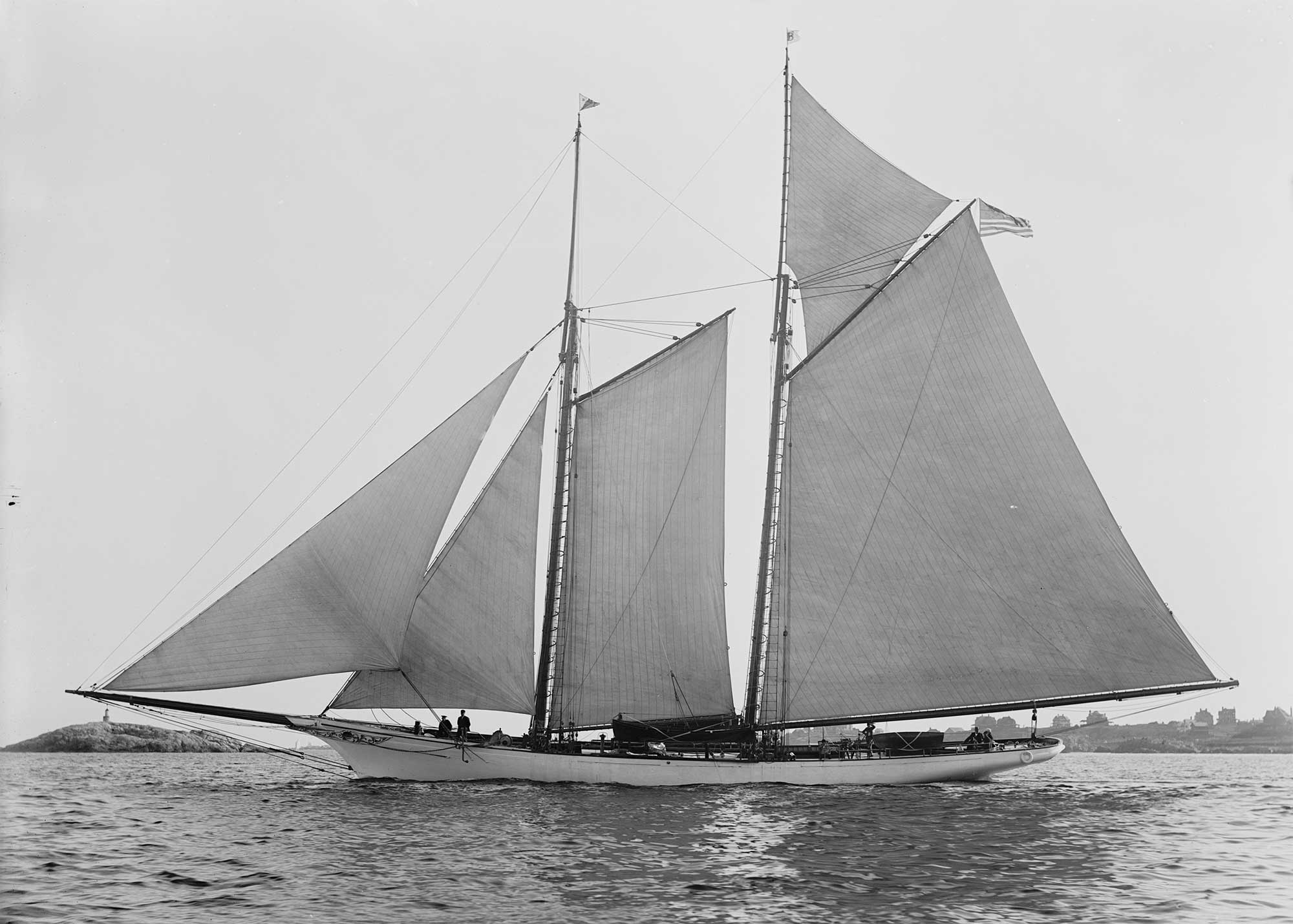
    George Steers gave the schooner efficient hull lines and a clean rig. America did not carry every available sail throughout the race. She carried the right sails for the conditions. From the start, the Cup rewarded the relationship between hull resistance, aerodynamic efficiency and crew execution.

    That formula still defines the event. The hardware has changed beyond recognition. The objective has not.

    The Rating Rules That Encouraged Extreme Yachts

    Early America’s Cup yachts were displacement boats. Their speed was constrained by waterline length, wave-making resistance and stability. Designers therefore searched for ways to create a longer effective sailing length without paying the full rating penalty.

    The most extreme expression was Reliance, Nathanael Herreshoff’s 1903 defender. Reliance measured about 43.8 metres in hull length, or 143 feet 8 inches, and carried roughly 1,580 square metres of sail, or 17,000 square feet. Her main boom alone was about 35.1 metres long, or 115 feet.

    When the yacht heeled, her long overhangs immersed and extended the effective waterline length. This increased speed potential while exploiting the measurement rule.

    It was brilliant engineering. It was also a dead end. Reliance required a huge crew, generated severe loads and had a narrow operating envelope. The Cup had discovered a recurring problem: an open rule can create extraordinary performance, but also extraordinary cost and fragility.
    America's Cup

    The J Class That Turned Testing into a Competitive Weapon

    The Universal Rule brought the J Class to the America’s Cup between 1930 and 1937. These yachts remain among the most elegant racing machines ever built. They were also scientific instruments.

    Ranger, the dominant American defender of 1937, used the maximum permitted waterline of 26.5 metres, or 87 feet. She displaced about 166 tonnes and carried approximately 701 square metres of sail.

    Her development process mattered more than her size. Designers used model testing to study resistance, heel angle, side force and balance before committing to the full-size yacht. Olin Stephens and Starling Burgess treated the hull, keel, rig and sails as one system.

    Ranger defeated Endeavour II four races to nil. One winning margin exceeded 18 minutes. The result confirmed that methodical testing could outperform intuition, however experienced the designer.

    The 12-Metre Era That Made Small Gains Decisive

    After the Second World War, J Class campaigns had become financially unrealistic. The America’s Cup returned in 1958 with the 12-Metre Class.

    The name is misleading. A 12-Metre was not 12 metres long. It was designed to a rating formula. Typical Cup yachts measured about 19 to 21 metres overall and displaced roughly 24 to 30 tonnes.

    These boats were slower than the J Class in absolute terms. They were also closer in performance. That made marginal gains decisive.

    Designers refined hull shape, ballast distribution, rudders, keels and sail inventories. Aluminium replaced wood in many campaigns. Wind-tunnel work, tank testing and two-boat comparison became standard. Professional crews trained for thousands of hours.

    The defining breakthrough came in 1983. Australia II used Ben Lexcen’s winged keel, developed with extensive model testing in the Netherlands. The inverted profile placed ballast low. Its horizontal wings reduced induced drag and helped control leeway.

    The keel was not magic. Australia II also had strong sails, a disciplined crew and an effective campaign. But the appendage changed the competitive balance. Australia II defeated Liberty four races to three and ended the New York Yacht Club’s 132-year hold on the trophy.

    The wider industry absorbed the principle. Winglets, bulbs and carefully shaped keel tips became familiar tools in racing and cruising design. Not every later keel was a copy. The conceptual transfer was clear: appendage geometry could create lift, reduce drag and improve stability without simply adding area.

    The IACC Era That Industrialised Yacht Design

    The controversial 1988 match placed a giant New Zealand monohull against the smaller hard-wing catamaran Stars & Stripes. The mismatch exposed the weakness of relying on the Deed of Gift alone to define a modern contest.

    The International America’s Cup Class, or IACC, followed in 1992 and remained in use until 2007. These were long, narrow monohulls with deep keels, large sail plans and highly optimised structures.

    Their design programmes increasingly resembled aerospace projects. Teams used computational fluid dynamics to study water and airflow. Finite-element analysis mapped structural loads. Velocity prediction programs compared performance across wind speeds and angles. Carbon fibre spread through hulls, masts, booms and appendages. Instrumentation produced large data sets from every sailing session.

    Sailmaking changed as well. During the 1992 cycle, moulded 3DL sails emerged from America’s Cup development. Sailmakers could create a three-dimensional shape on a full-size mould and align fibres with predicted load paths.

    That technology later evolved into 3Di composite sails. Related products are now used for offshore racing and cruising. The Cup helped turn the sail from stitched cloth into an engineered composite structure.

    The Multihull Revolution That Broke the Displacement Barrier

    The 2010 America’s Cup was another legal and technical confrontation. BMW Oracle Racing’s USA 17 was a 27.4-metre, or 90-foot, trimaran with a towering rigid wing. Alinghi 5 was a giant catamaran.

    USA 17 won easily. In the first race, the American trimaran averaged about 20.2 knots. The result proved that a rigid wing could deliver exceptional lift-to-drag performance at full scale.

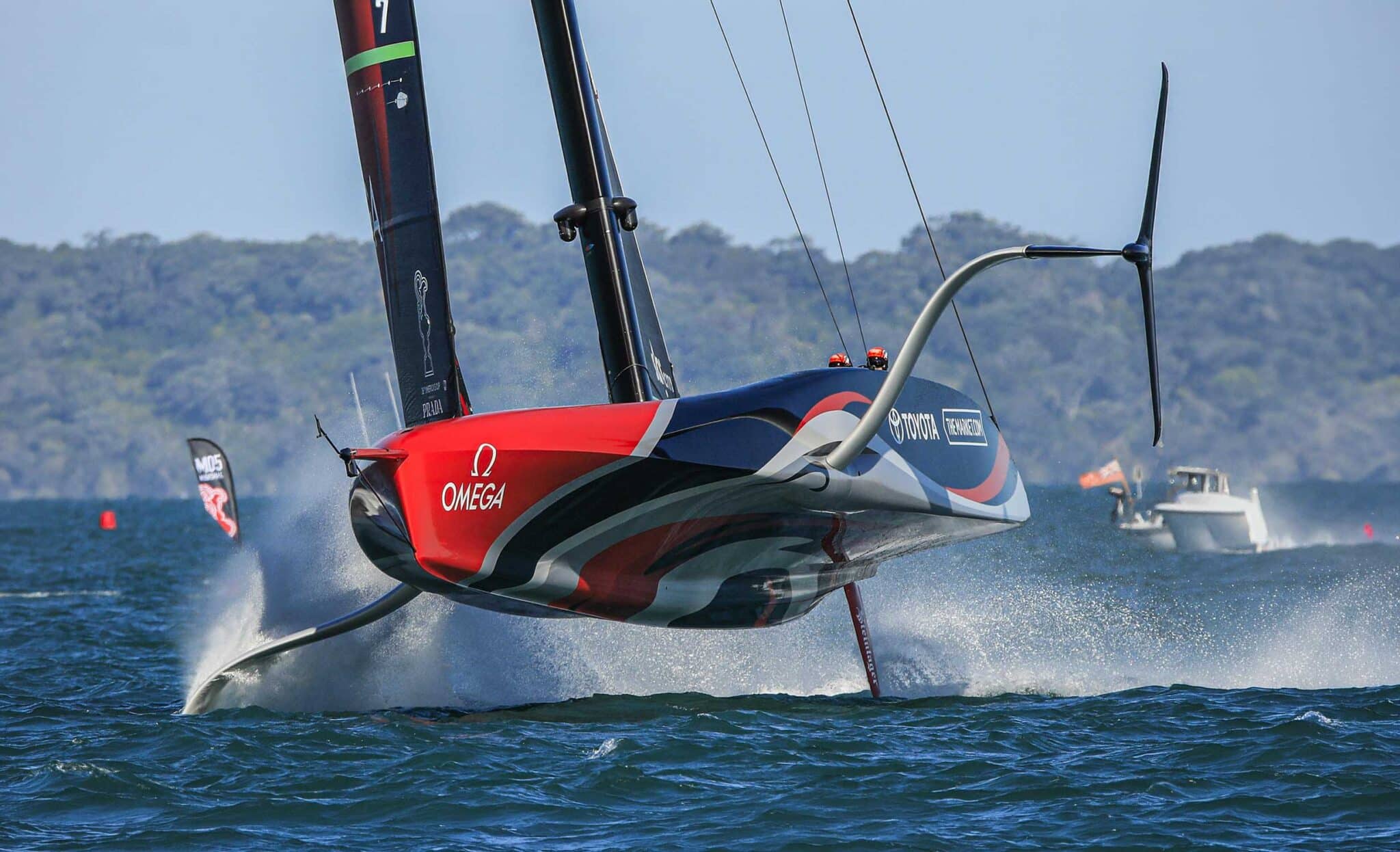
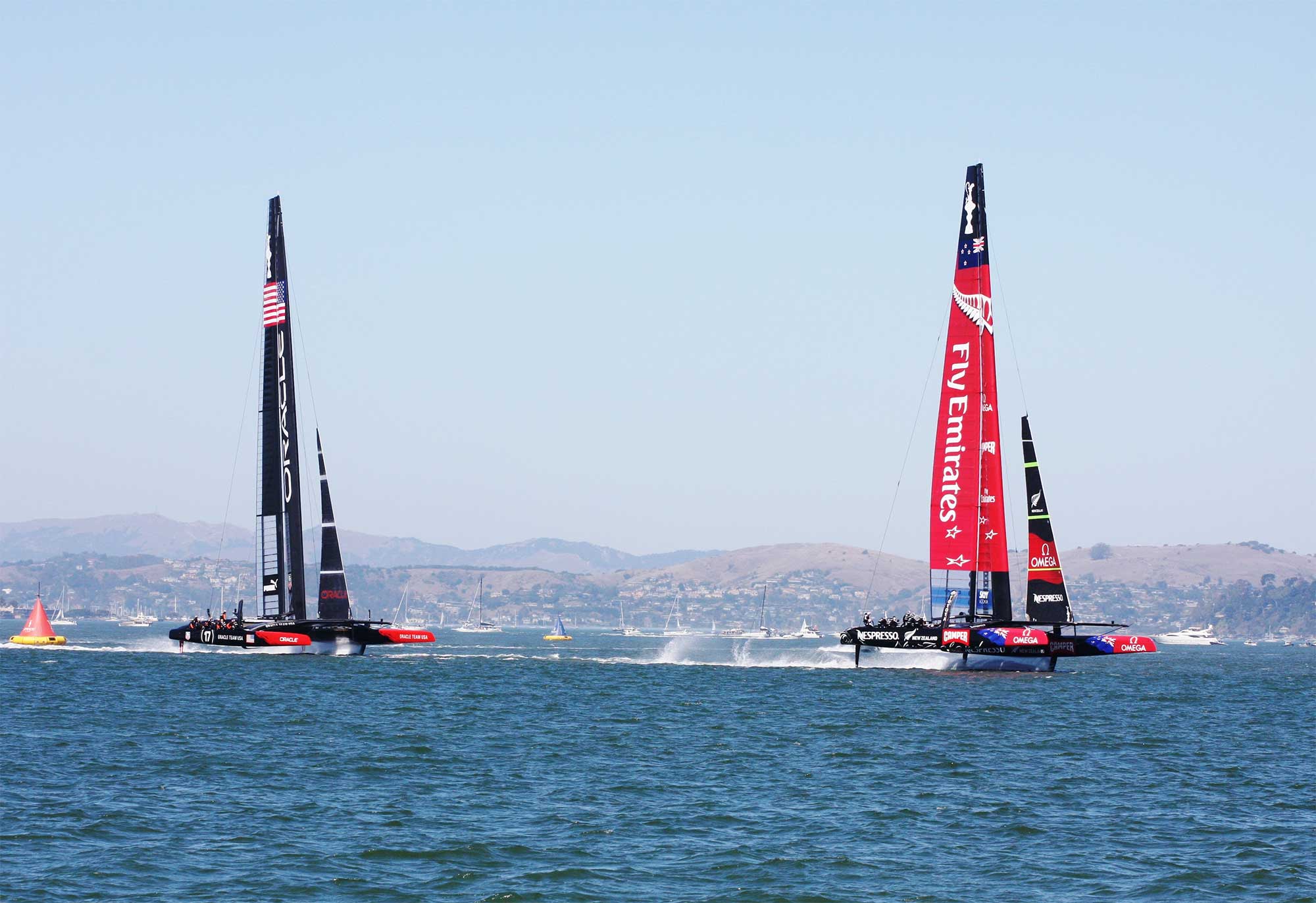
    The next Cup adopted the 22-metre AC72 catamaran. These boats combined light carbon structures, rigid wings and hydrofoils. Emirates Team New Zealand developed a configuration that allowed the catamaran to rise clear of the water and remain supported by its appendages.

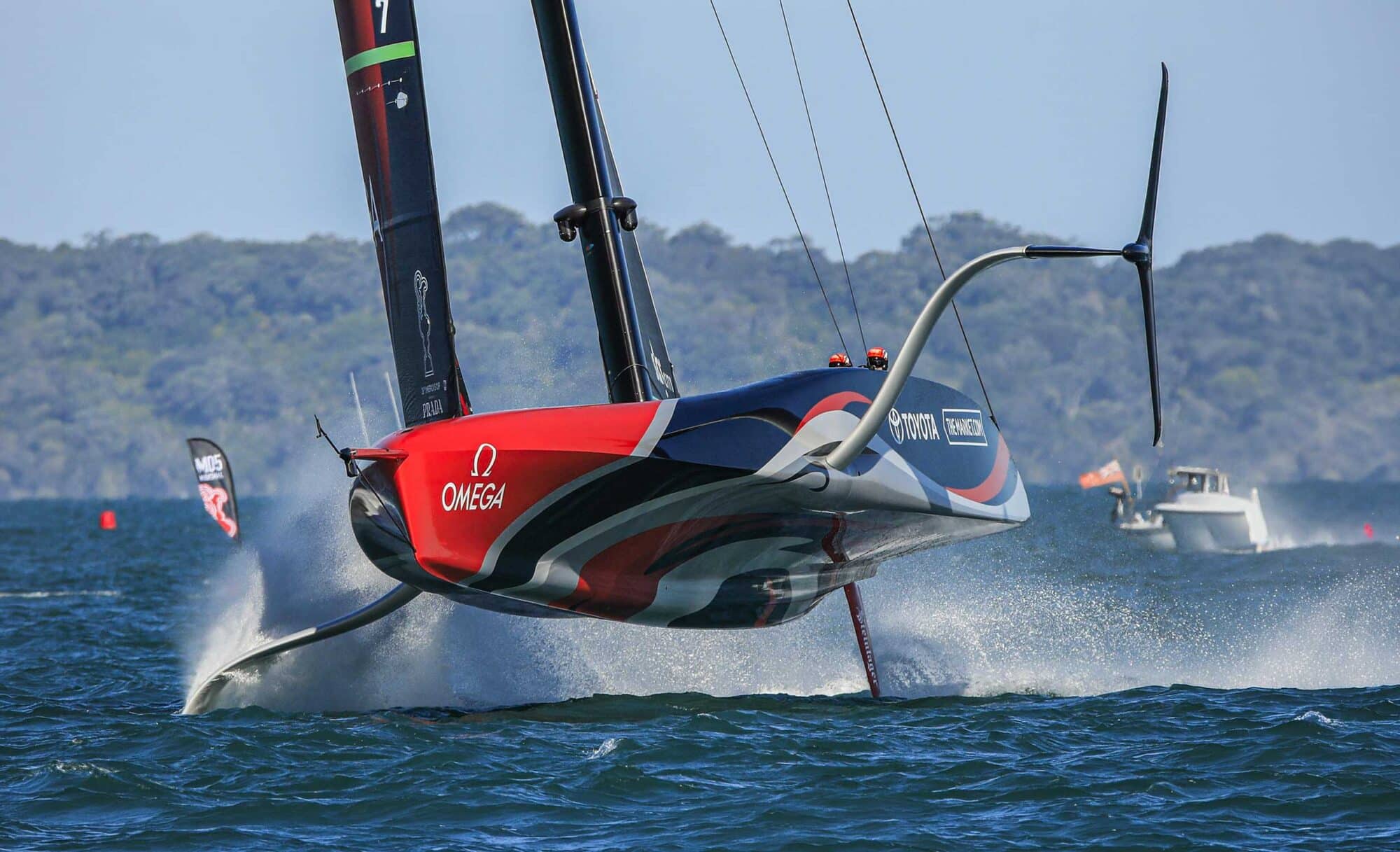
    This was the decisive break with the past. A conventional yacht pushes its hull through water. A foiling catamaran lifts its hulls above the surface. Wetted area falls sharply. Speed rises until aerodynamic drag, foil drag, cavitation risk and control limits become the main constraints.

    The AC72s exceeded 40 knots. They were spectacular and dangerous. The death of Artemis Racing sailor Andrew Simpson during training in 2013 was a brutal reminder that innovation had moved faster than the sport’s safety margin.

    For 2017, the Cup moved to smaller AC50 catamarans. Emirates Team New Zealand introduced cyclists, or cyclors, to generate hydraulic power more efficiently than conventional arm grinders. Its boat exceeded 46 knots and defeated Oracle Team USA seven races to one.
    The AC75 That Made Controlled Flight the New Normal

    After winning in Bermuda, Emirates Team New Zealand replaced the catamaran with a radical concept: a 20.7-metre foiling monohull.

    The AC75 has no conventional ballast keel. It uses two canting foil arms. One foil is lowered to provide lift and lateral resistance. The windward foil is raised and acts partly as movable ballast. A rudder elevator controls pitch. Flaps on the submerged foil regulate lift.

    Above deck, a twin-skin mainsail forms a soft wing around the mast. It offers much of the aerodynamic logic of a rigid wing, but can be hoisted, lowered and reshaped.

    The second-generation AC75s raced in Barcelona in 2024 weighed about 6,200 kilograms without crew and carried eight sailors. They combined carbon structures, hydraulics, electronic flight controls, advanced software and hundreds of sensors.

    INEOS Britannia reported 120,000 components, more than 700 sensors and channels, and over 30,000 data channels on its 2024 boat. During Race 8 of the Louis Vuitton Cup Final, the British team recorded 55.6 knots, equal to 103 km/h.

    This performance did not come from one invention. It came from control. At 50 knots, a small error in pitch can cause a crash within seconds. The crew must manage ride height, foil loading, sail shape, energy, course position and tactics at the same time.

    The 38th America’s Cup is scheduled for Naples in 2027. It will retain the AC75 and AC40 platforms. Existing teams must reuse their previous AC75 hulls where available. The crew will fall to five sailors. Battery power will replace much of the human-generated hydraulic energy. A €75 million team cost cap is intended to contain escalation without ending development.

    The Technologies That Reached Cruising Yachts

    The Cup does not transfer complete boats into the cruising market. An AC75 would be an absurd offshore cruiser. It has extreme systems, limited practical payload and no tolerance for neglected maintenance.

    The transfer happens in layers.

    The Composite Structures That Reduce Weight and Fatigue

    Carbon fibre, structural foams, bonded components and engineered load paths are now common in premium yacht construction. Racing accelerated their adoption and improved manufacturing discipline.

    For a cruising yacht, lower structural weight can support more payload, a stronger safety margin or better light-wind performance. Stiffness also helps preserve rig geometry and sail shape.

    The specification must be different. A race boat is optimised for a short competitive life. A bluewater yacht must withstand repeated slamming, ultraviolet exposure, thermal cycles and imperfect maintenance. The correct goal is not minimum weight. It is minimum unnecessary weight.

    The Sail Technology That Preserves Shape

    Moulded composite sails, fibre mapping and aerodynamic simulation have moved directly into high-end cruising.

    A sail that holds its shape generates less drag and more drive. It also reduces heel and rudder load. On passage, that can improve average speed without pushing the boat harder. It can also reduce autopilot effort and electrical consumption.

    This transfer is particularly valuable because it improves both performance and control. A stable sail shape makes the yacht more predictable. That matters more offshore than a brief increase in peak speed.

    The Digital Tools That Predict Behaviour Before Launch

    Modern designers routinely use computational fluid dynamics, finite-element analysis and velocity prediction programs. These tools were not invented by the America’s Cup. The Cup accelerated their marine use and created a culture of validation.

    For an offshore catamaran, simulation can examine bridge-deck clearance, wave impact, structural fatigue, appendage loads and aerodynamic balance under realistic loading.

    Digital models reduce guesswork. They do not replace sea trials. They allow naval architects to arrive at the testing stage with better questions and fewer fundamental uncertainties.

    The Foil Research That Improved Appendages

    Most cruising yachts do not need to fly. Full foiling creates draft, complexity, impact risk and maintenance demands that conflict with remote cruising.

    Yet America’s Cup foil research has improved rudders, daggerboards, centreboards and keel profiles. Designers now understand ventilation, cavitation, section shape and load distribution more precisely.

    Some performance cruising multihulls use foil-assisted appendages to reduce effective displacement or control pitching. The concept can work. It must be judged honestly.

    A small speed gain is worthless if the system becomes vulnerable to collision, marine growth or hydraulic failure far from support. Offshore engineering must consider the consequences of failure, not merely the benefits of correct operation.

    The Control Systems That Reduce Crew Workload

    Load sensors, hydraulic controls, electric winches, integrated displays and advanced autopilots have roots across racing, aerospace and industrial engineering. The Cup has forced them to become faster, lighter and more accurate.

    For cruising, the purpose is different. The goal is not to complete a tack in seconds. It is to let a small crew manage a large yacht safely.

    Automation is useful when it supports judgement. It becomes dangerous when it hides failure modes. Offshore systems should remain diagnosable. Critical functions should have manual or redundant alternatives.

    The best cruising control system is not necessarily the most sophisticated one. It is the system that remains understandable at 03:00, in poor weather, when the nearest technician is thousands of kilometres away.

    The Offshore Lesson That Matters More Than Speed

    At Privilège Marine, we do not believe a bluewater catamaran should imitate an America’s Cup boat. The missions are opposite.

    A Cup boat must be fastest for a few races. An offshore yacht must remain capable after weeks at sea. It carries water, fuel, tenders, tools, food, personal equipment and safety systems. It must sail in waves that would stop Cup racing. It must remain manageable by an owner and a small crew.

    The relevant America’s Cup legacy is therefore methodological.

    Measure loads. Reduce drag. Control weight. Preserve sail shape. Validate structures. Improve ergonomics. Collect useful data. Design systems as parts of one coherent platform. Then apply reliability before spectacle.

    The best cruising innovation is rarely the most visible. It may be a lighter structure that allows more equipment without overloading the boat. It may be a sail that keeps its shape for thousands of hours. It may be an autopilot that uses less energy because the hull and rig are balanced.

    It may also be a machinery space that allows a pump, filter or electrical component to be reached and replaced at sea. Access is not glamorous. Offshore, it is a performance feature.

    This distinction is essential. Racing technology asks how far performance can be pushed. Bluewater engineering asks how much useful performance can be preserved without compromising safety, comfort or independence.

    The Future That Will Be Faster but More Selective

    The America’s Cup has moved from carved wooden hulls to aircraft-like control systems in less than two centuries. Its boats became faster because designers attacked every source of resistance and uncertainty.

    The next advance may not be another great jump in peak speed. Beyond 100 km/h, control, reliability, cost and safety matter as much as acceleration. The 2027 rules already reflect that reality through hull reuse, a cost cap and stored electrical power.

    The Cup will continue to produce ideas that appear excessive. That is its function. It provides a place where designers can test the outer edge of possibility.

    The cruising industry should watch closely, but copy selectively. The enduring achievement of the America’s Cup is not the flying yacht itself. It is the discipline behind it: understand the forces, remove waste, manage energy and build the boat as a coherent system.

    That discipline belongs on every serious ocean-going yacht.
  • Sailing the Bermuda Triangle: The Myth, the Sea and the Islands

    Sailing the Bermuda Triangle: The Myth, the Sea and the Islands

    A practical sailing guide to the Bermuda Triangle’s myths, real offshore risks, Bermuda’s anchorages and the island experience for large catamarans.

    The Bermuda Triangle is one of the ocean’s most successful stories. It is not an officially defined sea area, and neither NOAA nor the United States Coast Guard considers it uniquely dangerous. Yet the legend grew from real losses, including USS Cyclops in 1918 and Flight 19 in 1945, then expanded through decades of sensational books and television. For sailors, the practical risks are less mysterious: the Gulf Stream, fast-changing weather, tropical systems, fatigue, traffic and Bermuda’s extensive coral reefs. A well-prepared offshore yacht should treat the passage with respect, not fear. Bermuda itself is a compelling landfall. St. George’s offers history and straightforward clearance. The Great Sound gives broad-beam catamarans room to anchor. Hamilton brings urban energy, while Castle Harbour offers greater seclusion. For a large Privilège catamaran, the key considerations are weather routing, daylight arrival, reliable communications, anchoring discipline and advance confirmation of marina beam limits.

    The Triangle was created by storytelling, not cartography

    The first fact is also the most important. The Bermuda Triangle is not an official place. It has no internationally accepted coordinates, no legal boundary and no special status on nautical charts. Its usual outline joins Miami, Bermuda and Puerto Rico, creating a vast section of the western North Atlantic.

    The name entered popular culture in 1964. The American writer Vincent Gaddis used “The Deadly Bermuda Triangle” as the title of an article in Argosy, a pulp magazine. Charles Berlitz turned the idea into a global phenomenon with his 1974 bestseller, The Bermuda Triangle.

    The formula was irresistible. It combined aviation, deep water, tropical weather and unexplained loss. It also benefited from selective storytelling. Incidents separated by decades were presented as parts of one pattern.

    Official assessments are less dramatic. NOAA states that there is no evidence of mysterious disappearances occurring more frequently inside the supposed Triangle than in other large, heavily travelled ocean areas. The United States Coast Guard does not recognise it as a zone of special hazard and has found no extraordinary factor behind the casualties it reviewed.

    Some losses remain unresolved because wreckage was never recovered. Deep water, rapid currents and limited historical records can leave permanent uncertainty. An unexplained loss is not evidence of a supernatural cause.

    The disappearances that gave the myth its power

    USS Cyclops remains one of the legend’s darkest episodes. The 165-metre (542-foot) United States Navy collier disappeared in March 1918 while sailing from Barbados towards Baltimore. The ship carried 306 crew members and passengers. No confirmed wreckage was found.

    Later naval analysis considered the ship’s structural characteristics, its heavy manganese ore cargo, loading stresses and severe weather among the plausible explanations. The loss remains officially unresolved. That is not the same as inexplicable.

    Flight 19 added aviation mystery to maritime folklore. On 5 December 1945, five TBM Avenger torpedo bombers left Fort Lauderdale on a routine training mission. They failed to return. Radio exchanges suggested navigational confusion and uncertainty about their position. The aircraft entered deteriorating weather and eventually exhausted their fuel. A rescue aircraft was also lost during the search.

    The legend often removed this operational context. Wartime aircraft had limited navigation equipment. Weather information was sparse. Position fixing depended on compass headings, estimated speed, elapsed time and visual references. A small initial error could become a large final error.

    The supernatural explanations fail a basic test

    The most famous theories include Atlantis, extraterrestrial intervention, time distortions, magnetic vortices and methane eruptions from the seabed. None has produced credible evidence.

    The compass story deserves a technical answer. A magnetic compass points towards magnetic north, not normally geographic north. The angular difference is magnetic variation, which changes according to location and over time. Navigators correct for it.

    A compass can also be affected by electrical equipment, ferrous objects, wiring, loudspeakers and poor calibration. That is a vessel problem, not an ocean anomaly.

    Rogue waves, waterspouts and violent squalls are real. They can damage vessels anywhere. They do not prove the existence of a special destructive mechanism inside the Bermuda Triangle.

    sailing Bermuda

    The real ocean is challenging enough

    A sailor does not need paranormal explanations to respect this part of the Atlantic. The physical environment already provides a serious test.

    The most influential feature is the Gulf Stream. NOAA gives its average speed as approximately 6.4 kilometres per hour (4 miles per hour), with typical maximum surface speeds near 9 kilometres per hour (5.6 miles per hour). For a sailing yacht, that current can materially change course over ground, arrival time and sea state.

    The 1,178-kilometre (636-nautical-mile) Newport Bermuda Race has crossed this water since 1906. Its long record is useful evidence. Thousands of yachts have completed the passage safely. The race is nevertheless known as the “Thrash to the Onion Patch” because wind against current can build steep, confused seas.

    The Gulf Stream is a routing problem, not a legend

    The Gulf Stream is not a fixed blue river. Its axis moves. It develops meanders, warm eddies and cold eddies. A current chart that is several days old may already be misleading.

    For a yacht approaching from the United States East Coast, the critical decision is where and at what angle to cross the main stream. A favourable crossing may add speed. A poor crossing may push the yacht sideways for hours.

    Strong northerly or north-easterly wind against the north-flowing current can produce short, breaking waves. The danger is not necessarily their absolute height. It is their steepness, frequency and disorganisation. The motion can become violent, while slamming loads increase rapidly.

    A large cruising catamaran brings advantages. It offers speed, redundancy, good watchkeeping spaces and a stable living platform. It also has substantial windage and high structural loads. The correct response is not to drive the boat harder. It is to reduce sail early, protect the crew and preserve the systems.

    On a Privilège, offshore capability is built around autonomy and redundancy. Twin engines, duplicated critical systems, robust energy management and protected watchkeeping reduce the consequences of a single failure. They do not remove the need for weather routing and disciplined seamanship.

    The weather window matters more than the destination

    The official Atlantic hurricane season runs from 1 June to 30 November. Historical activity peaks around 10 September, with the busiest period generally extending from mid-August to mid-October. Bermuda can be affected directly or indirectly by tropical systems.

    Spring and early summer are popular for passages from the United States. Autumn may suit yachts heading south, but tropical risk remains part of the calculation.

    Winter creates a different problem. Strong cold fronts can move rapidly off North America and generate gales, large seas and abrupt wind shifts. Behind a front, the wind can oppose the Gulf Stream and make conditions considerably worse than the wind speed alone would suggest.

    The sensible skipper studies the full route, not only the forecast at departure. Satellite communications allow regular updates, but forecast models still diverge. Squall lines can form between forecast points. Equipment can fail.

    A safe plan includes sea room, conservative sail choices and the possibility of delaying landfall.

    The approach to Bermuda rewards precision

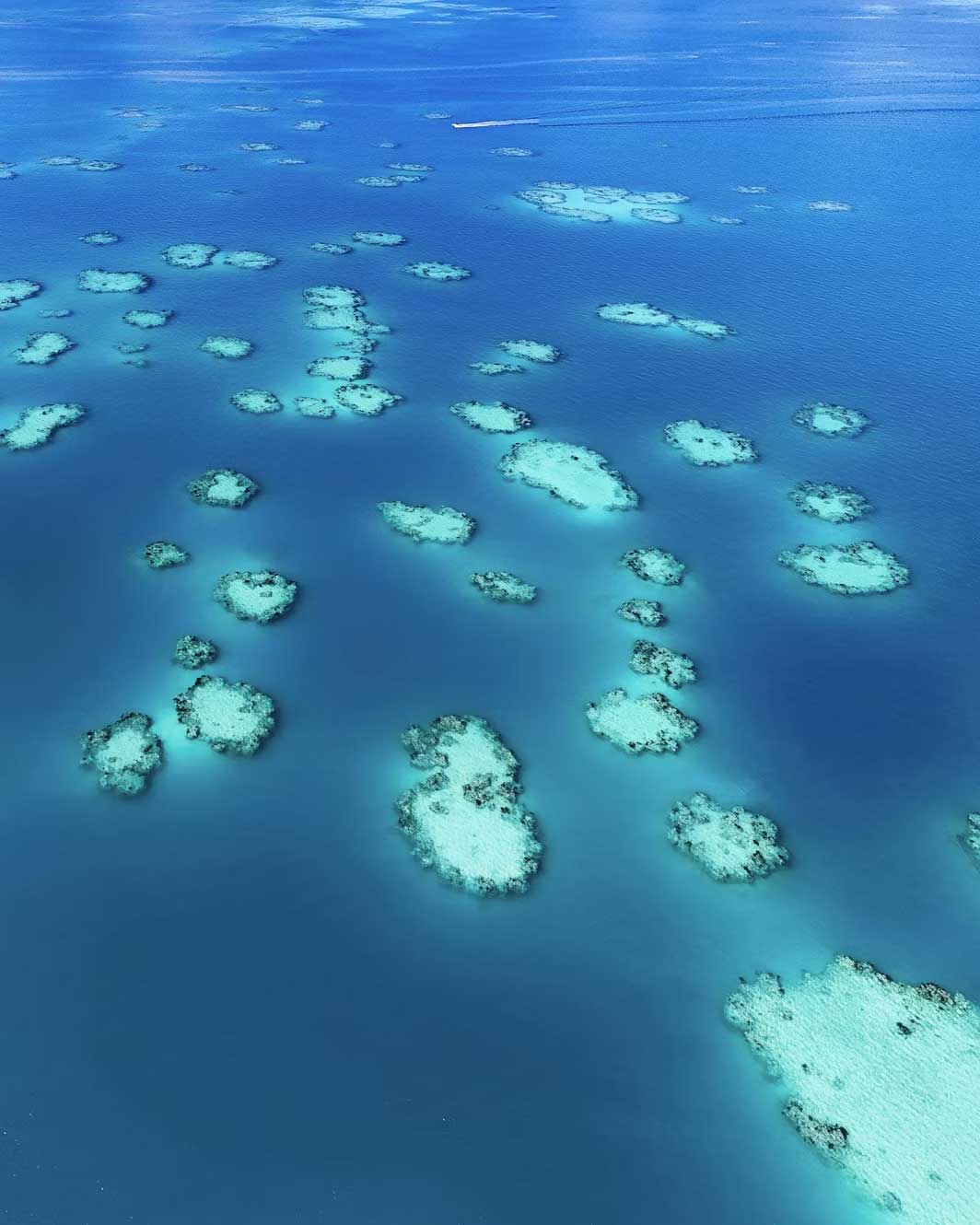
    Bermuda’s offshore passage is often less difficult than its final approach. The islands are surrounded by coral reefs. On the northern side, those reefs extend as far as 16 kilometres (10 miles) offshore.

    Government guidance warns against pressing into unfamiliar local waters after dark. The Town Cut entrance into St. George’s Harbour is well marked, but darkness, rain or poor visibility remove the visual information that makes reef navigation safer.

    A daylight landfall is the professional choice. It allows the crew to identify water colour, breaking reef, buoys, traffic and any discrepancy between charted and observed conditions.

    Electronic charts, radar and accurate GNSS positioning are essential, but none should be treated as infallible. Large-scale official charts and current Notices to Mariners remain necessary. The Bermuda Department of Marine and Ports regularly publishes warnings about missing buoys, extinguished lights, diving operations and local traffic restrictions.

    Visiting yachts are asked to contact Bermuda Harbour Radio approximately 56 kilometres (30 nautical miles) from the islands on VHF channels 16 or 27. The station provides arrival instructions and directs yachts towards clearance in St. George’s Harbour.

    The yellow Q flag should be flown until formalities are completed. The principal yacht reporting and customs facility is at Ordnance Island.

    Arrivals between midnight and 08:00 may be directed to Powder Hole. The yacht must remain in the quarantine area until clearance becomes available. Current visitor guidance also requires advance electronic reporting through SailClear.

    Formalities are not especially burdensome, but they should be prepared before departure. Passports, vessel documents, insurance records, crew details and health declarations must be readily available.

    The large catamaran changes the anchoring equation

    Official guidance states that overnight anchoring is generally free, provided the vessel does not obstruct navigation channels or existing moorings. The choice of anchorage still requires judgement.

    For a large catamaran, the beam matters more than the draft when selecting a marina. A shallow draught helps in protected waters, but it does not justify crossing poorly surveyed reef areas. The broad beam may eliminate otherwise suitable berths.

    High freeboard creates another consideration. A large catamaran presents considerable surface area to the wind. The resulting load on the anchor can rise sharply during a squall, even when the water remains relatively flat.

    The skipper should confirm berth width, manoeuvring room, shore-power compatibility and fendering before entering a marina. At anchor, the crew should identify clear sand or mud, avoid coral, calculate swinging room for the full forecast and account for neighbouring monohulls that may swing differently.

    The St. George’s Harbour anchorage is the logical first stop

    St. George’s Harbour is the most practical arrival base. Powder Hole is sheltered, close to clearance and within dinghy distance of the historic town. It suits a large cruising catamaran better than a rushed attempt to secure a berth immediately after an offshore passage.

    The anchor should still be set under load and its position verified. Squalls can funnel across the island, while commercial and recreational traffic moves through the harbour.

    For marina comfort, St. George’s Marina and Superyacht Dock offers berthing, provisioning and fuel close to Ordnance Island. Bermuda’s tourism authority states that it can handle yachts up to 100 metres (328 feet).

    A large sailing catamaran is comfortably within the marina’s stated length range. Its beam must nevertheless be declared in advance. Length alone does not determine whether a multihull can be accommodated.

    The Great Sound gives a catamaran room to breathe

    The Great Sound is Bermuda’s best-known large natural harbour. A reef barrier across its entrance reduces Atlantic wave energy. The available space is attractive for a broad-beam catamaran, particularly when the crew wants privacy, water access and sufficient room to swing.

    It is also a strong base for the Royal Naval Dockyard and the West End. Pier 41 Marina provides services in Dockyard, while the wider sound offers anchoring opportunities.

    Current charts and local guidance remain essential. Reef edges, channels and moorings create a landscape that is visually beautiful but operationally unforgiving.

    Hamilton Harbour is the urban alternative. It gives immediate access to restaurants, shops, provisioning and the capital. It also brings ferry traffic, wake and less solitude. The Hamilton Princess Marina offers full-service facilities and can accommodate very large yachts. Advance booking is essential for a wide catamaran.

    Castle Harbour is the quieter choice. It is scenic, protected and close to Tucker’s Town. It can provide a more private Bermuda sailing experience, but the entrances and surrounding reefs demand careful pilotage.

    Mangrove Bay and Somerset are also listed as popular anchoring areas. A very large catamaran should assess access, turning room, bridge restrictions and local traffic before treating them as routine options.

    The islands are better than the legend suggests

    Bermuda is not merely a technical stop between weather systems. It is a destination with enough character to justify several days.

    St. George’s is the natural beginning. Founded in 1612, the town and its related fortifications form a UNESCO World Heritage Site. White stepped roofs collect rainwater. Narrow streets lead from King’s Square towards old churches, stone buildings, small museums and waterfront restaurants.

    After several days offshore, its scale feels civilised rather than staged. It remains closely connected to the sea. Yachts are not hidden in a distant marina district. They arrive beside the old town.

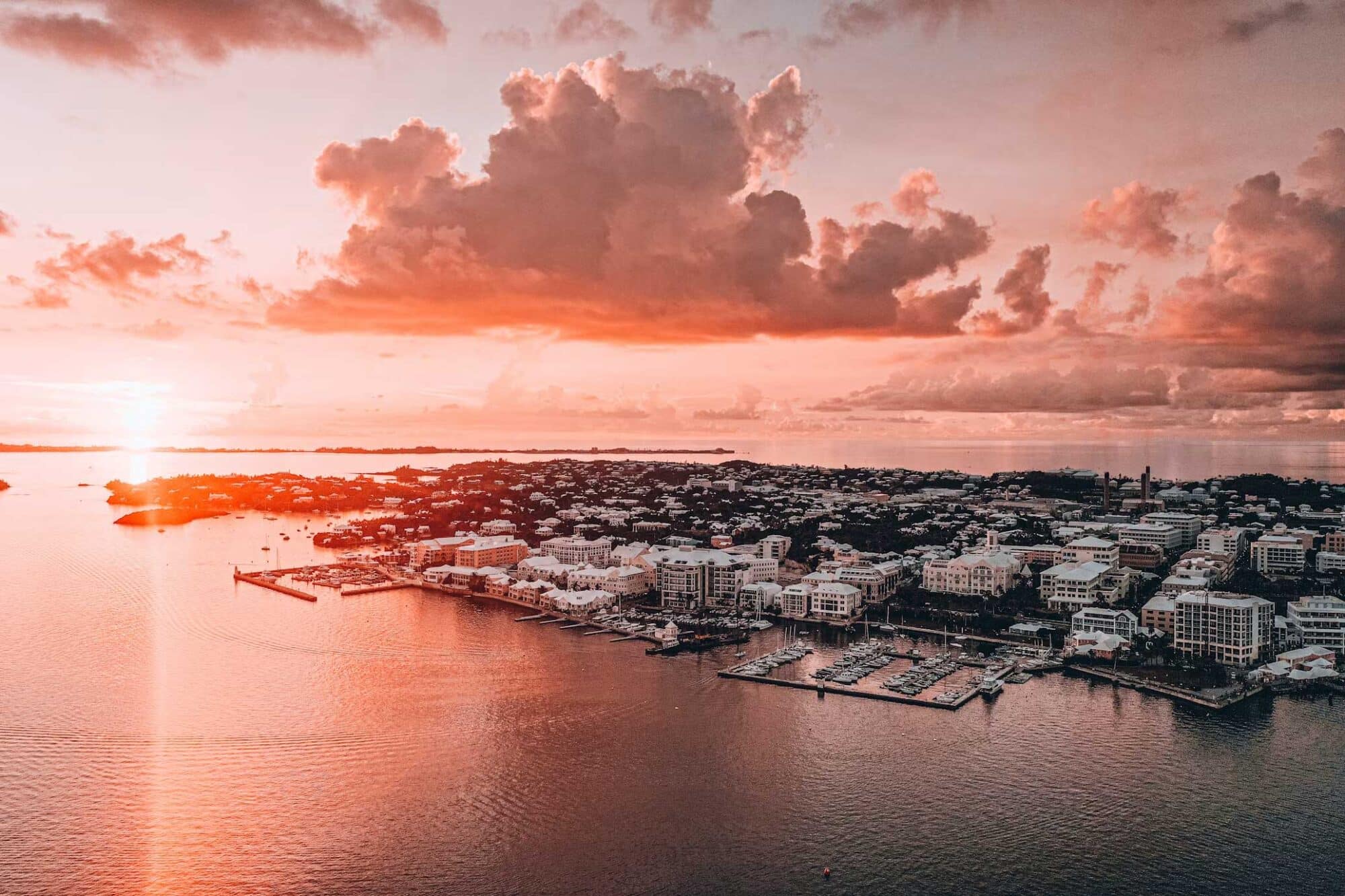
    Hamilton provides the contrast. Front Street is polished and commercial, with pastel façades facing the harbour. The city works well for provisioning, dining and crew logistics. It is not Bermuda’s most intimate place, but it is the most efficient.

    The Royal Naval Dockyard carries greater architectural weight. The former military complex now combines the National Museum of Bermuda, workshops, restaurants, shops and marine services. It makes a practical day ashore from the Great Sound.

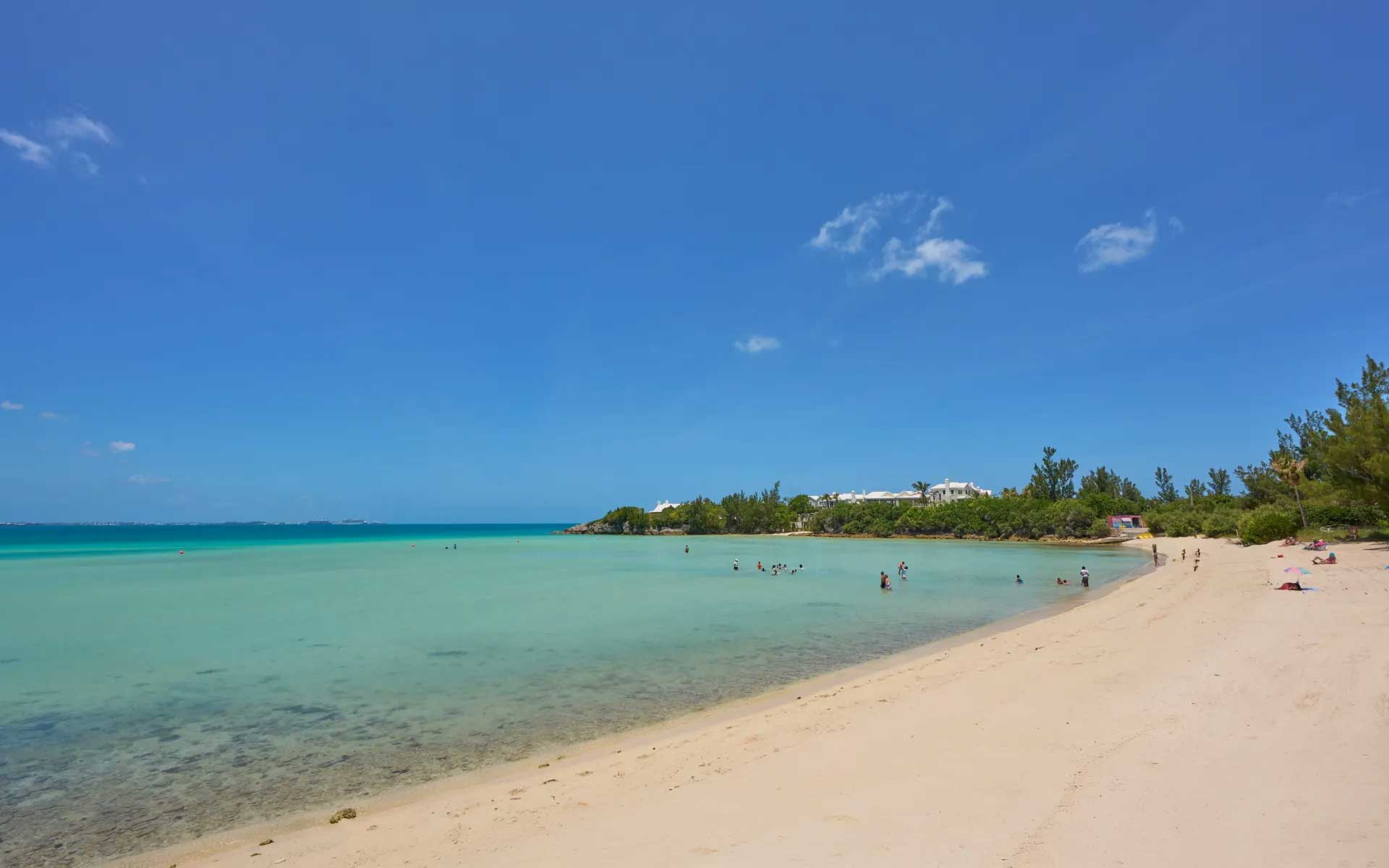
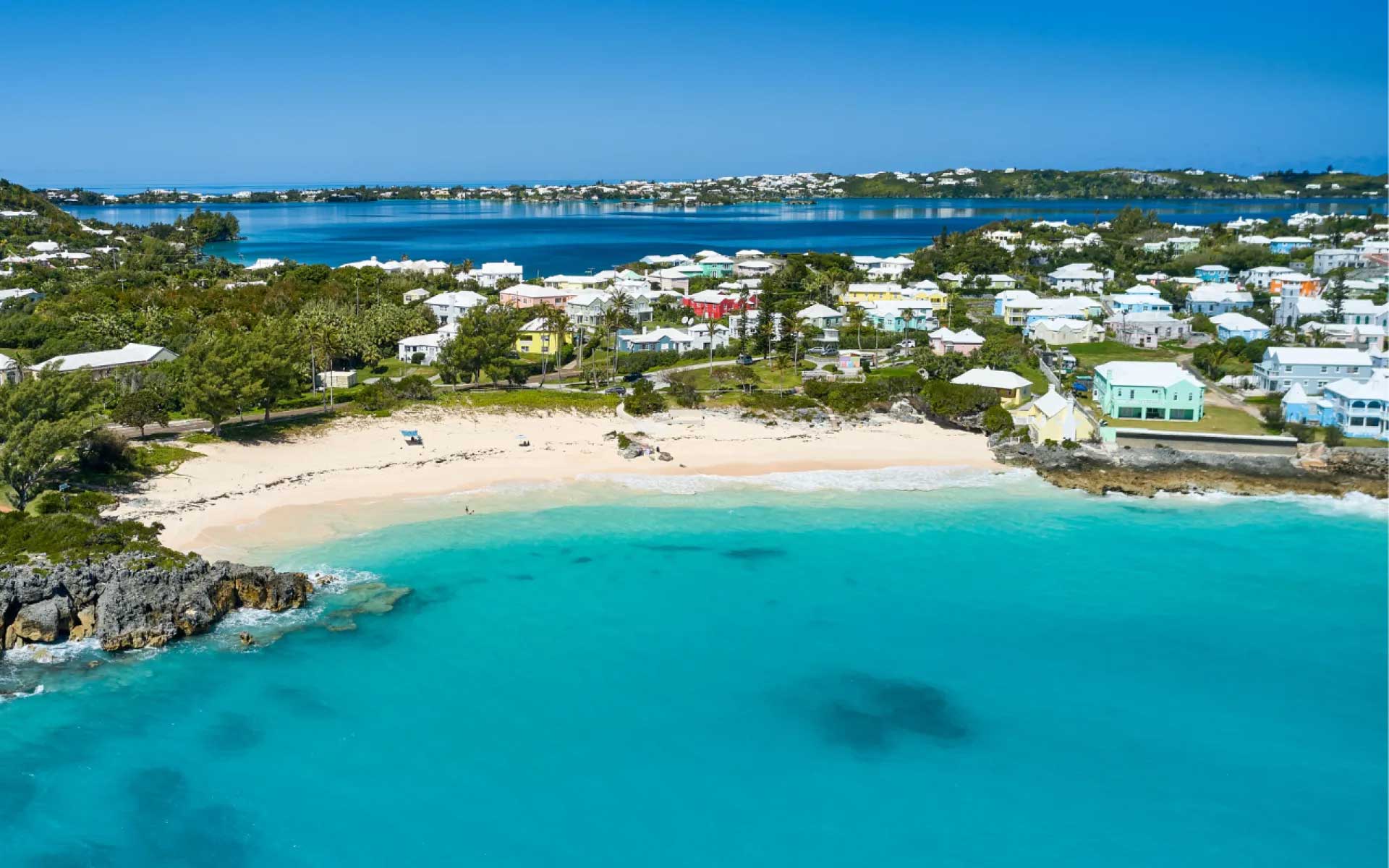
    The beaches justify their reputation. Horseshoe Bay has pale pink sand, clear water and limestone formations. It can be busy, particularly when cruise ships are in port. The adjoining South Shore paths lead towards quieter coves and Warwick Long Bay. The better experience is often found beyond the main access point.

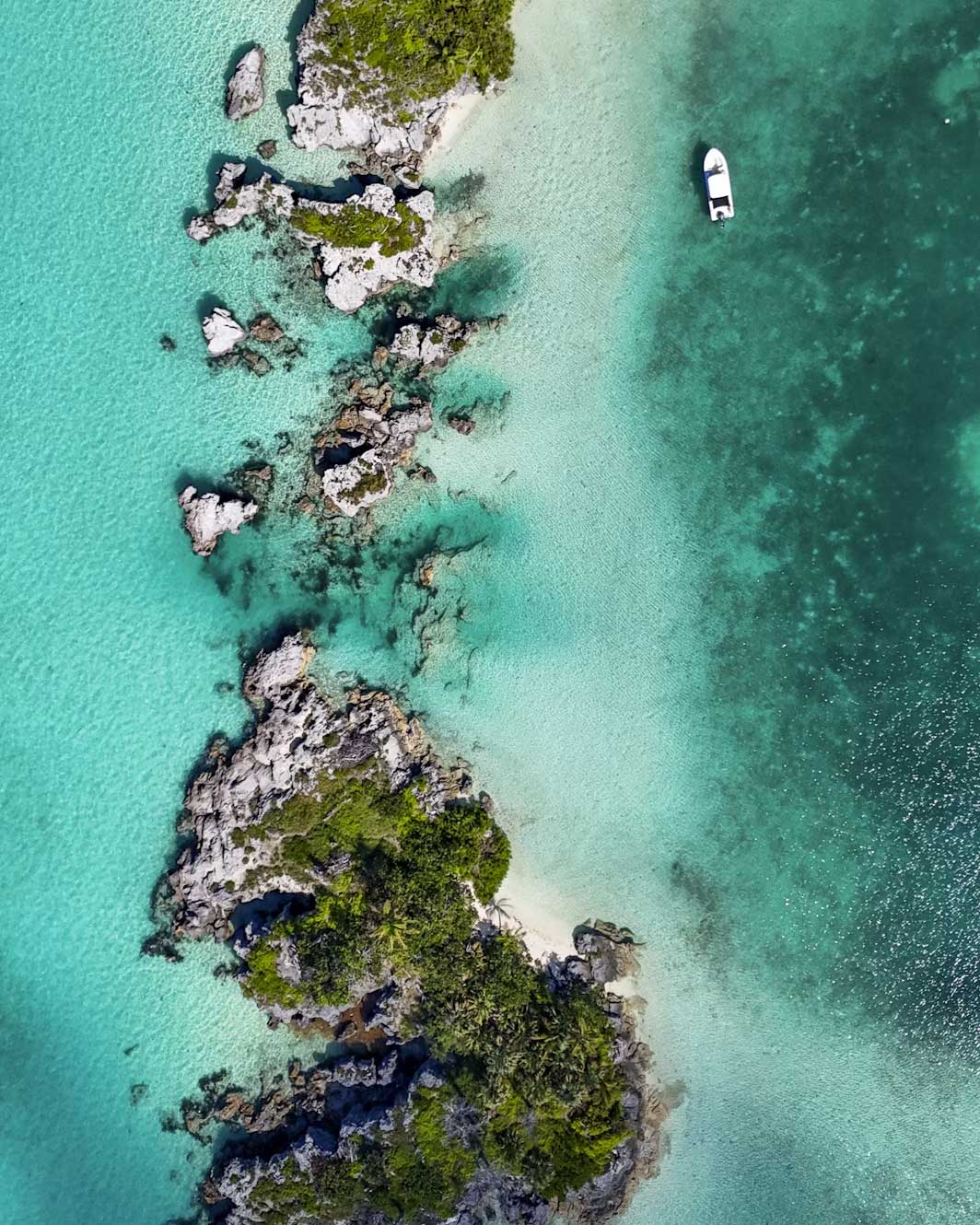
    Below the water, Bermuda’s wreck history becomes an attraction rather than a warning. Local tourism authorities count more than 300 sunken vessels around the reefs. Diving and snorkelling can combine coral, clear Atlantic water and wreck structure in the same outing.

    The Crystal Caves offer limestone chambers and clear underground pools. The former Bermuda Railway route has become a trail linking coastline, woodland and settlements. It is one of the simplest ways to see parts of the island that are invisible from the main roads.

    Bermuda is expensive. Provisioning, dining and marina services reflect its remote location and high operating costs. That should be budgeted honestly.

    Yet the quality of the stop is high. The island is compact and well served by buses and ferries. A yacht crew can move from harbour to beach or historic site without turning the visit into a logistical exercise.

    The myth ends where seamanship begins

    Sailing the Bermuda Triangle is not an encounter with a forbidden sea. It is an offshore passage across a busy and meteorologically active part of the North Atlantic.

    Its risks are identifiable. They include current, weather, fatigue, navigational error, machinery failure and reef approach.

    For a Privilège owner, the correct attitude is straightforward. Use the yacht’s range, stability and redundancy. Do not confuse capability with invulnerability. Cross the Gulf Stream with a current plan. Reef early. Maintain a real watch. Call Bermuda Radio in good time. Make the final approach in daylight. Give the anchor the same attention as the ocean crossing.

    Bermuda then changes the tone. The reef that demands caution also creates luminous sheltered water. The harbour used for customs opens directly onto one of the Atlantic’s most historic towns. The supposed centre of a maritime mystery becomes a refined, practical and rewarding cruising destination.

    Bermuda rewards prepared sailors, not superstitious ones.

  • How to Calculate Power Consumption on a Sailing Boat

    How to Calculate Power Consumption on a Sailing Boat

    A practical method to calculate daily amp-hours, size batteries and solar, and build a Privilège catamaran around the owner’s real life at sea.

    Calculating power consumption on a sailing boat starts with a simple rule: electrical autonomy must be measured in energy, not merely in amps. Every refrigerator, autopilot, watermaker, communication system and air-conditioning unit has a power rating and an operating time. Multiply the two, correct for duty cycle and conversion losses, and the yacht’s daily energy requirement emerges.

    A refrigerator may draw 3 to 9 amps while its compressor is running, yet consume far less over 24 hours because it cycles on and off. Air conditioning is different. A single marine unit can consume more energy overnight than the refrigerator, navigation electronics and lighting combined.

    For Privilège Marine, the opportunity lies in designing the entire energy architecture around the owner. The Signature 510, 580, 600 and 650 do not need identical batteries, solar arrays or generators. A couple crossing oceans, a family working remotely and an owner expecting silent tropical air conditioning require fundamentally different yachts.

    The Amp-Hour Figure Is Useful but Often Misleading

    Owners frequently ask how to calculate power consumption on a sailing boat. The calculation itself is straightforward. The difficulty lies in using the correct units.

    An amp is a measure of electrical current. It does not describe total energy consumption unless voltage and time are also known. Ten amps at 12 volts represents 120 watts. Ten amps at 24 volts represents 240 watts. The current is identical, but the power has doubled.

    The basic formula is:

    power equals voltage multiplied by current

    A 24-volt pump drawing 5 amps therefore consumes 120 watts.

    Energy adds time to the calculation:

    daily energy equals power multiplied by time

    If that pump operates for two hours, it consumes 240 watt-hours, or 0.24 kilowatt-hours.

    This is why Use watt-hours, not amps alone is the safest rule for a catamaran energy audit. Watt-hours allow an owner to compare a 24-volt refrigerator, a 230-volt induction hob and a 48-volt battery system without confusing current with energy.

    Daily amp hours cruising remain useful, but only after the system voltage has been defined. A yacht consuming 12 kilowatt-hours a day requires about 500 amp-hours at 24 volts. The same energy represents 250 amp-hours at 48 volts.

    The yacht has not become twice as efficient. Its electrical architecture simply operates at a higher voltage.

    The Energy Audit Must Separate Rating From Real Consumption

    Every appliance should be entered into an energy audit with four values:

    • Its rated power
    • Its operating time
    • Its duty cycle
    • Its electrical supply, whether direct current or alternating current

    A 100-watt appliance running continuously consumes 2.4 kilowatt-hours per day. A 100-watt compressor operating 40 per cent of the time consumes 0.96 kilowatt-hours.

    The distinction is essential. Refrigerators, freezers, water pumps and air-conditioning compressors cycle. Navigation lights and communication equipment may run continuously. Induction hobs and hairdryers draw substantial power, but only for short periods.

    A proper boat power consumption calculator should therefore use the following equation:

    Daily consumption equals rated watts multiplied by operating hours multiplied by duty cycle.

    Alternating-current appliances introduce another correction. Energy taken from the batteries passes through an inverter. If an appliance requires 1,000 watts and the inverter operates at 90 per cent efficiency, the batteries must supply roughly 1,111 watts.

    Those inverter losses become significant on yachts with electric cooking, domestic appliances and extensive entertainment systems.

    Standby consumption also matters. An inverter, network switch, television, charger or satellite terminal may appear insignificant on its own. Ten devices averaging only 10 watts each create a permanent 100-watt load. Over 24 hours, that is another 2.4 kilowatt-hours.

    Small loads become large when they never stop.

    The Refrigerator Draws Amps Only When the Compressor Runs

    The question “how many amps does a fridge use on a boat?” has no single answer.

    Modern marine refrigerators commonly use variable-speed direct-current compressors. Secop’s BD35F and BD50F families, widely used in mobile refrigeration, show maximum-speed power inputs ranging broadly from about 35 to 104 watts, depending on compressor model, refrigerant and operating temperature.

    At 12 volts, that represents approximately 3 to 9 amps while the compressor is running. At 24 volts, it represents roughly 1.5 to 4.5 amps.

    The daily result depends on insulation, ventilation, ambient temperature, door openings, thermostat setting and the quantity of warm food placed inside.

    Consider a 70-watt compressor running 40 per cent of the day. It consumes:

    70 watts multiplied by 24 hours multiplied by 0.40, or 672 watt-hours per day.

    That equals 56 amp-hours at 12 volts or 28 amp-hours at 24 volts.

    If tropical heat, poor ventilation or frequent use pushes the duty cycle to 60 per cent, consumption rises to just over 1 kilowatt-hour. The same refrigerator now needs about 84 amp-hours at 12 volts.

    A large cruising catamaran may carry a refrigerator, freezer, cockpit drinks fridge, wine cabinet and ice maker. Refrigeration can then require between 2 and 5 kilowatt-hours per day.

    The equipment choice matters. So does installation. Indel Webasto Marine states that efficient compressor ventilation is central to performance. Its Smart Energy Control can reduce consumption substantially by adapting compressor speed and using the thermal mass of food and drinks.

    A premium refrigerator fitted in a badly ventilated cabinet is not an efficient system. It is simply an expensive appliance working too hard.

    The Air-Conditioning System Changes the Entire Calculation

    Refrigeration attracts attention because it operates continuously. In reality, The air-conditioning load dominates most luxury-catamaran energy budgets.

    A Dometic MCS T16 marine unit provides approximately 4.69 kilowatts of cooling capacity (16,000 BTU per hour) while consuming about 1.32 kilowatts in cooling mode.

    If one unit runs for eight hours at a 50 per cent duty cycle, it consumes roughly 5.3 kilowatt-hours. Two equivalent zones consume more than 10 kilowatt-hours.

    That is before refrigeration, cooking, navigation, communications, water production or battery losses are considered.

    Whole-yacht air conditioning on a large catamaran can therefore add 20 to 40 kilowatt-hours to the daily audit in hot and humid conditions. Large windows, open doors, inadequate shading and low thermostat settings increase the load further.

    This is where simplistic battery calculations fail. A 20-kilowatt-hour lithium bank may support normal domestic life comfortably. It will not provide unlimited silent air conditioning throughout a tropical night while preserving a responsible reserve.

    The solution is not automatically a larger generator. Better insulation, zoned cooling, variable-speed equipment, external shading and intelligent operating schedules can reduce demand before more generation is added.

    Cooling the owner’s suite at night is one requirement. Maintaining hotel temperatures in every cabin, saloon and circulation area is another.

    The owner must decide which experience is expected.

    Power consumption

    The Watermaker and Communications Loads Are More Predictable

    Water production is easier to calculate because consumption can be expressed per litre.

    Schenker states that its energy-recovery watermakers typically require about 4 watt-hours per litre of fresh water. Its Modular 100 produces 100 litres per hour while consuming 400 watts.

    Producing 200 litres therefore requires about 0.8 kilowatt-hours. At 24 volts, that is roughly 33 amp-hours before minor system losses.

    The watermaker is rarely the largest onboard consumer. It becomes inefficient when the system is oversized, poorly maintained or operated in short cycles that require repeated flushing.

    Communications can consume more.

    Starlink Standard equipment typically averages about 75 to 100 watts. Used continuously, it may consume 1.8 to 2.4 kilowatt-hours per day. At 24 volts, that represents approximately 75 to 100 amp-hours.

    Starlink Mini typically draws considerably less. For an owner who needs email, weather files and occasional video calls rather than permanent high-capacity connectivity, the difference can save more energy than replacing every light on the yacht.

    This is an example of why An audit must model behaviour rather than simply catalogue equipment.

    The Passage Profile Is Different From Life at Anchor

    A catamaran energy audit should contain at least three operating scenarios.

    The first is the marina profile. Shore power is available, batteries remain charged and high-power appliances can operate without meaningful autonomy constraints.

    The second is the anchor profile. Refrigeration, water production, cooking, communications, lighting and domestic pumps dominate.

    The third is the passage profile. The autopilot, instruments, radar, navigation displays, navigation lights and communications may operate for 24 hours.

    Autopilot consumption is particularly difficult to estimate. Raymarine’s ACU-200 can provide up to 15 amps continuously to a drive unit, but maximum output is not average consumption. Calm conditions with balanced sails require little steering effort. Quartering seas and poor sail trim can make the drive work repeatedly.

    A realistic passage audit must therefore include sea-state assumptions. It should also treat navigation, bilge pumps, emergency communications and essential lighting as protected loads.

    Domestic comfort must never be allowed to exhaust the reserve needed for steering and safety.

    The Privilège Range Requires Several Different Energy Strategies

    Privilège Marine’s published range extends from the Signature 510 to the Signature 650. The Signature 600 is the natural evolution of the Signature 580.

    The Signature 510 measures 17.09 metres (56 feet). The Signature 580 and Signature 600 measure around 19.10 metres and 18.28 metres respectively (62 feet 8 inches and 60 feet). The Signature 650 has a published hull length of 19.60 metres (64 feet 3 inches), with an overall dimension reaching 21.25 metres (approximately 70 feet).

    Size alone does not determine consumption. Cabin configuration, crew numbers and lifestyle matter more. Nevertheless, larger yachts generally carry more refrigeration, lighting, pumps, electronics and climate-control zones.

    The following figures are indicative engineering envelopes. They are not published standard Privilège specifications. Each yacht must be audited against its final equipment list and owner programme.

    Privilège modelAt anchor without overnight air conditioningOn passageTropical comfort with zoned air conditioning
    Signature 5108 to 12 kWh per day11 to 16 kWh per day20 to 35 kWh per day
    Signature 58012 to 17 kWh per day15 to 21 kWh per day28 to 45 kWh per day
    Signature 60013 to 19 kWh per day16 to 23 kWh per day30 to 50 kWh per day
    Signature 65016 to 24 kWh per day20 to 28 kWh per day40 to 65 kWh per day

    The Signature 510 may be configured for a couple undertaking long-distance cruising. Its strongest energy strategy may prioritise low continuous consumption, direct-current refrigeration, efficient water production and enough solar generation to cover normal days at anchor.

    The Signature 580 may support more guests, larger domestic systems and separate crew functions. Its audit should examine simultaneous loads, not merely daily totals. Running an induction hob, watermaker, washing machine and battery charger together may exceed inverter capacity even when the daily energy budget appears acceptable.

    The Signature 600 creates a further variable. Its aft portside cabin can become an office, cinema, gym, studio or storage area. An office adds communications and computer loads. A cinema adds audiovisual equipment. A gym may introduce ventilation or powered machinery. Storage adds almost nothing.

    The owner’s choice can change the energy architecture before a single battery is ordered.

    The Signature 650 may operate closer to a small superyacht. Multiple refrigeration units, crew accommodation, extensive air conditioning and larger entertainment systems can justify a higher-voltage domestic network, substantial lithium storage and carefully coordinated generators, alternators and solar arrays.

    The Battery Bank Must Be Sized Around Usable Energy

    Battery labels show nominal capacity. Owners live with usable battery capacity.

    A 25-kilowatt-hour battery bank should not be treated as 25 kilowatt-hours of unrestricted daily energy. A reserve is required for safety, battery longevity, unexpected weather and reduced charging.

    A sensible design might use 70 to 80 per cent of nominal capacity for normal operation, depending on battery chemistry, manufacturer limits and the desired service life.

    A yacht needing 12 kilowatt-hours between charging opportunities may therefore require 16 to 20 kilowatt-hours of nominal storage. A yacht requiring 25 kilowatt-hours overnight may need 35 kilowatt-hours or more.

    Battery sizing should also consider peak power. A bank may hold enough energy for the day but still be unable to supply several air-conditioning compressors, an induction hob and a washing machine simultaneously.

    Voltage matters here. Moving major hotel loads to 48 volts reduces current and cable size for the same power. Critical navigation equipment can remain on protected 12-volt or 24-volt circuits through properly engineered conversion and redundancy.

    The architecture must comply with the relevant marine electrical standards, including ISO 13297 and, where appropriate, ABYC requirements for electrical systems and lithium-ion batteries.

    The Solar Array Must Be Judged by Daily Yield

    Solar panels are sold in watts. Owners need kilowatt-hours.

    A 2-kilowatt array does not produce 2 kilowatts throughout the day. Output changes with latitude, season, temperature, shading, orientation, salt deposits and sail position.

    A practical estimate multiplies array capacity by equivalent full-sun hours and then applies a system-efficiency factor.

    A 2-kilowatt array receiving five equivalent sun hours with 75 per cent net system efficiency may produce:

    2 multiplied by 5 multiplied by 0.75, or 7.5 kilowatt-hours per day.

    A 4-kilowatt array under the same conditions may produce 15 kilowatt-hours.

    Boom shadows, rigging and antennas can reduce production materially. Dividing the array across several maximum-power-point trackers can limit the effect of partial shading.

    For a Privilège project, realistic solar targets must be developed around available surfaces, aesthetics, tender handling, boom clearance and weight. The objective is not to cover every horizontal surface. It is to obtain predictable production without compromising sailing function or the yacht’s visual balance.

    The Privilège Advantage Is Not Simply a Larger Battery

    A Privilège is not automatically more energy-efficient because of its name or price. A larger, more luxurious yacht may consume more than a simpler production catamaran.

    The meaningful difference is that Privilège’s advantage is integration.

    The shipyard can begin with the owner’s actual programme. It can ask whether the yacht will cross oceans, remain in the Mediterranean, spend months in the Caribbean, carry professional crew or operate primarily as a private home.

    It can then coordinate refrigeration volume, air-conditioning zones, solar capacity, batteries, inverters, alternators, generator output, cable sizing, ventilation and monitoring as one system.

    This matters because equipment is often added to production yachts in isolation. The owner selects a larger fridge, more air conditioning, lithium batteries and additional solar panels. Each option may be legitimate. The combined system may still be poorly balanced.

    A bespoke Privilège can instead be designed around an energy objective.

    One owner may request several days at anchor without generator use. Another may prioritise silent cooling in the owner’s suite. A third may need continuous Starlink, office equipment and video conferencing. A diving programme may add a compressor. A serious cook may demand induction, ovens and extensive refrigeration.

    The owner’s programme comes first. The equipment should follow.

    The Better Yacht Makes Its Energy Limits Visible

    The final stage of the audit is monitoring.

    A shunt-based battery monitor measures current entering and leaving the bank. Systems such as Victron SmartShunt can calculate state of charge, consumed amp-hours, historical discharge and estimated remaining time. Integrated monitoring can also display solar production, generator status, alternator charging and major loads.

    Commissioning should compare the predicted audit with measured consumption. Refrigeration should be tested in realistic ambient temperatures. Air-conditioning duty cycles should be recorded. Solar yield should be measured with sails, boom and antennas in their normal positions.

    A yacht that requires its generator every evening is not energy autonomous, whatever its brochure claims. A yacht carrying an enormous battery bank but lacking charging capacity is equally poorly designed.

    The better system is not the one with the largest numbers. It is the one that delivers the owner’s expected life at sea, preserves safety reserves and makes every energy flow understandable.

    For Privilège Marine, this is where customisation becomes engineering rather than decoration. The yard can build the quiet, connected, tropical or expedition yacht the owner actually intends to use. The honest calculation must come first.

  • The Best Yacht Flag for an American in Europe and the Caribbean

    The Best Yacht Flag for an American in Europe and the Caribbean

    A practical guide to yacht flags, EU VAT, U.S. import duty and charter rules for Americans cruising the Mediterranean and Caribbean.

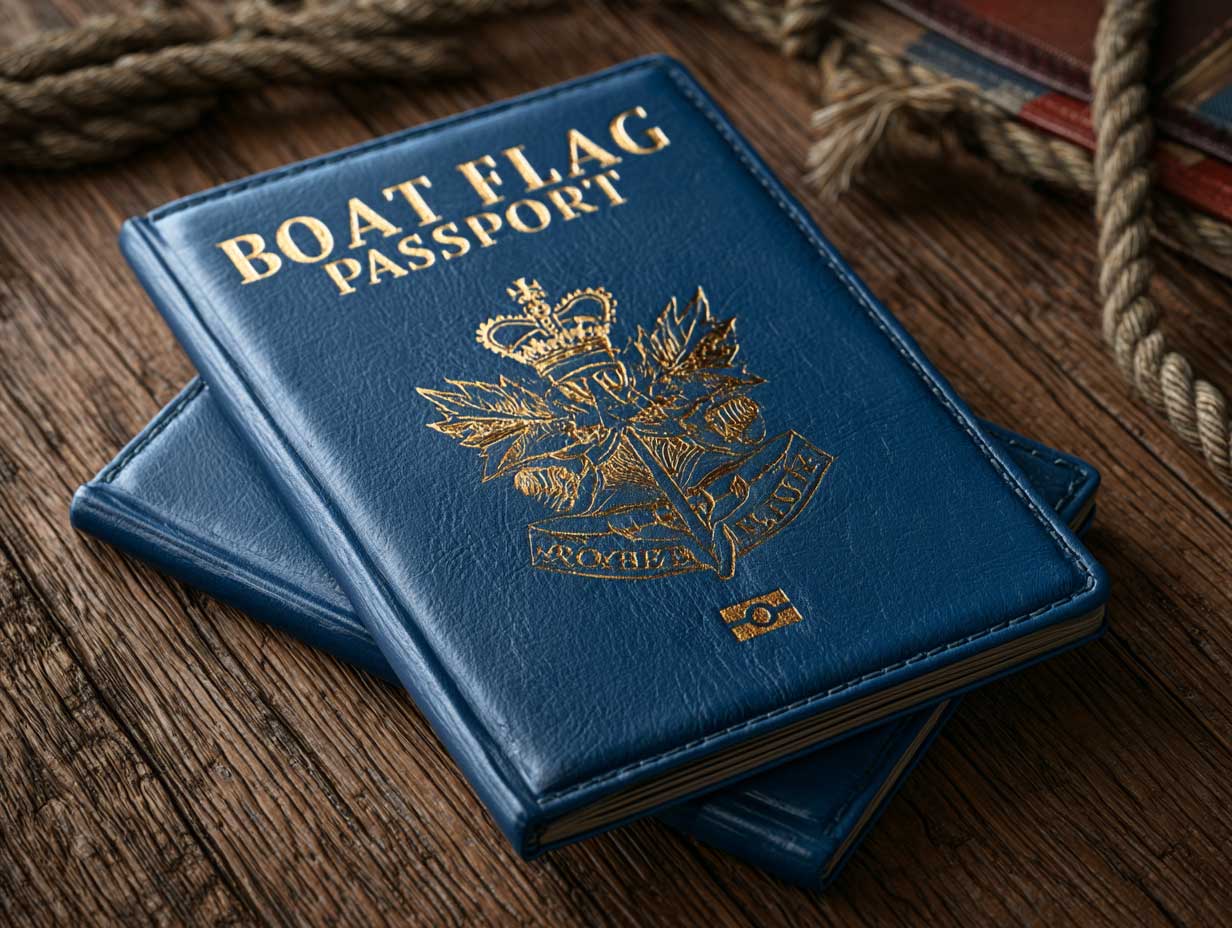
    For most American owners buying a new Privilège catamaran for private cruising, the strongest default is a U.S. flag with a recreational Certificate of Documentation. It provides clear proof of nationality, supports recognized marine financing and avoids the administrative burden of a foreign ownership company.

    The Mediterranean tax strategy must then be addressed separately. A non-European resident may use EU Temporary Admission to cruise in European Union waters for up to 18 months, provided the yacht is registered outside the EU and remains eligible for the regime. Alternatively, the owner can import the yacht permanently and pay EU VAT.

    A Cayman Islands, Marshall Islands or British Virgin Islands flag can make sense for commercial charter, international crewing, complex ownership or specific financing arrangements. An EU flag such as Malta is more suitable for a permanently European yacht than for temporary admission.

    The correct answer depends on residence, ownership, cruising duration, charter activity and the yacht’s eventual return to the United States.

    The flag decision begins with the yacht’s real operating plan

    A yacht flag establishes nationality. It determines which maritime administration supervises registration, ownership, safety certification and certain crewing requirements. It can also affect financing, insurance, charter licensing and the legal remedies available to lenders.

    The flag does not, by itself, determine where tax is payable.

    For an American buying a new Privilège catamaran, five questions come first:

    • Will the yacht remain strictly private?
    • Is the owner resident in the United States or Europe?
    • How long will the yacht remain in the Mediterranean?
    • Will it carry paying guests?
    • Will it eventually enter the United States?

    These choices should be made before delivery. They may influence the purchasing entity, the delivery location, the export procedure, the insurance contract and, in a commercial project, the yacht’s technical specification.

    This is particularly important for a Privilège. These catamarans are designed in Les Sables-d’Olonne as long-range homes at sea. Their systems, storage, autonomy and interior arrangements are developed around each owner’s route, family and operating expectations. The legal structure should follow the same owner-led approach.

    The U.S. flag is the strongest default for private cruising

    A recreational yacht of at least five net tons can generally qualify for United States Coast Guard documentation when it is wholly owned by an eligible U.S. citizen or qualifying U.S. entity. A yacht built in France can therefore be documented in the United States for recreational use.

    The recreational endorsement authorizes pleasure use. It does not authorize ordinary passenger charter operations. It nevertheless provides a nationally recognized title and nationality framework. U.S. documentation can also support the registration of a preferred ship mortgage, which matters when a yacht is financed.

    For a private owner cruising between the Mediterranean, the Caribbean and the United States, the principal advantages are clear:

    • A direct connection with the owner’s home jurisdiction
    • Familiar documentation for American lenders and advisers
    • Straightforward proof of nationality abroad
    • No requirement to maintain a foreign yacht-owning company
    • Easier administrative continuity when returning to U.S. waters

    The ownership structure still requires care. A U.S. corporation must satisfy specific citizenship rules concerning its incorporation, chief executive and board leadership. An LLC should be reviewed against the Coast Guard’s ownership and citizenship requirements before the purchase contract is signed.

    The U.S. flag also carries practical restrictions

    A French-built yacht cannot normally qualify for a U.S. coastwise endorsement. It therefore cannot simply enter the domestic American passenger trade. This is a major restriction for an owner considering charters between U.S. ports.

    The choice of captain also requires attention. U.S. documentation rules can create difficulties when a documented vessel is formally placed under the command of a non-U.S. citizen. An owner intending to employ a permanent European, British, Australian or South African captain should obtain a written crewing opinion before selecting the flag.

    For an owner-operated, private Privilège, these restrictions are usually manageable. For a professionally crewed charter yacht, they can change the answer.

    The Mediterranean tax question is about customs status

    The European Union distinguishes the yacht’s flag from its customs status.

    A U.S.-flagged yacht may become a Union-status yacht after lawful importation and payment of VAT. It can then remain in the European Union without the 18-month temporary admission limit.

    Conversely, an EU flag does not prove that VAT has been paid. Registration documents and tax documents serve different purposes. European Commission guidance states that the owner’s nationality and the yacht’s flag are generally irrelevant to Union customs status, except where a yacht is using temporary admission.

    The export route from France requires precise documentation

    A new Privilège is built and delivered in France. France applies a standard VAT rate of 20 percent.

    On a yacht valued at €4 million, that represents €800,000. The tax treatment must therefore be designed before the yacht is handed over.

    A sale may qualify as a French VAT-free export when the yacht is genuinely exported outside the European Union and the seller retains the required customs evidence. The contract, transfer of risk, delivery protocol, departure itinerary and export declaration must all tell the same story.

    An owner should avoid accepting unrestricted delivery in France and then attempting to reconstruct an export transaction afterwards. Sea trials, commissioning, warranty work and owner use must be clearly separated in the documentation.

    The temporary admission route suits mobile non-EU owners

    A person established outside the European Union may temporarily bring a privately used yacht into EU customs territory without paying import duty or VAT.

    The yacht must be registered outside the European Union. It must normally be owned or used by a person established outside the EU. It must leave the customs territory within 18 months.

    During that period, the yacht can move between participating EU countries without opening a new temporary admission procedure at every border. A Privilège could therefore cruise from France to Spain, Italy, Greece and Croatia within the same admission period.

    The owner should retain:

    • Registration and ownership documents
    • Proof of non-EU residence
    • The original entry record
    • Marina invoices and fuel receipts
    • Crew and guest records
    • Evidence of departure from EU customs territory

    A new 18-month period can generally begin after the yacht has genuinely left and later re-entered. European legislation does not establish a universal minimum time outside the EU. Repeated short exits designed only to create artificial compliance may still attract customs scrutiny.

    An American citizen living permanently in France, Spain or Italy should not assume that a U.S. passport creates temporary admission eligibility. Residence matters more than citizenship for this purpose.

    USA Pavillon

    The permanent import route suits a European home port

    An owner intending to keep the yacht in the Mediterranean throughout the year may prefer permanent importation.

    Import VAT is generally due in the country where the yacht enters the relevant import procedure. France currently applies 20 percent. Malta applies 18 percent. Italy, Spain, Greece and other countries apply their own standard rates.

    The lowest published rate should never be the only reason for choosing an import country. Customs authorities will consider where the import genuinely occurred, where the yacht was released for free circulation and whether the declared transaction had economic substance.

    After lawful importation, a non-EU resident can own a Union-status yacht indefinitely. The yacht can retain a U.S. flag. Paying European VAT does not require adopting a European flag.

    This is often the cleanest solution for an owner who wants a permanent berth in Palma, Antibes, Porto Cervo or Athens and expects to spend most seasons within the European Union.

    The foreign flag earns its cost only when it solves a problem

    The Cayman Islands, Marshall Islands and British Virgin Islands are established yacht registries. They are commonly considered when a yacht has international financing, professional management, non-American crew, multiple beneficial owners or a commercial charter programme.

    Their value comes from maritime administration and operational flexibility. Their value does not come from making tax disappear.

    Operating situationMost practical starting pointPrincipal advantagePrincipal concern
    Private Mediterranean and Caribbean cruising by a U.S. residentU.S. recreational documentationSimple ownership and strong home-jurisdiction connectionU.S. crewing and commercial-use restrictions
    Private yacht with international captain or complex ownershipCayman Islands, Marshall Islands or British Virgin IslandsYacht-focused registry and flexible corporate structuringAnnual administration and U.S. reporting
    Permanent EU-based yachtU.S. or EU flag after permanent importationLong-term European use without the 18-month limitImport VAT becomes payable
    Commercial Mediterranean or Caribbean charterCommercial Cayman or Marshall Islands structure, or another approved commercial registryPurpose-built commercial frameworkCoding, manning, VAT and local charter licences
    Intended charter between U.S. portsSpecialist U.S. maritime analysis requiredPotential access to the U.S. marketA French-built yacht normally lacks coastwise eligibility

    The Marshall Islands generally requires ownership through an eligible citizen, national or qualified foreign maritime entity. The British Virgin Islands also applies qualified ownership rules, which often lead an American owner to use a local company. Cayman provides both private and commercial registration pathways.

    A foreign ownership company can also create American tax-reporting obligations. Depending on control and ownership, a U.S. person may have to file IRS Form 5471 and disclose foreign financial interests. The basic penalty for failing to file a complete Form 5471 can begin at $10,000, with further penalties for continued failure.

    A foreign flag should therefore be selected because it improves the yacht’s operation, financing or commercial structure. A foreign flag does not erase U.S. tax. American citizens remain subject to U.S. taxation on worldwide income.

    The Malta flag belongs to a different strategy

    Malta offers a respected European registry and a developed commercial-yacht framework. A nonresident owner can register through an appropriate structure and local representative.

    Its main limitation for this specific profile is decisive. EU temporary admission requires the yacht to be registered outside the European Union. A Malta-flagged yacht therefore does not fit the standard temporary admission strategy.

    Malta is better suited to a yacht that will operate permanently within Europe, particularly when commercial activity and EU compliance are central to the plan.

    The charter decision must be made before construction

    Private use and commercial charter are different legal activities.

    A U.S. recreational endorsement restricts the yacht to pleasure use. Cayman and Marshall Islands structures may offer clearer pathways for switching between private and commercial operation, subject to their respective certification requirements.

    The flag still represents only one part of the charter analysis. The yacht may also need:

    • Commercial safety certification
    • Stability and load-line documentation
    • Additional lifesaving and firefighting equipment
    • Qualified and medically certified crew
    • Commercial liability insurance
    • Local charter licences
    • VAT registration and invoicing procedures
    • Compliance with local cabotage rules

    These requirements can affect the layout, crew accommodation, technical spaces, escape routes, fire protection and operating manuals. Commercial use should be decided before construction. Retrofitting a private yacht for regulated charter after delivery can be expensive and operationally disruptive.

    The Caribbean rewards a simple and defensible structure

    The Caribbean is a collection of separate customs, immigration and tax jurisdictions. Each national arrival may require clearance, regardless of the yacht’s flag.

    For private cruising, a U.S. flag is widely understood and generally practical. The larger tax issue arises when the yacht enters the United States.

    A foreign-flagged yacht owned by a U.S. resident can become dutiable when imported into the United States. Sailing yachts have historically been classified at a federal duty rate of approximately 1.5 percent, although the current tariff classification and customs value should always be confirmed before arrival.

    A qualifying foreign yacht may receive a U.S. cruising licence for up to one year when its flag state benefits from reciprocal treatment. The licence simplifies port formalities. It does not eliminate arrival reporting, import duty or state use tax.

    State taxation must also be reviewed. Florida, for example, caps the sales and use tax imposed on a boat at $18,000 under its current rules. Eligibility, timing and prior tax credits still require a transaction-specific analysis.

    The best answer follows the owner’s life at sea

    For a U.S.-resident owner buying a new Privilège for private Mediterranean and Caribbean cruising, the most coherent structure will usually be:

    U.S. recreational documentation, a properly documented export from France and European temporary admission during Mediterranean seasons.

    A permanent Mediterranean owner should consider paying EU import VAT and obtaining Union status. The yacht can still remain under the U.S. flag.

    A foreign registry deserves serious consideration when the yacht will employ a non-American captain, operate commercially, use international financing or sit within a multi-owner or estate-planning structure.

    Before delivery, the owner should obtain one coordinated written plan covering French export VAT, yacht ownership and registration, EU customs treatment, U.S. import exposure, insurance and intended commercial use. Each element affects the others.

    A Privilège is designed to cross oceans and become a genuine home for its owner. Its flag should provide the same qualities as the yacht itself: security, clarity and the freedom to follow the intended route.

  • The Practical Atlantic Crossing Checklist

    The Practical Atlantic Crossing Checklist

    How to plan an Atlantic crossing: the route, weather, systems, safety gear, sails, spares, watches, provisions and practical failure control.

    A safe Atlantic crossing begins months before departure. The classic westbound passage runs for about 5,000 kilometres (2,700 nautical miles) from the Canary Islands to the Caribbean and takes an average cruising yacht around 18 to 21 days. The checklist must cover far more than safety equipment. It must test the route, crew, sails, steering, energy production, water supply, communications, food storage and repair capability as one operating system. The strongest crews reduce sail early, inspect for chafe every watch and preserve several ways to steer, navigate, communicate, pump water and generate electricity. They carry food for a delayed arrival and keep potable water outside the watermaker’s production chain. At Privilège Marine, we see an ocean-going catamaran as both a bluewater yacht and a home. The crossing plan must protect both functions. The real standard is simple: the boat must still work tired, at night and after its first equipment failure.

    The Route Must Be Chosen Before It Is Optimised

    The classic westbound Atlantic crossing starts in the Canary Islands and finishes in the Lesser Antilles. The Atlantic Rally for Cruisers sails from Las Palmas de Gran Canaria to Rodney Bay, Saint Lucia. Its route covers about 5,000 kilometres (2,700 nautical miles), and the average yacht completes it in 18 to 21 days. The 2026 ARC is scheduled to depart on November 22.

    A second option runs through Mindelo in Cabo Verde. This divides the passage into two offshore legs and allows the yacht to refuel, reprovision and make final repairs. It also creates another departure decision. A stop becomes valuable only when it supports the plan rather than adding pressure to leave on a fixed date.

    The passage plan should cover the entire voyage from berth to berth. The International Maritime Organization divides voyage planning into appraisal, detailed planning, execution and continuous monitoring. That means studying the yacht’s limitations, weather, charts, currents, traffic, ports, reporting systems and emergency alternatives before departure.

    The route file should contain:

    • The intended route and acceptable deviations.
    • Areas of increased traffic or fishing activity.
    • Minimum fuel and water thresholds.
    • Alternative Caribbean landfalls.
    • Medical diversion options.
    • Weather-routing criteria.
    • Conditions that would delay departure.
    • Daily position-reporting procedures.
    • Passport, registration, insurance and crew documentation.

    A route drawn by routing software remains a forecast. It should never become an instruction that overrides the sea in front of the yacht.

    The Departure Window Must Follow the Weather

    The official Atlantic hurricane season runs from June 1 to November 30. Tropical systems can still form outside those dates. The climatological peak occurs around September 10, with most activity concentrated between mid-August and mid-October.

    This explains the traditional late-November departure from the Canary Islands. It does not make every late-November day suitable.

    A safe departure requires a genuine weather window. The crew should examine the position of the Azores High, the development of the north-easterly trade winds, swell direction, frontal activity north of the route and any tropical disturbance leaving the African coast.

    Use several sources. Compare GRIB models with synoptic charts and official forecasts. Obtain professional routing when the skipper lacks the experience to interpret model disagreement. Keep receiving weather after departure through satellite communications, SSB radio or another proven offshore system.

    The eastbound crossing follows a different logic. A Caribbean-to-Europe passage normally uses spring weather systems and often routes through the Azores. It requires its own plan and should never be treated as the westbound route in reverse.

    The Yacht Must Complete a Crossing Before Departure

    A marina test proves that equipment starts. An offshore trial proves that the yacht can operate continuously.

    Several months before departure, complete a technical survey of the rig, steering, propulsion, electrical system, safety equipment and all underwater fittings. Follow it with an offshore shakedown long enough to run every major system under realistic loads.

    Test both engines at cruising revolutions. Check cooling-water flow, exhaust temperature, belt tension, alternator output, saildrive seals and fuel quality. Open and close every seacock. Test every bilge alarm. Run the watermaker, generator, air-conditioning, refrigeration, radar, autopilot and satellite systems together.

    Record actual electricity consumption over 24 hours. A theoretical energy budget is insufficient. The figures must include the autopilot, navigation electronics, refrigeration, communications, pumps and domestic loads used during a real passage.

    A Privilège is designed as a true bluewater catamaran, with structural strength, engineering reliability and long-term use at the centre of the project. The same discipline must continue in operation. Salt, heat, vibration and continuous loading affect even high-quality equipment.

    The technical plan should preserve redundancy in five critical areas:

    • Steering.
    • Electrical generation.
    • Navigation.
    • Communications.
    • Fresh water.

    One spare component rarely creates redundancy. A complete alternative function does. A spare autopilot display is useless when the failed part is the hydraulic drive. A second chartplotter offers little protection when both units depend on the same power supply and GPS antenna.

    The Safety Equipment Must Be Reachable in Seconds

    Safety equipment belongs where the crew can reach it during an emergency. It should never sit beneath provisions, luggage or tools.

    The World Cruising Club’s 2026 requirements call for an offshore liferaft large enough for everyone aboard. On a multihull, it should remain deployable when the yacht is upright or inverted. The raft must be accessible and ready to launch within 15 seconds. A registered 406 MHz EPIRB with internal GPS is also required, along with long-range communications, DSC VHF, a handheld VHF, AIS and personal AIS crew-overboard beacons.

    Every person should have a properly fitted lifejacket with a light, whistle, spray hood, crotch strap, harness and personal beacon. Jacklines should allow movement from the cockpit to working areas with minimal clipping and unclipping. Crew should be able to connect their tether before stepping outside.

    The rule at night is one hand for the boat. Clip on before leaving the protected area. Nobody goes forward without informing the watchkeeper. In deteriorating conditions, nobody goes alone.

    The yacht also needs a tested crew-overboard recovery system. Finding the casualty solves only half the problem. The crew must be able to lift an exhausted or unconscious person over a high freeboard. Practise with a realistic weight before departure.

    A multihull should carry pumping arrangements for each hull and watertight compartment. The 2026 ARC requirements specify an emergency pumping capacity of at least 200 litres per minute (3,200 US gallons per hour). They also require an emergency tiller or independent steering method and a proven way to steer with a rudder disabled or missing.

    The Practical Atlantic Crossing Checklist

    The Sail Plan Must Reduce Loads Before Trouble Starts

    An Atlantic crossing is usually a downwind passage, yet downwind sailing creates its own failures. Sails remain loaded for days. Sheets rub against blocks, stanchions and guardrails. Preventers cycle under shock loads. Squalls can add wind rapidly during darkness.

    A catamaran provides less heeling feedback than a monohull. The crew must reef according to wind speed, sea state and equipment loads rather than waiting for discomfort.

    The standing order should be reef early. A conservative sail plan is usually faster over an entire passage because it reduces fatigue, damage and emergency manoeuvres.

    Inspect the following at least once per watch:

    • Mainsail battens, cars and reefing points.
    • Genoa sheets and furling line.
    • Downwind sail tack, head and clew.
    • Preventers and boom attachments.
    • Halyards at mast exits and sheaves.
    • Blocks, shackles and soft connections.
    • Guardrails near loaded lines.
    • Trampoline and forward lashings.

    Move a line before its cover is cut through. Add chafe protection where a lead cannot be changed. Mark high-load lines with tape so that movement becomes visible. Chafe control is one of the cheapest forms of offshore reliability.

    Carry a storm jib and either a storm trysail or a third mainsail reef that substantially reduces area. The World Cruising Club also strongly recommends a drogue or sea anchor for severe conditions. The correct equipment, attachment points and deployment method must be validated for the individual yacht before departure.

    The Spares Must Match the Failures You Can Repair

    The spare-parts inventory should reflect the yacht’s exact equipment. Generic boxes of screws create weight without solving the most likely failures.

    For the engines and generator, carry fuel and oil filters, impellers, belts, suitable lubricants, coolant, hoses, hose clamps, electrical relays and starter components. Carry the tools needed to change them in a moving engine room.

    For the water system, include pump diaphragms, pressure switches, filter cartridges, connectors and a complete repair kit for the watermaker. For the electrical system, carry fuses, breakers, cable, terminals, heat-shrink material, a crimping tool and a reliable multimeter.

    For the rig and deck equipment, carry spare sheets, low-stretch line, webbing, sail-repair materials, shackles, soft shackles, blocks and replacement fasteners.

    The autopilot deserves special attention. It may steer for hundreds of hours. Carrying a second pilot with an independent drive is stronger than carrying only electronic spares. Balance the sail plan so the pilot works lightly. Excessive pilot activity is often a sail-trim warning before it becomes an equipment failure.

    Store spares by system. Label every container. Maintain a searchable inventory showing location, quantity and part number. The person repairing a pump at 03:00 should not have to empty five lockers to find the seal.

    The Watch System Must Protect Human Performance

    Fatigue creates poor decisions long before it creates sleep.

    The skipper should establish the watch system during the shakedown passage. Every watchkeeper must be able to steer, trim sails, use radar and AIS, reef, start an engine, make a distress call and wake the skipper early.

    Three or more competent watchkeepers make rest easier to protect. Two-person crews need stricter routines because each person carries more continuous responsibility. The exact system may use two-hour, three-hour or rotating watches. The schedule should provide predictable sleep rather than theoretical equality.

    Night instructions should define when to wake the skipper. Examples include:

    • A wind increase beyond the agreed limit.
    • A squall approaching the route.
    • A vessel with an uncertain closest point of approach.
    • A sail, steering or electrical alarm.
    • A change in barometric pressure.
    • Any doubt about the yacht’s position or condition.

    The best standing order is direct: wake the skipper while the situation is still easy.

    The Food Plan Must Survive a Delayed Arrival

    Provision from a written menu. Plan three meals a day, snacks and a 20% reserve for slower progress or an unexpected diversion. The World Cruising Club also recommends a mixture of fresh, frozen and ambient food because refrigeration and freezers can fail.

    Use fresh produce first. Inspect fruit and vegetables every day. Remove damaged items immediately. Keep onions and potatoes separated. Protect eggs from movement and store dry goods in sealed containers.

    Prepare several meals before departure and freeze them in flat portions. They are easier to stack, defrost quickly and reduce galley work during the first days, when seasickness is most likely.

    Keep a complete ambient-food reserve that requires little water and minimal cooking. Include food that crew will eat when tired or unwell. A nutritionally perfect meal has no value when nobody can prepare it in a rough sea.

    Store heavy supplies low and near the yacht’s centre. Secure every bottle, tin and appliance. Divide essential food between more than one locker so that a leak or access problem does not compromise the whole supply.

    The Water Plan Must Assume the Watermaker Stops

    A watermaker increases comfort and autonomy. It should never become the only source of drinking water.

    European Food Safety Authority reference values place adequate total daily water intake at 2 litres for women and 2.5 litres for men under normal conditions. Heat, physical work, seasickness and illness can increase requirements. Passage planning must also include cooking and medical needs.

    Measure the crew’s real consumption during the shakedown passage. Carry enough tanked water to manage a meaningful watermaker failure. Add sealed emergency containers stored separately from the main tanks.

    The emergency grab bag should contain additional drinking water. World Cruising Club guidance recommends 2 litres per person in a sealed container, or a hand-operated desalinator with suitable containers.

    Monitor tank levels manually as well as electronically. Tank senders fail. Taste water before transferring it. A contaminated tank can remove a large part of the yacht’s reserve in one mistake.

    The Daily Routine Finds Small Failures Early

    Complete a daily systems round at the same time each day.

    Inspect the bilges, engines, rudders, steering gear, batteries, charging sources, water tanks, rig, sail attachments, deck fittings and safety equipment. Log pressures, temperatures, engine hours, fuel use, water production and battery state.

    Look for changes rather than obvious failures. A small quantity of belt dust, a warmer electrical connection, a rising pump-cycle frequency or a few drops beneath a shaft seal may provide days of warning.

    The most common offshore problems are often manageable when found early:

    A chafed line should be rerouted or replaced before its core is exposed. A struggling autopilot calls for sail balancing and early investigation. A charging failure requires immediate load reduction and isolation of reserve capacity. A watermaker fault should trigger water conservation before the tanks become low. A small sail tear should be repaired before the next squall enlarges it.

    Crew problems deserve the same attention. Treat seasickness early under an agreed medical plan. Protect sleep. Encourage regular meals and hydration. Resolve tension before fatigue turns it into conflict.

    The Crossing Is Won Through Preparation, Not Equipment Volume

    A serious Atlantic crossing checklist does not aim to carry a second yacht in spare parts. It creates a yacht and crew capable of adapting when one part of the system stops working.

    The route must leave room for weather. The sail plan must control loads. The energy system must support essential functions after one charging source fails. The water plan must survive without daily production. The watch system must keep judgement intact.

    Privilège catamarans are designed to cross oceans safely while remaining true homes at sea. That comfort becomes an operational advantage when storage is organised, machinery is accessible, working areas are protected and the crew can rest properly.

    The Atlantic rarely demands heroism. It asks for disciplined decisions repeated for several weeks. The strongest crossing is usually the quietest one: fewer urgent repairs, fewer exhausted manoeuvres and no pressure to defend a schedule that the weather has already rejected.

  • The Privilège Rostrum: The Structure Behind Space and Strength

    The Privilège Rostrum: The Structure Behind Space and Strength

    The Privilège rostrum strengthens the forward structure, manages rig loads and creates exceptional space for a private owner’s suite.

    The Privilège rostrum is a forward central pod built into the architecture of the catamaran. In French, the shipyard calls it the rostre. In English, “forward central pod” or “central nacelle” describes its function more clearly. The structure extends forward of the mast between the two hulls. It helps stiffen the yacht longitudinally, supports the forward beam through a third structural point and spreads loads created by the forestay and rig. Its shape can also add reserve buoyancy and reduce spray or bow immersion in demanding seas. The same volume produces a second benefit: real living space above the water. On the Signature 510, it forms the heart of a full-beam owner’s suite. On the Signature 650, the central nacelle creates a private apartment with panoramic forward views. Offshore strength and domestic comfort therefore come from the same piece of naval architecture.

    The Rostrum Begins as a Structural Decision

    A catamaran places two hulls beneath one wide platform. At sea, that platform works under complex loads. Each hull may rise and fall at a different moment. One bow can meet a wave while the other remains partly unsupported. The mast compresses the main structure, while the forestay, shrouds and sails apply changing forces.

    The Privilège rostrum addresses this problem through geometry. The forward central pod extends from the main nacelle towards the forward beam. It adds structural depth along the centreline and connects the forward part of the yacht to the main platform.

    The result is greater catamaran structural rigidity in an area exposed to repeated bending, torsion and impact. Privilège introduced this architecture during the brand’s early development and refined it across successive generations. Its recognisable form endured because the engineering remained useful.

    The Forward Pod Changes How Loads Travel

    Structural strength depends on the route taken by a load. Concentrated forces create local stress. A continuous structure spreads those forces across a larger area.

    Historic Privilège technical literature describes the rostrum as reinforcing longitudinal rigidity and diffusing forestay compression forces into the nacelle. The wording requires precision. The forestay works in tension. Its reaction creates high loads at the bow attachment, the mast and the surrounding structure.

    The rostrum acts as a load-distribution structure. It provides another substantial route through which rig loads can travel before being absorbed by the nacelle, forward beam and hull connections.

    The Third Support Point Reinforces the Forward Beam

    A conventional forward beam spans the distance between two bows. Privilège supports this area through the two hull connections and the central pod, creating a third structural support.

    The arrangement strengthens the forward structure and provides a coherent location for the dolphin striker, rig attachments, anchor gear and associated reinforcements. On the historic Privilège Série 7, the robust forward beam and mechanically welded dolphin striker were integrated with the nacelle.

    The larger Privilège 745 used the same central volume for its anchor locker, windlasses and sail storage. Its technical literature explained that the rostrum increased mechanical resistance while distributing forestay loads through the yacht’s longitudinal structure.

    This integration matters offshore. A windlass can experience severe dynamic loads when the yacht pitches. Rig forces change continuously as wind pressure, sail area and sea state evolve. Both systems require foundations designed into the yacht from the beginning.

    The Same Structure Creates the Owner’s Suite

    The rostrum also creates habitable volume above the water and forward of the saloon.

    Many catamarans place the owner’s cabin inside one hull, where width remains constrained by the hull form. Privilège uses the centre of the yacht to create a full-beam owner’s suite with a different sense of space.

    The Signature 510 measures 17.09 metres (56 feet) overall and 7.98 metres (26 feet) across the beam. Its forward suite draws on the width of the platform rather than the width of one hull. It offers panoramic views, extensive storage and clear separation from the guest cabins.

    The arrangement changes the experience of living aboard. The cabin becomes a private destination with space for wardrobes, drawers, dressing areas and a substantial bathroom. Owners can withdraw from the social areas while remaining connected to the centre of the yacht.

    The Signature 650 develops the same principle on a larger scale. Its beam reaches 9.20 metres (30 feet 2 inches). The central owner’s suite sits within the nacelle and gains panoramic forward-facing views. The room functions as a private apartment within an ocean-going catamaran.

    The rostrum therefore turns structural volume into useful living space. One piece of naval architecture performs several jobs.

    The Sea Decides Whether the Geometry Works

    Forward volume must be shaped carefully. Its underside can meet waves before other parts of the bridgedeck. Clearance, curvature, length and immersion influence bridgedeck slamming loads.

    Research into catamarans with centre bows shows that changes in centre-bow geometry and wet-deck clearance can alter slamming forces and vertical bending moments. The designer must balance internal space, structural depth, reserve buoyancy and wave interaction.

    Privilège uses a suspended central form instead of a third full-length hull. In demanding seas, the volume can provide reserve buoyancy as the bows press into a wave. It can also reduce spray passing through the forward netting and create a more secure working surface near the mast and anchor gear.

    The benefit comes from the complete design. Weight distribution, bridgedeck clearance, hull shape and speed remain decisive. The rostrum belongs first in the naval architecture. Its interior possibilities follow from that engineering decision.

    The Privilège Approach Makes Comfort Structural

    Privilège Marine builds bluewater catamarans for owners who may live aboard for months and cross oceans. Comfort therefore has a technical meaning.

    A quiet cabin depends partly on stiffness. Secure movement requires stable surfaces and protected circulation. Reliable anchoring requires reinforced foundations and accessible machinery. Interior volume must coexist with weight control, ventilation, drainage and maintenance access.

    The rostrum brings these requirements together. It strengthens the forward platform, supports working areas, provides storage and technical volume, and creates a private room that feels like part of a home.

    This is the core Privilège idea: comfort begins with structure.

    The owner’s suite is luxurious because the architecture makes it possible. The yacht remains reassuring because the same architecture contributes to the strength beneath it.

    The Signature Endures Because It Solves Real Problems

    The Privilège rostrum became visually distinctive because it solved several problems at once. It reinforces the yacht. It improves the load path around the forward beam and rig. It creates usable volume above the water. It supports anchoring and sail-handling functions.

    On selected models, it also makes possible one of the most recognisable owner’s suites in the bluewater catamaran market.

    That combination explains its longevity. The rostrum gives a Privilège a recognisable profile, yet its real value sits beneath the surface. The shape exists because the yacht must remain strong at sea and generous to live in.

  • How Privilège Catamarans Preserve 80% of Their Value Over Time

    How Privilège Catamarans Preserve 80% of Their Value Over Time

    Why Privilège catamarans take an early value reset, then resist depreciation through owner layouts, offshore engineering, scarcity and care.

    Luxury catamaran depreciation follows two different curves. The first is driven by the loss of the new-yacht premium. The second is driven by configuration, brand, condition and supply. A well-specified Privilège may lose about 20% during its first two years as the market discounts personal options, commissioning costs and the difference between a new build and a pre-owned yacht. After that reset, age becomes less important. Buyers focus on the owner’s layout, private-use history, maintenance records, equipment age and replacement cost. This is where Privilège has structural advantages. The yachts are conceived around their owners, built for long-distance cruising and produced in limited numbers. Public brokerage data checked on July 16, 2026, showed only two used Privilège 510s, one used Signature 580 and no used Signature 650 on YachtWorld. That scarcity supports demand. An 80% residual value remains a market outcome rather than a promise, yet it is credible for the strongest examples when measured correctly.

    The First Two Years Create a Market Reset

    Every new yacht carries a premium that disappears when the first owner becomes the seller. The market calls this depreciation. A more accurate term is the first-owner reset.

    The original invoice includes the right to define the yacht. The owner chooses materials, cabin functions, electronics, sails, energy systems, tender arrangements and hundreds of details. These choices create personal value. The next buyer rarely values every choice at its full cost.

    A €100,000 package of upgrades may add only part of that amount to the resale price. Commissioning costs follow the same logic. Delivery, setup, owner training and initial corrections improve the yacht, yet the brokerage market does not reimburse them euro for euro.

    A new yacht also offers factory selection, full warranty coverage and the emotional value of first ownership. A two-year-old yacht offers immediate availability and a proven operating record. Those advantages reduce the discount, but they rarely erase the new-build premium.

    YATCO places typical first-year yacht depreciation at 10% to 20%. A privately used, well-documented luxury sailing catamaran belongs at the stronger end of the market. A target of roughly 20% cumulative depreciation over the first two years is therefore defensible for a carefully specified Privilège. It remains a benchmark rather than a contractual floor.

    The arithmetic is simple. A yacht with an ex-tax market value of €2 million would reset toward €1.6 million at 80%. The next stage depends far less on the calendar. It depends on the individual boat.

    The Eighty Percent Figure Needs a Precise Denominator

    The phrase 80% residual value often compares different numbers.

    Residual value may be measured against the original base price, the final invoice, the original tax-paid price or the current replacement cost. These figures can diverge by hundreds of thousands of euros. Currency movements and changes in standard equipment create further distortions.

    The Privilège Signature 580 shows the problem. A published 2020 specification listed a base price of €1.69 million excluding tax. A 2021 Signature 580 was advertised in 2026 at €2.15 million. A later independent test placed the basic price of a new Signature 580 at just under €4 million in 2024.

    These figures refer to different specifications and tax positions. They also represent asking prices rather than completed transactions. They still reveal an important truth. A used yacht can retain more than its original nominal base price while representing a much lower percentage of current replacement cost.

    The Signature 510 market shows the same variation. A new 2025 Signature 510 was advertised at €2.09 million excluding tax. On July 16, 2026, two used examples were publicly listed at $1.749 million for a 2023 yacht and $1.399 million for a 2022 yacht. Currency, location, specification, tax status and condition prevent a clean percentage comparison.

    For serious analysis, 80% should refer to the yacht’s original ex-tax purchase value, with taxes, financing costs and highly personal consumables removed. The yacht must also remain comparable in specification and condition. That definition produces a useful measure of yacht residual value.

    The Owner’s Version Sits at the Top of Demand

    The strongest driver of catamaran resale value is configuration.

    A specialist multihull brokerage ranks a private owner’s version that has never entered bareboat charter at the top of the demand hierarchy. Its analysis estimates that an owner layout can command $40,000 to $80,000 more than a charter-layout sister of the same age.

    The premium comes from utility. Private buyers want privacy, storage, circulation and long-term comfort. They do not want the maximum number of revenue-producing cabins. A dedicated owner’s suite often replaces two smaller cabins and compact bathrooms. The lost berths create value for the person who lives aboard.

    Privilège has built its identity around this logic. The Signature 510 places a full-beam owner’s suite forward in the nacelle. The yacht can be configured with three or four cabins. Its storage and protected helm are designed for extended private cruising.

    The Signature 600 develops the principle further. Its aft port cabin can become an office, cinema, gym, studio, dressing room or additional storage space. This protects resale because the yacht remains centred on owner use.

    A mass-market four-cabin layout faces a harder resale equation. Every fleet phase-out adds similar boats to the market. An owner-specified Privilège competes with a much smaller pool.

    Privilege Catamaran

    The Charter Pipeline Repeats the Same Price Pressure

    A bareboat charter yacht works harder and enters a predictable resale channel.

    Sail Magazine has estimated that a catamaran leaving charter after four to five years may have depreciated by about 40%. The same analysis cited annual engine use of roughly 800 to 1,000 hours for some charter cats, against about 100 to 400 hours for a private yacht.

    Charter maintenance can be professional and documented. The market still prices use, cabin layout and future supply. Four-cabin, four-head models compete against newer fleet releases every season. This creates recurring inventory pressure.

    The private yacht follows a different pattern. Its interior usually reflects one owner’s habits. Its use history is easier to understand. Buyers still require a survey, yet they begin with a stronger assumption.

    Privilège yachts are conceived as private bluewater catamarans and floating homes. Their resale market therefore avoids much of the structural oversupply that affects ex-charter catamarans.

    The Brand Converts Confidence Into Liquidity

    Resale value depends on price and time. A yacht that takes two years to sell has weaker liquidity than a yacht that finds a credible buyer in six months.

    Brand recognition reduces uncertainty. A buyer can research the model, speak with specialists, obtain technical history and compare other examples. An unknown one-off demands more work. The seller pays through a lower offer or a longer sales period.

    This is brand liquidity.

    Privilège has built ocean-going catamarans in Les Sables-d’Olonne since 1985. Its current partner page lists at least 13 specialist organisations across Europe, the United States, the United Arab Emirates, Tahiti and Scandinavia.

    That network supports technical interpretation and after-sales confidence. It also helps older yachts remain legible to the market. A buyer understands that the name refers to a continuing shipyard, a defined design philosophy and a community of technical knowledge.

    The Condition Becomes the Balance Sheet

    Depreciation slows with age. Deferred maintenance then becomes the decisive discount.

    On a young yacht, buyers ask how old it is. On an older yacht, they ask what has been replaced. The survey becomes a balance sheet. Engines, saildrives, standing rigging, sails, generator, batteries, watermaker, air-conditioning, pumps, electronics and teak are assessed separately.

    A large maintenance backlog can remove more value in one survey than several years of normal ageing. The discount includes the repair cost, the uncertainty margin and the buyer’s time.

    A yacht with invoices, oil analysis, rig inspection reports and recent replacements can outperform its age. A 2009 Privilège 615 currently marketed in the United States highlights a substantial 2020 refit and new Yanmar engines. Its seller presents maintenance quality as the central value argument.

    The 2022 Privilège 510 Sisu provides a younger example. Its listing describes professional management, upgraded standing rigging, a premium sail inventory, six electric Harken winches and about 2.8 kW of solar generation. The winch upgrade alone is stated at about €60,000.

    This equipment does not recover its full invoice value. It reduces the buyer’s future expenditure and uncertainty. That difference protects the sale price.

    The Offshore Platform Preserves Long-Term Utility

    A boat holds value when its original purpose remains useful.

    Privilège builds bluewater luxury catamarans for ocean passages and extended life aboard. The Signature 510 carries CE Category A certification for 12 people. It has a light displacement of 16.8 tonnes (37,000 lb) and a full-load displacement of 22.8 tonnes (50,700 lb).

    The Signature 600 is listed at 29 tonnes (63,934 lb) empty and 35 tonnes (77,162 lb) fully loaded. The Signature 650 reaches 37 tonnes (81,600 lb) at full load.

    These figures describe substantial offshore platforms. They also explain why a Privilège can remain relevant after fashion changes. The yacht offers secure circulation, protected helm positions, large tankage, storage, private accommodation and the capacity to carry cruising equipment.

    This enduring structural utility matters more than a fashionable finish. Upholstery can be changed. Electronics can be upgraded. The core naval architecture and load-carrying capacity are far harder to reproduce.

    Rising replacement cost reinforces this effect. Materials, skilled labour, equipment and compliance costs have increased. A current new build may cost far more than a comparable yacht did five years earlier. The used yacht gains a price umbrella, especially when delivery slots are limited.

    The Scarcity Supports Price Without Creating a Guarantee

    Scarcity works when demand remains active.

    YachtWorld showed 1,894 used sailing catamarans on July 16, 2026. A separate brand search showed about 20 used Privilège sailing catamarans across all ages and models. That is close to 1% of the platform’s used sailing-catamaran inventory.

    The Signature series was rarer still. The platform displayed two used Privilège 510s, one used 580 Signature and no used Signature 650. Most Signature listings were new yachts or future delivery positions.

    This creates a genuine scarcity premium. Buyers searching for a used Privilège catamaran have few recent alternatives. A strong example can therefore resist broad market averages.

    Scarcity alone cannot rescue a poor boat. An unrealistic price, weak documentation or major deferred work will still stop a sale. Rarity increases leverage only when the yacht is credible.

    The Resale Strategy Begins With the Original Specification

    Owners protect value before delivery.

    The strongest specification supports private long-distance use. It avoids highly personal choices that narrow the future audience. It invests in equipment that serious cruisers understand.

    A practical resale specification includes an owner-focused layout, robust energy generation, sensible battery capacity, reliable water production, protected watchkeeping, practical sail handling, accessible machinery and generous storage. Buyers also reward recognised equipment brands and installations that can be serviced globally.

    Documentation should begin on day one. Every service invoice, software update, oil change, rig inspection and equipment replacement should remain in one digital file. Engine and generator hours should be tracked.

    Cosmetic care matters because it signals deeper care. Clean bilges, dry lockers, intact sealant, protected joinery and orderly wiring make the yacht easier to trust.

    The strongest principle is simple: resale starts at specification.

    The Market Rewards Boats That Remain Coherent

    A Privilège can lose about 20% during its first two years because the market removes the premium attached to newness, factory choice and personal commissioning. The curve then changes.

    Configuration moves to the front. Brand recognition reduces transaction risk. Condition determines the refit budget. Offshore capability preserves utility. Scarcity limits direct competition. Rising replacement cost supports the ceiling.

    This combination explains why strong Privilège examples can retain around 80% of their original value after the initial reset. The result depends on the denominator, the specification, the ownership history and the survey. Public asking prices provide evidence of positioning. Completed private transactions determine the final truth.

    A yacht retains value when the second owner can understand it, trust it and use it without rebuilding its purpose. Privilège begins with that purpose: a safe ocean-going catamaran that also works as a real home. The resale market recognises the difference.

  • When to Choose the Flag for a New-Build Catamaran—and Why It Matters

    When to Choose the Flag for a New-Build Catamaran—and Why It Matters

    Choosing a yacht flag early prevents costly changes to a new catamaran’s certification, ownership, financing, crewing and delivery.

    A yacht’s flag is not decorative. It determines the vessel’s nationality and places it under the authority of a flag state. For a new-build catamaran, that decision can affect ownership eligibility, private or commercial use, safety equipment, surveys, crew qualifications, radio licensing, financing and resale. It does not, by itself, determine VAT status or grant an automatic right to cruise indefinitely in another customs territory. The correct time to begin is before the build contract is signed. The intended use and likely registry should then be confirmed before the technical specification is frozen. At Privilège Marine, the flag discussion belongs beside the ownership structure, cruising programme and delivery plan. Waiting until launch can force equipment changes, delay registration and complicate insurance or mortgage documents. A strong registry is not simply inexpensive. It must be legally suitable, operationally credible and responsive throughout ownership.

    The Flag Is the Yacht’s Legal Nationality

    Under international law, a vessel has the nationality of the state whose flag it flies. That state must exercise jurisdiction and control over administrative, technical and social matters. The flag administration therefore becomes one of the yacht’s permanent authorities.

    It may set registration conditions, approve surveys, issue certificates and regulate radio licensing. It may also define requirements for commercially operated yachts, professional crew and safety equipment.

    This is why choosing a yacht flag is different from selecting an attractive home port. The flag creates a legal operating framework.

    For a Privilège catamaran intended for bluewater cruising, several reputable registers may be possible. The correct choice depends on the owner, ownership entity, financing, cruising grounds and future use. There is no universally best yacht flag.

    The Decision Must Begin Before the Contract

    The flag should be considered before the build contract is finalised. At that stage, the owner should define who will legally own the yacht and whether it will be used privately or offered for charter.

    Some registers accept direct ownership only from specified nationalities. Others permit qualifying companies or require a local representative. A lender may prefer a registry in which a maritime mortgage can be recorded clearly.

    Several major registries permit registration during construction. The Cayman Islands allows a vessel and related mortgage to be registered once the keel is laid. The Republic of the Marshall Islands can issue a construction certificate during the build. This can matter when staged payments are financed.

    Ownership, finance and flag must be designed together. Changing the owner entity late can affect contracts, insurance and delivery documents.

    The Private-or-Commercial Question Changes the Build

    The most consequential question is whether the yacht will remain private.

    Private use generally means that the yacht is used for the owner’s pleasure and does not carry guests for payment. Once it is chartered or used for reward, another regulatory regime may apply.

    For yachts below 24 metres (78.7 feet), commercial codes can require additional lifesaving equipment, fire protection, alarms, surveys and crew certification. The United Kingdom’s Sport or Pleasure Vessel Code applies to commercial vessels below 24 metres carrying no more than 12 passengers. Malta also applies a Small Commercial Yacht Code below 24 metres.

    These are not post-delivery paperwork differences. Equipment locations, escape routes, fire systems and accommodation standards may need review during design.

    An owner who may charter later is not describing a minor possibility. Future charter use should be engineered from the start.

    boat flag

    The Flag Does Not Decide VAT by Itself

    A common mistake is to treat a non-European flag as a VAT solution. It is not.

    VAT and customs status depend on the owner’s residence, ownership structure, delivery location, importation and actual use. The flag may be relevant evidence, but it is not the sole test.

    The European Union’s temporary admission procedure can, subject to conditions, allow a non-Union pleasure craft to circulate within the EU customs territory for up to 18 months. That benefit is not automatic merely because the yacht flies a non-EU flag.

    An EU flag also does not prove that EU VAT has been paid. Owners should retain purchase invoices, import documents and evidence of Union status where applicable.

    Flag registration and tax status are separate files. They should be coordinated before delivery.

    The Technical Specification Must Match the Registry

    A recreational catamaran between 2.5 and 24 metres (8.2 and 78.7 feet) placed on the European market generally falls within the scope of the European Recreational Craft Directive. CE compliance and flag compliance are related but distinct.

    The CE mark addresses European product requirements. The flag state determines registration and operational obligations. Commercial operation may add coding and survey requirements.

    Before the specification is frozen, the owner, shipyard and adviser should confirm the navigation area, maximum number of people aboard, private or commercial status, lifesaving appliances, fire equipment and radio installation.

    This is also the moment to decide whether classification is required by the flag, lender or insurer. Classification is not the same as registration. A classification society may review construction against its rules and act for the flag during certain surveys.

    The Final Months Are for Execution, Not Strategy

    Several months before delivery, the registration application should be active. The yacht’s name may need to be reserved. Ownership records, proof of title and financing documents must be assembled.

    The builder’s certificate is central to new-build yacht registration. A tonnage measurement may also be required. The United Kingdom’s Part I process, for example, requires evidence of title and a tonnage survey.

    The flag also affects the ship station licence, call sign and Maritime Mobile Service Identity. An MMSI contains a three-digit code linked to the issuing administration. If the yacht changes flag, the MMSI must change. AIS equipment, radios and emergency beacons may therefore need reprogramming.

    Do not commission communications equipment under a temporary assumption.

    Before handover, the owner should have the certificate of registry or provisional certificate, radio licence, insurance confirmation, ownership evidence, CE documentation and any required commercial certificates.

    The New-Build Flag Checklist

    The intended use: Will the catamaran be used for private cruising, charter, corporate hospitality or a future combination?

    The legal owner: Will ownership be personal, corporate or financed, and is that owner eligible for the selected registry?

    The cruising plan: Where will the yacht operate, enter customs territory and potentially conduct charter activity?

    The tax position: Where will delivery occur, and how will VAT or importation be documented?

    The technical regime: Does the flag require additional surveys, commercial coding, classification or safety equipment?

    The crew model: Will the yacht be owner-operated or professionally crewed, and which qualifications will the flag accept?

    The lender and insurer: Can a mortgage be recorded, and do both parties accept the flag and cruising programme?

    The registry service: Does the administration provide efficient technical support, provisional registration and document processing?

    The radio identity: When will the call sign, MMSI, EPIRB registration and AIS data be issued?

    The exit plan: Can the yacht be sold, deleted, refinanced or converted to commercial use without unnecessary friction?

    The Best Flag Is the One That Fits the Yacht’s Real Life

    The wrong flag is rarely wrong because of its colour or reputation. It is wrong because it was selected for one attractive feature while ignoring the yacht’s operation.

    A low registration fee cannot compensate for unsuitable ownership rules. A prestigious register cannot rescue a yacht designed as private when its owner later expects charter activity. A tax assumption cannot replace customs advice.

    At Privilège Marine, the sensible sequence is direct. Define the owner, use, cruising programme and financing first. Shortlist the appropriate flags next. Confirm the technical consequences before design freeze. Complete registration, radio and insurance work before handover.

    The flag at the stern may occupy less than one square metre (10.8 square feet). Its consequences extend through the yacht’s entire working life.

  • The Balearics by Catamaran: The Coves Worth Sailing For

    The Balearics by Catamaran: The Coves Worth Sailing For

    The finest Balearic anchorages, sunset coves, beach restaurants, diving grounds and island experiences for catamarans over 15 metres.

    The Balearic Islands reward a slower form of navigation. Mallorca offers dramatic mountain scenery, serious marinas and access to the protected Cabrera archipelago. Ibiza combines secluded coves with sophisticated beach restaurants and some of the Mediterranean’s finest sunsets. Formentera provides luminous water, white sand and long lunches reached directly by tender. Menorca is quieter and more elemental, with limestone calas, protected marine habitats and the 185-kilometre Camí de Cavalls. A catamaran longer than 15.2 metres (50 feet) is particularly well suited to the archipelago, but its beam and swinging radius require discipline. The most celebrated coves can become congested, and anchors must never damage Posidonia oceanica seagrass. The intelligent itinerary therefore combines open-water anchorages, ecological moorings and secure harbours. The objective is not to visit every famous beach. It is to find the right island, cove and restaurant for each moment.

    The Balearics Demand More Planning Than Their Beauty Suggests

    The Balearic Islands appear easy on a chart. The passages between Mallorca, Menorca, Ibiza and Formentera are manageable for a modern bluewater catamaran. The harder decision is where to stop once the coastline begins to fragment into beaches, cliffs and narrow calas.

    A catamaran over 15.2 metres (50 feet) has useful advantages here. Its shallow draught opens anchorages that remain less comfortable for deep-keel monohulls. Its stable platform makes long afternoons at anchor genuinely enjoyable. Its tender provides direct access to beaches and restaurants.

    Yet size also creates constraints. A yacht of this length may be close to 8 metres (26 feet) wide. It needs generous swinging room, particularly when afternoon sea breezes alter the yacht’s orientation. Many postcard coves become unsuitable when crowded.

    The Balearics are not a place for improvised anchoring. Posidonia oceanica seagrass is protected, and anchoring on it is prohibited. PortsIB operates ecological buoy fields, with categories extending to yachts of 25 metres (82 feet). A yacht slightly longer than 15 metres will normally need a buoy rated for the next applicable length category. Reservations should be made early during summer.

    The Mallorcan Coast Balances Mountains, Harbours and Wilderness

    Mallorca offers the most varied sailing in the archipelago. The Serra de Tramuntana drops directly into the sea along the northwest coast, while the south and east provide gentler beaches and wider anchorages.

    Port de Sóller is the practical base for the Tramuntana coast. The enclosed harbour provides a safer overnight position than the exposed calas nearby. From there, Cala Deià is an exceptional settled-weather lunch stop. The anchorage is small, rocky and vulnerable to swell, so a large catamaran should remain outside the tightest section and use its tender.

    Ca’s Patró March, set above the water, remains the classic shore destination. Come for grilled fish and the cliffside setting rather than theatrical service. It suits a long, informal lunch, but reservations are essential.

    Farther southwest, Port d’Andratx provides marina infrastructure before a visit to Sant Elm and the waters around Sa Dragonera. The coastline is rugged and the late light is excellent. It also places the yacht within reach of Mallorca’s western marine reserves.

    The strongest wilderness experience lies south of the island. Cabrera Archipelago Maritime-Terrestrial National Park protects 89,478 hectares (221,105 acres) of water. Navigation, mooring and scuba diving are regulated. Cabrera Harbour accommodates a limited number of vessels, and advance authorisation is mandatory. In July and August, overnight stays are restricted to two nights.

    The rules are demanding because the experience is rare. After the day boats leave, Cabrera becomes quiet, dark and almost entirely natural. The Blue Cave, entered in suitable conditions, glows with reflected light during the afternoon. For a Privilège owner seeking distance from the usual Mediterranean circuit, Cabrera is Mallorca’s most valuable detour.

    The Ibiza Coast Is Best Read by Mood

    Ibiza should not be reduced to nightlife. Its western and southern coasts offer some of the finest catamaran anchorages in the Balearic Islands.

    Cala d’Hort is the essential sunset position. Es Vedrà rises 382 metres (1,253 feet) from the sea offshore, creating one of the archipelago’s most recognisable silhouettes. The anchorage can become crowded and exposed, so it is often better to arrive during the afternoon, enjoy the view and relocate before darkness unless conditions are exceptionally settled.

    Cala Conta offers a broader western outlook and another strong sunset. Cala Bassa is more sheltered but busier. Cala Porroig provides a quieter alternative, while Cala Jondal is the address for dining and social life.

    For a refined seafood lunch, Casa Jondal is the clear choice. Chef Rafael Zafra’s cooking turns a beach restaurant into a serious gastronomic destination. The atmosphere is elegant but conspicuous, and prices match its reputation.

    For traditional Ibizan character, Yemanjá offers a more relaxed Cala Jondal experience. For music, spectacle and a high-energy crowd, Blue Marlin remains the obvious option. These places are not interchangeable. Choose the atmosphere before choosing the table.

    The Formentera Anchorages Deliver the Clearest Water

    The passage from Ibiza to Formentera crosses the Freus marine reserve. The water becomes progressively lighter as the seabed rises around the island.

    Ses Illetes is the celebrated stop. The long sandbar produces water of remarkable transparency, but it also attracts large numbers of yachts. Arrive early, use an ecological mooring where required and confirm the seabed visually before deploying an anchor in permitted sand.

    Espalmador feels more remote, although summer traffic can remove any illusion of solitude. Cala Saona, on the west coast, is smaller and better suited to a sunset swim. It can become tight for a large catamaran, so good judgement matters more than proximity to the beach.

    For a classic long lunch, Juan y Andrea at Ses Illetes combines seafood, paella and an animated barefoot atmosphere. Es Molí de Sal occupies a former salt mill and offers a more composed setting, with views towards both Illetes and La Savina. It is the stronger choice for an elegant lunch that drifts towards sunset.

    The best approach is to anchor responsibly, arrive by tender and accept that lunch may last three hours. Formentera should never be rushed.

    The Menorcan Calas Reward Owners Who Follow the Weather

    Menorca is less polished and more exposed. Its southern coast is defined by pale limestone, pine forests and turquoise calas. Cala Macarella, Macarelleta and Cala Mitjana are the best-known examples.

    They are superb swimming stops, but limited space makes early arrival important for a yacht over 15 metres. The rocky margins of Cala Macarella are excellent for snorkelling when visibility is good.

    The northern coast is different. Cala Pregonda has reddish rock, clearer exposure to weather and a landscape unlike the southern beaches. The North Menorca Marine Reserve protects waters between Cap Gros and Punta des Morter. It is one of the island’s best areas for snorkelling and guided diving.

    Fornells provides a useful refuge when conditions allow entry. The large bay offers access to the north while giving the yacht a more secure base than the open calas.

    Menorca requires flexibility. When the tramuntana strengthens, the north coast can become uncomfortable quickly. The southern calas then become the logical alternative. A fixed itinerary is less valuable than the freedom to change coast overnight.

    The Underwater Itinerary Belongs in the Cruising Plan

    The Balearics contain several protected marine reserves where underwater life is richer than around heavily used beaches.

    Mallorca’s Illa del Toro is one of the most established diving areas. Rocky walls, groupers and schools of fish make it a stronger scuba destination than an ordinary coastal reef. Cabrera offers an even more protected environment, although permits and authorised diving arrangements are required.

    Formentera’s Freus reserve is well suited to snorkelling in clear, shallow water. Menorca’s northern reserve offers rocky habitats and less urban pressure.

    A yacht should not simply arrive and launch divers independently. Local regulations vary by reserve, and professional dive centres understand authorised zones, weather and current conditions. The boat remains the private base. The specialist operator provides local knowledge.

    The Experiences Ashore Complete the Voyage

    Mallorca’s inland vineyards provide the strongest wine experience. The island has two principal designations of origin: Binissalem and Pla i Llevant. Binissalem includes 13 registered wineries and is associated with local varieties such as Manto Negro and Moll.

    Macià Batle, Biniagual and Tianna Negre offer different expressions of Mallorcan wine culture. A private transfer from Palma, Port d’Andratx or Port de Sóller turns the visit into a full day ashore.

    On Menorca, the Camí de Cavalls circles the coast for 185 kilometres (115 miles) in 20 official stages. There is no need to walk the entire GR 223. A section near Cala Galdana, Macarella or Cap de Cavalleria is enough to understand the island beyond its beaches.

    Formentera is best explored by bicycle or scooter. La Mola lighthouse provides the island’s broadest outlook, while Ibiza’s inland villages reveal a quieter agricultural landscape far removed from the clubs.

    The finest sailing holiday in the Balearic Islands is not built from a checklist. It moves between wilderness and civilisation. One day ends alone beneath Cabrera’s dark sky. The next may involve lunch at Cala Jondal or a sunset behind Es Vedrà.

    From the deck of a long-range catamaran, that contrast is the true luxury. The yacht does not merely transport its owners between islands. It gives them the ability to choose how each day should feel.

  • The Real Difference Between Series and Owner-First Catamarans

    The Real Difference Between Series and Owner-First Catamarans

    Series production sells a proven specification. Privilège owner-first construction shapes an offshore catamaran around the people who will live aboard.

    The difference between a series-production catamaran and an owner-first yacht is not simply the number of options on a price list. It is the order in which decisions are made. Series production begins with factory efficiency, repeatable layouts and a specification designed for a broad market. The owner then selects from what the production system can accommodate. Owner-first construction reverses that sequence. It starts with the owner’s cruising program, privacy needs, crew structure and autonomy requirements, while retaining proven naval architecture. At Privilège Marine, that distinction appears in the full-beam owner’s suite, meaningful interior flexibility, offshore engineering and an after-sales relationship that continues beyond delivery. Series production has legitimate advantages, including speed, familiarity and cost control. But an owner planning years of bluewater cruising is not buying only a platform. The owner is commissioning a long-term operating environment.

    The Series-Production Model Is Built Around Repetition

    Series production is not inherently inferior. It is an efficient answer to a clear market need. A production catamaran builder reduces variation, repeats manufacturing processes and uses common layouts, joinery modules, wiring plans and option packages across many hulls.

    That model improves predictability. It can shorten delivery times, simplify staff training and make parts easier to identify. It also suits owners seeking a familiar layout, controlled pricing or a yacht intended partly for charter.

    The compromise is equally clear. The production system defines the limits of the yacht. Layout changes disrupt workflow. Bespoke cabinetry affects drawings and weight estimates. Unusual equipment can alter electrical loads, ventilation and commissioning.

    This is why many production ranges offer an “owner’s version” and a “charter version.” The difference often concerns cabin count. One hull becomes a larger private area, while the platform remains largely fixed. That is personalization, but it is not owner-first construction.

    The Owner-First Model Begins With the Cruising Program

    Privilège Marine works from a proven range rather than designing every yacht from a blank sheet. Repeatable naval architecture, validated structures and established engineering reduce technical risk.

    But the first question is different: What must this yacht allow its owner to do?

    A couple preparing for a circumnavigation may require extensive stores, redundant communications and easy machinery access. A family may prioritize separate living zones, school space and privacy. An owner using professional crew may need different circulation between service and private areas.

    Those choices influence refrigeration, battery capacity, solar generation, water production, ventilation, furniture, technical access and weight distribution. Personalization therefore involves design and engineering, not merely decoration.

    Privilège states a typical delivery horizon of about 12 to 18 months, depending on the model and degree of personalization. That timetable reflects limited-production construction to order. The yacht is not treated as stock.

    The Owner’s Suite Reveals the Yacht’s Real Priority

    The clearest architectural difference is often found in the most private space aboard.

    On many catamarans, the owner’s cabin occupies one hull. It can be comfortable, but its proportions remain governed by hull width and a platform designed to support several cabin configurations.

    Privilège takes a more structural approach. The Signature 510 uses the forward central nacelle to create a full-beam owner’s suite. The owner is not given a slightly larger cabin inside a guest-oriented plan. The private suite becomes part of the yacht’s architecture.

    The Signature 510 is 17.09 meters (56 feet) long and 7.98 meters (26 feet) wide. Its central suite uses that beam to create panoramic views, lateral volume and separation from guest accommodation.

    This is the point often missed in comparisons between a production catamaran and a semi-custom catamaran. Usable privacy matters more than nominal cabin count.

    The Personalization Must Remain Technically Coherent

    Owner-first construction does not mean accepting every request. A serious custom catamaran builder must sometimes say no.

    Every appliance consumes power. Larger battery banks add weight. Additional refrigeration creates heat. New furniture can obstruct wiring, plumbing or structural access. Heavy equipment can alter trim and motion.

    The shipyard’s role is not to accumulate options. It is to translate a lifestyle into a coherent vessel.

    The Signature 600 illustrates this approach through its aft portside cabin. Instead of fixing the space as another guest cabin, Privilège can configure it as an office, gym, cinema, studio, enlarged wardrobe or additional storage area.

    The surrounding platform remains controlled. The Signature 600 measures 18.28 meters (60 feet), carries 259 square meters (2,787 square feet) of sail and displaces 35 tonnes (77,162 pounds) at full load. Freedom remains subject to balance, access and reliability.

    The Offshore Capability Appears in the Numbers

    The phrase “bluewater cruising catamaran” should describe measurable design intent.

    The Signature 510 carries 800 liters (211 US gallons) of fuel and 600 liters (158 US gallons) of fresh water. It has a full-load displacement of 22.8 tonnes (50,700 pounds), twin 80-horsepower diesel engines and CE A-12 certification.

    The Signature 600 carries 970 liters (256 US gallons) of fuel and 900 liters (237 US gallons) of fresh water. These figures matter because offshore autonomy depends on capacity, access, reliability and load-carrying margin.

    European Category A is intended for extended voyages in conditions that may exceed Beaufort Force 8 and significant wave heights of 4 meters (13 feet), excluding abnormal conditions. Certification is not a guarantee against extreme weather. It is a technical baseline.

    A series yacht can also be ocean-capable. The honest distinction is that owner-first construction allocates more decisions to the intended voyage, rather than to the broadest possible market.

    The After-Sales Philosophy Extends the Build

    The difference continues after handover.

    In a conventional sales model, support may move progressively from the shipyard to dealers, equipment suppliers and local contractors. That structure can work well when many identical boats create broad technical familiarity.

    Privilège treats catamaran after-sales service as part of the ownership product. Owners remain connected through dedicated contacts and WhatsApp assistance groups. The after-sales manager can coordinate the shipyard, captains, marinas, subcontractors and manufacturers. When an important issue requires builder knowledge, a technician can travel to the yacht.

    This matters because personalized yachts contain decisions that may not be obvious to an unrelated technician. The builder retains the design history and reasoning behind installations. Continuity reduces diagnostic uncertainty.

    Feedback also returns to production. Recurrent failures, difficult access points or supplier weaknesses can be corrected in future yachts.

    The Better Choice Depends on Who Should Adapt

    A series-production catamaran is often the rational choice for an owner who values quicker availability, established specifications, broad familiarity and disciplined pricing. There is no virtue in paying for customization that will not be used.

    Owner-first construction becomes relevant when the yacht will serve as a home, offshore sailing platform and private environment for years. In that case, compromises made for factory repetition can become daily irritations. Poor storage, unsuitable circulation or insufficient technical capacity do not remain small details after several ocean passages.

    The divide is straightforward. In series production, the owner adapts to a carefully defined product. At Privilège Marine, a proven offshore platform is adapted, within sound technical limits, to the owner.

    That does not mean every yacht should be bespoke. It means serious long-range ownership demands a different order of priorities. The boat must begin with the life it will carry.