Category: Blog

  • The Flag That Quietly Defines Life Aboard a Yacht

    The Flag That Quietly Defines Life Aboard a Yacht

    Choosing a yacht flag shapes ownership, compliance, tax, charter use, insurance and cruising freedom. It is never just paperwork.

    Choosing a yacht flag is one of the least visible decisions in yacht ownership. It is also one of the most consequential. The flag gives a boat its legal nationality. It determines the flag state, the registration authority, the safety framework, the inspection regime, the radio licence, the ownership rules and, in many cases, the way the yacht can be used. A private pleasure yacht, a commercially operated yacht and a liveaboard yacht may look similar at anchor, but they do not raise the same legal questions. Nationality, residence, tax position, cruising area, charter plans, financing, insurance, crew status and future resale all matter. At Privilège Marine, we build catamarans around their owners’ real sailing projects. The flag must be chosen with the same seriousness. It should fit the yacht, the owner and the intended life aboard, not just the fastest registration route.

    The boat flag is the yacht’s legal nationality

    A yacht flag is not simply a piece of fabric at the stern. It is the visible sign of the yacht’s legal nationality.

    Under the United Nations Convention on the Law of the Sea, every state sets the conditions under which a ship may receive its nationality and fly its flag. The ship then has the nationality of that state. The same convention also says that ships should sail under the flag of one state only and, on the high seas, are generally subject to the exclusive jurisdiction of that flag state.

    This is the foundation of yacht flag registration. The flag determines which administration has primary responsibility for the yacht. It also determines which documents must be carried, which surveys may apply, which safety rules are relevant, how radio equipment is licensed and which authority can issue or validate key certificates.

    For an owner, this matters from the first day. A yacht without a proper flag is not simply incomplete. It may be unable to clear customs, obtain insurance, enter a marina, receive an MMSI number, register a mortgage or sail internationally with confidence.

    The mistake is to see the flag as a late administrative decision. It is better treated as part of the yacht project. On a bluewater catamaran built to cross oceans, the flag must support the way the yacht will actually be used.

    The private yacht and the commercial yacht are not the same legal object

    The same catamaran can be a private yacht, a commercial yacht or, in some cases, move between different modes under strict conditions. The physical boat may be identical. The legal consequences are not.

    A private pleasure yacht is normally used by the owner, family and guests without payment. The owner is not carrying passengers for hire. The yacht is not marketed for charter. The regulatory burden is usually lighter, although this does not mean informal. Safety, radio, navigation, environmental and registration rules still apply.

    A commercial yacht is different. It is used for sport or pleasure but in trade. Charter is the obvious example. Once guests pay, the yacht enters a more demanding world: coding, surveys, manning requirements, crew qualifications, safety equipment, insurance terms, operational limits and sometimes different tax treatment.

    The Red Ensign Group Yacht Code gives a useful benchmark. Part A applies to yachts of 24 m (78 ft 9 in) and over in load line length, in commercial use for sport or pleasure, carrying no cargo and no more than 12 passengers. Part B concerns pleasure yachts of any size, in private use or engaged in trade, carrying more than 12 but not more than 36 passengers. Malta’s Commercial Yacht Code also distinguishes between yachts below 24 m, certified under a Small Commercial Yacht Code, and yachts over 24 m, certified under the Commercial Yacht Code. Its Commercial Yacht Certificate is renewable every five years.

    These thresholds are important because many owners underestimate the consequences of chartering. A yacht that is perfectly suitable as a private liveaboard may need additional equipment, surveys and documentation before commercial operation. The flag state will decide how that transition can be done.

    The liveaboard yacht creates a third layer of complexity

    A liveaboard yacht is not always a separate legal category. In many jurisdictions, the yacht remains private or commercial depending on use. But living aboard changes the analysis.

    A liveaboard owner may spend months in one country, move between customs zones, use the yacht as a residence, work remotely, host family, employ crew, or keep the yacht in European waters for extended periods. Each point can affect customs, tax, immigration, marina contracts, insurance and local reporting.

    This is where the choice of a boat flag becomes difficult. A European resident sailing an EU VAT-paid yacht does not face the same issues as a non-EU resident using a non-EU flagged yacht under temporary admission. Under EU customs guidance, private means of sea transport may normally stay under temporary admission for 18 months. That figure matters. It can shape cruising plans, winter storage, exit-and-re-entry strategy and the evidence an owner should keep on board.

    The flag does not decide everything. Residence, beneficial ownership, VAT status and the place where the yacht is used also matter. But the flag interacts with all of them.

    At Privilège Marine, many owners are not buying a catamaran for a short season. They are buying a platform for life aboard. Some plan a Mediterranean programme. Others want Atlantic crossings, Caribbean seasons, Pacific cruising or a family sabbatical. The correct flag for one programme may be unsuitable for another.

    The owner’s nationality and residence can narrow the options

    A common question is simple: can an owner choose any flag?

    The honest answer is no. Not always.

    Some registers require a link between the owner and the flag state. That link may be nationality, residence, company incorporation, local representation or an approved ownership structure. Some flags accept private individuals from many jurisdictions. Others require a local company or representative. Some are practical for EU residents. Others are more common for international owners, financed yachts or yachts with future charter plans.

    This is why nationality and residence matter. A French resident, a British resident, a Swiss resident, a US citizen, a non-EU resident based in Dubai and a company-owned yacht in Malta may all face different choices. The same physical yacht may produce different answers depending on who owns it, where the owner lives, how the yacht is financed and where it will cruise.

    There is also the question of perception. A recognized flag with strong administration can make port formalities easier. A poorly perceived flag can invite more questions, especially under port state control regimes. The Paris MoU White, Grey and Black List, valid for the 2025–2026 period, ranks flag performance using inspection and detention data over a three-year rolling period for flags with at least 30 inspections. France ranked first on the White List for that period, with 297 inspections and one detention between 2022 and 2024. Cayman Islands was also on the White List, ranked sixth, with 318 inspections and three detentions.

    This does not mean a private yacht should select a flag only by ranking. It does mean the reputation of the flag state is not abstract. It can affect how the yacht is viewed by authorities, insurers, financiers and maritime professionals.

    The flag affects safety rules, surveys and equipment

    Owners often ask about taxes first. They should also ask about safety.

    The flag state sets or applies the framework for construction standards, equipment, surveys, certification and operational compliance. On a private yacht, these rules may be lighter than on a commercial vessel. But they are still real. For example, UK guidance for pleasure vessels explains that the term “pleasure vessel” refers to the way the vessel is used at the time of operation, not merely what it was designed to do. The same guidance notes that UK Class XII regulations concern pleasure vessels of 13.7 m (44 ft 11 in) and over, with specific exemptions allowing small craft equipment instead of large commercial ship standards in defined cases.

    The technical message is clear. The legal status of the yacht depends on use. A yacht built for private use cannot automatically be operated commercially because the owner has found a charter client. A pleasure yacht may be treated differently if it is used for reward. A commercial yacht may require coding, inspections, life-saving appliances, fire-fighting equipment, crew certificates and a safety management approach that exceeds private use.

    This is not bureaucracy for its own sake. A charter guest is not the same legal person as an invited friend. A paying passenger creates a different duty of care. The flag state must recognize that difference.

    For a Privilège catamaran, which may be built for ocean passages, family living and long-distance autonomy, the right safety framework must be planned early. It affects lockers, equipment placement, fire systems, liferafts, alarms, radio equipment and documentation.
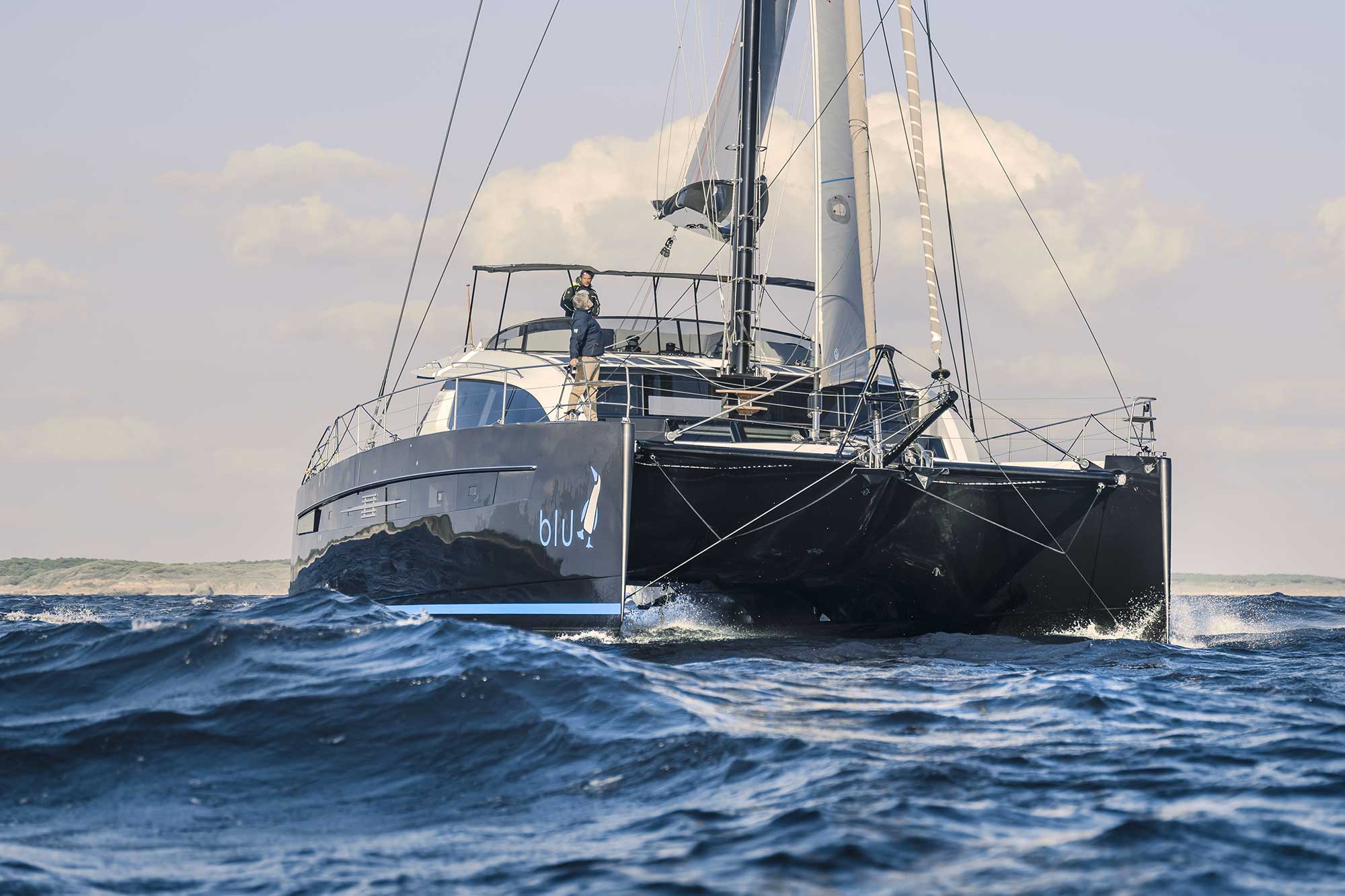
    boat flag

    The flag also shapes radio, identity and navigation formalities

    A yacht flag is connected to practical identity. Registration usually leads to an official number, port of registry, call sign and the ability to obtain a radio licence. The MMSI number used by VHF DSC, AIS and EPIRB is tied to the flag administration.

    This matters when a yacht changes flag. A reflagging may require a new radio licence, new MMSI, updated AIS programming, revised EPIRB registration and new marking. It may also affect insurance, mortgage registration and the yacht’s official documents.

    The process is not always dramatic, but it is not casual. A yacht is a legal object. Its identity must be coherent across registration papers, insurance documents, builder’s certificate, bill of sale, radio licence, equipment records and customs evidence.

    The International Maritime Organization has been paying greater attention to transparency in ship registration. In April 2026, the IMO Legal Committee approved new guidelines intended to improve due diligence, ownership records and oversight of registration procedures. The fact that this is now a formal international concern should tell owners something important: flag registration is no longer a quiet back-office issue. Authorities want cleaner records and clearer responsibility.

    The tax question cannot be separated from use

    Tax is often the reason owners first ask about flags. It is also where bad advice can become expensive.

    The flag may influence customs treatment, but it does not replace a full tax analysis. VAT status, importation, the owner’s residence, beneficial ownership, the place of use, charter activity and temporary admission rules all matter.

    For example, a non-EU flagged yacht used privately by a non-EU resident may be able to enter EU waters under temporary admission for a defined period, often 18 months. But that does not make it an EU VAT-paid yacht. It does not automatically allow commercial charter. It does not solve residence issues. It does not make every Mediterranean cruising plan simple.

    Similarly, an EU flag does not by itself prove that VAT has been paid. Customs officers may ask for supporting documentation. Owners should keep purchase invoices, VAT evidence, import documents, registration papers, insurance certificates, crew documents and proof of movements in a clear onboard file.

    The hard truth is that the flag is sometimes oversold as a tax solution. It should be understood as one part of a wider ownership structure. The right question is not “Which flag is cheapest?” The better question is: which flag matches the yacht, the owner, the tax position, the cruising area and the intended use?

    The financing and insurance markets care about the flag

    A yacht flag also affects finance and insurance.

    Lenders often prefer recognized registries where mortgages can be properly recorded and enforced. Insurers look at flag, use, cruising limits, crew qualifications, surveys, class where applicable, and whether the yacht is private or commercial. A yacht that is insured as private but used for paid charter can create serious problems after an incident.

    Some flags are well understood by banks, insurers, managers and surveyors. Others may be legal but less convenient. The difference can appear when financing is arranged, when the yacht is sold, when a claim is made or when a buyer’s lawyer checks title.

    This is why a flag decision should be made with the future in mind. A private owner may not plan to sell for years. But resale still matters. A clear flag history, strong documentation and recognized registration can make a future transaction smoother. Confused paperwork can reduce confidence and delay a sale.

    A Privilège is a long-term yacht. It deserves a flag structure that can support long-term ownership.

    The charter option must be decided before it becomes tempting

    Many private owners say they do not plan to charter. Some later change their mind.

    That change can be sensible. It can also be complicated. If the yacht was registered, equipped and insured only for private use, occasional charter may not be easy. The flag state may require coding. The insurer may require revised terms. Crew qualifications may change. Local charter rules may apply in the cruising area. VAT and tax reporting may become more complex.

    The Mediterranean is especially sensitive. France, Italy, Spain, Greece, Croatia and other jurisdictions can apply their own charter rules, VAT treatment and local requirements. A flag that works well for private cruising may not be the most efficient for commercial use. A flag that works for charter may impose obligations the owner would not want for purely private life.

    This is why the charter question should be answered early, even if the answer is “probably not.” A yacht can be designed with flexibility, but legal flexibility must be planned. The build specification, safety equipment, documentation and ownership structure may need to anticipate future use.

    The best flag choice begins with the sailing programme

    The right flag cannot be chosen in isolation. It starts with the sailing programme.

    Will the yacht be kept mainly in France, Spain, Italy or Greece? Will it cross the Atlantic each year? Will it remain in the Caribbean? Will it cruise outside the EU? Will the owner live aboard? Will there be crew? Will the yacht charter? Will the yacht be financed? Will the owner be resident in the EU? Will the owner want a private ownership structure or a company-owned structure? Will there be a future plan to sell into a specific market?

    Only after these questions are answered does the list of suitable flags become meaningful.

    At Privilège Marine, we build catamarans around the owner’s real life aboard. The flag should follow the same logic. It should be chosen because it supports the yacht’s mission, not because it appeared convenient in a conversation at the end of the sale.

    The Privilège view is that paperwork is part of seamanship

    Privilège Marine designs and builds bluewater luxury catamarans in Les Sables d’Olonne, with models such as the Signature 510, Signature 580, Signature 600 and Signature 650 conceived around ocean capability, comfort and owner-led personalization. Our work is technical, but it is also practical. A yacht that is beautifully built but poorly structured administratively creates avoidable stress.

    Choosing a yacht flag is therefore not a decorative decision. It is part of seamanship. It affects how the yacht is recognized, how it is controlled, how it is insured, how it may be used and how freely it can move.

    The right approach is calm and methodical. Start with the owner’s nationality and residence. Define private, commercial or mixed use. Clarify the cruising area. Confirm VAT and customs status. Check eligibility. Speak to a maritime lawyer, tax adviser, insurer and, where relevant, a yacht manager. Then select the flag that supports the whole project.

    A boat flag should never be chosen only because it is fashionable, cheap or fast. At sea, weak decisions travel with the yacht. Strong decisions disappear into the background and allow the owner to enjoy the voyage.

    The best flag is the one that lets the yacht live as intended.
  • Why Bridgedeck Clearance Defines Catamaran Comfort at Sea

    Why Bridgedeck Clearance Defines Catamaran Comfort at Sea

    Bridgedeck clearance decides whether a catamaran glides over waves or pounds into them. Here is why the best bluewater cats feel calmer offshore.

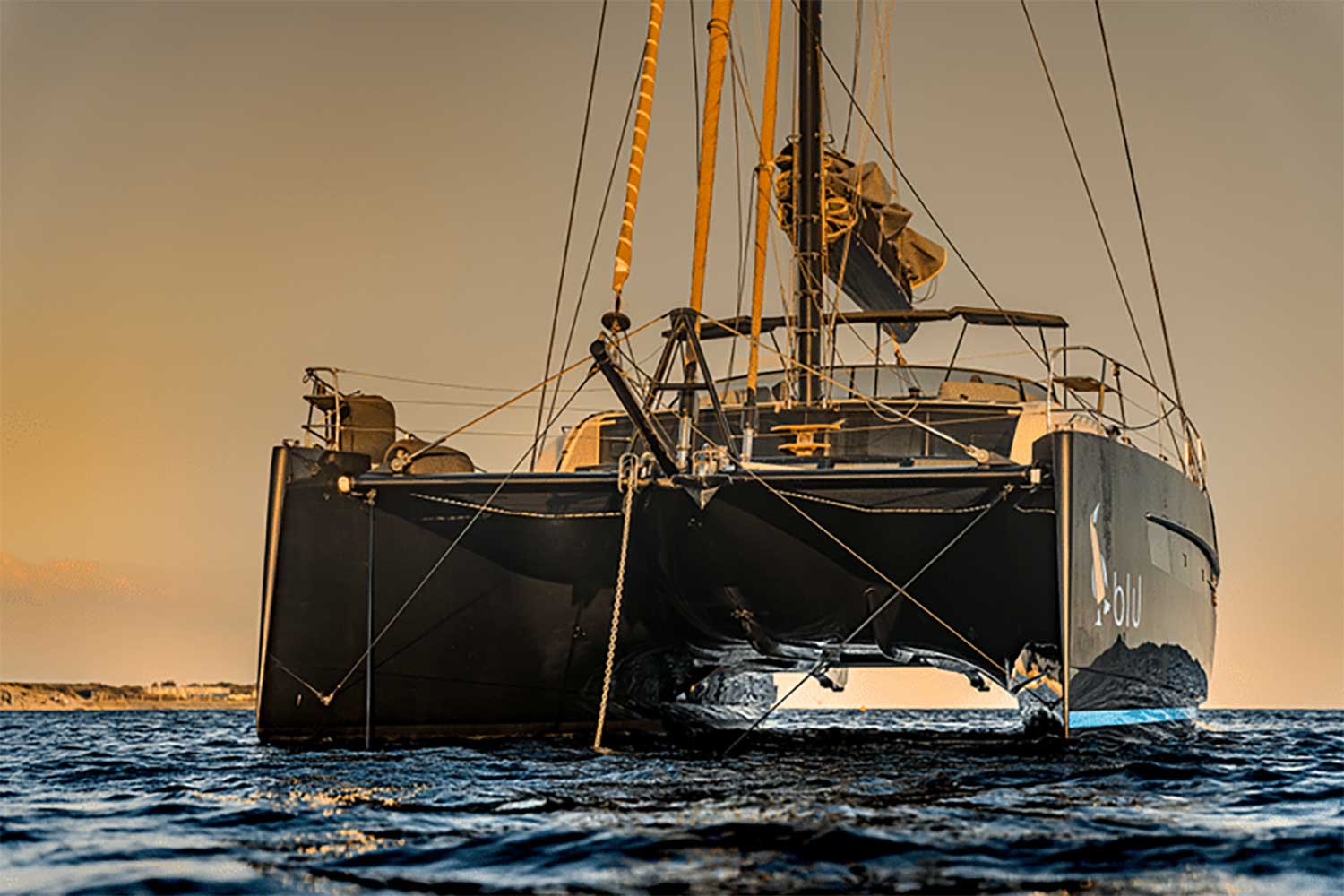
    On a catamaran, bridgedeck clearance is the vertical distance between the sea and the underside of the structure linking the two hulls. It sounds like a technical footnote. It is not. It is one of the measurements that most directly affects offshore comfort, noise, fatigue, speed and confidence on board. When clearance is too low, waves strike the underside of the bridgedeck. The result is catamaran slamming: a hard, hollow impact that can shake the saloon, disturb sleep, slow the boat and unsettle even experienced guests. Many charter catamarans are designed around volume, cabins and short holiday use, not necessarily around long bluewater passages. A true bluewater catamaran takes a different view. It gives waves room to pass between the hulls. Privilège Marine’s philosophy belongs to that second category: offshore safety, comfort, strong construction and a calmer ride in real sea conditions.

    The measurement that tells the truth about a catamaran

    Ask a first-time catamaran buyer what matters most and the answer usually comes quickly: cabins, saloon volume, cockpit space, flybridge, finish, price, brand and resale value. Ask an offshore sailor and the list changes. The sailor wants to know how the boat behaves when the weather is no longer designed for a brochure.

    This is where catamaran bridgedeck clearance becomes crucial.

    Bridgedeck clearance is the height between the waterline and the underside of the bridgedeck, the central structure connecting the two hulls. On many cruising catamarans, this area sits below the saloon, cockpit, forward lockers, owner’s suite or central nacelle. It is the “ceiling” above the sea passing between the hulls.

    In calm water, it is easy to ignore. In a marina, it is almost invisible to a buyer standing on deck. At a boat show, the saloon may look vast and bright, while the tunnel below is rarely inspected. Yet offshore, the sea looks at the boat from underneath. If there is not enough vertical space, waves do not pass cleanly through the tunnel. They hit the boat.

    That impact is called bridgedeck slamming, pounding or bridge-deck slap. The terms vary. The experience is the same. A wave strikes the underside of the platform with a sharp, resonant blow. The boat shudders. Conversation stops. The crew looks at each other. Guests who were relaxed a minute earlier suddenly understand that catamaran comfort at sea is not only about upholstery.

    It is about geometry.

    The reason some catamarans ride rough in real conditions

    A catamaran does not need a large breaking sea to slam. The process can start with normal wave interaction between the hulls.

    Each hull creates its own bow wave. These waves move inward and meet below the bridgedeck. In head seas or short chop, the hulls also pitch. The bows rise and fall. The distance between the underside of the platform and the water changes constantly. A catamaran that looks safe at rest may lose much of its usable clearance once it is loaded with fuel, water, tenders, equipment, cruising stores and personal belongings.

    The problem worsens when the bridgedeck is long, flat or low. A long bridge structure gives more surface for waves to hit. A flat forward face behaves like a wall. Steps, emergency hatch recesses, stiffening beams, lockers, nacelles and berth shelves that protrude into the tunnel can all reduce effective clearance. The buyer may read one figure in a specification sheet, but the sea finds the lowest point.

    This is why loaded displacement matters. A boat measured empty at a dealer’s dock is not the boat that crosses an ocean. A cruising catamaran may carry hundreds of litres of water, hundreds or thousands of litres of fuel, spare parts, batteries, solar equipment, a dinghy, safety gear, tools, provisions and personal cargo. Every kilogram lowers the hulls. Every centimetre lost below the bridgedeck increases the chance of pounding.

    There is also a commercial reason behind rougher-riding cats. More interior volume sells. More cabins sell. More headroom sells. A large saloon impresses at a boat show. Four guest cabins with en-suite heads impress in a charter brochure. A huge cockpit photographs well. The compromise is often pushed below the floor, where the buyer does not immediately see it.

    The sea sees it later.

    The compromise that changes comfort offshore

    The modern charter catamaran has done much to popularise multihull sailing. It gives families and groups a stable platform, private cabins, shallow draft and large social areas. For island hopping in protected waters, this formula works well. A week in the British Virgin Islands, Greece, Croatia or the Seychelles is not the same as a winter Atlantic passage.

    That distinction matters.

    Many charter catamarans are built around accommodation density. The goal is to create the maximum number of berths, heads and usable spaces within a given length. This often leads to fuller hulls, bigger cabins, larger cockpits and a longer bridgedeck. These are not flaws if the mission is coastal holiday sailing. They become more serious when the same boat is judged as an offshore passagemaker.

    The discomfort of charter catamaran comfort at sea usually appears in three situations: sailing upwind, crossing short steep chop, or moving through confused seas. These conditions increase pitching and relative motion. When the underside of the nacelle or saloon floor is too close to the water, the impact can be frequent enough to affect sleep, cooking, navigation and general confidence.

    It is not only the noise. The human body reads slamming as stress. A sudden bang under the floor is different from the rolling motion of a monohull. It feels abrupt. It feels mechanical. For inexperienced guests, it can feel as if something is wrong, even when the structure is safe. Over hours or days, this affects mood and fatigue.

    The best offshore catamarans reduce that stress by design. They do not try to defeat the sea by mass alone. They give the sea a clean path.

    The offshore minimum that serious buyers should understand

    There is no universal legal number that defines safe bridgedeck clearance for every offshore catamaran. Certification rules, including CE design categories, look at broader design conditions such as stability, buoyancy, wind force and significant wave height. They do not give the buyer a simple, universal bridgedeck clearance minimum.

    That is why practical rules of thumb matter.

    One widely cited offshore guideline is to use at least 0.7 inches of bridgedeck clearance for every foot of overall length. Translated into metric terms, a 13.7-metre catamaran (45 ft) would need about 0.80 m (31.5 in) of clearance as a minimum reference. A 15.2-metre catamaran (50 ft) would suggest about 0.89 m (35 in). A 18.3-metre catamaran (60 ft) would suggest about 1.07 m (42 in).

    Another useful rule considers the span between the hulls. If the catamaran is very beamy, the sea can rise higher between the hulls. In that case, a practical target sometimes used by designers and experienced multihull sailors is clearance of roughly 20 percent of the span between the hulls. For example, if the open tunnel span is 4.27 m (14 ft), the implied clearance would be about 0.85 m (33.6 in).

    These are not magic numbers. They are not substitutes for naval architecture. But they help a buyer ask better questions.

    The most important word is “loaded.” The relevant figure is not the highest point under the bridgedeck. It is the lowest point that waves will hit when the yacht is in real cruising condition. The buyer should inspect the nacelle, escape hatches, steps, beams, locker bottoms, tender arrangements and any protruding shelf inside the tunnel. A clean tunnel is worth more than a flattering brochure number.

    For serious offshore use, minimum offshore clearance should be judged together with hull shape, buoyancy distribution, tunnel cleanliness, weight discipline, bridge-deck length, forward profile and intended load. Clearance is central, but it is not alone.

    The comfort penalty of slamming is bigger than the noise

    A slamming catamaran is not merely unpleasant. It becomes less efficient.

    When a wave hits the underside of the bridgedeck, energy that should move the boat forward is lost in impact, vibration and disturbed water. Experienced multihull writers have reported that severe pounding can reduce boat speed by several kilometres per hour, equivalent to several knots. In a passage context, this matters. A loss of 5.6 to 7.4 km/h (3 to 4 knots) during repeated impacts is not just a performance issue. It changes arrival times, weather windows, watch-keeping and crew fatigue.

    Comfort is also a safety factor. Offshore sailing is a long-duration activity. A tired crew makes poorer decisions. A guest who cannot sleep is less useful on watch. A skipper who must constantly adjust course to reduce pounding has fewer options. A galley that is difficult to use affects nutrition. A saloon that feels harsh affects morale.

    This is why serious sailors often say that comfort and seaworthiness are linked. A calm yacht is not a luxury detail. It helps people function.

    The best offshore catamarans therefore aim for a specific kind of comfort: not hotel comfort, but passage comfort. The boat should feel solid, quiet and predictable. It should not need to be driven like a fragile object. It should reassure the people on board when conditions become less friendly.

    That is a different design brief from a high-volume holiday platform.

    The Privilège approach to bluewater comfort

    Privilège Marine has always belonged to the world-cruising end of the catamaran market. The yard’s identity is not based on mass charter production. It is based on owner-led yachts, offshore use, French craftsmanship and long-distance sailing.

    That distinction is not cosmetic. It changes the priorities of the boat.

    A Privilège catamaran is designed as a bluewater catamaran first. The Privilège range makes this clear in its positioning: ocean-crossing capability, safety, reliability, comfort and tailor-made construction are central to the brand. The Privilège Signature 580, for example, is listed with a length of 19.10 m (62 ft 8 in), a beam of 9.18 m (30 ft 1 in), a full-load displacement of 35 tonnes (77,162 lb), a 259 m² sail plan (2,787 sq ft) and CE A-12 certification. The Signature 650 is presented as an ocean-going catamaran for world cruising, with a full-load displacement of 37 tonnes (81,600 lb), CE Category A certification and a design brief focused on long-distance comfort.

    These figures matter because size, load-carrying ability and offshore design intent all help create a more settled ride. A longer hull gives the designer more room to balance living volume with clearance. A strong platform can carry real cruising equipment without becoming a floating compromise. A carefully shaped central nacelle can provide the Privilège owner’s suite and interior volume while still respecting the need for seawater to pass below.

    This is the key point: Privilège does not treat comfort as a marina feature. Comfort must hold at sea.

    On a well-designed Privilège, the ride is quieter and more reassuring because the boat is not constantly fighting its own underside. The waves have more room to move through the tunnel. The platform feels composed. The saloon remains a place of calm rather than a soundboard. The owner and guests feel the difference most when the sea becomes irregular, when the wind is forward, or when the passage is long enough for fatigue to matter.

    No serious yacht builder should claim that a catamaran will never slam. Any catamaran can pound if overloaded, badly trimmed, driven too fast into short seas, or exposed to the wrong wave pattern. But there is a major difference between occasional impact in difficult conditions and a design that pounds as part of its normal behaviour.

    Privilège is built for the first reality, not the second.

    The design details that make a catamaran feel reassuring

    A comfortable offshore catamaran is not created by one measurement. Bridgedeck clearance is the headline, but several design details work together.

    The first is a clean tunnel. Water should not meet hard, flat obstacles under the bridgedeck. The fewer protrusions, the better. If structures exist, they should be shaped, angled and integrated so they split or deflect water rather than stop it.

    The second is the position of the bridgedeck. A structure carried too far forward can meet waves before the hulls have lifted. A structure carried too far aft can meet tunnel waves where they have built up. Keeping the platform proportionate matters.

    The third is weight concentration. Heavy items placed at the ends increase pitching. More pitching means more variation in clearance. A boat with heavy ends may slam more often because the platform moves through a larger vertical arc.

    The fourth is load discipline. Even a good catamaran can be harmed by poor loading. Extra batteries, water toys, dive compressors, tenders, tools and personal cargo all have consequences. A bluewater yacht must carry equipment, but it should be designed for that load from the start.

    The fifth is hull form. Slender, efficient hulls reduce wave-making, but they must also carry cruising weight. Very full hulls may carry load better, but can increase resistance and tunnel disturbance. The naval architect’s task is to balance these pressures honestly.

    This is why Privilège Marine’s positioning is relevant. A tailor-made yacht is not simply a yacht with different fabrics. It allows the owner’s programme to be integrated into the technical brief. If the owner plans ocean passages, long-term living aboard, crewed world cruising or family sailing, the equipment, layout and load plan can be discussed before the yacht is built. That is far better than adapting a volume charter platform after delivery.

    The quiet test that should decide the boat

    The real test of a catamaran is not how large the saloon feels at the dock. It is how the yacht behaves when the sea is short, the wind is forward and dinner is being prepared while the boat is still making passage.

    A low-clearance catamaran can still be pleasant in protected waters. It can still be commercially successful. It can still satisfy charter guests who sail between anchorages in fair weather. But for owners who want to cross oceans, live aboard seriously or bring family and friends into open-water conditions, bridgedeck clearance is not a technical detail. It is one of the foundations of confidence.

    The question is simple: does the boat give the sea enough room?

    Privilège Marine’s answer is rooted in a clear design culture. The yacht must feel calm, strong and composed offshore. It must offer comfort without forgetting why the boat floats on two hulls in the first place. It must be luxurious, but not soft. It must be reassuring, not merely spacious.

    That is why catamaran bridgedeck clearance deserves more attention than it gets. It is hidden below the living space, but it shapes the life above it. It decides whether a passage feels nervous or relaxed. It decides whether guests sleep or listen. It decides whether the yacht feels like a floating apartment or a real ocean-going home.

    For a bluewater owner, that difference is everything.

  • Living on a Catamaran Full Time: From Dream to Ocean Home

    Living on a Catamaran Full Time: From Dream to Ocean Home

    A frank look at full-time catamaran life, bluewater safety, onboard systems and why Privilège Marine treats ocean cruising as a home design problem.

    Living full time on a catamaran is no longer a fantasy reserved for retired sailors or extreme adventurers. Remote work, satellite internet, modern energy systems and larger cruising multihulls have made the idea more realistic for couples who want to leave conventional life without abandoning comfort. But the dream is often sold too easily. A catamaran is not a floating apartment. It is a moving technical system exposed to weather, salt, fatigue and distance. The right question is not only how to live on a catamaran full time. It is how to do it safely, comfortably and for years rather than months. This is where Privilège Marine occupies a rare position. Its yachts are conceived as premium ocean homes, not charter platforms. Through custom layouts, bluewater engineering, robust materials and long-distance autonomy, Privilège turns liveaboard catamaran life into a serious residential project at sea.

    The Dream Is Real, but It Is Not a Floating Holiday

    The search phrase “how to live on a catamaran full time” says more than it seems. It is not just a practical query. It is an emotional one. Behind it are couples in their thirties, forties and fifties asking whether a different life is still possible. They imagine resigning from routine, selling a house, leaving traffic behind and waking up in an anchorage rather than a suburb.

    The appeal is easy to understand. A cruising catamaran offers space, privacy, stability at anchor and the rare ability to move a whole household across borders. Compared with a monohull of similar length, it usually provides a wider saloon, separate hulls for cabins, a large cockpit and easier separation between living, working and sleeping areas. For a couple planning a sailing life catamaran project, that matters. One partner may work online while the other prepares navigation, manages maintenance or rests after a night watch.

    But the hard truth is that living aboard is not the same as being on vacation. A full-time boat is a home, a vehicle, a workplace, a workshop and a safety capsule. It has plumbing, electricity, batteries, engines, pumps, rigging, electronics, sails, water tanks, black-water systems, refrigeration and safety gear. Every comfort depends on a system. Every system must be maintained.

    This is why the dream stage must include a reality check. The question is not whether a couple can quit a job and sail the world on a catamaran. Some can. Many have. The better question is whether they are ready to live inside a technical environment where comfort depends on discipline.

    The Catamaran Solves Space, but It Does Not Remove Compromise

    A catamaran is attractive for liveaboard life because volume changes everything. Space reduces friction. It allows a couple to carry tools, spare parts, clothes, books, medical supplies, work equipment, diving gear, food and personal objects without turning daily life into a constant act of unpacking.

    That does not mean storage is unlimited. On a boat, every kilogram matters. Weight affects performance, motion, fuel consumption and safety margins. A catamaran overloaded with domestic comfort can become slow, noisy and harder to handle in heavy weather. Full-time living is therefore not about filling a yacht as one would fill a house. It is about designing a household around movement.

    This is one of the main traps of liveaboard catamaran life. Buyers often inspect the saloon, the cabins and the cockpit first. They imagine dinner at anchor, morning coffee and guests flying in for a week. They should also inspect access to machinery, ventilation, bilges, electrical panels, sail handling, engine rooms and emergency exits. The liveaboard boat that feels impressive at a boat show may feel punishing after six months if every filter change requires contortion, every locker is too shallow and every noisy system sits below the berth.

    A serious full-time cruising catamaran must therefore answer two questions at the same time. Can it feel like a home? Can it be serviced like a boat? The answer is not found in cushions or glossy brochures. It is found in tankage, ventilation, handholds, drainage, protected helm stations, circulation, engine access, cable routing and the quality of the materials that survive salt, heat and vibration.

    The Bluewater Standard Separates a Home from a Liability

    The phrase bluewater catamaran is used too casually. In marketing language, it can mean almost anything beyond coastal cruising. In real life, it means a yacht designed to make long passages across exposed water, where the nearest marina may be several hundred nautical miles away and decisions cannot be outsourced.

    European CE Category A gives one useful benchmark. It refers to recreational craft designed for conditions that may exceed wind force 8 on the Beaufort scale and significant wave heights above 4 metres (13 feet), excluding abnormal events such as hurricanes or rogue waves. This does not make any yacht invincible. It does establish a more demanding design context than a coastal platform.

    For a couple living aboard, bluewater capability is not a badge. It is a form of risk reduction. Offshore sailing requires redundancy, protected working areas, secure movement on deck, reliable steering, clear sightlines, strong construction and systems that remain accessible when the boat is moving. A beautiful interior becomes irrelevant if the crew cannot reef safely, reach the helm under protection or diagnose a fault at sea.

    This is where Privilège Marine’s positioning becomes meaningful. The shipyard does not compete primarily on charter density or maximum cabins per metre. Its story is rooted in long-distance sailing, with a French yard at Les Sables-d’Olonne and a brand heritage linked to Philippe Jeantot, the ocean racer and founder of the Vendée Globe. That origin matters because the best bluewater yachts are not designed as floating hotel rooms. They are designed by people who understand fatigue, weather, autonomy and fear.

    The Privilège Approach Treats the Catamaran as a Private Residence

    Privilège Marine’s strongest argument is not that its yachts are merely luxurious. Many catamarans now claim comfort. The real argument is that Privilège treats comfort as a permanent living condition, not as a weekend feature.

    The Signature 510, at 17.09 metres (51 feet), is presented by the yard as a yacht for autonomous bluewater sailing, with extended life on board, generous storage and a protected helm station. Its beam of 7.98 metres (26 feet) gives the platform enough volume for a serious owner’s layout without pushing into the management complexity of a very large yacht. For a couple planning to live aboard without full-time crew, that size matters.

    The Signature 580 moves the concept further. At 19.10 metres (58 feet) overall, with a beam of 9.18 metres (30 feet 1 inch), a light displacement of 29 tonnes and full-load displacement of 35 tonnes, it is not a minimalist boat. It carries 2 x 485 litres of fuel and 2 x 450 litres of fresh water, according to the yard’s published specifications. Those figures point to a yacht conceived for real autonomy, not just marina-to-marina cruising.

    The Signature 650, at 21.25 metres (65 feet) overall with a 9.20-metre (30-foot) beam, takes the residential idea into a larger category. Published figures list 2 x 1,000 litres of fuel and 2 x 650 litres of fresh water. That scale changes the emotional experience of life aboard. It creates space for privacy, longer stays away from infrastructure and a more stable sense of home.

    The newest Signature 600 is perhaps the clearest expression of the concept. Privilège describes an aft portside guest cabin that can become a home cinema, gym, office, storage room, artist’s studio or walk-in wardrobe. That is not a decorative detail. It is the difference between buying a boat and designing a life.

    The Customisation Question Becomes the Core of Full-Time Living

    For short-term cruising, a standard layout may be enough. For full-time living, customisation becomes central. A couple moving aboard for three years does not need the same yacht as a family crossing the Atlantic for one season or an owner using the boat with a rotating crew.

    One owner may need a proper office with sound insulation, screens and storage for professional equipment. Another may need a large galley with cold storage and practical working surfaces because remote anchorages change the way a household shops and cooks. A third may need a workshop, medical storage, dive gear space or an owner’s cabin that feels like a bedroom rather than a berth.

    This is where Privilège has a credible advantage over high-volume catamaran builders. A mass-production yacht must protect repeatability. A Privilège can be shaped around the owner’s intended life. That does not mean every idea should be accepted. Good custom building requires discipline. The best shipyard is not the one that says yes to every request. It is the one that knows when a requested feature will damage weight distribution, safety, access, resale logic or long-term usability.

    For full-time living, luxury is not marble for the sake of marble. It is silence at night, dry lockers, strong hinges, durable surfaces, good ventilation, reliable refrigeration, secure handholds and spaces that still work when the boat is heeled, rolling or slamming into confused seas. In that sense, a Privilège is closer to a premium residence engineered for movement than to a simple leisure yacht.

    Living on a Catamaran Full Time

    The Cost of Freedom Is Systems, Not Romance

    The financial reality of living full time on a catamaran is often underestimated. Some experienced cruising couples report modest monthly budgets in the range of roughly $2,000 to $3,000, especially when anchoring often, doing their own maintenance and avoiding expensive marinas. Older bluewater budget estimates have placed many cruising sailors around €1,500 to €2,500 per month. But those numbers do not describe the full cost of owning a premium new bluewater catamaran.

    For a luxury catamaran, the real budget includes insurance, marina fees, haul-outs, antifouling, sails, rig inspections, engine servicing, batteries, electronics, safety equipment, registration, communications, spare parts and depreciation. Industry rules of thumb often place annual yacht running costs around 5 to 10 percent of purchase price, depending on age, use, crew, location and maintenance philosophy. That range can be imperfect, but it is a useful warning. A liveaboard catamaran is not cheap freedom. It is a capital-intensive way to buy autonomy.

    Satellite internet has also changed expectations. Starlink’s maritime and roaming offers have made remote work from boats more realistic, including coastal and, with the right plan, offshore connectivity. But internet is not a substitute for seamanship. A couple cannot outsource weather judgment to a connection. They still need training, spare systems, paper logic, practical repairs and the ability to make decisions when tired.

    The people who succeed at full-time catamaran life tend to be neither dreamers nor cynics. They are organised realists. They plan budgets conservatively. They learn systems. They accept that some weeks are spent fixing things. They understand that a beautiful anchorage may follow a difficult passage, and that the difficult passage is part of the price.

    The Daily Reality Check Is More Useful Than the Fantasy

    A serious article on how to live on a catamaran full time should not sell the fantasy without naming the friction. Life aboard includes laundry logistics, customs clearance, visa planning, medical preparation, weather windows, school choices for children, internet failures, spare-part delays and marina shortages.

    Beam is a practical issue. A catamaran with an 8 to 9-metre beam may offer exceptional living space, but it can also face higher berthing costs and fewer available slips in crowded marinas. Insurance can become more complex when the cruising area includes hurricane zones, remote islands or ocean crossings. Maintenance becomes more expensive when the owner does not have the skills or time to diagnose problems early.

    Yet the rewards are real. Full-time catamaran life gives a couple shared purpose. It turns travel into habitation rather than consumption. It teaches weather, patience, mechanics, navigation and restraint. It replaces ownership of many objects with command of one complex object. For some people, that is the point.

    The strongest liveaboard yachts respect this reality. They do not pretend the sea is always gentle. They make life at sea less fragile. They provide space without forgetting safety. They offer comfort without ignoring access to systems. They allow the owner to live well without pretending the boat has stopped being a boat.

    The Better Question Is Whether the Boat Can Carry a Life

    The market for liveaboard catamarans is crowded with attractive promises. Some yachts offer volume. Some offer speed. Some offer charter income logic. Some offer contemporary interiors that photograph well. Privilège Marine stands apart because it can argue from a narrower but more powerful premise: a full-time cruising catamaran should be a private home capable of crossing oceans.

    That does not make Privilège the right answer for everyone. It is not the cheapest route into the liveaboard lifestyle. It is not aimed at owners looking for maximum charter cabins or minimal acquisition cost. It speaks to a different buyer: the couple or family that wants a premium ocean home, tailored to their habits, strong enough for long passages and refined enough to live aboard without feeling temporary.

    For that audience, the emotional question remains simple: “Is it really possible for us?” The honest answer is yes, but only with the right boat, the right budget and the right mindset. A catamaran can replace life ashore only if it is designed as more than transport. It must carry routines, work, rest, privacy, maintenance, safety and memory.

    That is the deeper promise of Privilège Marine. Not escape for a season. Not a floating holiday home. A real house at sea, built for people who want the horizon to become part of daily life.

  • How Privilège Turns a Catamaran Into a Home at Sea

    How Privilège Turns a Catamaran Into a Home at Sea

    Why upgrading to a Privilège Marine means moving from catamaran ownership to a tailored bluewater home built for distance, comfort and value.

    The move from a standard cruising catamaran to a Privilège Marine is not just an upgrade in size. It is a change in philosophy. A typical catamaran asks owners to adapt their habits to an existing layout. A Privilège is built around the owner’s life, route, crew, guests and private routines. That distinction matters once a yacht becomes more than a holiday platform. On a bluewater catamaran 50 feet plus, space, systems, privacy, storage, autonomy and after-sales support become part of the ownership experience. Privilège Marine’s strength lies in combining French craftsmanship, offshore engineering, large owner suites, robust construction and deep personalization. The result is a yacht that behaves less like a production object and more like a long-term private residence. That is also why Privilège catamarans have a credible argument on value retention: they are not merely bought. They are commissioned, lived in and kept.

    The real upgrade is not length, but the way the boat fits your life

    For many owners, the first catamaran is bought around a dream: more space, easier anchoring, shallow draft, stability at rest, and enough comfort to stay aboard for several weeks. That dream is real. It is also incomplete.

    The turning point usually comes later. The owner begins to ask sharper questions. Can the boat cross oceans without feeling improvised? Can it support months at sea without turning every passage into a logistics exercise? Can the interior work for a couple, children, guests, crew, remote work and privacy at the same time? Can the yacht remain elegant after years of salt, sunlight and hard use?

    That is where the concept of an upgrade catamaran becomes too narrow. The real question is not whether an owner moves from 43 feet to 49 feet, or from 49 feet to 59 feet. The issue is moving from a boat that accommodates life on board to a boat designed as a life on board.

    A Privilège Marine sits in that category. The company builds in Les Sables-d’Olonne, on France’s Atlantic coast, a place shaped by offshore sailing rather than marina theatre. The brand’s origin goes back to Philippe Jeantot, the French solo sailor who created the Vendée Globe and imagined a family cruising catamaran with serious ocean credentials. That history matters because it explains the yard’s bias: comfort is not treated as the opposite of seamanship. It is treated as something that must survive the sea.

    This is the central promise of the premium catamaran upgrade: your next boat should fit your life, not the other way around.

    The owner suite changes the meaning of privacy at sea

    On many catamarans, the owner cabin is a larger version of a guest cabin. It may have more storage, a bigger bathroom and a private desk. It is pleasant, but it remains constrained by a production layout.

    Privilège takes a different approach. Its best-known architectural signature is the central owner’s suite positioned forward in the nacelle. On the Signature 510, the full-beam owner’s suite is presented as the largest in its category. On the Signature 650, the central suite offers panoramic forward-facing views, natural light and the kind of volume rarely found in a sailing catamaran of this size.

    That is not a cosmetic detail. It changes daily life.

    A proper owner suite gives the owner separation from guests without isolation from the boat. It allows a couple to live aboard for long periods without feeling that the most private space has been sacrificed to maximize charter-style cabin count. It also makes the yacht more emotionally convincing. Owners of large bluewater catamarans do not only buy performance ratios and tankage figures. They buy the feeling of waking up in a private apartment facing the horizon.

    This is where Privilège’s customization becomes commercially powerful. A client can choose between fewer cabins with more private volume, or more accommodation for family and guests. On the Signature 510, the layouts include a master suite with two guest cabins, a master suite with three guest cabins, or four double cabins. On the Signature 580, the options include galley-up and galley-down arrangements, with different combinations of master, guest and crew spaces. On the Signature 650, the yacht can be configured with three to five cabins.

    This is not decoration. It is architecture around ownership.

    The 50-foot-plus catamaran becomes a systems platform

    A bluewater catamaran 50 feet plus is not simply a larger leisure boat. It is a small, mobile infrastructure system. It must generate power, manage water, preserve food, support communications, protect navigation equipment, ventilate cabins, store spare parts, handle black water, and remain maintainable far from the shipyard.

    The numbers show the shift. The Privilège Signature 510 has a length overall of 17.09 metres (56 ft), a beam of 7.98 metres (26 ft), light displacement of 16.8 tonnes, fuel capacity of 2 x 400 litres and fresh-water capacity of 2 x 300 litres. The Signature 580 moves to 19.10 metres (62.66 ft), 9.18 metres of beam, 29 tonnes light displacement, 2 x 485 litres of fuel and 2 x 450 litres of fresh water. The Signature 650 reaches 21.25 metres (70 ft), with 9.20 metres of beam, 29 tonnes light displacement, 2 x 1,000 litres of fuel and 2 x 650 litres of fresh water.

    These figures are not marketing ornaments. They define autonomy, comfort and operational seriousness. Fuel capacity affects motoring range, generator use and safety margins. Fresh-water capacity affects life at anchor, even when a watermaker is fitted. Displacement affects motion, payload and the relationship between luxury materials and sailing performance. Beam affects stability, living volume and deck circulation.

    The practical lesson is direct: the larger Privilège models are not just more spacious. They give the owner more room to specify the systems that make long-distance cruising realistic. Solar panels, lithium battery banks, inverters, watermakers, air conditioning, refrigeration, navigation electronics, satellite communication and domestic appliances all require proper integration. A yacht built for the owner must consider not only the list of equipment, but how the owner will actually use it.

    A Mediterranean summer yacht, a family circumnavigation yacht and a semi-crewed Caribbean-Pacific yacht do not need the same systems philosophy. Privilège’s value is that these differences can be discussed before the boat exists.

    The construction logic matters because luxury must survive movement

    The most honest test of a luxury catamaran is not the first boat show visit. It is year five.

    Glossy surfaces are easy to admire at delivery. The harder question is whether cabinets stay quiet, doors align, fabrics resist UV, cabins remain acoustically comfortable, and structural elements feel solid after thousands of nautical miles. In yachting, luxury without durability is just decoration with a short warranty.

    Privilège’s construction philosophy is built around this problem. The yard’s material describes infusion as part of its composite process, used to balance resin and fibre ratio for strength and weight control. It also states that structural bulkheads are installed, bonded and laminated in the hulls before demoulding, reinforcing the overall structure.

    That detail is important. A bluewater catamaran works constantly. The platform twists, lands, accelerates, slows, loads rigging, unloads rigging, and absorbs impact from waves across two hulls and a bridge deck. The owner may experience this as comfort or noise. The boat experiences it as force.

    This is why construction, joinery and systems integration cannot be separated. The best interior in the world loses value if it rattles, swells, cracks or becomes impossible to service. Privilège’s approach of hand-fitting cabinets, selecting durable marine fabrics, integrating soundproofing materials and using high-end mattresses is not only about aesthetics. It is about making a yacht that remains livable when the weather is no longer decorative.

    That is the difference between a catamaran that looks luxurious and a bluewater home that can stay luxurious.

    The CE Category A certificate is a technical signal, not a slogan

    The Privilège Signature 510, 580 and 650 are listed with CE Category A-12 certification. This deserves explanation because the term is often used loosely.

    Under the European recreational craft framework, Design Category A refers to craft designed for conditions where wind may exceed Beaufort Force 8 and significant wave height may exceed 4 metres, excluding abnormal conditions such as storms, hurricanes, tornadoes, extreme sea states and rogue waves. It is not a licence to behave carelessly. It is not a guarantee against weather. It is a design classification connected to stability, buoyancy, handling and structural requirements.

    For an owner considering a premium catamaran upgrade, the relevance is clear. Bluewater ownership is about margin. It is about the ability to leave later, arrive safely, manage fatigue, and cope with the unplanned. A well-designed yacht cannot remove risk. It can make risk more manageable.

    Privilège’s design choices follow that logic: protected helm positions, standard staysails across the range, balanced rigs, intuitive deck plans, strong visibility, and layouts that connect the helm to social areas rather than isolating the person on watch. These are not small matters. On passage, the person handling the boat must be protected, informed and connected.

    A home at sea is still a vessel. Comfort has to be earned through naval architecture.

    The upgrade changes the relationship between owner and shipyard

    Production boat buying is usually transactional. The owner selects a model, chooses from a list of options, accepts the compromises and waits for delivery. That model works well for many buyers. It is efficient. It can also be limiting.

    Privilège Marine operates closer to a commission-based relationship. The yacht begins with the owner’s sailing programme, lifestyle and expectations. The question is not simply “Which model?” but “What life must this boat support?”

    That question can lead to major decisions. Will the yacht be sailed by a couple, by family, or with crew? Will the galley be central to family life or separated for service? Does the owner need a work area with proper connectivity? Is the forward cockpit a quiet retreat, a guest space, or part of the watch system? Should the boat prioritize long-term autonomy, warm-weather living, charter flexibility, private cruising or resale liquidity?

    The best customization is not excess. It is discipline. A badly customized yacht can become personal in ways that harm future resale. A well-customized yacht improves use while keeping the boat coherent for the next owner. This is where an experienced yard matters. The role of Privilège is not to say yes to everything. It is to translate personal requirements into a yacht that remains seaworthy, elegant, serviceable and commercially understandable.

    That is why the claim that Privilège is among the strongest builders in customization is credible. The customization is not limited to cushions and veneers. It reaches layout, systems, materials, storage, service access, owner privacy and long-range use.

    The resale argument is really a durability argument

    No serious buyer should accept vague promises about resale value. Yacht markets move. Currency changes. Interest rates matter. New-build waiting times matter. Brokerage presentation matters. Maintenance records matter even more.

    Still, Privilège has a stronger resale story than most because its value proposition ages well. A yacht built for ocean cruising, with a recognizable brand, serious construction, owner-focused layouts and a limited production profile, is less exposed to the commodity logic of high-volume charter platforms. It may not be immune to depreciation, but it is harder to reduce to a generic used catamaran.

    Brokerage listings support the point, though they should be read carefully because asking prices are not final transaction prices. Older Privilège models from the 1990s and 2000s still appear in international listings, including Privilège 37, 465, 495 and 615 models. More recent listings show high-value Signature models, including a 2022 Privilège 510 advertised in the Caribbean and a 2025 Signature 580 advertised at multimillion-euro levels. The important signal is not one price. It is the continued market presence of boats across several generations.

    The reason is simple. A Privilège does not rely only on trend. It relies on trust. Buyers of used bluewater catamarans look for structural reputation, maintenance access, ocean capability, comfortable owner spaces and evidence that the yacht was not built down to a price. Privilège’s low-volume, semi-custom positioning gives it an advantage here.

    The best resale strategy is not speculation. It is building a boat that another serious owner will still want in ten or fifteen years.

    The support network becomes part of the ownership product

    A premium yacht is only as reassuring as the support behind it. This is especially true for owners moving beyond coastal cruising. Once a boat is in the Caribbean, the Pacific, the Indian Ocean or the Mediterranean, after-sales support becomes part of the boat’s real value.

    We state that its ownership experience includes support from design to handover and beyond, with 24/7 after-sales availability. For a bluewater owner, that matters. A yacht is a complex object. Even the best-built vessels need assistance, parts, remote diagnosis, upgrades, maintenance planning and sometimes urgent technical advice.

    This is one of the differences between owning a boat and owning a bluewater home. A home has continuity. It has records, upgrades, service history and known systems. The stronger the relationship between owner, shipyard and service partners, the more confidence the owner has to keep sailing.

    That confidence is commercially valuable. It reduces friction. It supports future resale. It makes ownership less intimidating for clients upgrading from smaller catamarans. It also gives brokers and future buyers a clearer story: the yacht is not an isolated object, but part of a builder ecosystem.

    The Privilège step is for owners who know what they want next

    The Privilège Marine buyer is not always a first-time dreamer. Often, the buyer has already owned or chartered catamarans. They know what annoys them. They know what they would change. They know the difference between space and usable space. They know that a beautiful saloon is not enough if storage is poor, systems are inaccessible, or the owner cabin feels like a compromise.

    That is why the step up to Privilège is persuasive. It gives experienced owners a chance to correct the boat around their life. It also gives future owners a more mature entry into bluewater sailing: not through fantasy, but through design.

    The central idea is frank. If a yacht is going to carry your family, your guests, your possessions, your work habits, your sleep, your privacy and your ambitions across oceans, it should not be treated like a product pulled from a shelf. It should be treated like a home that can sail.

    A Privilège Marine is not the cheapest way to own a catamaran. That is not the point. It is a way to own a yacht that has been built around the owner, with the structural, technical and interior seriousness required for distance. For the right buyer, the premium is not just in the materials. It is in the freedom to stop adapting your life to the boat, and start building the boat around your life.

  • Philippe Jeantot Built More Than a Race Around the World

    Philippe Jeantot Built More Than a Race Around the World

    How Philippe Jeantot turned solo ocean racing into the Vendée Globe and helped shape Privilège Marine’s bluewater catamaran DNA.

    Philippe Jeantot’s legacy cannot be reduced to one race, one shipyard, or one line in sailing history. He belongs to the generation that turned French offshore sailing into a serious technical, sporting and industrial culture. A former deep-sea diver, he came to sailing through endurance, risk and self-reliance rather than through yacht-club tradition. He won the BOC Challenge twice, helped redefine what solo ocean racing could mean, then created the Vendée Globe in 1989 as a harder, purer version of the round-the-world race: one skipper, one boat, no stopovers and no assistance. At the same time, he channelled his experience into Jeantot Marine, later associated with the Privilège catamaran line. The result was not a marketing story invented after the fact. It was a direct transfer from offshore hardship into bluewater catamaran design: safety, autonomy, comfort and long-distance capability.

    The diver who became a sailor through discipline, not romance

    Philippe Jeantot was born in Antananarivo, Madagascar, in 1952. Before he became one of the defining figures of French offshore sailing, he was a professional deep-sea diver. That detail matters. It explains much of his later approach to boats, risk and endurance.

    Deep-sea diving is not an aesthetic relationship with the sea. It is technical, physical and unforgiving. Jeantot worked in a world where equipment, preparation and discipline could decide whether a man came back alive. In 1977, he took part in the Janus IV dive programme run by COMEX, during which divers reached a depth of 501 metres. That background placed him far from the romantic image of the solitary yachtsman guided only by instinct.

    His route into sailing was similarly direct. Jeantot was influenced by Bernard Moitessier’s book The Long Way, one of the great texts of solo ocean sailing. But he did not simply buy into the myth of escape. He built himself a 13.5-metre steel ketch, equivalent to about 44 feet, and prepared for single-handed ocean sailing. The boat was heavy, strong and practical. It was not an object of leisure. It was a machine for survival.

    That distinction is central to the Philippe Jeantot legacy. He approached sailing as a system. The sailor, the hull, the rig, the deck layout, the repair strategy and the mental reserve had to function together. Later, this same thinking would influence both the Vendée Globe and the early Privilège catamarans.

    The BOC Challenge turned Jeantot into a global offshore figure

    Jeantot’s sporting reputation was built in the BOC Challenge, the solo round-the-world race with stopovers that later became known under other names, including Around Alone and Velux 5 Oceans. In 1982-1983, he entered the first edition and won. Contemporary accounts describe a race of more than 27,000 nautical miles, or roughly 50,000 kilometres, through calms, storms, high-latitude depressions and repeated damage.

    The race format was already brutal. It was solo. It crossed the Southern Ocean. It demanded that one person manage navigation, sleep, repairs, weather analysis, sail changes and fear. But it was not yet the Vendée Globe. The BOC Challenge allowed stopovers. Skippers could rest, repair and restart from major ports around the world.

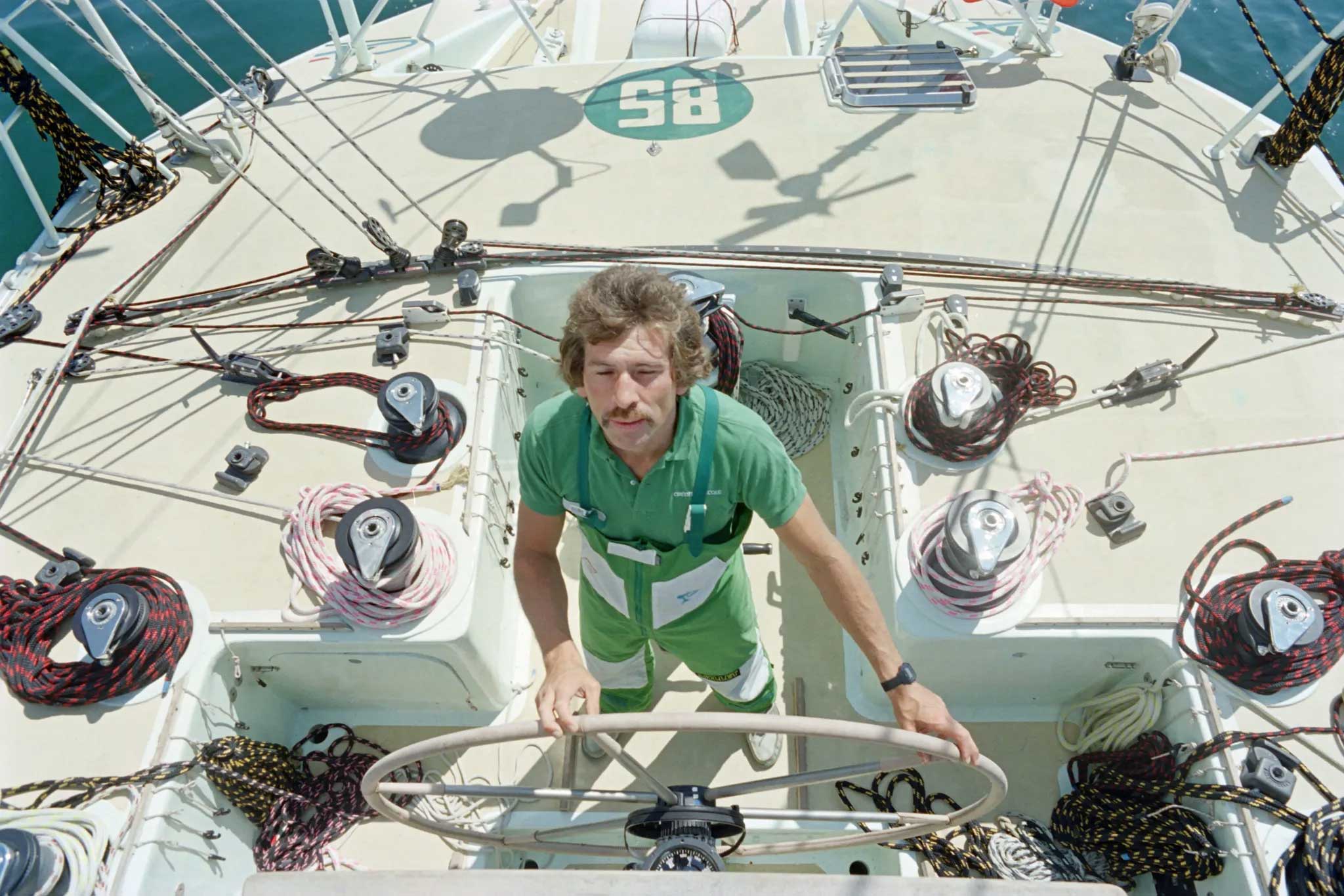
    Jeantot mastered that format. He won the 1982-1983 edition and then returned to win again in 1986-1987 aboard Crédit Agricole III. Winning once could be called a breakthrough. Winning twice made him a reference point. He was no longer just a French adventurer. He had become a sailor whose experience carried technical weight.

    The numbers are important because they separate fact from legend. The first BOC Challenge was not a coastal race inflated by storytelling. It was a full circumnavigation. Jeantot’s victory required months of isolation, weather management and mechanical resilience. His second win confirmed that the first was not an accident.

    This period also connected him to a broader French offshore movement. France was developing a particular culture of ocean racing: pragmatic, inventive, sponsor-backed and technically ambitious. Jeantot’s sponsor, Crédit Agricole, became part of that story. His boats, named Crédit Agricole, helped bring professional structure to a sport that still carried traces of amateur adventure.

    The Vendée Globe was born from dissatisfaction with compromise

    The Vendée Globe did not appear as a comfortable evolution of existing racing. It was born from dissatisfaction. Jeantot had won the BOC Challenge twice, but the stopover format left a question unresolved. If a sailor could stop, repair and recover, was the race truly the purest test of one person and one boat around the world?

    Jeantot’s answer was blunt: no.

    In 1989, he created a new race from Les Sables-d’Olonne. The principle was simple and severe: solo, non-stop, round the world, without assistance. The theoretical distance was around 24,000 nautical miles, or about 44,000 kilometres. The route sent skippers down the Atlantic, around the Cape of Good Hope, across the Indian and Pacific Oceans, around Cape Horn, then back up the Atlantic to Vendée.

    The first edition started on 26 November 1989. Thirteen skippers took the start. Only seven finished. Titouan Lamazou won in 109 days, 8 hours and 48 minutes. Jeantot himself finished fourth aboard Crédit Agricole IV, in 113 days, 23 hours and 47 minutes.

    Those figures still carry force. The first Vendée Globe was not a polished sporting product. It was an experiment conducted at full scale, in public, with real consequences. Boats broke. Skippers withdrew. Philippe Poupon’s capsize and rescue by Loïck Peyron became one of the defining images of the first edition. The race immediately proved both its power and its danger.

    This is why the Vendée Globe founder label matters. Jeantot did not merely create another event on the sailing calendar. He created a format that changed offshore racing. The Vendée Globe turned individual endurance into a global sporting narrative. It also forced boat design to advance. Autopilots, rigging, hull structures, energy systems, weather routing and onboard ergonomics all became matters of survival.

    Philippe Jeantot Privilege Marine
    Crédit Photo: Marcel Mochet

    The race made Les Sables-d’Olonne a capital of ocean endurance

    The choice of Les Sables-d’Olonne was not incidental. The port gave the race a fixed emotional geography. The Vendée Globe starts and finishes in the same place. That loop matters. It gives the event a ritual structure: departure, disappearance, danger, return.

    For the region, the race created an identity that went beyond tourism. Les Sables-d’Olonne became linked to the hardest form of solo ocean racing. Every four years, the town became a stage for technology, courage and national attention. The relationship between place and race helped turn the Vendée Globe into something more durable than a one-off challenge.

    The long-term effect is measurable. From 13 starters in 1989-1990, the race grew into a major international offshore event. The 2024-2025 edition had 40 starters, reflecting both the globalisation of the IMOCA class and the continuing appeal of the race format Jeantot created. The event remains rare in sport because its rule is easy to understand and almost impossible to execute: sail around the world alone, without stopping, without outside help.

    That clarity is part of Jeantot’s genius. Great sporting properties often have simple grammar. The Vendée Globe has one of the simplest. It is a human being, an 18-metre IMOCA, the oceans and time.

    The shipyard translated offshore experience into cruising design

    Jeantot’s other major legacy is industrial. In 1985, before the Vendée Globe began, he founded Jeantot Marine with René Bernard in Les Sables-d’Olonne. The company would become associated with the Privilège range of catamarans. Early models included boats such as the Privilège 47, followed by other designs that helped establish the brand’s reputation in long-distance multihull cruising.

    The link between racing and cruising is often exaggerated in the yacht industry. In this case, it is real. Jeantot had spent years learning what breaks offshore and what sailors need when land is far away. That experience did not lead him to design minimalist racing machines for private owners. It pushed him toward a different idea: a cruising catamaran that could cross oceans with stability, space, redundancy and confidence.

    A bluewater cruising catamaran is not simply a wide yacht with two hulls. It is a long-range platform. It must carry water, fuel, batteries, food, spare parts, safety equipment and people for extended passages. Its structure must cope with torsional loads between hulls. Its deck layout must allow watchkeeping and sail handling without exposing the crew unnecessarily. Its interior must remain livable at sea, not just impressive at anchor.

    That is where Jeantot’s offshore background mattered. The early Privilège philosophy was not built around marina glamour. It was built around ocean-crossing capability. Comfort was important, but not as a substitute for seriousness. Space had to serve life offshore. Volume had to be balanced against strength. The boat had to feel like a home without forgetting that the sea is indifferent to comfort.

    The first Privilège boats helped define a serious multihull niche

    The Privilège story began in a market that was very different from today’s catamaran sector. In the mid-1980s, cruising multihulls were still fighting for credibility. Many sailors associated serious ocean passagemaking with monohulls. Catamarans were often seen as charter boats, coastal platforms or experimental alternatives.

    Jeantot Marine entered that environment with a different claim. A catamaran could be comfortable and serious. It could offer privacy, stability and volume without abandoning offshore ambition. It could appeal to private owners who wanted to cross oceans rather than merely entertain guests in protected waters.

    This positioning proved important. The Privilège 47 and later models helped build a brand identity around strength, liveability and long-range cruising. The company was not the largest builder. It did not become a mass-production machine. Its place was narrower and more demanding: the premium end of the bluewater catamaran market.

    That niche still matters today. The modern catamaran market is crowded. Some brands focus on charter volume. Others focus on speed. Others push extreme luxury. Privilège Marine’s strongest argument remains the one rooted in its origin story: a boat shaped by offshore experience, designed for owners who care about the difference between coastal comfort and real bluewater confidence.

    The legacy is also complicated, and should be treated honestly

    A serious account of Philippe Jeantot cannot read like a brochure. His sporting and industrial contributions are substantial. They are also not the whole record. Jeantot later faced legal troubles in France, including convictions connected with financial and tax matters. Those facts do not erase the Vendée Globe. They do not cancel the technical influence he had on Privilège. But they do complicate the portrait.

    That distinction is important for credibility. Legacy is not sainthood. It is consequence. Jeantot’s consequence in sailing is clear. He helped professionalise French solo offshore racing. He founded the Vendée Globe, now one of the world’s most demanding ocean races. He helped create a shipyard whose identity was built around long-distance multihull cruising. These achievements stand because they produced institutions, boats and a culture that outlasted the man’s direct control.

    For Privilège Marine, the right lesson is not to mythologise Jeantot. It is to understand what made the origin powerful. The brand was born from a sailor who knew the cost of poor preparation. That is a stronger story than nostalgia. It gives the yard a technical inheritance: build boats for owners who may one day be far from rescue, far from shipyards and far from excuses.

    The real inheritance is a design ethic, not a name

    The phrase Philippe Jeantot legacy should not be treated as a decorative keyword. It describes a chain of cause and effect. Deep-sea diving taught discipline. Solo racing taught autonomy. The BOC Challenge taught the value of stopover repair and the limits of that format. The Vendée Globe removed the stopover and created the purest version of the test. Jeantot Marine then translated ocean experience into cruising catamarans designed for real passages.

    That is the story’s value for modern readers and serious yacht buyers. The sea does not care about branding. It tests structure, systems, crews and decisions. A convincing bluewater authority is not built by saying the word “bluewater” often. It is built by proving that design choices come from hard experience.

    Privilège Marine’s early story has that advantage. It begins with a man who had been deep under the sea, then alone across it, then ambitious enough to create a race that still defines the outer edge of solo sailing. The first Privilège boats emerged from that world. They were part of a broader French moment when offshore sailing, design and industry began to reinforce one another.

    The cleanest reading of Jeantot’s legacy is therefore not sentimental. It is practical. He helped make the ocean a stricter judge of sailors and boats. The Vendée Globe did that in sport. Privilège Marine carried part of the same logic into cruising. For a shipyard that still wants to speak credibly about safe ocean passages, private ownership and long-range autonomy, that origin remains more than history. It is a standard to meet.