Category: Blog

  • The Golden Globe Race: The Last Great Test of Pure Seamanship

    The Golden Globe Race: The Last Great Test of Pure Seamanship

    The Golden Globe Race sends solo sailors around the world with sextants, paper charts and classic yachts. Here is why the challenge remains unique.

    The Golden Globe Race is sailing’s most deliberate return to first principles. Competitors sail roughly 55,600 km (30,000 nautical miles) around the world alone, non-stop and without outside assistance, using yachts and navigation methods rooted in the late 1960s. GPS, electronic navigation instruments and autopilots are removed from the competitive equation. Skippers navigate with sextants, paper charts, compasses and chronometers, interpret weather from traditional sources and keep small boats functioning for around eight months. The yachts are conservative production monohulls of 9.75 to 10.97 m (32 to 36 ft), designed before 1988, with long keels and protected rudders. Since the original 1968 event, finishing has remained exceptional. The Golden Globe therefore rewards something technology can sometimes obscure: judgement, endurance, repair skills and the ability to remain effective when the nearest help is thousands of kilometres away.

    The race deliberately removes technology from the equation

    Calling the Golden Globe a race for “real sailors” is provocative. Modern IMOCA racing requires another formidable skill set. The Golden Globe makes a different choice. It strips away much of the technology supporting contemporary ocean racing and makes traditional seamanship decisive.

    The 2026 edition is scheduled to leave Les Sables-d’Olonne on 6 September. The eastabout course runs through the Southern Ocean and back to the same port, via the Cape of Good Hope, Cape Leeuwin and Cape Horn, with prescribed islands, latitude limits and rendezvous gates. Organisers expect many sailors to spend about 250 days at sea.

    The race is solo, non-stop and unassisted. A skipper may shelter or anchor to repair the boat, but entering a port or receiving material assistance removes him from the main classification. Opening the sealed emergency GPS equipment also moves a competitor into the Chichester Class.

    The navigator must create his own position and weather picture

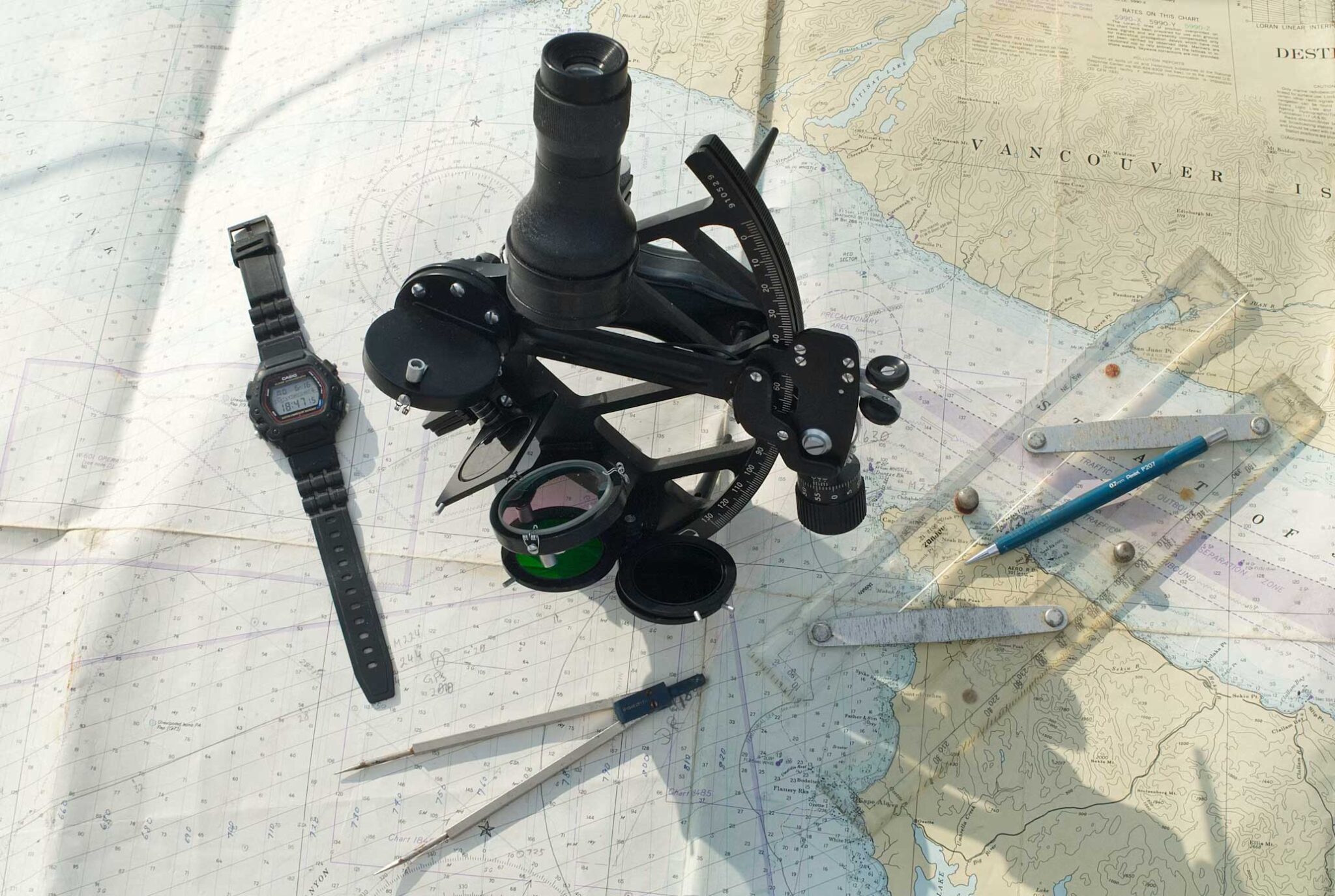
    A Golden Globe skipper cannot simply read latitude and longitude from a chartplotter. With sextant and paper charts, the sailor measures the altitude of the Sun or stars above the horizon. A chronometer, nautical almanac and sight-reduction tables turn that observation into a line of position. Dead reckoning fills the gaps between celestial fixes.

    Weather requires the same discipline. Personalised routing and services such as PredictWind or Windy are prohibited. Permitted sources include World Meteorological Organization high-seas text, HF radio weatherfax and national forecasts. The skipper still interprets the barometer, cloud structure, swell and wind shifts.

    Electric autopilots are banned. Competitors rely heavily on windvane self-steering, a mechanical system that responds to apparent wind direction and controls the helm. When it fails, the sailor must repair it, improvise or hand-steer.

    The boats are old-fashioned because reliability matters more than speed

    The rules restrict competitors to traditional production designs. The yachts must generally be fibre-reinforced plastic boats designed before 1988, built in series of at least 20, between 9.75 and 10.97 m (32 and 36 ft), with full-length keels, rudders attached to the keel’s trailing edge and a minimum design displacement of about 6,200 kg.

    These long-keel production yachts favour directional stability, simplicity and robust rudder protection. They are also heavy and much slower than modern offshore racers.

    The Rustler 36 has become emblematic. Jean-Luc Van Den Heede won the 2018 race in the Rustler 36 Matmut. That same yacht returns in 2026 under Ertan Beskardes as Miss Beagle. Damien Guillou’s Rustler 36 Solarem measures 10.77 m (35.3 ft) and displaces about 7,623 kg.

    Every boat still requires a major refit plan and surveys of the hull, deck, rig and critical systems. The rules leave seaworthiness with the entrant. The governing principle is simple: finish before trying to win.
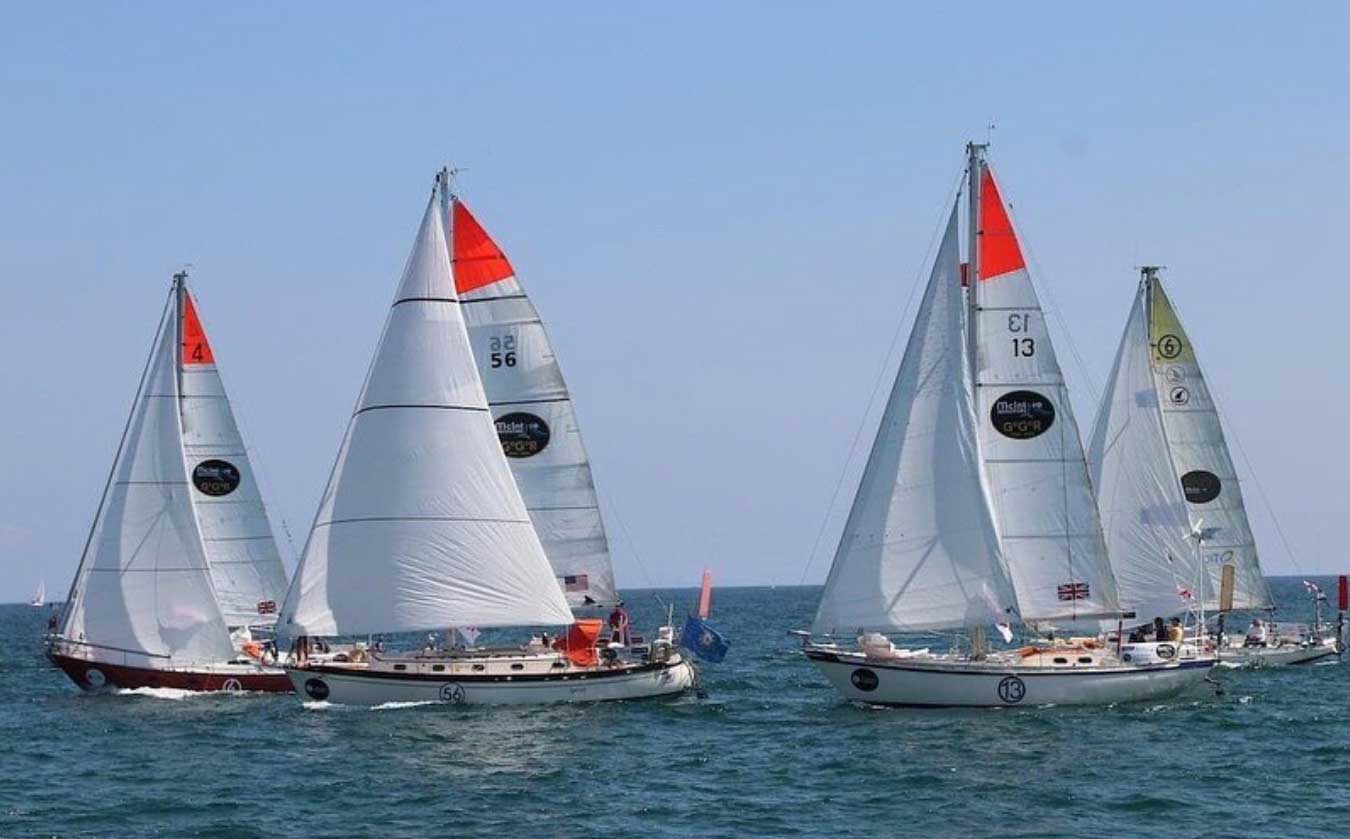
    golden globe race

    Crédit Photo: The Golden Globe Race

    The original race turned survival into sailing history

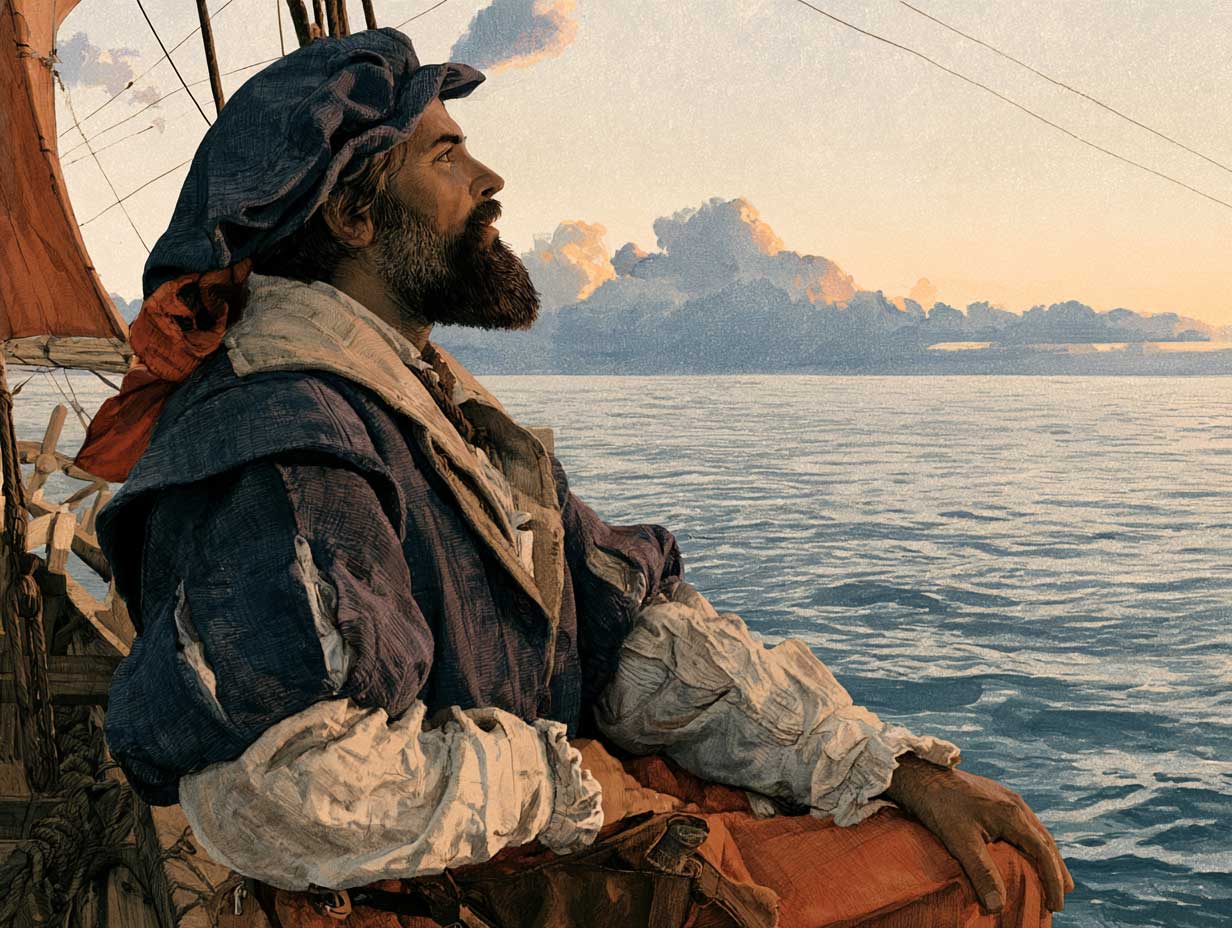
    The Sunday Times Golden Globe Race began in 1968. Nine men set out at different times. Only Robin Knox-Johnston finished, returning to Falmouth aboard the 9.75 m (32 ft) ketch Suhaili after 312 days and becoming the first person to sail solo and non-stop around the world.

    Bernard Moitessier rounded Cape Horn aboard Joshua while still capable of winning, then continued east and eventually sailed to Tahiti rather than return to Europe. Donald Crowhurst fabricated position reports while remaining in the Atlantic. His trimaran was later found abandoned after he disappeared at sea.

    The first edition established the race’s central truth. Speed only matters once survival, judgement and reliability are secured.

    The 2018 edition showed that the danger had not changed

    Eighteen sailors started the revived 2018 Golden Globe. Five finished.

    Jean-Luc Van Den Heede won in 211 days, 23 hours, 12 minutes and 19 seconds, a record that still stands. In the southern Indian Ocean, a storm with winds around 130 km/h (70 knots) and seas reported at 14 m dismasted Abhilash Tomy and Gregor McGuckin. Tomy suffered a severe spinal injury and required an international rescue.

    Susie Goodall was later pitchpoled and dismasted roughly 3,700 km (2,000 nautical miles) west of Cape Horn before being rescued by a bulk carrier.

    The 2022 edition produced a victory defined by seamanship

    Sixteen sailors started in 2022. Only three completed the race in the main classification.

    South African Kirsten Neuschäfer won aboard the Cape George 36 Minnehaha in an official corrected time of 233 days, 18 hours, 43 minutes and 47 seconds. She became the first woman to win a round-the-world race via the three great capes.

    Her defining moment came earlier. Finnish skipper Tapio Lehtinen’s Asteria flooded and sank rapidly in the southern Indian Ocean. Neuschäfer diverted, found his liferaft and took him aboard before transferring him to a merchant ship. Officials awarded her a 35-hour time credit.

    Abhilash Tomy finished second, four years after the spinal injury that ended his 2018 race. Michael Guggenberger finished third. Simon Curwen reached Les Sables-d’Olonne first physically, but a repair stop in Chile had moved him into the Chichester Class.

    The 2026 fleet combines professionals, veterans and outsiders

    As of late August 2026, 16 skippers remain. Damien Guillou is among the performance references. The former French Olympic-squad 49er sailor, Figaro competitor and IMOCA boat captain was near the front in 2022 before a windvane failure ended his race. He won the 2026 SITraN Challenge prologue.

    Ertan Beskardes returns for a third campaign in Van Den Heede’s former winning Rustler 36. Pat Lawless, a former Irish commercial fisherman, returns after self-steering failure forced him out in 2022. Guy deBoer is back after grounding Spirit on Fuerteventura in that same edition.

    The remaining fleet includes Guido Cantini, Andrea Lodolo, Matt Woodside, Isa Rosli, Henry Wootton, Gunnar Christensen, Louis Kerdelhué, Helga Marie “Mara” Løvenskiold Kveseth, Etienne Messikommer, Selim Yalcin, Pär Nyman and Daniel Pinsky.

    Qualification is demanding. The current Notice of Race requires at least 8,000 nautical miles of previous ocean sailing, another 2,000 nautical miles solo and, for most entrants, a further 4,000-nautical-mile solo non-stop qualifying voyage in the entered yacht.

    The real contest is between the sailor and uncertainty

    The Golden Globe remains compelling because it removes precision from a world accustomed to it. The public can follow satellite positions, and the 2026 edition adds a one-way Starlink-based Live Window on selected boats. The skipper receives no internet, weather data or navigational assistance through it. For the audience, it is 2026. For the sailor, much of the voyage still feels like 1968.

    From Privilège Marine’s home in Les Sables-d’Olonne, the lesson is familiar. A true bluewater yacht ultimately depends on one sailor, one boat and an ocean that does not adjust its standards.

    Comfort and electronics can transform life at sea. They remain tools. When systems fail, sound construction, preparation, judgement and self-reliance are what bring a boat home.
  • The Real Difference Between Yacht Customization and Commissioning

    The Real Difference Between Yacht Customization and Commissioning

    A yacht can be personalised during construction or modified after delivery. The difference affects cost, engineering freedom, safety and long-term ownership.

    A yacht can be made personal in two fundamentally different ways. One is to build it around its owner from the start. The other is to take a largely standard yacht and adapt it during commissioning or after delivery. The distinction reaches far beyond fabrics and furniture.

    On a production yacht, commissioning can add electronics, safety equipment, communications, watermakers, solar panels and other hardware. It can refine the boat. It cannot easily rewrite architecture that has already been engineered and built. Moving structural bulkheads, rerouting major systems or substantially changing weight distribution can create technical, regulatory and financial consequences.

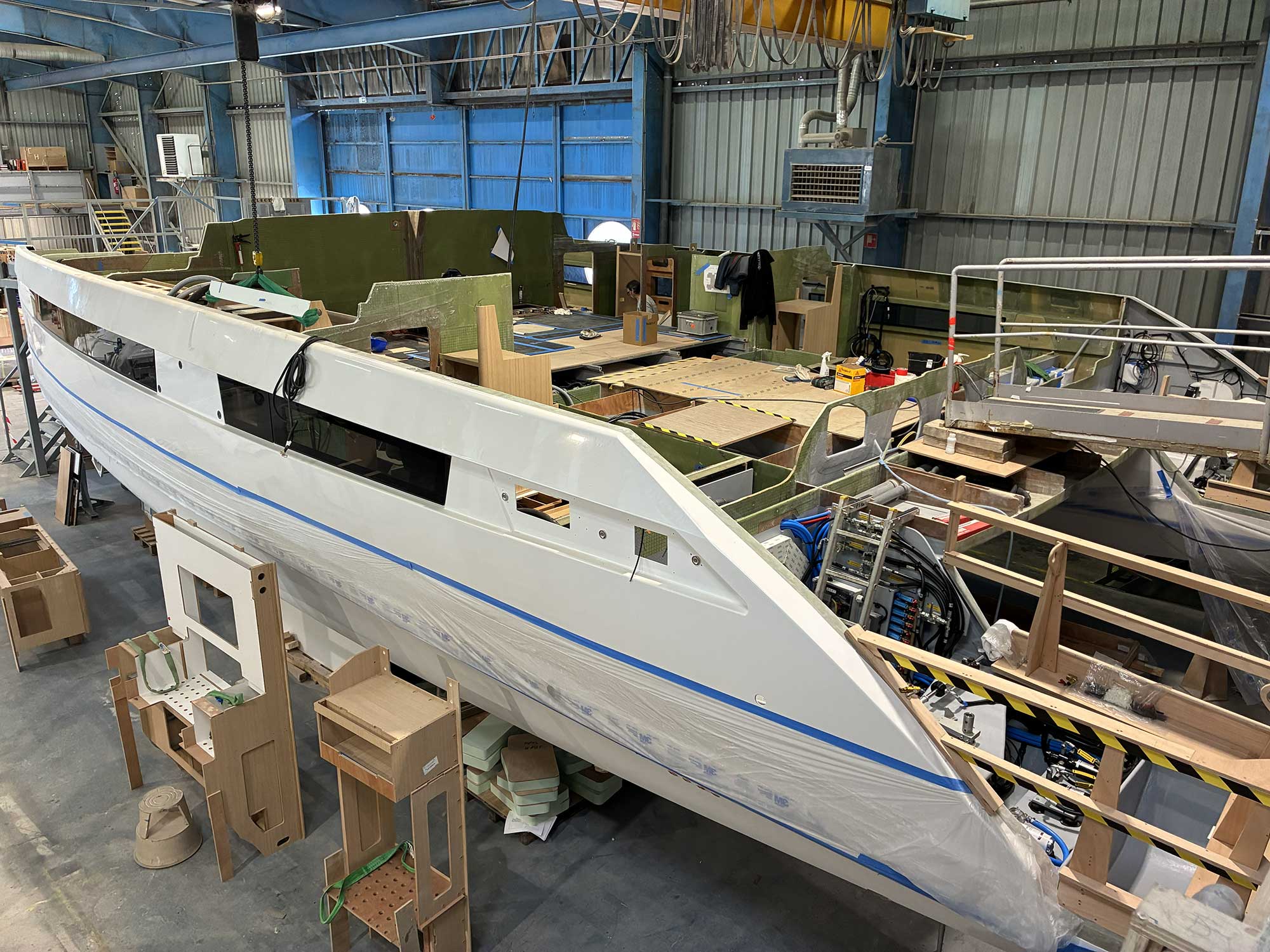
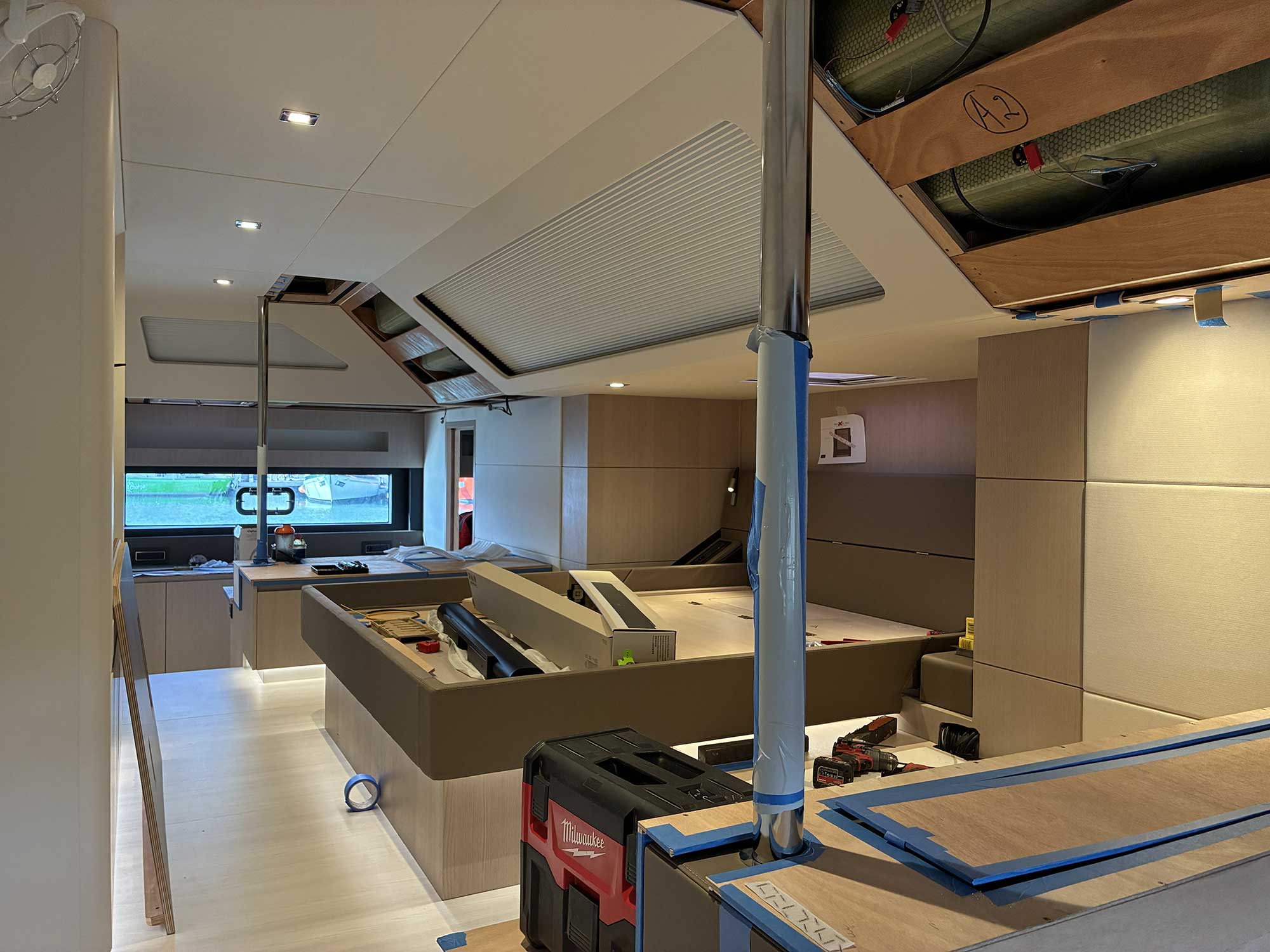
    At Privilège Marine, personalization is part of the construction process. Layout, equipment, electrical capacity, storage, materials and living spaces are considered together, before installation makes changes difficult. The yacht is therefore priced and engineered as the yacht the owner intends to use, rather than as a standard platform awaiting another layer of work after purchase.

    The difference begins long before the yacht reaches the water

    The word “customization” is used loosely in yachting. It can describe anything from selecting upholstery to redesigning a cabin. Those two decisions have almost nothing in common technically.

    A production yacht is normally built around a predetermined engineering package. Hull geometry, structural bulkheads, machinery spaces, cable routes, plumbing, tank locations and major furniture modules are largely established. Owners may choose from layouts, finishes and equipment packages. This makes production efficient and keeps delivery times predictable.

    New yacht commissioning begins at another stage. It prepares a completed or nearly completed yacht for service. It can include antifouling, mast stepping, sails, navigation equipment, safety equipment, communications systems, tender installation, sea trials and final technical checks.

    That process is necessary and valuable. It is simply different from designing a yacht around an owner.

    The distinction can be seen in published market pricing. A 2025 Leopard 46 price and option sheet listed a standard yacht at €699,000 before tax. The same document showed €17,439 for transport, documentation and commissioning, plus €8,381 for post-delivery commissioning. Selected options on the example yacht totalled €205,195.

    The lesson is broader than one model. A headline yacht price and a ready-to-sail yacht price can describe very different products.

    The structure determines what can still be changed

    Once a boat is built, physical reality becomes the main constraint.

    Moving a sofa is easy. Moving a load-bearing bulkhead is not. Installing a television is straightforward. Creating a cinema room with acoustic treatment, ventilation, dedicated electrical circuits and integrated cabinetry requires considerably more planning.

    The same applies to an office, gym, enlarged galley or serious long-range cruising storage.

    A sailing catamaran is especially sensitive because equipment affects weight distribution, trim and sailing performance. Batteries, generators, watermakers, refrigeration, tenders and additional furniture all have mass. Their location matters as much as their weight.

    Electrical changes also propagate through the yacht. A larger lithium battery bank may require different charging equipment, cable sections, protection devices, ventilation arrangements, monitoring and inverter capacity. More air conditioning can increase generator requirements. More refrigeration changes the daily energy budget.

    What appears to be one option can therefore become a chain of engineering decisions.

    The American Boat & Yacht Council currently maintains standards covering AC and DC electrical installations, lithium batteries, generators, fuel systems, water systems and numerous other onboard systems. In Europe, substantial post-construction modifications can also have conformity implications when they significantly affect structure, stability, propulsion or safety.

    Total personalization still has to respect physics.

    That is why the best moment to make a major change is usually before the relevant part of the yacht has been built.

    The Privilège approach integrates the owner into the engineering process

    Privilège Marine starts from a proven bluewater platform and develops the yacht around its owner’s programme.

    That distinction matters.

    The objective is not to create an experimental prototype every time. Offshore reliability depends on proven naval architecture, structural engineering and controlled construction. Personalization takes place within that disciplined technical framework.

    The Signature 600 illustrates the principle clearly. At 19.70 metres overall (63 feet), with a beam of 9.18 metres (30 feet), an empty displacement of approximately 29 tonnes and CE Category A certification for 12 people, it remains first and foremost an ocean-going sailing yacht.

    Yet its aft portside space is deliberately conceived as an open brief. It can become a cinema, office, gym, studio, substantial storage room or walk-in wardrobe.

    That is architectural customization, rather than decoration.

    If an owner chooses an office, the discussion begins before cabinetry is installed. Where should the desk face? How much natural light is required? Where should Starlink and network equipment sit? How many 230-volt outlets are needed? Is additional cooling required? Should acoustic insulation separate video calls from adjacent cabins?

    A gym produces another specification. Equipment weight matters. So do floor reinforcement, ventilation, clear headroom and safe stowage at sea.

    Long-distance storage produces another.

    The room may occupy the same physical volume, but the resulting yacht is different because its systems architecture has been developed around its use.

    The cost advantage comes from doing work once

    Retrofitting is frequently expensive for a simple reason: finished work has to be undone before new work can begin.

    Installing additional cabling during construction may involve placing cable runs before liners and furniture are fitted. Installing the same cable later can require dismantling panels, protecting completed interiors, creating access, routing around existing services and rebuilding everything afterwards.

    The owner is effectively paying for installation, removal and reinstallation.

    The economics become more severe when a change involves plumbing, cabinetry, ventilation ducts, structural reinforcement or large equipment that cannot pass through existing access points.

    There is also an opportunity cost. A newly delivered yacht that immediately spends several weeks undergoing modifications is an asset the owner has bought but cannot fully use.

    At Privilège, the agreed personalization is incorporated into the specification and into the configured price during the build process. This gives the owner visibility over what the yacht being discussed will actually cost.

    That does not mean an owner can change the specification indefinitely without financial consequences. A major request introduced after the design or production freeze may require additional engineering and a change order. Serious yachtbuilding requires that discipline.

    The important distinction is that personalization agreed during the project is not treated as an afterthought added to an artificially low headline price.

    The real value is a yacht that works as one system

    A bespoke sailing catamaran should not feel like a standard boat carrying a collection of expensive additions.

    Every major system interacts with another.

    A larger tender influences lifting equipment and weight aft. More solar capacity affects deck geometry and charging architecture. Greater refrigeration increases electrical consumption. A watermaker requires power, plumbing, filtration and maintenance access. A professional office depends on communications, power, cooling, seating and acoustic privacy.

    For a bluewater cruising yacht, these interactions matter thousands of miles from a shipyard.

    Privilège has built ocean-going catamarans in Les Sables-d’Olonne since 1985. Our yachts are intended to cross oceans safely, but they are also designed as homes in which owners may spend months at a time.

    Those two functions belong together.

    A floating home that cannot tolerate heavy weather has failed as a yacht. An exceptionally capable yacht that does not fit its owner’s life has failed as a home.

    The most meaningful form of yacht customization therefore happens before the yacht is finished. It brings the naval architect, designers, electricians, carpenters, systems engineers and owner into the same project.

    Commissioning can make a standard yacht more complete. Integrated personalization can make the yacht itself different.

    For an owner intending to cross oceans and live aboard for years, that distinction may ultimately matter far more than the length of the options list.

  • Choosing the Right Flag for Your Yacht: The Owner’s Checklist

    Choosing the Right Flag for Your Yacht: The Owner’s Checklist

    A yacht’s flag shapes registration, tax exposure, cruising rights, insurance and charter rules. Here is what owners should check before choosing one.

    Choosing a yacht flag is a legal and operational decision, not a matter of aesthetics. The flag gives the yacht its nationality and determines which administration regulates its registration, safety requirements, surveys and, in many cases, crewing rules. It can also influence financing, insurance, charter activity and access to certain administrative privileges.

    Tax requires a separate analysis. The flag does not determine VAT by itself. In the European Union, a yacht can have Union status while flying a non-EU flag. Conversely, a non-EU yacht may operate under Temporary Admission for up to 18 months if the relevant conditions are met. Owner residence, place of use and ownership structure are often more important than the flag.

    Individual and corporate owners also face different questions. A company can simplify financing or succession, but it introduces accounting, beneficial-ownership and tax issues. The correct flag is therefore the one that fits the yacht’s complete ownership and cruising programme.

    The first question concerns how the yacht will actually be used

    At Privilège Marine, we build bluewater catamarans to cross oceans and to serve as genuine homes for their owners. That makes flag selection particularly important.

    A yacht that spends its life between France, Italy and Greece presents a different legal profile from one crossing between Europe, the Caribbean and the United States. A privately used yacht also requires a different structure from one offered occasionally for charter.

    Before choosing a yacht flag, define four things: the owner, the cruising area, whether the yacht will generate revenue, and where it will normally be based.

    Those answers should drive the registration decision.

    The flag gives the yacht its legal nationality

    Under the United Nations Convention on the Law of the Sea, ships have the nationality of the state whose flag they are entitled to fly. The flag state exercises jurisdiction over administrative, technical and social matters concerning the vessel.

    This has practical consequences.

    The flag administration can determine registration requirements, mandatory equipment, survey obligations, radio documentation, skipper qualifications and other operating rules.

    Eligibility also differs significantly between registries.

    France generally requires at least 50 per cent qualifying EU or EEA ownership, whether directly or through qualifying companies, together with other registration requirements. Malta permits vessels to be owned by qualifying corporate bodies irrespective of nationality, subject in some cases to the appointment of a Maltese resident agent. The Marshall Islands requires yacht ownership through an eligible Marshall Islands entity or a qualified foreign maritime entity.

    The first item on any yacht registration checklist is therefore simple: can the proposed owner legally use the flag?

    The tax question begins with residence rather than the flag

    This is where yacht owners make some of their most expensive mistakes.

    Putting a yacht under a foreign flag does not automatically move it outside the tax system of the country where the owner lives or where the boat is used.

    France provides a clear example. A French resident who owns or uses a qualifying foreign-flagged recreational vessel can remain liable for the French annual tax on personal maritime craft, known as TAEMUP.

    A foreign flag therefore does not make a French-resident owner invisible to French taxation.

    Tax residence and flag state are different concepts.

    The same principle should guide wealth taxes, benefit-in-kind rules, personal-use taxation, inheritance planning and local cruising taxes. Each must be checked separately.

    The EU VAT rules deserve particular attention

    The European Commission issued updated guidance on pleasure craft in May 2026. Its position is particularly useful because it corrects a common misconception.

    The nationality of the owner and the yacht’s flag generally do not determine whether a vessel has Union customs status or whether VAT has been paid.

    A Cayman-, British- or Marshall Islands-flagged yacht can therefore have legitimate EU Union status.

    A non-EU flag does not mean “VAT unpaid”.

    The opposite is equally important.

    A yacht owned by a person established outside the EU can, subject to the conditions, enter the Union under Temporary Admission without paying import VAT and customs duty. For a privately used sea-going yacht, the normal period is 18 months.

    For full relief under the standard private-yacht regime, the European Commission states that the boat must be registered outside the EU and owned by a person established outside the EU.

    This is one of the situations where flag choice genuinely affects the VAT structure.

    An EU resident should therefore be particularly careful. EU guidance states that a boat being used in the Union by an EU resident must usually have Union status.

    The ownership structure changes the calculation

    The individual owner should start with personal residence

    Direct private ownership is often the simplest structure.

    The owner should check nationality and residency eligibility for the chosen flag, personal taxation in the country of residence, VAT or customs status, inheritance consequences and local taxes where the yacht will be kept.

    Succession should not be ignored. A yacht is a valuable movable asset. Different jurisdictions can treat ownership transfer after death very differently.

    The owner should also ask a practical question: will changing residence in five years make the chosen registration difficult to maintain?

    A bluewater yacht can remain in service for decades. The ownership structure should survive changes in lifestyle.

    The company-owned yacht creates another legal layer

    Corporate ownership can make sense. It can facilitate financing, joint ownership, succession planning and sometimes charter operations.

    It is not automatically tax-efficient.

    A company does not make private use commercial use.

    Where a company seeks VAT recovery, tax authorities can examine whether it is carrying on a genuine economic activity. Private use by shareholders or directors may create VAT adjustments, taxable benefits or other consequences depending on the jurisdiction.

    The owner must therefore identify the company’s jurisdiction, tax residence, beneficial owner, accounting obligations, VAT position and actual business activity.

    Registries increasingly conduct deeper ownership checks. In April 2026, the International Maritime Organization approved new international guidelines aimed at improving due diligence, ownership verification and transparency in ship registration.

    Opaque structures are becoming less attractive, not more.

    yacht flag

    The cruising programme can eliminate otherwise attractive flags

    Most cruising rights depend primarily on coastal-state immigration, customs and navigation laws. The flag can nevertheless create practical advantages or restrictions.

    The United States, for example, operates a cruising-licence regime for eligible foreign pleasure vessels based partly on reciprocal arrangements. A cruising licence can significantly simplify repeated movements between US ports.

    An owner planning several seasons in American waters should check eligibility before selecting a registry.

    The same logic applies elsewhere. Ask where the yacht will spend most of its time, whether local cruising permits exist, how often customs clearance is required, and whether a particular flag receives specific treatment.

    Choose the flag for the itinerary you will actually sail.

    The private-versus-commercial decision can change everything

    An owner who says, “I may charter the boat occasionally,” has already introduced a major registration issue.

    Private yacht registration and commercial yacht registration are not interchangeable.

    Commercial operation can introduce safety coding, inspections, crew qualifications, employment requirements, insurance conditions and local charter licensing.

    The differences between flags can be substantial.

    Malta’s commercial yacht framework covers yachts from 15 metres (49 ft). Yachts below 24 metres (79 ft) operate under its Small Commercial Yacht Code.

    The Marshall Islands standard Commercial Yacht category, by contrast, applies to yachts of 24 metres and above.

    For an owner considering a 15 to 21 metre (50 to 70 ft) bluewater catamaran, this distinction is fundamental.

    A flag that works perfectly for private cruising may therefore become unsuitable when commercial charter is added later.

    For larger commercial yachts, the Maritime Labour Convention and flag-state crewing requirements can add another layer of obligations.

    The quality of the registry matters beyond paperwork

    The cheapest registry is rarely the smartest criterion.

    Owners should examine the reputation of the administration, availability of technical support, survey network, responsiveness during emergencies, mortgage registration system and acceptance by banks and insurers.

    Port State Control data can provide one indicator of wider flag performance. In the Paris MoU’s 2025 White List, the Cayman Islands ranked first, France seventh and Luxembourg tenth.

    Those rankings primarily concern vessels subject to Port State Control and should not be treated as a league table for private yachts. They nevertheless illustrate how flag administrations develop reputations within the maritime industry.

    A serious bank financing a yacht may also want a registry where its mortgage can be properly recorded and enforced. The UK Ship Register, for example, explicitly identifies the ability to register a marine mortgage as an advantage of Part I registration.

    Ask the lender before selecting the flag.

    The same applies to the insurer.

    The technical rules follow the vessel after registration

    Registration does not only produce a certificate and a flag for the stern.

    Flag administrations may require surveys, tonnage measurement, safety equipment, radio licences, MMSI registration and documentation covering ownership and previous registration.

    For yachts built in Europe, another distinction matters.

    CE conformity under the EU Recreational Craft Directive concerns the design and manufacture of recreational craft from 2.5 to 24 metres (8.2 to 79 ft). It is separate from vessel registration.

    CE certification and flag registration are not the same thing.

    An EU-built bluewater catamaran can therefore be CE-certified while being registered under a non-EU flag. Both sets of rules must be respected where applicable.

    The owner’s flag-selection checklist should come before delivery

    Before deciding on the best flag for a yacht, the owner should be able to answer every question below:

    • Ownership eligibility: Can an individual owner qualify, or is a company required?
    • Owner residence: Where is the beneficial owner tax-resident?
    • VAT and customs: Is the yacht VAT-paid, Union status, exported or using Temporary Admission?
    • Cruising area: Which countries will the yacht realistically visit during the next five years?
    • Home base: Where will it spend most of the year?
    • Private or commercial use: Will any charter revenue be generated?
    • Local taxation: Are annual yacht taxes, cruising taxes or resident-owner taxes triggered?
    • Insurance: Has the insurer confirmed acceptance of the proposed flag and cruising area?
    • Financing: Can the lender register an acceptable marine mortgage?
    • Administration: What are the survey, radio, crewing, renewal and reporting obligations?

    One unanswered question can change the entire structure.

    The right flag should survive the complete ownership cycle

    A yacht flag should work on the day of delivery, during an Atlantic crossing, after several years in the Mediterranean, during a future resale and, if required, through a change in ownership structure.

    That is the real test.

    At Privilège Marine, our owners buy boats capable of travelling far beyond their home waters. The administrative structure deserves the same long-term thinking as the yacht itself.

    There is no universal “best yacht flag”. There is only a flag that fits a particular owner, tax residence, cruising programme, financing structure and use of the yacht.

    The correct flag is a consequence of the plan.

    Choosing it before the plan is understood is working backwards.

  • Performance or Comfort? The Bluewater Catamaran’s Third Way

    Performance or Comfort? The Bluewater Catamaran’s Third Way

    Performance catamarans chase speed. Cruising cats pursue comfort. A different bluewater philosophy shows why serious sailors increasingly expect both.

    Bluewater catamarans have traditionally forced owners towards one of two philosophies. Performance-oriented yachts reduce weight, carry powerful sail plans and use narrow hulls to generate speed. They can be thrilling, yet the same characteristics can demand greater attention from the crew, create higher loads and make exposed watches exhausting offshore. At the opposite end of the spectrum, high-volume cruising catamarans prioritise accommodation, payload and ease of use. Their additional weight and fuller hulls can compromise acceleration and sailing ability, particularly in light conditions.

    There is a third approach. Sustainable performance treats speed, seaworthiness and human endurance as parts of the same equation. At Privilège Marine, this means designing an ocean-going catamaran that sails efficiently while protecting the people aboard. A protected helm, balanced sail plan, secure circulation, structural strength and genuine residential comfort all contribute to the same objective: covering serious distances safely and arriving with energy left for the destination.

    The traditional choice divides speed from comfort

    For decades, sailing yacht design has been governed by an uncomfortable truth: every design decision has consequences.

    A performance cruising catamaran wants low displacement, narrow hulls, a generous sail plan and efficient appendages. Carbon construction, daggerboards and tall rigs can extract remarkable speed from relatively little wind.

    The current Comar Yachts C-Cat 48 illustrates the philosophy. It has a published light displacement of just 9.7 tonnes and carries 180 square metres (1,938 sq ft) of sail. Carbon daggerboards extend its draft from 0.90 metres (3 ft) to 2.95 metres (9.7 ft), and Comar says the yacht can maintain double-digit speeds. Significantly, the latest C-Cat 48 also incorporates an interior helm station for difficult weather — evidence that performance builders themselves recognise the importance of crew protection offshore.

    At the more extreme end, the Gunboat 68 uses all-carbon construction, daggerboards and a light displacement of about 17.8 tonnes. Gunboat has reported sea-trial speeds above 21 knots on one 68 and 15 to 16 knots upwind in 12 to 18 knots of breeze. These figures demonstrate what lightweight multihulls can achieve.

    Speed, however, is only one measure of a bluewater yacht.

    The fast catamaran asks more from its crew

    High performance changes the environment on board.

    As a yacht accelerates, the apparent wind experienced by the crew changes in both angle and intensity according to the yacht’s course. On a reach, a fast catamaran can bring the apparent wind significantly forward. At an exposed helm, spray, cold air and rain arrive with considerably greater force.

    For an afternoon sail, this can be exhilarating. During a three-hour night watch in poor weather, the calculation changes.

    Some performance catamarans use exposed aft steering positions because they give the helmsman direct visibility of the sails and an immediate connection with the boat. Others provide dual positions or an internal helm. HH Catamarans, for example, offers its HH52 with either aft swing helms or a forward cockpit and central helm. Gunboat installations have combined internal and external steering positions. These solutions reveal the fundamental design problem: the place that feels superb when actively sailing in good conditions is not always the place where an owner wants to spend the middle of a wet Atlantic night.

    The important issue is fatigue management.

    Fatigue accumulates through exposure, noise, movement, poor sleep and repeated physical effort. A maritime field study of 198 seafarers found very short sleep periods and classified 22.2 per cent of its pupillometric assessments in a range described as unfit for duty. A private sailing yacht is clearly a different environment from a commercial ship, but the human-factors principle is universal: tired watchkeepers make worse decisions.

    On an ocean passage, protecting the skipper is therefore a safety issue as much as a comfort issue.

    The sea punishes badly managed speed

    There is another consequence of performance: motion.

    A catamaran does not heel like a monohull, yet it still pitches, accelerates vertically and interacts violently with short seas. When the water rises into the tunnel between the hulls and strikes the underside of the bridgedeck, the result is wet-deck slamming.

    Slamming should not be simplistically associated with fast boats. Hull geometry, loading, bridgedeck clearance, wave direction, speed and sea state all matter. A heavy cruising catamaran with poor clearance can slam badly. A lightweight performance catamaran with carefully designed clearance can behave very well.

    The physics, however, are uncompromising. Experimental work published in Ocean Engineering found a strong relationship between relative impact velocity and wet-deck slam force. Other research has shown that increasing wet-deck height can reduce slamming loads in certain sea states. Bridgedeck geometry matters enormously.

    This is why chasing the highest possible number on the speed display misses the point offshore. A competent skipper will reduce sail when the sea state demands it. The fastest theoretical boat frequently spends an ocean passage operating well below its potential because crew comfort, structural loads and safety become the governing factors.

    The meaningful number is sustainable passage speed.

    The comfortable catamaran faces the opposite problem

    The other end of the market presents a different compromise.

    Large saloons, multiple cabins, enormous flybridges, domestic equipment, oversized refrigerators, air-conditioning systems, water toys and generous tankage all add weight. Wider hull sections create more accommodation but also more wetted surface and hydrodynamic resistance.

    Payload matters particularly on a cruising catamaran. Owners rarely sail a long-distance yacht at the lightship displacement printed in the brochure. Food, water, fuel, tender, outboard engine, tools, spare parts, batteries, personal belongings and cruising equipment gradually change the boat.

    A design centred mainly on interior volume can therefore become reluctant in light air. The engines start earlier. Sailing becomes something done when conditions are convenient rather than the yacht’s natural mode of transport.

    There is nothing inherently wrong with that philosophy. It suits owners whose programme consists mainly of coastal cruising, charter or short passages between marinas.

    It is a weaker answer for an owner who genuinely wants to cross oceans.

    The third approach treats performance as endurance

    At Privilège Marine, our position is deliberately different.

    We build bluewater catamarans first. They must be capable of spending weeks at sea. They must also function as real homes once they arrive.

    That requirement changes what performance means.

    A Privilège is not designed around a record-breaking top-speed figure. It is designed to maintain useful sailing performance while carrying the systems, stores and living spaces required for serious cruising.

    The Signature 510 illustrates that balance. It measures 15.24 metres (50 ft) overall, has a light displacement of 17 tonnes and carries 165 square metres (1,776 sq ft) of working sail, including an 88-square-metre (947 sq ft) mainsail, a 57-square-metre (613 sq ft) genoa and a 20-square-metre (215 sq ft) staysail. It is certified CE Category A for 12 people.

    Under European rules, Category A means a recreational craft is designed for conditions where wind may exceed Beaufort Force 8 and significant wave height may exceed 4 metres (13 ft), excluding abnormal conditions such as hurricanes, violent storms and rogue waves. Certification does not replace seamanship, but it establishes the seriousness of the design brief.

    The larger Signature 600 carries 259 square metres (2,788 sq ft) of sail and has a light displacement of 29 tonnes. Its 1,000 litres (264 US gal) of fuel and 900 litres (238 US gal) of fresh water illustrate another part of the equation: a genuine long-distance yacht must carry useful payload without turning itself into a floating apartment that has forgotten how to sail.

    The protected helm changes an ocean passage

    One of the clearest expressions of this philosophy is the helm station.

    On the Signature 510, the helm is elevated enough to provide strong visibility yet remains connected to the cockpit. It is protected by a windscreen and hardtop. The principal sailing functions can be concentrated around the steering position. The skipper remains close to the people aboard rather than isolated on a flybridge.

    This becomes important at 0300.

    Rain should not become an endurance test. Spray should not force the watchkeeper to spend hours soaked in foul-weather gear when yacht architecture can provide protection. Reefing should not require unnecessary movement around the deck when conditions deteriorate.

    Protection preserves concentration.

    It also changes how an owner uses the boat. A couple can consider longer passages with greater confidence. Watch changes become simpler. Sail reduction can happen earlier because controls are accessible. The skipper can remain alert rather than spending energy simply resisting the weather.

    That is practical luxury.

    The floating home still has to cross an ocean

    Comfort begins below deck as well.

    A genuinely comfortable offshore yacht needs secure circulation, usable berths, storage, ventilation, manageable noise levels and spaces positioned with motion in mind. A huge cabin has little value if the crew cannot sleep in it at sea.

    Privilège’s characteristic full-beam owner’s suite places the owner’s accommodation centrally in the nacelle. The broader philosophy extends through the boat: owners need enough storage for extended cruising, real tank capacity, protected living areas and layouts designed around months aboard rather than a weekend demonstration.

    The Signature 650 carries 2,000 litres (528 US gal) of fuel and 1,300 litres (343 US gal) of fresh water in the yard’s current specification. Its working sail area is 264 square metres (2,842 sq ft). It combines those cruising capacities with Category A certification and a helm designed around visibility and protection.

    This is where performance with comfort becomes more than a slogan.

    The yacht has to sail well with the owner’s life aboard.

    The best passage leaves energy for the destination

    The sailing industry sometimes treats performance as a race between numbers.

    For a bluewater owner, the more useful question is different: how much energy does the yacht require from its crew to cover 1,500 or 3,000 nautical miles?

    Peak speed matters. Light-air efficiency matters. Ability to point matters. So do protection, sleep, movement, noise, sail handling and confidence in the structure.

    A yacht capable of extraordinary speed can be the right choice for an owner who enjoys an active, technically demanding sailing experience. A spacious cruising platform can be ideal for predominantly coastal use.

    Privilège occupies the territory between those extremes deliberately. The objective is serenity at speed, rather than speed at any cost.

    A real bluewater catamaran should make distance easier. It should allow its owners to cross an ocean safely, sail enough to enjoy the journey, live properly while doing it and step ashore ready to explore.

    That may be the most relevant definition of performance in long-distance cruising: not simply arriving first, but arriving rested.

  • Sailing Croatia’s Dalmatian Coast and Kornati by Catamaran

    Sailing Croatia’s Dalmatian Coast and Kornati by Catamaran

    A practical owner’s guide to sailing Hvar, Vis, Korčula, Mljet and the Kornati, with the finest anchorages, restaurants and experiences.

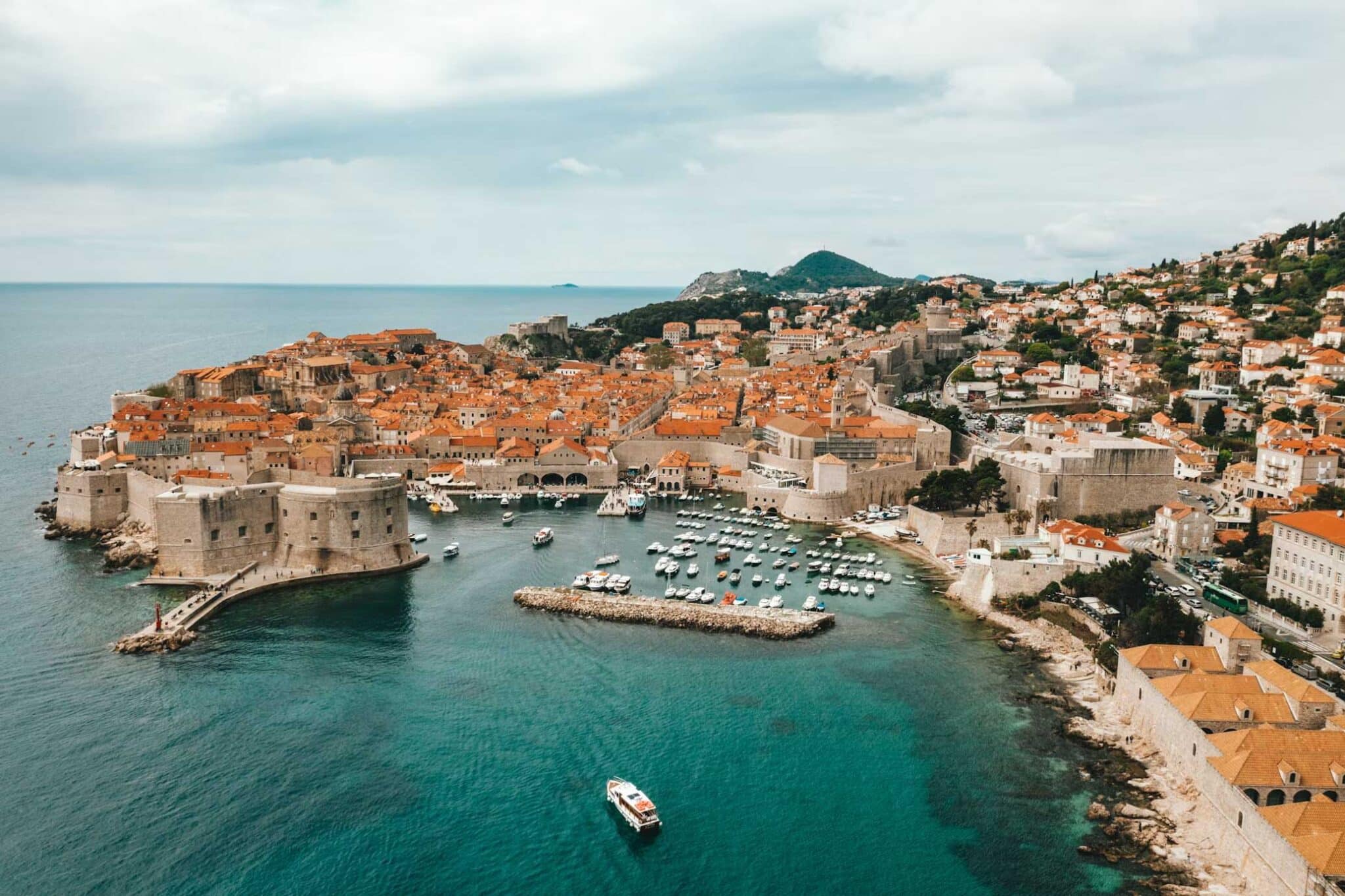
    Croatia’s Dalmatian Coast gives a large cruising catamaran an unusual concentration of sailing, culture, food and natural beauty. The classic route from Split through Hvar, Vis, Korčula and Mljet to Dubrovnik moves between historic ports, protected coves and sophisticated restaurants within relatively short passages. Farther north, the Kornati offer the counterpoint: 89 islands, islets and reefs scattered through a stark national park where the yacht itself becomes the destination.

    For a 15.2 to 21.3 metre (50 to 70 ft) catamaran, the main advantage is freedom at anchor; the principal constraint is beam when entering marinas. The best journey therefore alternates between berths, buoy fields and nights away from port.

    Hvar brings energy. Vis has character. Korčula brings wine. Mljet slows everything down. Dubrovnik supplies the finale. The Kornati deliver silence. Together, they make Dalmatia one of Europe’s most complete cruising grounds.

    The Dalmatian Coast is made for a large cruising catamaran

    A 50 to 70 ft catamaran fits the geography of Dalmatia remarkably well. The islands sit close enough together for sailing to remain part of the day rather than consume it. Deeply indented coastlines create route choices and shelter. Many of the finest places are better experienced from the water than from a hotel.

    This suits the way we design yachts at Privilège Marine. A Signature 510 has a draft of 1.57 metres (5.15 ft) and a beam of 7.98 metres (26 ft). The Signature 650 draws 2.04 metres (6.7 ft) and spans 9.21 metres (30 ft). The relatively shallow draft opens opportunities at anchor. The beam demands planning in port. A berth capable of receiving a 20-metre monohull does not automatically work for a large multihull.

    Croatia has the infrastructure to support serious cruising. In 2025, its coast counted 216 nautical ports, including 86 marinas and 18,850 moorings. Only 1,045 moorings were designed for vessels over 20 metres, however, while average occupancy of sea moorings reached 78 per cent. Large-catamaran owners should reserve the important nights and retain flexibility elsewhere.

    The southbound route from Split deserves at least a week

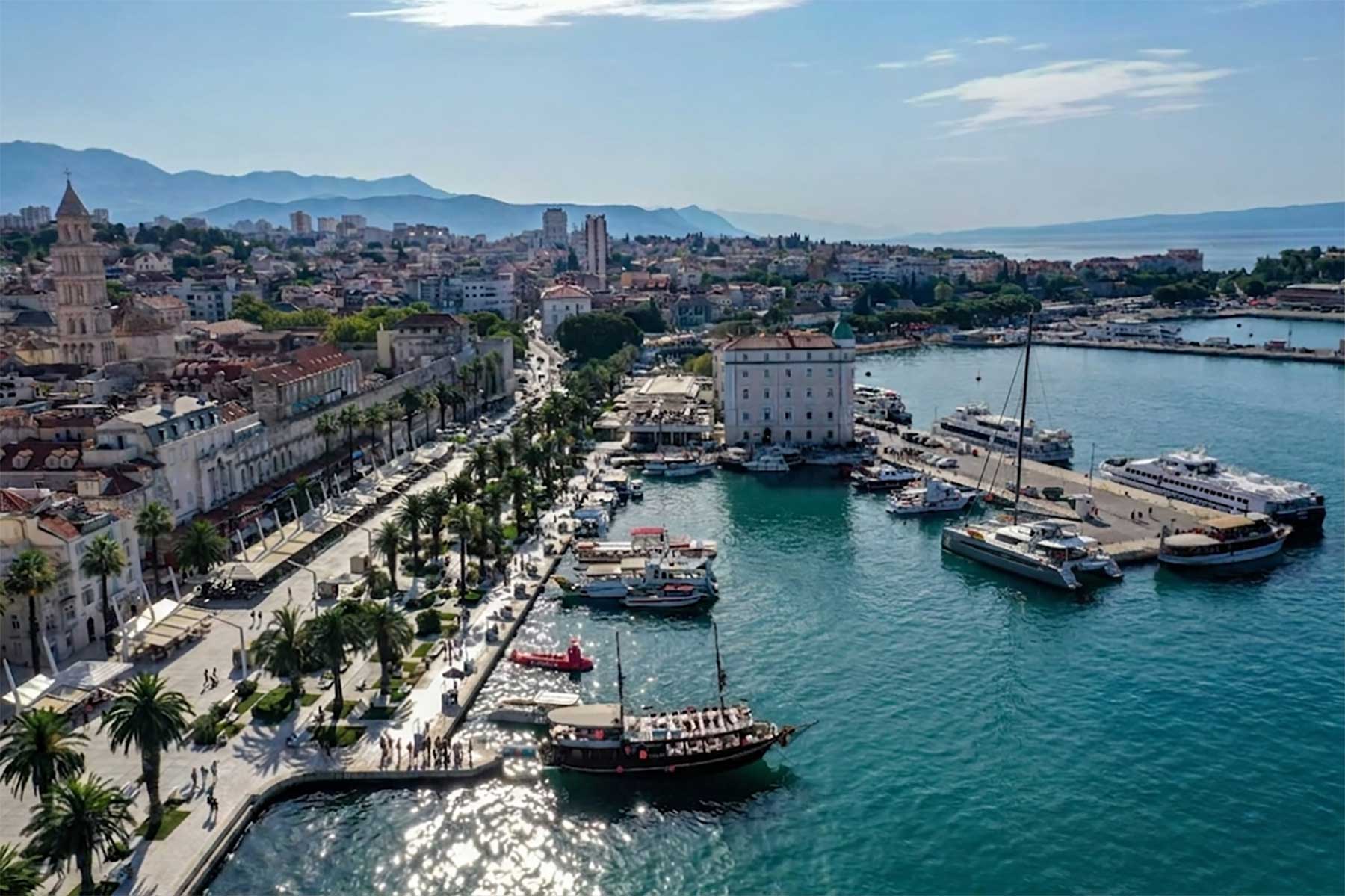
    Start in Split. Spend an evening inside Diocletian’s Palace before casting off. The Roman complex dates from around AD 300 and has been UNESCO-listed since 1979. It establishes the pattern for the entire cruise: major European history sits directly beside the quay.

    The Hvar and Pakleni Islands combine glamour with real cruising

    Hvar works particularly well from a yacht because you can enjoy the town and leave when you choose. Walk to the fortress, have dinner on the waterfront, then move among the Pakleni Islands for swimming and quieter nights.

    Vinogradišće Bay on Sveti Klement is an essential stop. Laganini Lounge Bar & Fish House has been operating in Palmižana for more than 50 years. It is the place for a long lunch built around Adriatic fish, scampi and tuna, followed by cocktails close to the water.

    Nearby, Carpe Diem Beach Hvar delivers the more energetic side of the island, with cabanas, a restaurant, music and after-beach drinks. Its late-night programme has faced local restrictions, so owners should check the current schedule rather than build an evening around assumed opening hours.

    Back in Hvar Town, Gariful remains one of the island’s best-known waterfront institutions for fish and seafood.

    Large-catamaran owners should note one important detail. ACI Marina Palmižana publishes a maximum daily vessel length of 15 metres. That is below the length of most 58 to 70 ft catamarans and even marginal for a genuine 50-footer. A marina night there should therefore be confirmed in advance rather than assumed.

    Hvar also deserves time ashore. The UNESCO-listed Stari Grad Plain still follows agricultural divisions laid out by Greek settlers in the fourth century BC. Grapes and olives have been cultivated across the same landscape for roughly 24 centuries.

    The island of Vis offers the route’s strongest personality

    Vis feels more remote. Its coastline is dramatic and development remains relatively restrained.

    Visit Stiniva with the tender rather than trying to manoeuvre a large catamaran through its narrow and often busy entrance. The Blue Cave on Biševo also belongs on an early-morning programme, subject to sea conditions and local access arrangements.

    For dinner, Pojoda is one of the classic addresses for Dalmatian fish cooking. For sunset drinks and a more polished evening, head to Fort George, the nineteenth-century fort overlooking Vis.

    A day ashore can combine the island’s former military tunnels with a winery visit. Vis produces distinctive local whites alongside Plavac Mali reds. This is one island where leaving the waterfront for several hours pays off.

    The Korčula and Mljet leg changes the rhythm

    Korčula brings another dimension to a Dalmatian sailing itinerary. The old town is compact, elegant and easy to explore from the harbour.

    ACI Marina Korčula has 166 berths and can accommodate daily vessels up to 50 metres. Length therefore becomes less problematic here, although a large catamaran should still reserve according to beam.

    Wine is central to the island. Pošip and Grk are the varieties to know. Pošip is associated particularly with Čara and Smokvica, while Grk comes from vineyards around Lumbarda. Both are indigenous white grapes and pair naturally with Adriatic fish and shellfish.

    For a destination dinner, LD Restaurant holds a Michelin star and combines Dalmatian produce with modern technique.

    For something more rooted in the island, drive inland to Konoba Mate in Pupnat. The family-run restaurant works with its own vegetables, cheeses, olive oil and local produce and has earned Michelin Bib Gourmand recognition.

    Continue south to Mljet. Use Pomena or Polače as a base, then spend several hours walking, cycling, swimming or kayaking around Veliko Jezero and Malo Jezero.

    This is precisely where an owner’s catamaran changes the experience. You can remain surrounded by nature without sacrificing the comfort of home.

    The Dubrovnik finale should begin at Šipan

    Keep one long lunch before Dubrovnik for Bowa Restaurant on Šipan. Its secluded bay, Adriatic fish, Mali Ston oysters, garden vegetables and island olive oil make it one of those restaurants that makes considerably more sense when approached from the sea.

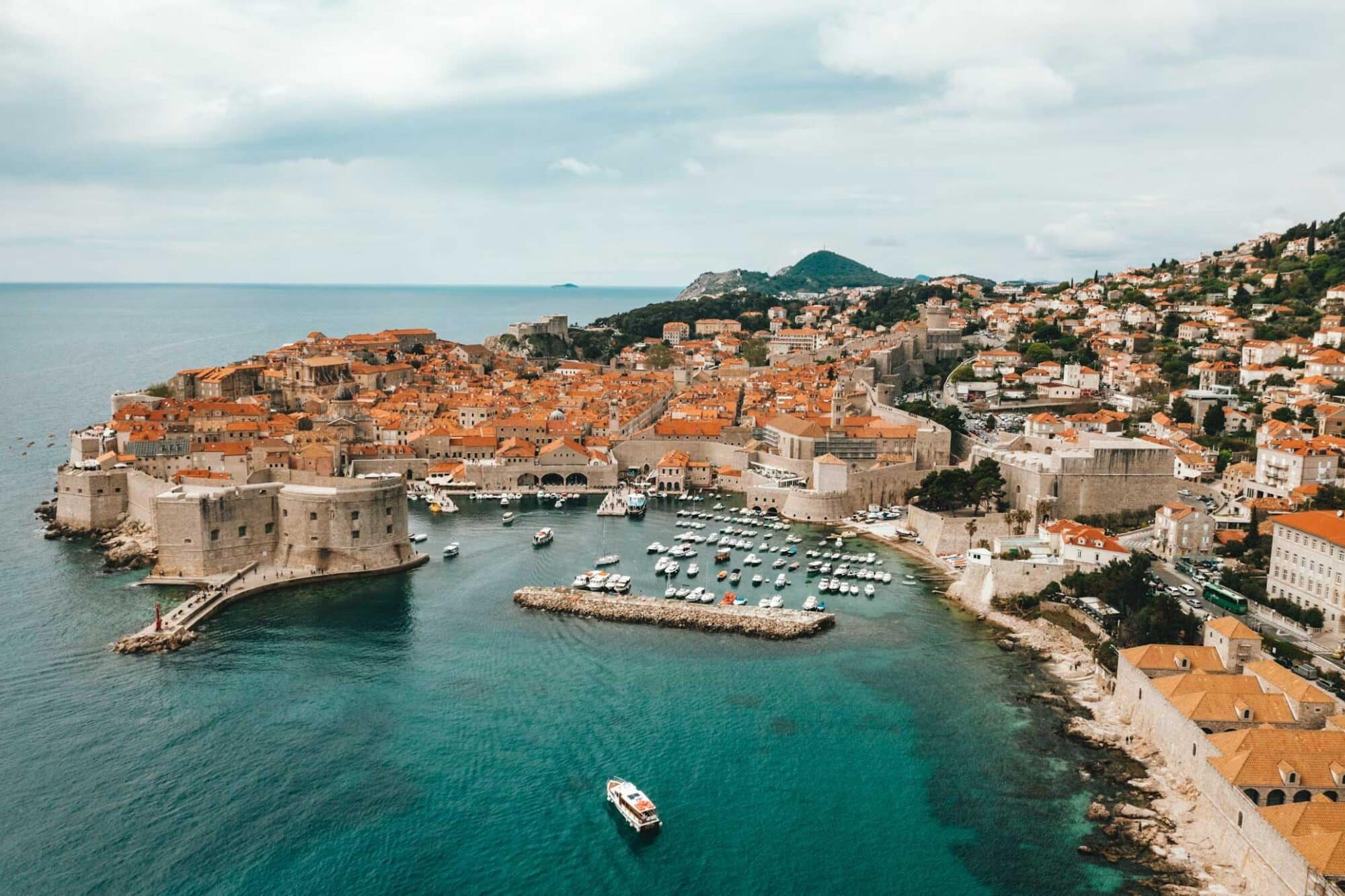
    Dubrovnik itself deserves a proper night ashore. Its Old City has been a UNESCO World Heritage site since 1979 and reflects centuries of maritime wealth, trade and political independence.

    For dinner, Restaurant 360 is the serious choice. Michelin awards it one star. The restaurant occupies part of the historic walls and maintains a wine cellar of roughly 450 labels.

    ACI Marina Dubrovnik has 371 berths and can accommodate daily yachts up to 45 metres, making it a useful service, provisioning and turnaround point for a large catamaran.

    The Kornati offer an entirely different Croatia

    The Kornati deserve their own cruise rather than a rushed extension of the Dubrovnik route. Approach them from Šibenik, Murter or Zadar.

    Kornati National Park covers 217 square kilometres. Its 89 islands, islets and reefs create 238 kilometres of coastline. There are few distractions here. Pale limestone, dry-stone walls and transparent water dominate the landscape.

    Sail between Kornat, Levrnaka, Lavsa and Piškera. Take the tender towards Lojena beach. Swim and snorkel. Organised diving is regulated, while anchoring and overnight stays are permitted only in designated locations within the park.

    Planning also saves money. During the June to September 2026 season, a one-day park ticket purchased before entry costs €95 for vessels from 11 to 17.99 metres and €160 for vessels from 18 to 24.99 metres. Buying inside the park raises those prices to €190 and €320 respectively.

    Then build an evening around Konoba Opat. It is reached by boat and remains one of the defining nautical dining experiences of the Kornati, centred on the day’s catch and simple Adriatic cooking.

    The food is best when Dalmatia keeps things simple

    Dalmatian cooking needs little decoration. Order grilled whole fish, scampi na buzaru, black risotto, octopus salad and peka when a traditional konoba has time to prepare it properly.

    On Hvar, look for gregada, a simple fish stew built around potatoes, onion, olive oil and white wine.

    Follow the wine geographically. Hvar and Vis bring island whites and Plavac Mali. Korčula brings Pošip and Grk. Pelješac, opposite Korčula and Mljet, produces some of Croatia’s most serious Plavac Mali reds.

    The best meals will not necessarily be the most expensive ones. A fish grilled metres from the yacht in the Kornati can make more sense than an elaborate tasting menu. Dalmatia rewards context.

    The Adriatic winds should decide the rhythm

    Three names matter: maestral, bura and jugo.

    The summer maestral is the welcome north-westerly sea breeze that generally develops through the day and weakens towards sunset. It often creates the most enjoyable sailing conditions of the summer season.

    The bura comes from the north-east. It can descend rapidly from the mountains and produce violent gusts, particularly close to the mainland and around exposed channels.

    The south-easterly jugo develops more progressively and can build an uncomfortable sea.

    For a large catamaran, the lesson is straightforward. Choose the night’s shelter before the afternoon becomes committed. Check the marine forecast continuously. Keep one day unallocated in the programme. A bluewater catamaran provides range, autonomy and security. Local seamanship still determines the quality of the cruise.

    The real luxury is deciding where tomorrow happens

    Dalmatia is at its best when the yacht remains the centre of the journey.

    Sail for three hours. Swim before lunch. Stay another night because the bay is perfect. Leave early because Vis looks better. Move from a quiet anchorage to a Michelin-starred restaurant without changing hotels, packing a bag or following a fixed itinerary.

    This is also the logic behind a Privilège. We build ocean-going catamarans capable of crossing oceans, then design them as genuine floating homes once they arrive. Croatia shows why those two ideas belong together.

    Offshore capability brings you there. Comfort and autonomy allow you to stay.

    The result is freedom of choice: a silent anchorage tonight, a remarkable table tomorrow, and another island waiting beyond the headland.

  • The Criteria That Lead Sailors from Monohulls to Catamarans

    The Criteria That Lead Sailors from Monohulls to Catamarans

    Heel, fatigue, space, safety and autonomy often drive sailors towards two hulls. Here is when a catamaran becomes the rational next boat.

    For many experienced sailors, moving from a monohull to a catamaran is less about changing the way they sail than changing the way they want to live at sea. The decisive criteria are usually practical: less heel, easier movement, lower physical fatigue, more living space, greater storage capacity, better privacy and useful mechanical redundancy. A cruising catamaran also creates a more stable platform at anchor and makes everyday activities such as cooking, sleeping, working and keeping watch considerably easier. Yet two hulls are not an automatic guarantee of safety. Catamarans require disciplined sail reduction, careful loading and a design genuinely engineered for offshore use. This distinction matters. Privilège Marine builds around precisely that combination: catamaran stability, bluewater capability, protected handling, generous storage and residential comfort. The result is a yacht conceived not simply to cross an ocean, but to make living across that ocean sustainable.

    The Heel Angle Eventually Becomes a Quality-of-Life Question

    Experienced monohull sailors rarely abandon monohulls because they suddenly dislike sailing. Many have spent decades appreciating the feedback, balance and responsiveness of a yacht sailing properly on its keel.

    What changes is often the crew.

    A cruising monohull commonly settles into its sailing groove at around 15 degrees of heel. In stronger conditions, the angle can increase considerably before sail is reduced. That is entirely normal sailing behaviour.

    It also affects almost everything happening inside the boat.

    Walking means compensating for the angle. Cooking requires bracing against the galley. A glass, computer or book must be secured. Sleeping on the wrong tack can become uncomfortable. Moving through the cockpit means reaching for a handhold before taking the next step.

    After three hours, this may be part of sailing. After three days, it becomes work.

    The physics of a cruising catamaran are fundamentally different. Instead of obtaining much of its stability from a deep ballasted keel, a catamaran derives enormous initial form stability from the distance between its hulls. Cruising World has illustrated the difference with an example in which a wind load producing roughly 15 degrees of heel on a cruising monohull produces around three degrees on a comparable catamaran.

    That changes life aboard.

    The floor remains close to horizontal. People move more naturally. Meals stay on tables. Cooking is easier. Watchkeeping is less physically demanding. Owners still use handrails and proper offshore procedures, but they are no longer compensating continuously for a boat living at an angle.

    For many sailors, this is the first serious reason to consider a catamaran.

    The Crew’s Energy Becomes More Valuable Than Sailing Tradition

    Fatigue is one of the least glamorous subjects in yacht ownership and one of the most important offshore.

    A boat that constantly requires its crew to brace, climb, balance and compensate consumes energy. On an overnight passage, this matters. On a transatlantic passage, it becomes a safety consideration.

    A catamaran offers low-angle sailing and usually far less rolling at anchor. The motion offshore remains real. Catamarans can pitch, hobbyhorse and generate sharp accelerations in confused seas. Poorly designed boats can also suffer bridgedeck slamming when waves strike the underside of the nacelle.

    This is why the question should never simply be: monohull or catamaran?

    The better question is: what catamaran?

    Hull shape, bridgedeck clearance, displacement, weight distribution and structural stiffness all affect offshore behaviour. Loading also matters because excessive weight lowers the hulls and reduces bridgedeck clearance.

    For Privilège, comfort at sea begins with naval architecture rather than upholstery. The hulls, structural bulkheads, weight distribution and bridgedeck geometry are conceived for extended offshore use. The objective is a yacht whose comfort continues when the marina is hundreds of nautical miles behind.

    This distinction becomes increasingly important with age. A sailor of 55 or 65 may possess considerably more experience than at 35 while having much less interest in spending every passage fighting the boat.

    Experience often changes the definition of performance. Preserving the crew can become more important than preserving tradition.

    The Width Changes What You Can Carry and How You Live

    The space advantage of a cruising catamaran is immediately visible, yet the implications go much further than having a bigger saloon.

    Two hulls separated by several metres create an entirely different architectural platform.

    Consider the Privilège Signature 510. It measures 17.09 metres (56 ft) overall and 7.98 metres (26 ft) across the beam. Its light displacement is 16.8 tonnes, rising to 22.8 tonnes at full load.

    That six-tonne difference illustrates the scale of the operational load envelope required for people, liquids, equipment, provisions and cruising gear.

    The yacht carries 800 litres (211 US gal) of fuel and 600 litres (158 US gal) of fresh water. Storage is integrated throughout the boat for extended cruising.

    Move to the Signature 650 and the scale becomes more pronounced. The yacht reaches 21.25 metres (approximately 70 ft) overall with a beam of 9.20 metres (30 ft 2 in). Full-load displacement reaches 37 tonnes.

    These dimensions change what ownership can mean.

    There is space for tools and spare parts. Diving equipment can have a dedicated place. Water toys need not occupy the saloon. Provisions for weeks at sea can be stored properly. A work area can remain a work area rather than becoming a dining table every evening.

    For owners spending months aboard, storage capacity is not a luxury feature. It is part of autonomy.

    The Boat Eventually Becomes a Home Rather Than a Weekend Machine

    The strongest reason to move towards a catamaran often appears after the sailing day has ended.

    A cruising yacht spends an extraordinary amount of its life anchored, moored or in port. The owner still lives aboard during those hours.

    The catamaran then exploits its full width.

    The saloon sits above the water between the hulls, creating panoramic views and a natural connection between cockpit and interior. Cabins can be separated from one another. Guests gain privacy. Ventilation can improve. The galley becomes part of the main living area rather than a space buried below decks.

    Privilège pushes this architectural advantage further through its forward full-beam owner’s suite.

    On the Signature 510, the owner is not simply allocated one of the hulls. The suite extends into the central nacelle. It creates a wider sleeping environment with forward views and greater separation from guest accommodation.

    That matters because long-term owners gradually stop measuring a yacht by the number of cabins.

    They begin measuring privacy, circulation, natural light, storage, noise and the distance between where they sleep and where everyone else lives.

    The boat has become a home.

    The Safety Case Becomes About Exposure, Stability and Redundancy

    Catamaran safety requires precision because simplistic claims are misleading.

    A catamaran possesses very high initial stability and does not normally heel deeply under sail. That reduces the likelihood of crew losing balance and makes movement around the vessel easier.

    It also changes the yacht’s warning signs.

    A ballasted monohull heels progressively as aerodynamic load increases. The crew feels the boat becoming overpowered. The sails move away from the vertical and shed some of their effective force.

    A catamaran remains relatively upright. High loads can therefore build without the dramatic heel that warns a monohull sailor to react.

    Reefing early is essential.

    The relationship between wind speed and aerodynamic force makes this particularly important: approximately speaking, aerodynamic pressure rises with the square of wind speed. Doubling wind speed can create roughly four times the aerodynamic pressure.

    There is another fundamental distinction. A ballasted monohull can possess substantial self-righting ability following a knockdown. An inverted cruising catamaran should not be expected to right itself in the same way.

    Modern standards explicitly recognise this issue. ISO 12217-2 includes specific provisions for habitable multihulls covering susceptibility to inversion, escape arrangements and flotation when inverted.

    Catamaran safety therefore comes from design and seamanship working together.

    Every current Privilège is certified in European Design Category A, the category applicable to recreational craft designed for conditions where wind may exceed Beaufort Force 8 and significant wave heights may reach 4 metres and above, excluding abnormal conditions such as hurricanes, violent storms and rogue waves.

    Certification provides a technical baseline. Offshore preparation goes further.

    The Twin-Hull Architecture Creates Useful Redundancy

    The second hull also changes the machinery architecture.

    Every current Privilège uses two diesel engines, one in each hull. The Signature 510, for example, carries two engines rated at approximately 58.8 kW each (80 hp).

    The practical benefit extends beyond additional power.

    If one propulsion system becomes unavailable, another remains. Two engines also provide differential thrust during harbour manoeuvres, allowing the skipper to apply ahead thrust on one side and astern thrust on the other.

    Privilège extends this principle through system redundancy.

    Depending on specification, this can include segregated tanks, multiple bilge pumps, dual autopilot arrangements, alternative electrical generation, multiple navigation resources and more than one means of anchoring.

    Redundancy does not mean duplicating every object aboard. It means ensuring that the loss of one critical function does not immediately create an emergency.

    For owners planning long-distance sailing, this distinction can become more persuasive than another knot of theoretical boat speed.

    The Privilège Formula Brings the Criteria Together

    There is a risk in treating all catamarans as equivalent.

    They are not.

    Some are developed principally for charter utilisation. Some prioritise minimum displacement and maximum sailing performance. Others concentrate on interior volume. Each design brief creates compromises.

    A genuine bluewater catamaran must resolve several objectives simultaneously.

    It needs structural integrity. It needs sensible displacement and load capacity. It needs adequate bridgedeck geometry. It needs manageable sail handling. It needs secure circulation. It needs accessible machinery. It needs protected watchkeeping positions and enough storage to operate away from shore.

    It must then provide a home that owners actually want to inhabit.

    This has been central to Privilège since the brand’s origins in the offshore experience of Philippe Jeantot, twice winner of the BOC Challenge and founder of the Vendée Globe.

    The current Signature 510 demonstrates the philosophy particularly clearly. Its balanced rig and deck layout are designed for short-handed operation. Its protected helm station remains connected with the cockpit while providing visibility around the yacht. Its storage and tankage support extended cruising. Its owner’s suite gives the private accommodation the importance it deserves.

    Safety technology has also evolved. Since 2026, SEA.AI optical and thermal machine-vision technology has been fitted as standard across the Privilège range to help identify objects that conventional AIS or radar may fail to show clearly.

    The objective is coherent rather than spectacular: create a yacht in which offshore capability and residential comfort reinforce one another.

    The Moment to Change Comes When the Boat Must Serve Your Life

    The monohull remains one of sailing’s great machines. Its balance, feedback and ability to work to windward explain why generations of sailors remain deeply attached to it.

    Yet yacht ownership evolves.

    At some point, an experienced sailor may realise that he is choosing routes partly to avoid uncomfortable sea states. His partner may no longer enjoy passages at 20 degrees of heel. Guests may tolerate the boat rather than enjoy it. Storage may have consumed every cabin. Moving around the boat may require more effort than the sailing itself.

    These are meaningful signals.

    The transition from monohull to catamaran often occurs when the owner stops asking which boat produces the purest sailing sensation and starts asking which boat will allow him to sail farther, stay aboard longer and bring the people he loves with him.

    That is precisely where Privilège positions its yachts.

    The promise is larger than two hulls. It is a floating home capable of crossing oceans: stable enough to make daily life natural, robust enough to take distance seriously, spacious enough for long-term ownership and engineered so that comfort does not have to end when the passage begins.

    For many lifelong monohull sailors, that is ultimately the criterion that matters.

  • The Voyage That Made Ernest Shackleton an Enduring Legend

    The Voyage That Made Ernest Shackleton an Enduring Legend

    Shackleton’s failed Antarctic crossing became a masterclass in survival, seamanship and leadership after Endurance vanished beneath the ice.

    Ernest Shackleton remains one of history’s most admired explorers because he turned a failed expedition into an extraordinary rescue operation. His 1914 Imperial Trans-Antarctic Expedition aimed to complete the first overland crossing of Antarctica. Endurance never reached the continent. The ship became trapped in the Weddell Sea, drifted with the pack for ten months and was eventually crushed. Shackleton then kept 28 men alive on the ice, led them to Elephant Island and sailed the 6.9-metre (22.5-foot) James Caird across approximately 1,450 kilometres (800 nautical miles) of the Southern Ocean. Captain Frank Worsley navigated with a sextant, a chronometer and only a few usable observations. Every member of the Endurance party survived. The wider expedition lost three men on the Ross Sea side. Shackleton’s reputation rests on courage, adaptability and loyalty. It also requires a frank assessment of his hurried planning, financial difficulties and willingness to accept extreme risk.

    The Sailor Who Learned Leadership Before Reaching Antarctica

    Ernest Henry Shackleton was born on 15 February 1874 in Kilkea, County Kildare, Ireland. His family later moved to London. At 16, he left school and joined the merchant navy.

    The decision gave him a practical education. Shackleton learned sail handling, cargo operations, watchkeeping, navigation and command aboard working ships. He qualified as a master mariner and gained experience on long ocean passages before entering polar exploration.

    In 1901, he joined Robert Falcon Scott’s Discovery Expedition. Shackleton, Scott and Edward Wilson travelled south by sledge to latitude 82°17′S, setting a new record. Hunger, cold and illness overwhelmed the party. Shackleton suffered a serious physical collapse and was sent home in 1903.

    The return damaged his pride. It also shaped his later leadership. He understood that exhaustion accumulates quietly. He had experienced how quickly ambitious plans could exceed a crew’s physical reserves.

    Shackleton returned to Antarctica as leader of the Nimrod Expedition in 1907. In January 1909, he and three companions reached 88°23′S, approximately 180 kilometres (112 miles) from the South Pole.

    Their food was running out. The men were weakening. Shackleton turned back.

    That decision denied him the Pole and probably saved four lives. It established one of the central principles of his leadership: survival took priority over the objective.

    The Expedition That Sought the Last Great Antarctic Prize

    Roald Amundsen reached the South Pole in December 1911. Robert Falcon Scott arrived weeks later and died during the return journey. Shackleton needed a new objective.

    He proposed the first complete crossing of Antarctica. His team would land beside the Weddell Sea, travel through the South Pole and continue to the Ross Sea. The journey across the continent would cover approximately 2,900 kilometres (1,800 miles).

    The Imperial Trans-Antarctic Expedition required two ships. Endurance would carry Shackleton’s Weddell Sea party. Aurora would place another group on the opposite side of the continent.

    The Ross Sea Party had to lay food and fuel depots along the final section of the proposed route. Shackleton’s crossing team would depend on those supplies after passing the Pole.

    The concept was bold and geographically coherent. Its margins were dangerously narrow. The two parties had no practical means of communicating. A failure on either side could threaten the entire expedition.

    Endurance departed Britain in August 1914 as Europe entered the First World War. After calling at Buenos Aires, the ship sailed to South Georgia. Experienced Norwegian whalers warned Shackleton that the Weddell Sea ice was unusually severe.

    He continued south on 5 December.

    The Polar Ship Built for Strength and Human Life

    Endurance had been launched in Norway in 1912 under the name Polaris. She was conceived as an ice-capable steam yacht for wealthy Arctic passengers before Shackleton bought her for £14,000.

    The vessel measured approximately 44 metres (144 feet) in length, with a beam of 7.6 metres (25 feet), and registered about 348 gross tons. She was a three-masted barquentine, combining sail power with a coal-fired steam engine of around 350 horsepower.

    Her rig placed square sails on the foremast and fore-and-aft sails on the other masts. This arrangement provided useful downwind power while requiring fewer sailors than a fully square-rigged ship.

    The auxiliary engine helped in confined waters and among broken ice. Its effectiveness depended on coal consumption, propeller access and the availability of open water. Once solid pack surrounded the hull, propulsion became irrelevant.

    Endurance was built with exceptional care. Her joints were heavily cross-braced. Her keel consisted of four solid oak members laid one above another. Dense greenheart protected vulnerable external areas. The structure was designed to absorb shocks while operating near ice.

    Strength still has limits. A ship can push aside broken floes. It cannot indefinitely resist the pressure generated when kilometres of moving pack converge around its hull. Ice pressure acts across the entire structure. It bends frames, twists the keel and opens seams.

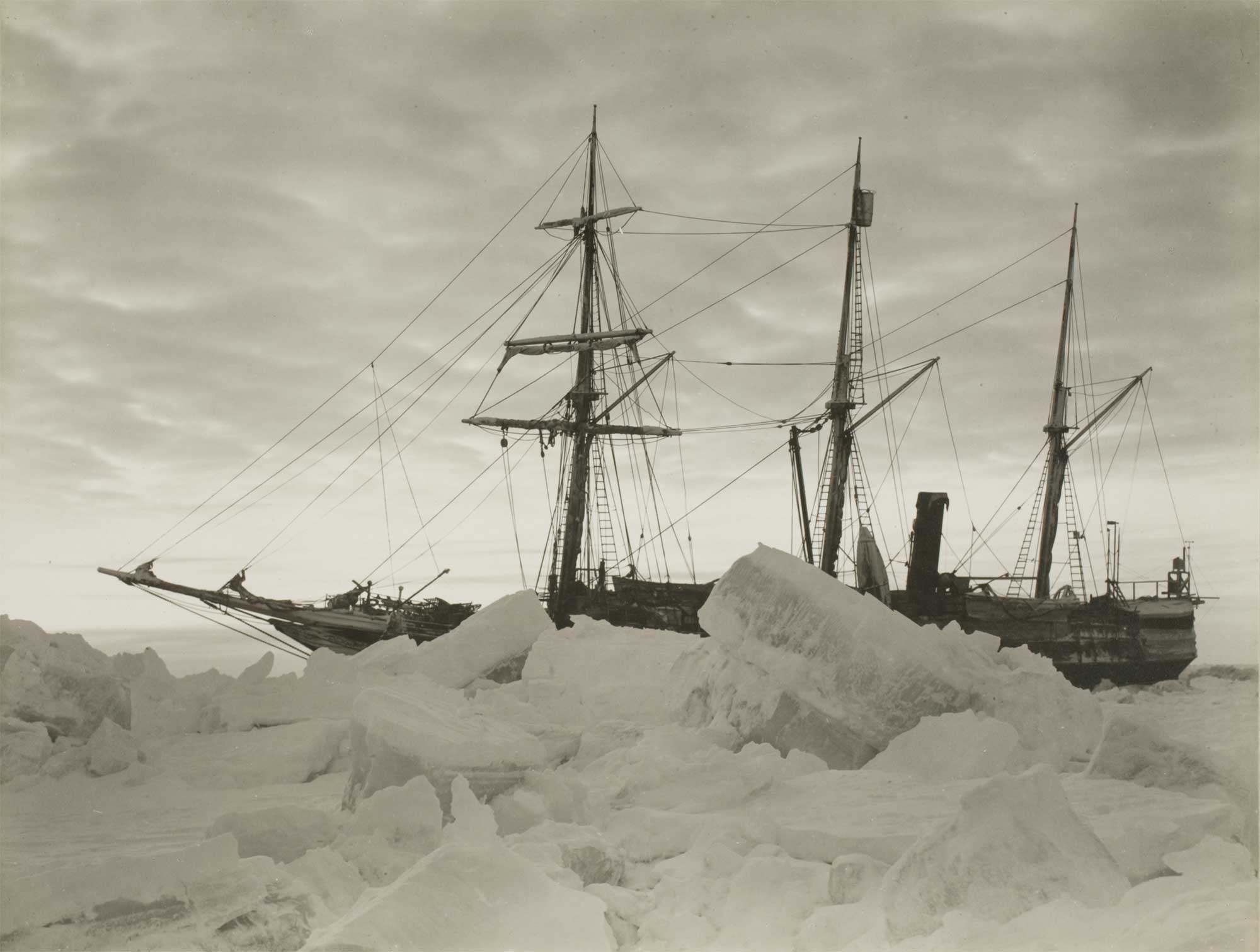
    Endurance also offered unusually civilised accommodation for a polar vessel. She had cabins, a dining saloon, electric lighting, a galley and a darkroom used by photographer Frank Hurley.

    These features were more than luxuries. Warmth, light, food preparation and personal space helped maintain health and discipline during months of isolation.

    The Voyage That Made Ernest Shackleton an Enduring Legend

    The Ice That Turned a Voyage Into a Drifting Camp

    Endurance became trapped in the Weddell Sea on 19 January 1915, before reaching the intended landing point. The crew attempted to saw and break a channel. The pack closed faster than they could clear it.

    The ship drifted with the ice for ten months.

    Shackleton converted Endurance into a winter station. The crew maintained watches, cared for the dogs, took meteorological and scientific observations, repaired clothing and kept the ship operational. Lectures, games, music and Frank Hurley’s photography provided structure.

    Routine became a leadership instrument. Shackleton understood that idle men could become anxious, divided and fatalistic. He mixed social groups, controlled visible signs of fear and watched individuals whose morale concerned him.

    Food gradually changed. Stored provisions were supplemented and later replaced by seal and penguin meat. Fresh meat helped prevent scurvy, although nobody aboard fully understood the role of vitamin C.

    Living conditions deteriorated as the hull came under increasing pressure. Timbers groaned. Decks lifted. Water entered through damaged seams. Pumps had to be operated while carpenter Harry McNish constructed temporary barriers.

    On 27 October 1915, Shackleton ordered the men to abandon Endurance. The ship disappeared beneath the ice on 21 November.

    The expedition’s original purpose ended with it. Shackleton immediately gave the men a new objective: they would return home.

    The Camps That Drifted Across the Weddell Sea

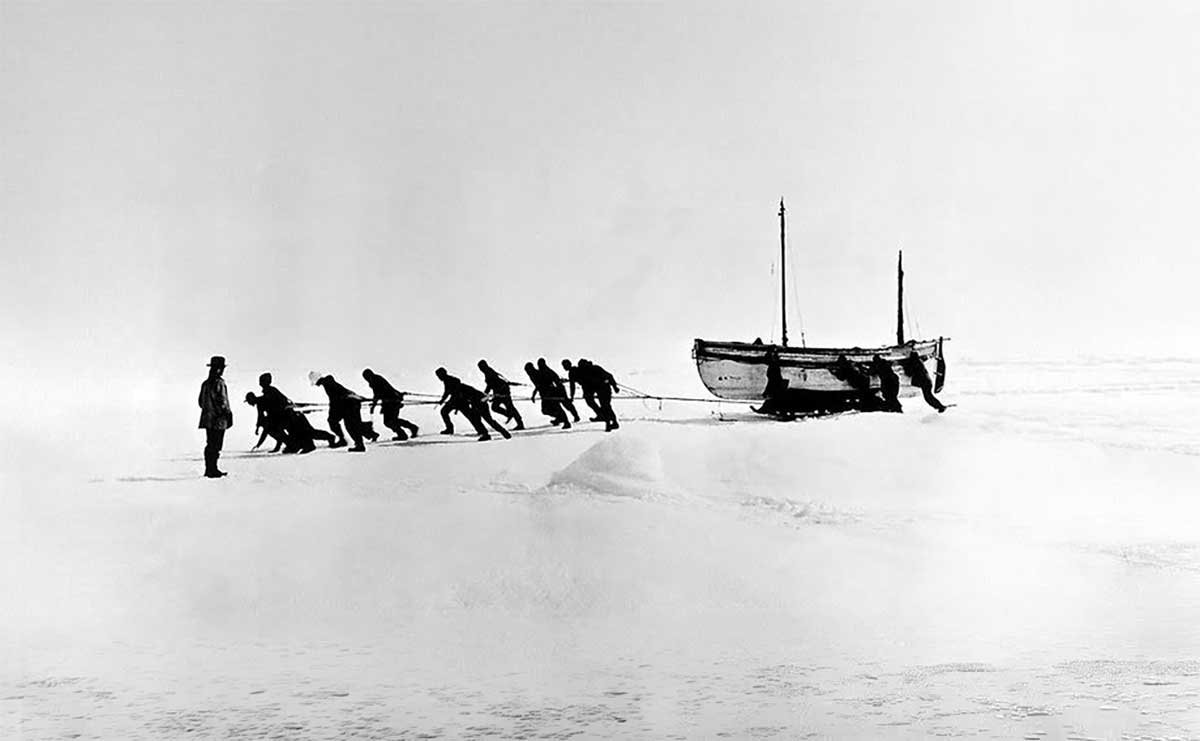
    The 28 men established camps on the pack ice with tents, supplies and three lifeboats: James Caird, Dudley Docker and Stancomb Wills.

    Shackleton ordered personal possessions reduced to about 0.9 kilograms (2 pounds) per man. The gesture showed that survival equipment and food now outweighed rank, sentiment and ownership.

    An early attempt to haul the boats across the ice failed. The uneven surface, pressure ridges and soft snow made progress exhausting. Shackleton stopped the march rather than consume the crew’s strength for little distance.

    They waited and drifted north.

    The danger was constant. Floes could split beneath tents. Leopard seals patrolled the edges. Killer whales surfaced near the boats. Food supplies depended increasingly on hunting. Clothing remained damp. Sleeping bags froze.

    Shackleton delegated carefully. Frank Wild maintained discipline. Frank Worsley managed navigation. McNish repaired equipment. Doctors Alexander Macklin and James McIlroy monitored health.

    Competence was distributed across the team. Shackleton’s strength lay partly in recognising who could solve each problem.

    When the ice finally broke apart in April 1916, the men launched the three lifeboats. After a brutal open-boat passage, they reached Elephant Island on 15 April. It was their first solid ground in 497 days.

    The island offered no realistic prospect of rescue.

    The James Caird That Became a Minimal Ocean-Going Vessel

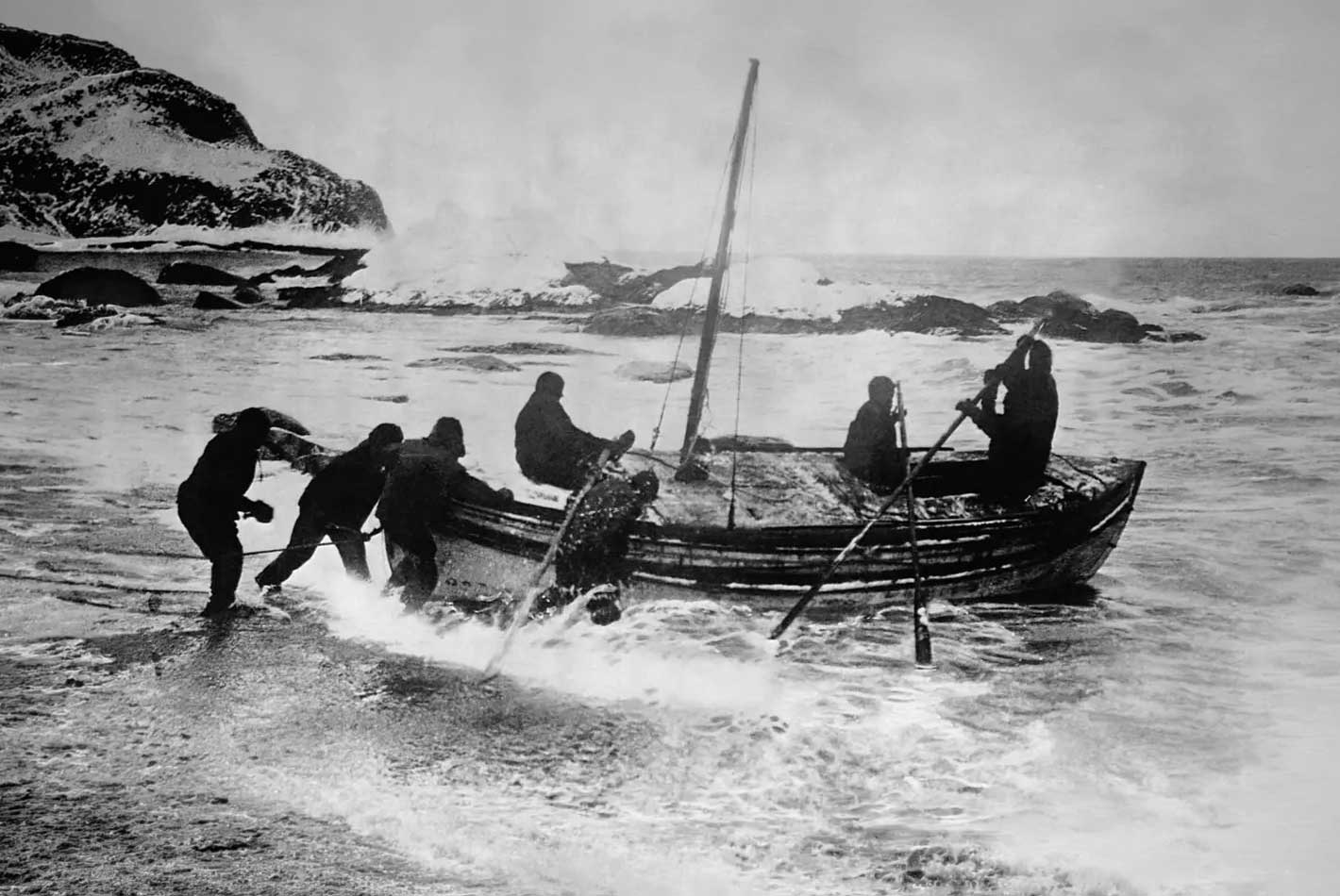
    Shackleton decided to sail for South Georgia, where whaling stations offered the nearest practical help. The route crossed approximately 1,450 kilometres (800 nautical miles) of the Southern Ocean.

    James Caird was only 6.9 metres (22.5 feet) long. She was a double-ended, carvel-built lifeboat, designed primarily for emergency evacuation rather than a prolonged offshore passage.

    McNish transformed her with the materials available. He strengthened the structure, raised the sides and installed a makeshift deck using timber and canvas. Lamp wick, paint and seal blood helped seal gaps. Stones and sand provided ballast.

    The modifications improved protection and stability. They also left six men inside a wet, low and heavily loaded hull with almost no room to move.

    The crew consisted of Shackleton, Worsley, Tom Crean, Timothy McCarthy, John Vincent and McNish. They departed Elephant Island on 24 April 1916.

    The boat faced freezing spray, breaking seas and powerful westerly winds. Ice accumulated on the hull and rigging, raising the centre of gravity. The men had to break it away to prevent capsize. Their clothes and sleeping bags remained wet. Drinking water became contaminated.

    A sea anchor helped control the bow in heavy weather. Ballast limited violent movement. Sail had to be reduced early because a knockdown could fill the small cockpit and end the voyage within minutes.

    The James Caird survived because its crew treated every decision as a question of energy, stability and structural preservation.

    The Navigation That Found an Island in an Empty Ocean

    Frank Worsley carried a sextant, nautical almanac, chronometer and charts. His challenge was severe. Accurate celestial navigation requires a visible horizon and a clear Sun or star. The Southern Ocean provided cloud, spray and a violently moving platform.

    Worsley reportedly secured only four useful celestial observations during the passage. He supported them with dead reckoning, estimating course, speed, current and leeway.

    A sextant measures the angle between a celestial body and the horizon. The observation, combined with precise time and astronomical tables, gives a line of position. A chronometer error of four seconds can produce a longitude error of roughly 1.9 kilometres (1.2 miles) near the equator.

    Worsley had to perform these calculations while balancing in a 6.9-metre boat. Missing South Georgia meant entering the open South Atlantic with declining water, exhausted men and no second landfall.

    He deliberately aimed toward the island’s western side to account for uncertainty and prevailing conditions.

    The James Caird reached King Haakon Bay on 10 May after 16 days at sea. Navigation had reduced an ocean to one landfall.

    The Mountain Crossing That Completed the Rescue

    The boat landed on the uninhabited southern coast of South Georgia. The whaling stations lay across an unmapped interior of glaciers, mountains and crevasses.

    Shackleton, Worsley and Crean began the crossing on 19 May. They had basic clothing, a rope, a carpenter’s adze and screws fitted into their boots for grip. They travelled continuously because stopping risked hypothermia.

    After roughly 36 hours, they reached Stromness.

    Shackleton then organised repeated attempts to rescue the 22 men on Elephant Island. Ice defeated the first three vessels. The Chilean steam tug Yelcho, commanded by Luis Pardo, finally reached them on 30 August 1916.

    Every member of the Endurance party survived.

    The wider expedition had a darker outcome. Aurora had been torn from its Ross Sea moorings, leaving ten men ashore. The party completed its depot-laying work despite inadequate clothing and supplies. Arnold Spencer-Smith died from illness and exhaustion. Aeneas Mackintosh and Victor Hayward disappeared while crossing unstable sea ice.

    The statement that Shackleton “saved all his men” therefore needs precision. He saved all 27 companions who sailed with him aboard Endurance. Three members of the wider expedition died.

    The Leader Whose Failures Form Part of His Legacy

    Shackleton’s leadership deserves admiration without mythology.

    He made excellent decisions during the crisis. He abandoned unproductive marches. He protected weaker men without publicly humiliating them. He placed difficult personalities close to him. He maintained routines and presented confidence when the outcome was uncertain.

    He also created some of the risks he later managed. Preparations were hurried. Financing remained unstable. The expedition relied on optimistic assumptions about sea ice and coordination between two distant parties. Some experienced voices had warned of severe conditions in the Weddell Sea.

    Shackleton’s objective failed completely. His response to that failure made him famous.

    After returning, he served during the First World War and struggled with business ventures, debts and declining health. He sailed south again aboard Quest in 1921. On 5 January 1922, aged 47, he died in his cabin while the ship was anchored at South Georgia.

    He was buried at Grytviken at the request of his wife, Emily.

    The Lessons That Still Define Serious Ocean Voyages

    The Endurance expedition established lessons that remain relevant to offshore sailing, polar operations and expedition leadership.

    Structural strength must match the actual environment. A robust vessel still needs an escape strategy when external forces exceed its design assumptions.

    Repairability matters. McNish’s tools and practical knowledge turned a lifeboat into an ocean-going survival craft. Complex systems offer little value when they cannot be repaired far from assistance.

    Navigation requires redundancy. Worsley combined celestial observations, timekeeping, dead reckoning and judgement. He never depended on a single source of information.

    Habitability also affects safety. Warmth, sleep, food, light and protected working areas preserve judgement. A yacht designed for long-distance sailing must function as both a vessel and a home.

    This principle stands at the heart of Privilège Marine. Offshore capability comes from robust construction, reliable systems, protected navigation and interiors designed around the people who live aboard. Comfort supports endurance when it reduces fatigue and keeps a crew physically and mentally effective.

    Endurance was located in 2022 at a depth of 3,008 metres (9,869 feet). The wreck remains remarkably well preserved in the cold Weddell Sea.

    Its survival beneath the ice offers a final image of Shackleton’s story. The ship was lost, the mission failed and the men faced conditions beyond the original plan. Leadership began when the plan ceased to matter.

  • How to Navigate Without GPS When Every Screen Goes Dark

    How to Navigate Without GPS When Every Screen Goes Dark

    A practical guide to sextant navigation, dead reckoning and backup instruments when GPS, satellite data and onboard electronics fail.

    A yacht can continue navigating after a GPS or satellite communications failure, provided the crew preserves time, direction, speed and a reliable record of its last position. The immediate fallback is dead reckoning: plotting the distance travelled from a known fix using course, speed and elapsed time, then correcting for leeway and current. Near land, visual bearings, radar ranges, depth soundings and charted lights can produce accurate fixes. Offshore, celestial navigation supplies an independent position source. A sextant measures the altitude of the Sun, Moon, a planet or a star above the horizon. A chronometer provides precise UTC. The Nautical Almanac identifies the celestial body’s position, while sight-reduction tables convert the observation into a line of position. Two or more lines create a fix. The method demands practice, clear horizons and disciplined calculations. It remains one of the strongest forms of navigation redundancy available at sea.

    The First Failure to Identify Is the One You Actually Have

    An internet outage and a GPS failure are two separate events.

    A marine GPS receiver obtains one-way radio signals directly from satellites. It calculates its position and time aboard the vessel. Starlink, mobile data and other internet connections may disappear while the chartplotter continues to display an accurate position.

    A true GPS failure at sea has several possible causes. The antenna, receiver, power supply or onboard data network may fail. Lightning can disable several interconnected instruments. Radio-frequency interference can jam the signal. Spoofing can produce a convincing yet false position.

    The crew must determine whether the displayed position is absent, frozen or wrong. Compare it with the steering compass, speed log, radar, depth sounder and expected track. Check whether the chartplotter’s position changes naturally with the vessel’s movement.

    Write down the last trusted latitude and longitude, the exact UTC time, the course steered, speed, wind, sea state and estimated current. Mark the position on a paper chart. Start a manual navigation log immediately.

    The last reliable fix becomes the new origin.

    The Dead Reckoning Plot That Keeps the Yacht Moving

    Dead reckoning navigation calculates a new position from the vessel’s direction and distance travelled through the water.

    The basic relationship is simple:

    Distance = speed × time.

    A yacht maintaining 6 knots for four hours travels 24 nautical miles, or 44.4 kilometres, through the water. The navigator plots that distance along the course steered from the previous position.

    The calculation needs three independent references: a magnetic steering compass, a measure of speed and an accurate clock.

    The compass course then requires correction. Deviation is the error caused by magnetic fields aboard the yacht. Variation is the angle between magnetic north and true north at the vessel’s location. Leeway is the yacht’s sideways movement under the effect of the wind.

    Current adds another movement. Navigators describe it through its set and drift. Set is the direction towards which the water flows. Drift is its speed.

    A dead reckoning position uses the vessel’s course and speed through the water. An estimated position also accounts for current, tidal stream and leeway.

    The distinction can become significant. A yacht sailing for ten hours through a 1-knot cross-current may finish around 10 nautical miles, or 18.5 kilometres, from its uncorrected track.

    The navigator should plot a new position at least every hour and after every change of course, speed or sail plan. The zone of uncertainty must expand as time passes.

    Dead reckoning is a controlled estimate.

    The Coastal Instruments That Work Without Satellites

    Near land, traditional pilotage can provide greater precision than an offshore celestial fix.

    A hand-bearing compass measures bearings to charted objects such as lighthouses, headlands, towers or conspicuous buildings. Two plotted bearing lines create a position. Three bearings provide a useful check. They often form a small triangle rather than meeting at one exact point.

    The navigator should choose objects separated by useful angles. Bearings that are too close together produce a weak fix. An intersection angle between roughly 30 and 150 degrees gives a clearer result.

    Radar offers another independent position source when its scanner and power supply remain operational. The navigator can measure distances to headlands, islands, buoys or harbour walls. These ranges are plotted as arcs on the paper chart.

    Two radar ranges produce a fix. One radar range crossed with a visual bearing also works. Parallel indexing can confirm that the yacht remains on a safe track past a coastline or isolated danger.

    The echo sounder adds further evidence. A depth reading rarely gives a unique position. It can still confirm that the vessel has reached a continental shelf, channel, shoal or harbour approach.

    A lead line remains a completely independent solution in shallow water. Traditional leads included a hollow base filled with tallow. Sand, mud, shells or gravel collected by the tallow could be compared with the seabed description printed on the chart.

    Buoyage, light characteristics, sound signals, water colour, wave patterns and coastal contours complete the picture.

    Navigation strengthens when independent evidence agrees.

    The Sextant That Measures an Angle in the Sky

    A sextant measures the vertical angle between a celestial body and the visible sea horizon. Position comes later, through calculation and plotting.

    The instrument uses two mirrors. The horizon glass shows the real horizon. The index mirror reflects the Sun, Moon, planet or star through the telescope. Moving the index arm brings the reflected celestial body down to the horizon.

    The graduated arc and micrometer drum give the angle, often to 0.1 minute of arc.

    A complete celestial navigation kit includes a sextant, a chronometer or reliable quartz watch set to UTC, the current Nautical Almanac, sight-reduction tables, plotting sheets, dividers, pencils and calculation forms.

    Accurate time is essential. Earth rotates through 15 degrees of longitude each hour. That equals 15 minutes of longitude every minute of time and 15 seconds of longitude every second.

    The surface distance represented by a longitude error changes with latitude. Near the equator, a four-second timing error can move the calculated longitude by approximately one nautical mile, or 1.852 kilometres.

    The navigator must check the watch before departure, record its error and monitor its daily gain or loss.

    sextant

    The Instrument Check Before Every Observation

    The first task is to establish the sextant’s index error.

    The observer looks at the horizon through both optical paths and moves the index arm towards zero. The direct and reflected horizons should form one continuous line. Any difference becomes an index correction applied during the calculation.

    The sextant must also remain dry, protected from impact and kept away from rapid temperature changes. A bent frame or disturbed mirror can corrupt every subsequent observation.

    For a Sun sight, the observer selects the correct shades, faces the Sun and brings its reflected image towards the horizon.

    The instrument is gently rocked from side to side. The reflected Sun then traces a small arc. The observer places the lowest point of that arc on the horizon. This confirms that the sextant is vertical.

    The observer calls “mark” at the moment of contact. Another crewmember records UTC to the nearest second. A single-handed navigator must read the time immediately after the sight.

    Correct shades are essential. Direct observation of the Sun can cause permanent eye damage.

    The recorded measurement is called sextant altitude, or Hs.

    The Corrections That Produce the Observed Altitude

    The raw sextant reading contains several predictable errors.

    Index correction accounts for the instrument’s zero error.

    Dip accounts for the observer’s height above the visible horizon. A person standing high above the water sees the horizon farther away and slightly lower than a person at sea level.

    Refraction accounts for the atmosphere bending light. The correction becomes particularly significant when a celestial body is low above the horizon.

    Semidiameter corrects observations made on the upper or lower edge of the Sun or Moon. Almanac calculations use the centre of the celestial body.

    Parallax accounts for the observer’s position on the Earth’s surface rather than at the Earth’s centre. It has a major effect on Moon sights and a much smaller effect on stars.

    After these corrections, the sextant altitude becomes observed altitude, written Ho.

    A reliable fix begins with a reliable sight.

    The Sight Reduction That Creates a Line on the Chart

    The Nautical Almanac gives the Greenwich Hour Angle and declination of the observed celestial body for each hour of UTC.

    Greenwich Hour Angle describes the body’s angular position west of the Greenwich meridian. Declination is comparable to latitude projected onto the celestial sphere.

    The navigator begins with an assumed position close to the current dead reckoning position. Sight-reduction tables, such as Publication 229, then provide two results.

    The first is computed altitude, written Hc. This is the angle at which the celestial body should appear from the assumed position.

    The second is true azimuth, written Zn. This is the true bearing of the celestial body.

    The navigator compares observed altitude with computed altitude:

    Intercept = Ho − Hc.

    One minute of arc represents one nautical mile, or 1.852 kilometres, on the Earth’s surface.

    Suppose the corrected observed altitude is 42°18.6′ and the computed altitude is 42°12.2′. The difference is 6.4 minutes.

    The intercept therefore measures 6.4 nautical miles, or 11.9 kilometres.

    Observed altitude is higher than computed altitude, so the navigator plots the intercept towards the celestial body along its azimuth. A lower observed altitude produces an intercept plotted away from the body.

    A line drawn at 90 degrees to the azimuth is the line of position. The yacht lies somewhere along that line.

    The traditional memory aid is simple: Ho more, towards; Ho less, away.

    One observation produces one line of position.

    The Multiple Sights That Produce a Celestial Fix

    Two lines from different celestial bodies can intersect and create a position fix. Three well-spaced observations provide a stronger result and expose a poor sight.

    Nautical twilight offers the best opportunity for star navigation. The horizon remains visible while the brightest navigational stars and planets have appeared. The observer can take several sights in rapid succession and reduce them to a common time.

    A useful selection includes bodies spread widely around the horizon. Three stars located in nearly the same direction create weak geometry and amplify observation errors.

    The Sun can also provide several position lines during the day. A morning Sun line is plotted and advanced using course and distance travelled. A later Sun line can then cross it.

    A meridian altitude around local apparent noon provides a relatively direct calculation of latitude. The navigator observes the Sun as it rises, reaches its maximum altitude and begins to fall.

    The noon sight remains useful, although it gives less information than a properly developed series of lines. Longitude still depends on accurate time and further calculations.

    Practical celestial navigation can place a well-trained crew within a few nautical miles of its true position. Clouds, haze, a distorted horizon, inaccurate time and poor observation technique can enlarge the error considerably.

    Celestial navigation is suitable for crossing oceans, monitoring progress and approaching a broad landmass. It cannot provide the precision required for entering a reef passage or narrow harbour under uncertain conditions.

    The Emergency Routine That Prevents Escalation

    A GPS failure should trigger a structured response.

    Confirm the yacht’s steering, electrical supply and communications. Identify which instruments remain independent. Preserve the last reliable position and start the manual plot.

    Reduce sail when crew workload, visibility or traffic requires it. Post a dedicated lookout. Maintain a safe distance from land, shoals and traffic separation schemes.

    The crew should preserve every independent instrument. A battery-powered compass, handheld VHF, radar, echo sounder and quartz watch may become more valuable than the main navigation network.

    Keep accurate UTC even during several days of cloud. Continue the dead reckoning plot so that the next celestial observation begins with a credible assumed position.

    The paper chart should show hazards, clearing bearings, safe depths, alternative ports and generous margins around the estimated track. A close nighttime landfall becomes an unnecessary risk when positional uncertainty remains high.

    The skipper may need to slow down or heave to until daylight, improved visibility or a reliable fix becomes available. Progress has less value than control.

    The Equipment That Must Be Ready Before Departure

    A sextant stored aboard without training offers limited protection. The crew should practise Sun sights during ordinary passages and compare the calculated position with GPS.

    Completed sight-reduction examples should remain with the equipment. The sextant should be adjusted regularly. The chronometer’s error and rate should be recorded.

    A serious non-electronic navigation kit should include corrected paper charts, a magnetic compass with a current deviation card, a hand-bearing compass, independent UTC watches, pencils, dividers, parallel rules and a manual log.

    Offshore crews should add a quality sextant, the current Nautical Almanac, the correct volumes of sight-reduction tables and waterproof calculation forms.

    Backup electronics remain valuable when they have independent power and antennas. A handheld GNSS receiver stored in a protected container can survive a failure affecting the yacht’s primary network. It still depends on satellite signals, so it complements rather than replaces traditional navigation.

    The Privilège Approach to Genuine Navigation Redundancy

    Two chartplotters connected to one antenna, one network and one power supply provide display duplication. A single underlying failure can disable both.

    Genuine redundancy separates position sources, power supplies, displays and methods.

    At Privilège Marine, redundancy means that the yacht can continue operating safely after a component fails. The principle applies to propulsion, steering, energy, communications and navigation.

    System accessibility also matters. The crew must be able to identify a failed connection, isolate damaged equipment and restore essential functions while at sea.

    A bluewater yacht serves as both an ocean-going vessel and a home. A protected navigation area, clear sightlines, secure movement and manageable watchkeeping arrangements reduce fatigue. They preserve the crew’s ability to think clearly after hours or days of degraded operation.

    Modern navigation has made ocean sailing more precise and accessible. Its convenience can hide the number of systems supporting a single position symbol on a screen.

    Seamanship begins where convenience ends.

    A crew that can preserve a course, maintain an estimate, read a coastline and recover its position from the sky remains capable when technology stops cooperating.

  • The Magellan Voyage That Changed Navigation and Redrew the World

    The Magellan Voyage That Changed Navigation and Redrew the World

    Magellan’s life, five ships and brutal voyage reveal how the first circumnavigation transformed navigation, geography and ocean sailing.

    Ferdinand Magellan entered history as the commander who launched the expedition that achieved the first recorded circumnavigation, although he never completed the voyage himself. A Portuguese sailor in Spanish service, he left Sanlúcar de Barrameda in 1519 with five ships and 239 men to find a westward passage to the Moluccas. The expedition survived mutiny, shipwreck, starvation, scurvy, desertion and armed conflict. It found the channel now known as the Strait of Magellan, crossed the Pacific in 99 days without fresh provisions and reached the Philippines, where Magellan was killed at Mactan in 1521. Juan Sebastián Elcano then brought Victoria home in 1522 with 18 survivors. The voyage demonstrated the practical continuity of the world’s oceans and exposed the true scale of the Pacific. It also showed that successful ocean exploration depends on more than courage. Ship strength, navigation, provisions, leadership and judgement decide whether a crew reaches the other side.

    The Portuguese Mariner Who Chose a Spanish Crown

    Fernão de Magalhães was born in Portugal around 1480. He sailed during the Portuguese expansion into the Indian Ocean, fought at Diu and reached Malacca. He gained direct knowledge of Asian trade routes and of the Moluccas, the Indonesian islands whose cloves commanded exceptional prices in Europe.

    Portugal already controlled the eastern route around the Cape of Good Hope. Magellan proposed reaching the same market by sailing west. King Manuel I rejected him. Magellan moved to Seville, entered Spanish service as Fernando de Magallanes and presented his plan to Charles I.

    Spain wanted access to the spice trade without entering the Portuguese sphere established by the Treaty of Tordesillas. Magellan believed that a passage existed through or around South America. He also argued that the Moluccas might lie within Spain’s half of the divided world. The voyage began as a commercial expedition, rather than as a planned circumnavigation.

    The company was multinational. It included Spanish and Portuguese sailors, the Venetian chronicler Antonio Pigafetta, the Basque mariner Juan Sebastián Elcano, the pilot Francisco Albo and Enrique de Malacca, Magellan’s Malay interpreter.

    The Five Ships Built for Cargo Rather Than Comfort

    The Armada de Molucca left Seville on 10 August 1519 and sailed from Sanlúcar de Barrameda on 20 September. Its five vessels were Trinidad, San Antonio, Concepción, Victoria and Santiago. Trinidad was Magellan’s flagship.

    They were naos, Iberian ocean-going cargo ships related to the carrack. Their capacities ranged from 75 to 120 toneles, a measure of carrying volume rather than modern displacement. San Antonio was the largest at 120 toneles. Trinidad was rated at 110, Concepción at 90, Victoria at 85 and Santiago at 75.

    No original construction plans survive. Naval historians estimate that Victoria measured about 28 metres long and 7.5 metres in beam. She carried approximately 45 men when she departed. Her timber hull was caulked with oakum and pitch. High sides and a deep hold provided cargo capacity and useful freeboard, but also created windage and slow handling.

    The rig used a bowsprit and three masts. Square sails on the foremast and mainmast delivered power when the wind came from behind the beam. A triangular lateen sail on the mizzen helped balance the ship. Additional bonnet sails could enlarge the working sail area in favourable conditions. Steering came from an axial stern rudder operated through a long tiller.

    The design was strong and practical for carrying provisions and commercial cargo. It was also heavy, crowded and inefficient to windward. Sail handling required men to work on exposed decks and aloft. The hull was the crew’s entire margin of survival.

    Maintenance was continuous. Carpenters, caulkers, coopers, sailmakers and smiths were as important as the pilots. A leaking hull could be beached and careened so that its underwater planking could be scraped, repaired and resealed. Every operation depended on hand tools, local materials, tides and physical labour.

    The Search for a Passage Through an Unknown Coast

    The fleet crossed the Atlantic, reached Brazil and worked south along an incompletely charted coast. Every major inlet demanded investigation because it might lead to the Pacific. Exploration consumed time, provisions and morale.

    At Puerto San Julián in Patagonia, several Spanish officers mutinied. Magellan suppressed the revolt with speed and severity. Luis de Mendoza was killed, Gaspar de Quesada was executed and Juan de Cartagena was later abandoned. Magellan preserved command, but fear became part of his authority.

    Santiago was subsequently wrecked while scouting farther south, although its crew survived. On 21 October 1520, the remaining ships found the entrance to the Strait of Magellan. The passage extends for roughly 560 kilometres through narrow channels, islands, strong tidal streams, hidden shallows and sudden squalls.

    San Antonio deserted inside the strait and returned to Spain with valuable provisions. Three ships entered the Pacific on 28 November. Magellan had found the passage he had promised. He had also entered an ocean whose scale he had badly underestimated.

    The Navigation System That Mixed Astronomy and Judgement

    The expedition’s pilots could calculate latitude with reasonable accuracy. They measured the altitude of the Sun or known stars with instruments such as the mariner’s astrolabe and quadrant. Astronomical tables supplied the Sun’s declination for each day. A magnetic compass gave heading, while charts recorded coastlines, bearings and known hazards.

    Longitude remained the central weakness. Accurate marine chronometers were still more than two centuries away. The pilots therefore relied on dead reckoning. They estimated speed, recorded heading and calculated the distance travelled over time.

    Sandglasses measured the watches. Speed could be judged by timing a floating object over a known length of hull or by using an early log line. A lead line measured depth near land and could sometimes recover samples of the seabed.

    Currents, leeway and storms made navigational errors accumulate. Francisco Albo’s log and Antonio Pigafetta’s narrative show disciplined observation, but also the limitations of the instruments. Experienced pilots corrected their calculations against landfalls, soundings, celestial observations and the behaviour of the sea.

    Navigation was therefore both technical and intuitive. Instruments produced figures. Survival depended on knowing when those figures were wrong.

    The Pacific Crossing That Destroyed the Crew’s Health

    The ocean first appeared calm, which explains the name Pacific. The crossing was still catastrophic. The ships spent 99 days at sea before reaching Guam and found almost nowhere to replenish their supplies.

    Food included ship’s biscuit, salted meat and fish, cheese, pulses, oil, wine and water stored in wooden casks. Heat, damp, bilge water and vermin damaged everything. Pigafetta described biscuit reduced to foul powder, putrid water and men eating ox hide that had been softened in seawater. Rats became valuable food.

    Scurvy followed the long absence of fresh produce. Swollen gums, weakness, bleeding and infection killed men who had survived storms and combat. The cause, vitamin C deficiency, would not be scientifically understood for centuries.

    Most sailors slept on mats, bundles or bare planking. Senior officers had limited protected accommodation. The rest found space beneath the forecastle, between cargo or on deck. Privacy barely existed. Personal chests served as seats, tables and storage.

    Fire was tightly controlled because a cooking flame or lantern could destroy a wooden ship within minutes. Drinking water could become contaminated. Wounds healed poorly in the damp and unhygienic environment. Vermin consumed food and spread disease.

    The lesson remains direct: habitability is a safety system. Exhausted and malnourished sailors make poorer decisions, handle sails more slowly and repair damage less effectively.

    The Death at Mactan and the Voyage Elcano Finished

    The expedition reached the Philippines in March 1521. Magellan allied himself with Rajah Humabon of Cebu and entered local political and religious conflicts. On 27 April, he attacked the forces of Lapulapu on Mactan.

    The decision was reckless. Shallow water kept the European boats and their heavier weapons away from the shore. Magellan’s men had to wade across the reef. They were outnumbered, exposed and unable to withdraw in good order. Magellan was killed while covering their retreat.

    Magellan did not complete the circumnavigation. After further deaths, the survivors burned Concepción because too few men remained to operate three ships. Trinidad and Victoria eventually reached the Moluccas and loaded cloves.

    Trinidad attempted to return east across the Pacific and failed. Victoria sailed west under Juan Sebastián Elcano. Elcano crossed the Indian Ocean, rounded the Cape of Good Hope and avoided Portuguese authorities wherever possible.

    Victoria reached Sanlúcar on 6 September 1522 and Seville two days later with 18 survivors. She had travelled more than 37,500 nautical miles, approximately 69,450 kilometres. One vessel out of five had returned. Fewer than one man in twelve from the original company stood on her deck.

    The Lessons That Changed Ocean Navigation

    The Magellan expedition revealed that the Pacific was far larger than many European geographers had assumed. It demonstrated that the world’s oceans formed a connected navigable system. It also produced practical knowledge of winds, currents, coastlines, provisioning and the southern passage between the Atlantic and Pacific.

    The records mattered almost as much as the route. Pigafetta preserved geographical, linguistic and ethnographic observations. Albo supplied navigational data. Later expeditions could study their landfalls, errors and survival decisions.

    The voyage also exposed the limits of command by force. Magellan defeated mutiny, yet his confidence became overreach at Mactan. Elcano succeeded by reducing the mission to one objective: bringing one damaged ship and its remaining crew home.

    The circumnavigation accelerated cartography and oceanic navigation. It also advanced European imperial competition and brought violence, forced conversion and commercial exploitation to the communities encountered along the route. Its importance should be recognised without turning conquest into romance.

    For modern ocean sailors, the enduring lesson lies in redundancy, maintainability, protected watchkeeping and humane living conditions. At Privilège Marine, those principles shape the bluewater yacht as both a safe offshore platform and a genuine home at sea. Five centuries of technology separate today’s yachts from Victoria. The ocean still rewards preparation and punishes illusion.

  • The Real Differences Between Carbon and Aluminium Masts

    The Real Differences Between Carbon and Aluminium Masts

    Carbon and aluminium masts offer different gains in weight, stiffness, cost and offshore serviceability. Privilège Marine explains the trade-off.

    The choice between a carbon mast and an aluminium mast is not simply a contest between modern and traditional materials. It is an engineering decision involving weight, stiffness, sail control, durability, maintenance and cost. Aluminium remains the rational standard for most cruising yachts. It is proven, relatively affordable and supported by a worldwide service network. Carbon fibre offers a higher stiffness-to-weight ratio. It can reduce weight aloft by around 20% to 30% in a typical cruising application, although the exact saving depends on the mast design and equipment. This improves stability, reduces pitching and allows more precise sail trim. A carbon boom also lowers inertia during gybes. At Privilège Marine, aluminium masts and booms are fitted as standard because they provide a strong and dependable offshore solution. Carbon masts and booms are available as an option for owners seeking better weight control and stronger sailing performance from a fully equipped blue-water catamaran.

    The Material Choice That Shapes the Entire Yacht

    A mast appears simple. It is a vertical structure holding the sails. In engineering terms, it is far more demanding.

    A yacht mast must resist compression from the standing rigging. It must absorb lateral bending from the sails. It must withstand torsion, shock loads, pumping and thousands of load cycles. Those forces change with wind speed, sea state, sail configuration and the movement of the yacht.

    The mast must also control sail shape. A structure that bends too much allows the forestay to sag and changes the profile of the mainsail. A structure that is excessively rigid may transfer higher peak loads into the rigging, chainplates and hull. The correct mast is therefore not the stiffest possible mast. It is a mast with the correct bend characteristics for the complete yacht.

    Carbon fibre and aluminium achieve this balance in very different ways.

    An aluminium mast is normally made from an extruded marine-grade alloy section. The profile is anodised or painted. It can be tapered towards the masthead and reinforced around high-load areas such as the gooseneck, spreaders and rigging attachments.

    A carbon mast is a laminated composite. Its fibres can be placed in specific directions and quantities. More material can be added where loads are highest. Less can be used where the structure requires less reinforcement. This allows the designer to control longitudinal stiffness, lateral stiffness and torsional resistance with much greater precision.

    That design freedom is the central advantage of carbon. Its black finish is merely the visible result.

    The Weight Difference That Matters Most Above the Deck

    Raw material density provides a useful starting point.

    A typical aluminium mast alloy has a density of about 2.70 grams per cubic centimetre. Carbon fibre itself is closer to 1.79 grams per cubic centimetre. A finished carbon laminate also contains resin, coatings, inserts and local reinforcements, so those figures cannot be translated directly into a complete mast weight.

    The finished result nevertheless remains significant. A properly engineered carbon fibre mast may weigh around 20% to 30% less than its aluminium equivalent. Rustler Yachts, which offers both materials on offshore cruising yachts, cites an average reduction of approximately 25% in mast weight.

    The percentage is only part of the story. The location of the saved weight matters more.

    Removing 100 kilograms from a yacht’s interior is useful. Removing 100 kilograms from a mast, with much of that mass positioned 10 to 25 metres above the water, has a greater dynamic effect.

    The yacht’s vertical centre of gravity moves lower. Pitching and rolling inertia decrease. The boat becomes more responsive to changes in wind pressure. It may recover more quickly after passing through a wave. It also wastes less energy accelerating a heavy rig from side to side.

    This matters on a catamaran. A modern blue-water catamaran carries a substantial operational load. It may have large fuel and water capacities, lithium batteries, refrigeration, air conditioning, a tender, domestic equipment, safety systems, tools, stores and personal belongings.

    A carbon mast does not make that payload disappear. Nor does it transform a luxury cruising catamaran into a racing machine. Carbon is not magic. It simply removes mass from one of the least desirable places to carry it.

    At Privilège Marine, this is one of the main reasons for offering a carbon mast and boom. It helps preserve sailing performance on a yacht designed to carry its owners, their equipment and their ambitions across oceans.

    The Stiffness Advantage That Improves Sail Control

    Stiffness is often discussed badly.

    Carbon fibre is not automatically stiffer than aluminium in every direction. Carbon is anisotropic. Its properties depend on the orientation of its fibres. An aluminium alloy behaves more uniformly in different directions.

    The relevant engineering value is not simply the material’s modulus. Mast stiffness also depends on the dimensions and geometry of the section. Naval architects describe bending stiffness as the product of the material’s elastic modulus and the section’s second moment of area.

    In simple terms, both the material and the shape matter.

    The elastic modulus of common aluminium mast alloys is about 70 gigapascals. Individual carbon fibres may exceed 230 gigapascals and can reach more than 300 gigapascals in intermediate-modulus products. A finished laminate has lower values than the bare fibres because it includes resin and fibres in several orientations. Yet its stiffness relative to its mass remains substantially higher.

    This allows a carbon mast to be lighter while retaining equal or greater stiffness in the directions that matter.

    The result is better control of mast bend. The mainsail can maintain a more consistent designed shape. The rig can also support greater forestay tension, provided the entire rig and yacht structure have been engineered for it.

    Forestay tension is critical when sailing upwind. Wind pressure pushes the headsail and forestay to leeward. This creates forestay sag. Excessive sag makes the headsail fuller, increases aerodynamic drag and reduces pointing ability.

    A stiffer mast does not eliminate sag. Nothing does. It makes the rig more stable and predictable, which allows more precise rig tuning.

    This can produce a cleaner headsail entry, a more controlled mainsail profile and less distortion as wind pressure changes. The yacht may sail closer to the wind. More importantly for offshore cruising, it may maintain speed through waves with fewer large changes in heel, heading and sail shape.

    The Performance Gain That Extends Beyond Maximum Speed

    Owners often ask how many knots a carbon mast will add. There is no responsible universal answer.

    The gain depends on displacement, sail area, hull form, sea state, wind strength, rig configuration and the weight difference between the two mast packages. It also depends on whether the owner uses the additional performance effectively.

    A carbon rig can improve light-wind acceleration because the yacht has less mass and rotational inertia. In moderate conditions, reduced pitching can help the sails and appendages work more consistently. Upwind, greater rig stability can improve sail shape and pointing.

    In stronger wind, a lighter rig may allow the yacht to carry its working sail plan for longer before reefing. This does not mean that reefing decisions should become aggressive. Offshore seamanship still requires conservative margins. It means the yacht may remain balanced and controlled over a wider operating range.

    The real benefit is often found in average passage speed rather than peak speed.

    An additional fraction of a knot sustained for several days is valuable. At an average of 8 knots, a yacht covers about 356 kilometres, or 192 nautical miles, in 24 hours. Raising that average to 8.5 knots adds roughly 22 nautical miles per day. Over a ten-day passage, the difference exceeds 400 kilometres, or 216 nautical miles.

    A carbon mast alone cannot guarantee that gain. Weather routing, sail choice, hull cleanliness and crew decisions remain decisive. The carbon rig gives the yacht a better platform from which to use the available wind.

    The Carbon Boom That Reduces Loads During Manoeuvres

    The boom deserves separate attention.

    Seldén states that its carbon booms can provide a weight saving of up to 35% to 40% compared with an aluminium equivalent. On one published example for a 10.7-metre yacht, or 35 feet, the boom weight falls from approximately 30 kilograms to 20 kilograms.

    The absolute saving will differ on a large catamaran, but the mechanical principle remains the same.

    A lighter boom has less momentum during a gybe. This reduces the energy that must be controlled by the mainsheet, traveller, preventer and boom fittings. Accidental gybes remain dangerous, but the forces generated by a lighter spar can be lower.

    The crew also benefits during reefing and sail handling. A lighter boom places less static load on the topping lift or rigid vang. It may reduce rolling influence when sailing downwind. The boom can also be made stiffer for its weight, helping to maintain mainsail foot tension and sail shape.

    The carbon boom is therefore not merely a visual companion to a carbon mast. It produces its own operational and structural benefits.

    The Strength Question That Requires a More Honest Answer

    People often ask which mast is stronger. The question is incomplete.

    A carbon mast can offer exceptional tensile strength and compression resistance for its weight. The laminate can be reinforced locally around spreader roots, halyard exits, goosenecks and standing-rigging attachments. It also has strong resistance to conventional metal fatigue and does not corrode in the same way as aluminium.

    Aluminium has different advantages. It is ductile. It can deform before complete failure. Dents, cracks, oxidation and corrosion around fittings are often visible during inspection. Its behaviour is familiar to surveyors and riggers around the world.

    Carbon damage can be less obvious. A local impact may produce internal delamination, matrix cracking or fibre damage without creating a dramatic mark on the surface. A serious impact therefore requires professional assessment. Visual inspection alone may not establish the full extent of the damage.

    Carbon is also electrically conductive. Carbon structures and metallic fittings must be carefully isolated to limit galvanic corrosion. Stainless-steel and aluminium fittings still require inspection, even when the main tube itself cannot corrode.

    A carbon mast is repairable. A specialist can remove damaged laminate and rebuild the structure with correctly oriented fibres. A good repair can restore the required load path. But it is not an improvised job for an unqualified technician in an isolated harbour.

    An aluminium mast may be easier to inspect and service through the conventional marine network. Major structural repairs can still be difficult. Welding heat-treated aluminium may alter local material properties and create hard points or weakened zones. Some damage requires replacement rather than repair.

    Neither material removes the need for scheduled rig inspections.

    The Aluminium Standard That Remains Technically Rational

    Aluminium continues to dominate cruising yacht masts for sound reasons.

    It delivers a proven balance of strength, weight and price. Extrusion produces consistent sections. Anodising provides effective surface protection. Components and replacement fittings are widely available. Most professional riggers understand aluminium spars.

    It is also easier to control project cost. The production process is industrialised. Standard sections can be adapted to many yacht designs. Lead times are usually more predictable than those for a fully customised carbon laminate.

    For an offshore yacht, serviceability matters. A yacht may cruise far from its original shipyard. Owners need a system that can be inspected, maintained and supported in different countries.

    This is why Privilège Marine installs aluminium masts and booms as standard. The choice is not a concession. It is a robust technical specification for safe and reliable blue-water cruising.

    A well-designed aluminium rig can deliver excellent performance. The mast can be correctly tapered, tuned and paired with high-quality standing rigging and sails. For many owners, it provides the best balance between purchase cost, operational simplicity and long-term ownership.

    The Carbon Price That Reflects More Than Raw Material

    A carbon mast costs more because the product is more complex.

    The manufacturer must calculate the laminate for a specific yacht. Engineers determine fibre type, fibre orientation, wall thickness and local reinforcement. The mast may be filament-wound or built from pre-impregnated materials. It then requires controlled curing, finishing, machining, bonding and detailed quality assurance.

    The tooling and production volume also matter. Aluminium mast sections are extruded in repeatable profiles. Carbon yacht masts are produced in much smaller numbers and may be highly customised.

    There is no reliable universal multiplier. The difference depends on mast height, section size, spreaders, standing rigging, mainsail track, paint system, fittings, shipping and commissioning.

    A published options list for the 14-metre Eagle 46 priced a package including a carbon mast, carbon boom, Rodkicker vang and rod rigging at €42,750 excluding VAT. That figure is not directly transferable to a larger Privilège catamaran. It demonstrates the scale of the premium and the importance of comparing complete rig packages rather than raw mast tubes.

    On a large yacht, the option must be assessed against its operational value. The buyer is not paying only for carbon fibre. The buyer is paying for engineering, custom manufacturing, reduced weight aloft, improved sail control and potentially better passage performance.

    The Privilège Approach That Keeps the Choice Practical

    At Privilège Marine, the standard aluminium mast and boom remain the logical solution for most cruising programmes. They are strong, proven and maintainable. They also allow owners to allocate budget to other equipment that may be more important to their specific voyage, such as energy generation, communications, additional refrigeration or safety systems.

    The carbon mast and boom form a genuine performance option. They are particularly relevant for owners who want to control the weight of a comprehensively equipped yacht. They can also suit owners who place a high value on sailing response, reduced pitching and more precise sail trim.

    The decision must be made early. Changing mast material affects rig engineering, weight calculations, stability, wiring, fittings, standing rigging and commissioning. It is not simply a cosmetic substitution at the end of construction.

    The owner must also consider the yacht’s real loading condition. A carbon mast cannot compensate indefinitely for oversized tenders, excessive equipment or several tonnes of optional payload. Weight management must remain coherent across the entire yacht.

    This is the frank answer. Carbon improves performance, but engineering discipline creates the performance.

    The Better Rig Is the One That Matches the Voyage

    The aluminium mast offers value, familiarity and worldwide serviceability. The carbon mast offers lower weight, greater design freedom and a more stable aerodynamic platform.

    Neither material is universally superior.

    For an owner planning relaxed coastal cruising, aluminium may be the sensible choice. For an owner seeking the best possible sailing response from a fully equipped ocean-going catamaran, the carbon option becomes more compelling.

    The difference is not measured only at the masthead. It is felt in the yacht’s motion, its acceleration, its sail shape and the way it carries its equipment across an ocean.

    A successful offshore yacht does not pursue minimum weight at any cost. It places weight intelligently. Few kilograms are more valuable to remove than those carried high above the water.