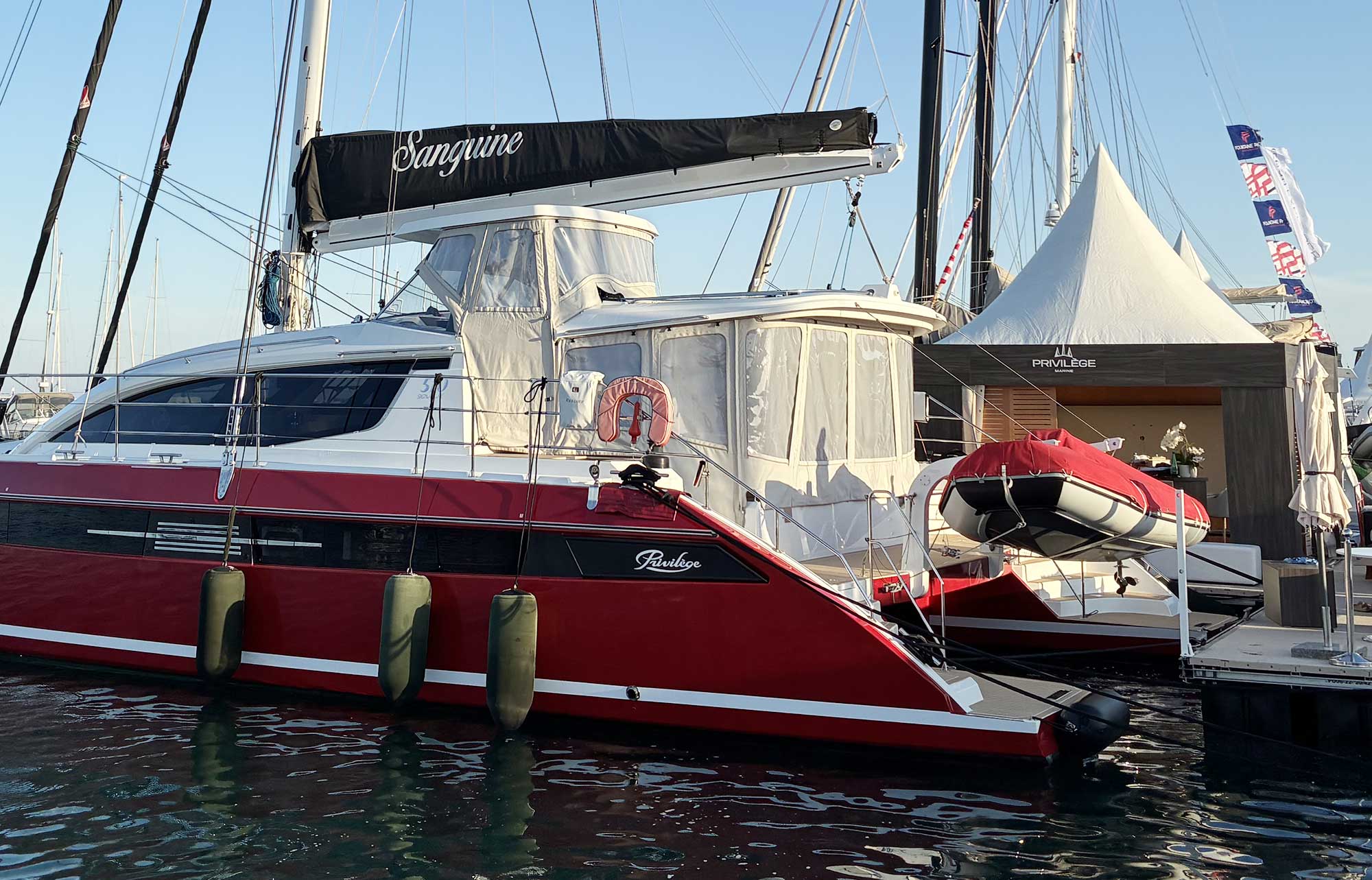
A dinghy that breaks loose in a seaway becomes a hazard, and fixing it at sea is dangerous. Privilège Marine on securing the tender before the weather turns.
A tender that breaks free in a rising sea turns from a convenience into a hazard. Davits and swim-platform cradles are built for calm water, not for the shock loads of a pitching stern. A loose dinghy swings, slams against the hull and can be torn from its mounts. Worse, it tempts a crew member aft to fix it just as the deck becomes most dangerous. The remedy is simple and unglamorous: secure the tender as if a rough passage is coming, every time, before leaving the dock. Lash it so it cannot move, drain it, and remove the outboard for long passages. In heavy weather, the safest place for a dinghy is often on deck or below, not hanging astern. At Privilège Marine, we treat hull, rig and tender as one safety system. A well-stowed tender protects the boat and the people aboard.
The Moment a Secured Tender Earns Its Keep
Weather changes fast at sea. A flat anchorage at dusk can become a wind-against-tide chop by dawn. The tender that rode quietly on the davits all summer becomes a liability the instant the boat starts to pitch. It swings on its lashings, snatches at its mounts and beats against the transom. If a wave fills it or a single fixing lets go, it hangs from one point and flails.
An 18-metre (60-foot) catamaran sailing off Marseille under bare poles at 11 knots had exactly this happen. A wave tore one fixing off the RIB, the remaining lashings worked free, and the tender hurled itself about on its last two tethers. The crew came close to cutting it loose, judging it too dangerous to save. That is the heart of the matter. Securing a dinghy on davits is not about tidiness. It is about not manufacturing a problem that has to be solved later on a wet, moving deck. Sound tender safety at sea begins long before the wind rises.
The Forces a Davit and Its Lashings Must Survive
The Weight You Are Actually Carrying
Common rail- and transom-mounted davits carry safe working loads from roughly 91 to 340 kilograms (200 to 750 pounds). Larger yacht davits run from 500 kilograms to 3 tonnes. The trap is the true weight of a loaded tender. A 3.4-metre (11-foot) RIB weighs around 100 kilograms (225 pounds). Add a modern four-stroke outboard at 50 to 70 kilograms (110 to 155 pounds), a fuel tank, an anchor and a few oars, and the load passes 160 kilograms (350 pounds). Many off-the-rack davits are rated at exactly that figure, in flat water, lifted gently. They were never meant to hold it through a seaway.
The Water That Multiplies the Load
Seawater weighs about 1,025 kilograms per cubic metre. A tender that takes aboard 200 litres of green water, easily done when a following sea breaks over a low transom, gains roughly 205 kilograms (450 pounds) in an instant. The davits then carry double their design load, swinging on the ends of two arms. Motion makes it worse. As the stern rises and drops, the lashings and mounts see shock loads that briefly reach several times the static weight. This is how fittings shear, welds crack and tenders depart.
The Right Way to Lash a Tender on Davits
Start from one principle: the tender must not move at all. A dinghy left to dangle is the one that fails. Haul it firmly against its chocks or the transom and lash it in several directions so it cannot swing fore and aft or cant sideways.
Cruisers who cross oceans with the dinghy on davits describe a reliable method. Lash the bow slightly higher than the stern, remove the drain bung so any water runs straight out, and fit a full cover to keep spray from pooling inside. Run a line from the outboard side of the dinghy, under its keel, to the toe rail, so a beam gust cannot lift and flip it. Several ratchet straps to strong points beat a single rope every time. For a passage, take the outboard off and stow it low and secure, with the fuel line shut. The smaller the windage and the lower the weight, the kinder the load on every fitting. Experienced crews advise stowing the engine separately once the wind reaches around 30 knots and the seas build to 1.2 to 1.8 metres (4 to 6 feet).
The Choice Between Davits, Deck and Towing
Davits suit coastal hops and calm seas. For an offshore passage, or when heavy weather is forecast, the dinghy belongs on deck, inverted and strapped down, or deflated and stowed below to cut windage. A platform-mounted tender must sit high enough that following seas and the boat’s own wake cannot wash it at low speed.
Towing is the weakest option offshore. A towed dinghy can surf down a wave into the transom, snatch its painter until it parts, or fill and behave like a sea anchor. One sailor measured half a knot or more of lost speed towing a RIB behind a smaller yacht. If you must tow for a short hop, use a bridle, guard hard against chafe, and stream a small drogue from the dinghy’s transom to keep it tracking straight. The honest rule from people who sail far is the simplest one. Prepare the tender as though the passage will be rough, because forecasts are wrong often enough to matter.
The Danger of Going Aft in a Seaway
The real reason to secure the tender early is human. The most dangerous place on a boat in heavy weather is the deck, and the worst moment to be there is mid-gale, reaching aft to wrestle a swinging dinghy over a pitching transom.
The figures are sobering. The Marine Accident Investigation Branch recorded 308 man-overboard occurrences in British waters between 2015 and 2023, of which 40 per cent were fatal. Across recreational craft, 47 per cent of people who go overboard do not come back. In cold water, crews have under 11 minutes on average to recover a casualty before they stop responding, and as little as 4 to 5 minutes in the coldest, roughest conditions. A person sent aft to free a flailing tender meets that exact risk. Anyone on deck in such weather should wear a 275-newton offshore lifejacket and clip on with a harness and tether. The surer protection is to give them no reason to be there at all. Real man-overboard prevention starts with removing the task.
The Habit That Keeps Crews Safe
Good seamanship makes this a routine rather than a decision. Secure the tender properly before you leave the dock, every time, and the question of whether to risk the deck later never arises. Check the lashings at dusk and ahead of any front. Treat the davit’s safe working load as a hard limit, not a target. See the hull, the rig and the tender as one system, each able to endanger the others when neglected.
At Privilège Marine, we build boats to carry their owners across oceans in comfort and confidence, and we hold that the small disciplines decide the safe voyages. A tender that stays exactly where you put it, through the worst the sea can offer, is one of those quiet disciplines worth keeping.
Seasickness comes from a clash of senses. A catamaran’s level ride calms it, and a larger bluewater cat calms it most. Here is the science.
Seasickness begins in the brain, not the stomach. It comes from a conflict between what the inner ear feels and what the eyes see, and the motion that provokes it most sits at a very specific, slow frequency. A monohull’s rhythmic roll lands squarely in that danger zone. A catamaran does not. With two hulls and a wide beam, a cat sails almost flat, heeling only a few degrees, and that level ride removes the main trigger of nausea at sea. Size then sharpens the advantage. A larger bluewater catamaran carries a longer waterline, more weight and greater bridgedeck clearance, so it rides over waves with a slower, gentler motion. This article explains why seasickness happens, what calms it, why a catamaran beats a monohull for queasy crews, and how a small cat and a large one differ at sea.
The Clash of Signals Behind a Churning Stomach
Seasickness is a form of motion sickness, and the leading explanation is the sensory conflict theory, set out by Reason and Brand in 1975. The brain builds its sense of balance from three streams of information: the vestibular system in the inner ear, the eyes, and the position sensors in muscles and joints. When these streams disagree, the brain reads the mismatch as a warning. Below deck, the inner ear feels the boat moving while the eyes see a cabin that appears still. That contradiction triggers the response. Many researchers believe the body treats the confusion as a sign of poisoning and reacts as if to expel a toxin. That is why the symptoms run from cold sweat and pallor to yawning, headache, nausea and vomiting.
The motion that provokes sickness is surprisingly specific. Laboratory and shipboard studies agree that vertical oscillation near 0.2 Hz, roughly one rise and fall every five seconds, is the most nauseogenic. The provocative band runs from about 0.1 to 0.3 Hz, and motion faster than about 0.5 Hz becomes far less troubling. A landmark survey of more than 20,000 ferry passengers found that the incidence of vomiting rose in step with the strength of vertical acceleration and with the time spent in it. Susceptibility varies widely between people, and reported seasickness on sea travel ranges from around three percent in mild conditions to sixty percent in rough weather. Prolonged exposure also brings the sopite syndrome, a heavy drowsiness and apathy that drains a crew even without vomiting.
The Steps That Settle the Stomach Before It Turns
The fastest relief is to give the eyes and the inner ear the same story. Looking at the horizon, or at the distant coast, lets vision confirm the motion the body feels. Taking the helm helps even more, because the brain predicts the movements it commands and largely cancels the conflict. That is why the person steering rarely feels sick while a passenger below does. Fresh air, a position low and near the centre of the boat, steady hydration and avoiding alcohol all reduce the odds. Eating light, dry food and keeping busy on deck help too.
Medication works for many people. Scopolamine, worn as a small patch behind the ear, is widely used for prevention, and antihistamines such as cinnarizine, meclizine and dimenhydrinate are common over-the-counter choices, though they tend to cause drowsiness. Ginger and acupressure wristbands that press the P6 point on the wrist help some sailors, with mixed evidence behind them. A doctor or pharmacist should guide any choice of drug. The body also adapts. Most people grow their sea legs within two or three days as the brain learns the new pattern of motion, which is one reason a steadier boat shortens the misery.
The Level Ride That Sets a Catamaran Apart
A catamaran attacks seasickness at its source. Resting on two hulls set far apart, it has enormous initial stability and sails almost upright. A cruising cat rarely heels more than five degrees, while a monohull routinely sails heeled at twenty to thirty degrees or more. The wide beam works like a built-in stabiliser, so the boat resists rolling instead of swinging through it. That level ride is the heart of the comfort difference.
The physics line up with the medicine. A typical cruising monohull rolls with a period of roughly three to six seconds. That places its motion right inside the 0.1 to 0.3 Hz band the body tolerates worst, and the rhythm repeats for hour after hour. A catamaran answers waves with a short, stiff motion of small amplitude, spending little time in that provocative range. The crew can stand, cook, read and sleep without bracing against a constant tilt. A galley stays usable. A saloon table stays level. Children and first-time guests stay calm. Less heel and less roll mean less of the repetitive lateral swing that confuses the inner ear, which is the core reason a catamaran is better for seasickness.
The Honest Caveat About a Catamaran’s Motion
A catamaran is not motion-free, and frankness serves the reader here. Because a cat is stiff rather than soft, it can react quickly to short, steep chop, producing a brisker movement than the slow pendulum of a heavy monohull. The bigger issue is bridgedeck slamming. When a wave strikes the underside of the platform that links the two hulls, it lands a sharp, hollow blow that shakes the boat. That impact is jarring and tiring, and it disturbs sleep, even though its quick, high-frequency jolt is not the classic trigger of nausea. The cure for it is design, and design is where size and pedigree start to matter.
The Difference Between a Small and a Large Catamaran
Length changes everything about how a catamaran feels at sea. A longer hull has a longer waterline, and a longer waterline lengthens the natural period of pitch and heave, which makes the motion slower and gentler. A larger cat also carries more weight, and loaded displacement smooths the ride by giving the boat the inertia to push through a wave rather than dance on top of it. A small, light catamaran reacts to every short wave. Its quick, snappy motion sits closer to the frequencies that unsettle the stomach, and its lower bridgedeck slams more readily once it is loaded with fuel, water and stores.
Clearance is the decisive measurement. A practical offshore guideline allows about 0.7 inches of bridgedeck clearance for every foot of overall length. A 13.7 m catamaran (45 ft) would want roughly 0.80 m (31.5 in), a 15.2 m catamaran (50 ft) about 0.89 m (35 in), and an 18.3 m catamaran (60 ft) about 1.07 m (42 in). A larger hull gives the designer the room to deliver that clearance and still provide generous living space. A small hull forces a compromise, and the sea finds it. Weight distribution matters as well. Concentrating heavy items near the centre reduces pitching, while heavy ends swing the platform through a wider arc and invite more pounding.
The Numbers That Explain a Calmer Ride
Concrete figures show the gap. The Privilège Signature 580 measures 19.10 m (62 ft 8 in), with a beam of 9.18 m (30 ft 1 in) and a full-load displacement of 35 tonnes (77,162 lb). The Signature 650 carries a full-load displacement of 37 tonnes (81,600 lb). That mass is what lets a yacht ride through a seaway with a settled, sea-kindly motion rather than reacting to each crest. The penalty for getting clearance wrong is measurable too. Experienced multihull sailors report that heavy slamming can cut boat speed by 5.6 to 7.4 km/h (3 to 4 knots), which lengthens a passage and wears down the crew. A larger, well-designed bluewater cat avoids that tax and the fatigue that comes with it.
The Privilège View of Comfort at Sea
At Privilège Marine, comfort is treated as an offshore engineering target, not a marina feature. Each yacht is designed as a true floating home, built to cross oceans while keeping the people aboard rested and well. Generous bridgedeck clearance, disciplined weight distribution and a clean tunnel let the sea pass between the hulls instead of striking the boat. The result is a platform that stays composed when the wind moves forward and the water turns short and irregular. A crew that is not fighting the motion can sleep, eat and think clearly, and a clear-headed crew is a safer one.
Seasickness is the first thing many newcomers fear about life at sea, and it is the first thing a good catamaran quietly removes. The level ride answers the science, the size sharpens the advantage, and careful design turns a comfortable boat into a calm one. The measure of an ocean catamaran is whether the table stays set, the bunk stays restful and the horizon stays a pleasure rather than a remedy. On a boat built around that idea, the sea becomes a place to live, not merely to survive.
How professional sailors manage sleep at sea, from bluewater cruising watches to Vendée Globe micro-naps, fatigue control and safer ocean passages.
Sleep at sea is a matter of seamanship before it is a matter of comfort. On an ocean passage, the right question is not whether the boat can be trusted. A well-built bluewater catamaran, reliable instruments, radar, AIS, autopilot and alarms all reduce workload. They do not remove the need for judgment. Professional sailors know this. They treat sleep as part of the navigation plan, not as an interruption to it. Cruising crews can often keep a near-normal rhythm if they are enough people on board and if the watch schedule is well designed. Solo racers cannot. Vendée Globe skippers use polyphasic sleep, short naps, fatigue monitoring and strict preparation because they must remain capable of reacting at any moment. For owners crossing oceans, the lesson is clear: the safer the boat, the more disciplined the sleep plan must be.
The first rule of sleep at sea is that the boat is always moving
On land, sleep is built around stability. The room is still. The floor does not pitch. The bed does not slide. The night has a predictable rhythm. At sea, the body rests inside a machine that never stops working.
This changes everything.
A yacht sailing offshore is constantly exposed to wind shifts, squalls, waves, traffic, floating objects, sail loads, autopilot corrections and small technical alerts. Even a calm night can change quickly. A 10-knot breeze can become 25 knots under a rain cloud. A quiet shipping lane can produce a fast merchant vessel on a crossing course. A sail that looked perfectly trimmed at midnight can be overpowered at 02:00.
That is why professional sailors do not think of sleep as a private activity. They think of it as part of watchkeeping. The person resting is still part of the safety system. The person awake must know when to wake the skipper, when to reduce sail, when to check radar, when to make a visual inspection, and when to accept that tiredness is becoming a risk.
At Privilège Marine, this distinction matters. A bluewater catamaran is designed to cross oceans with confidence. It must protect its crew, carry them comfortably, and reduce unnecessary fatigue. Yet comfort does not replace seamanship. It supports it. The better the yacht, the more efficiently the crew can manage energy, decisions and rest over time.
The aim is not to fight sleep. The aim is to sleep at the right moment, in the right place, with the right alarms, with the right person awake, and with enough margin to wake up before the boat needs urgent action.
The professional sailor does not simply sleep less
The popular image of the offshore racer is misleading. It suggests a heroic sailor staying awake for days, surviving on instinct and adrenaline. That is poor seamanship. A tired sailor becomes slow, emotional and imprecise. The first errors are small: a forgotten check, a delayed reef, a wrong interpretation of a radar echo, a poor food choice, a bad sail trim decision. Later, fatigue becomes dangerous.
Most adults need about seven hours or more of sleep in 24 hours. Sleep also follows cycles of roughly 80 to 110 minutes, moving through light sleep, deep sleep and REM sleep. Offshore sailing disrupts those cycles. The professional response is not bravado. It is sleep management.
Solo and short-handed racers often use sleep management offshore sailing techniques. They divide rest into short naps. They sleep before they collapse. They avoid long, uncontrolled periods of exhaustion. They try to wake at points in the sleep cycle that allow them to function quickly.
A solo offshore sailor may take naps of 20 to 40 minutes. In more stable conditions, he may try to sleep for about 90 minutes, close to one full sleep cycle. During heavy weather, coastal traffic, sail changes or tactical moments, he may sleep far less. During a long ocean passage in settled conditions, he may rebuild some sleep debt.
This is why “sleep like a professional sailor” means the opposite of sleeping randomly. It means planning rest as deliberately as sail choice, routing or fuel management.
The instruments help the sailor sleep, but they do not stand watch alone
Modern sailing instruments have transformed offshore rest. AIS identifies many commercial vessels and yachts equipped with transponders. Radar can detect targets that AIS does not show. Autopilots steer accurately for long periods. Wind instruments monitor shifts and load. Chartplotters help track traffic, course and position. Alarms can be set for CPA, depth, wind speed, course deviation and battery levels.
These tools are essential. They allow longer and safer rest than previous generations could expect. They also create a temptation: the belief that a yacht far from land, with alarms active and a good autopilot, can be left to look after itself.
That belief is dangerous.
The International Regulations for Preventing Collisions at Sea require every vessel to maintain a proper look-out by sight, hearing and all available means. This applies offshore as well as near the coast. Distance from land reduces some risks. It does not remove them. Commercial ships, fishing vessels, unlit craft, drifting containers, whales, squalls and gear failures can still appear.
On a crewed bluewater catamaran, instruments should be treated as a layered safety system. The watchkeeper looks outside, checks instruments, listens to the boat, scans the horizon, verifies sail shape and confirms that the autopilot is steering correctly. Alarms support that person. They do not replace him.
On a solo boat, the situation is more severe. A solo sailor must sleep, yet the legal and practical tension remains. This is one reason elite skippers invest so much time in alarm discipline, radar settings, AIS range, autopilot reliability and cockpit ergonomics. They are not sleeping because the boat no longer needs them. They are sleeping because they have trained the boat and themselves to buy short windows of rest.
The cruising sailor can often preserve a more human rhythm
A bluewater cruising crew has one major advantage over a Vendée Globe skipper: there is more than one person on board. That changes the sleep equation.
With three or four competent adults, a watch system can protect real rest. A classic arrangement might use three-hour or four-hour watches at night, with flexible daytime naps. Some crews prefer a rotating system so the same person is not always awake at 03:00. Others use a fixed rhythm because the body adapts better when the schedule is predictable.
There is no universal answer. The correct sailing watch schedule depends on crew size, experience, weather, traffic, boat speed, sea state and the distance from hazards. A couple crossing an ocean double-handed will face a very different sleep problem from a family sailing with a professional skipper and two additional crew members.
The six-hours-on, six-hours-off pattern can look attractive because it is simple. Yet maritime fatigue research has repeatedly warned that this structure can fragment sleep and increase tiredness. Many sailors discover the same truth at sea. Six hours off rarely means six hours asleep. It includes handover, food, clothing changes, washing, small repairs, weather checks and the time needed to calm the brain.
For a cruising owner, the priority should be quality of rest. A three-hour night watch may feel harder at first, but it can protect the crew from long periods of low alertness. A four-hour watch may suit stronger crews and settled weather. The best yachts make this easier by reducing noise, vibration, unnecessary movement and discomfort.
This is where a Privilège catamaran’s design philosophy becomes practical rather than decorative. A true floating home gives the crew real cabins, protected living spaces, secure movement, accessible systems and places where sleep can be deep enough to restore judgment. Comfort is not only luxury. Offshore, comfort becomes a safety factor.
The Vendée Globe turns sleep into a competitive discipline
The Vendée Globe is the purest laboratory for professional sailor sleep. It is a solo, non-stop, unassisted race around the world, sailed on 18-metre IMOCA monohulls. The theoretical course is about 45,000 kilometres (24,300 miles), from Les Sables-d’Olonne down the Atlantic, across the Indian and Pacific oceans, around the three great capes, and back to France.
In 2025, Charlie Dalin won the race in 64 days, 19 hours, 22 minutes and 49 seconds, breaking the previous record by more than nine days. That number is not only a sailing statistic. It shows the intensity of the modern IMOCA era. These boats are fast, violent and noisy. Foils have increased speed, but they have also increased shock, vibration and physical stress.
A Vendée Globe skipper cannot “go to bed” in the normal sense. He sleeps in fragments. He wakes to check weather files, trim sails, inspect the boat, adjust the autopilot, manage energy, eat, communicate with race control when allowed, and make strategic decisions. The boat may be travelling at more than 20 knots, which means it can cover more than 37 kilometres in one hour. A one-hour nap is therefore a serious decision.
The best skippers train for this before the start. They learn their fatigue thresholds. They test alarm systems. They identify which bunk position is safest. They prepare food that can be eaten quickly. They build routines to wake, assess and act within seconds. They also learn when not to optimize. A tired skipper who spends 30 minutes chasing a tiny gain may lose more performance through fatigue than he gains through trim.
This is one of the frank lessons from ocean racing: the fastest sailor is often the one who knows when to rest.
The race bunk is a safety device, not a bedroom
The Vendée Globe has also changed the meaning of a bunk. On a cruising yacht, a cabin is part of life aboard. On an IMOCA, a sleeping position is closer to a cockpit extension. It must keep the sailor close to instruments. It must protect him from being thrown across the cabin. It must allow fast exits. It must work when the boat slams, accelerates and lands heavily after a wave.
Damien Seguin’s experience before the 2024-2025 Vendée Globe illustrates the point. After being thrown several metres inside a foiling boat during a transatlantic race, he worked on a more secure sleeping arrangement for the next Vendée Globe. The question was not softness. The question was whether he could fall asleep without fearing the next impact.
This is also relevant to bluewater cruising. Owners do not need an IMOCA-style coffin bunk. They do need sea berths that work when the yacht is moving. A large bed in a beautiful cabin is excellent at anchor. Offshore, the crew also needs lee cloths, secure handholds, low-risk movement, ventilation, darkness, and a sleeping place where the body does not fight every roll or pitch.
On a catamaran, motion differs from a monohull. There is less heeling, which helps daily life and reduces muscular fatigue. There can still be quick accelerations, bridge-deck impacts in poor seas, and noise from water flow. Design quality matters. Weight distribution, bridgedeck clearance, insulation, cabin placement and structural stiffness all influence the crew’s ability to rest.
A yacht that lets people sleep well helps them sail well.
The owner’s passage plan should include a sleep plan
Many ocean passage plans focus on route, weather, fuel, water, provisioning and arrival formalities. Sleep is often treated as something that will happen naturally. That is a mistake.
A serious bluewater cruising sleep plan should be written before departure. It should define watches, handover rules, wake-up triggers and minimum rest expectations. It should state when the skipper must be called. Examples are simple: a vessel within a defined CPA limit, wind above a set threshold, lightning, sudden wind shift, autopilot fault, unexpected sail noise, battery alarm, water ingress alarm, or any doubt in the watchkeeper’s mind.
The phrase “wake me if you are unsure” is not enough. At sea, inexperienced crew often delay waking the skipper because they do not want to disturb him. Professional crews remove that hesitation. They define triggers in advance. They make waking the skipper a sign of discipline, not weakness.
The plan should also include caffeine rules. Coffee is useful. It is also easy to misuse. A watchkeeper who drinks strong coffee near the end of a watch may ruin his next rest period. Alcohol should be avoided on passage. Heavy meals before night watches can increase drowsiness. Dehydration increases fatigue. Poor clothing makes people cold and irritable.
Sleep at sea is a system. The system includes food, hydration, watch length, cabin comfort, alarms, deck layout, weather routing and crew culture.
The safest sleep comes from reducing unnecessary workload
A well-designed yacht gives its crew more rest by reducing avoidable work. This is central to long-distance sailing. Every difficult movement, every exposed manoeuvre, every hard-to-reach valve, every unclear electrical panel and every noisy cabin consumes energy. Over one night, the difference may seem small. Over an Atlantic crossing, it becomes significant.
Privilège Marine builds bluewater catamarans around this reality. Ocean comfort is not about adding softness to a boat that remains demanding. It is about designing a yacht as a coherent living and sailing system. The owner, family and crew must be able to move safely, understand the boat, access equipment, manage watches and recover properly.
This is also why customization matters. A retired couple crossing the Atlantic with occasional professional crew does not have the same sleep needs as a family with children, a remote-working owner, or a highly experienced sailor planning long passages with friends. Cabin layout, crew accommodation, watch station visibility, galley safety, storage, technical access and acoustic comfort all affect fatigue.
The best offshore yacht is not the one that promises the crew will never be tired. That promise would be false. The best yacht is the one that helps the crew stay clear-minded for longer.
The professional lesson for owners is discipline, not imitation
Cruising sailors should not imitate Vendée Globe sleep patterns without need. A 20-minute nap strategy belongs to solo racing, emergency conditions or very short-handed passages. It is not a lifestyle objective. It is a controlled response to an extreme situation.
The real lesson from the Vendée Globe is more useful: prepare your sleep before you need it. Know who is awake. Know what the alarms mean. Know when to reef. Know when to wake the skipper. Know where to sleep when the sea becomes rough. Know how fatigue changes your personality. Some sailors become slow. Some become overconfident. Some become anxious. Some stop eating. The sea exposes these patterns quickly.
A professional sailor respects fatigue because fatigue is honest. It shows up in decisions before it shows up in drama.
For a Privilège owner, the goal is to combine the discipline of offshore racing with the intelligence of bluewater cruising. Use the instruments. Trust the engineering. Enjoy the comfort. Sleep properly when the watch system allows it. Then wake with enough clarity to make good decisions.
The ocean rewards yachts that are well built. It rewards crews that are well rested even more.
A true bluewater catamaran is engineered to cross oceans safely. Here is why charter-spec boats fall short and what real offshore capability demands.
The best catamaran for offshore sailing is the one engineered, from the keel up, to cross oceans in safety and in comfort. A real bluewater catamaran is defined by structural strength, generous bridgedeck clearance, careful weight distribution and true self-sufficiency. Charter-spec boats are built around berth count and quick turnaround, and they struggle once the nearest harbour is two weeks astern. Buying the wrong boat is the most expensive mistake in cruising. At Privilège Marine, the ocean crossing is the design brief, not an afterthought. For forty years, our shipyard in Les Sables d’Olonne has built catamarans that are also true floating homes, shaped around their owners. Even fast performance multihulls tend to ease their pace at sea, settling into the steady rhythm a Privilège holds naturally. This article explains what real offshore capability requires, and why it matters before you sign.
The Ocean Does Not Forgive a Charter-Spec Compromise
An ocean crossing is a different discipline from a long coastal hop. The Atlantic trade-wind route from Las Palmas to Saint Lucia runs about 2,700 nautical miles (5,000 km) and takes the average cruising yacht eighteen to twenty-one days. For most of that passage, no safe harbour is within reach. Weather shifts. Squalls arrive at night. Gear works loose. Crews grow tired. The Atlantic Rally for Cruisers, which has guided more than 8,000 boats across the ocean since 1986, exists for one reason: crossing an ocean rewards preparation and punishes improvisation.
A catamaran carries a specific risk here. A monohull can be knocked flat and still right itself. A multihull, once capsized by an exceptional sea, stays inverted. That single fact raises the bar for offshore safety. Motion, structure and seamanship matter more, not less, on two hulls. The boat has to resist the loads, keep the crew rested, and stay controllable when the wind passes Force 8.
The Gap Between a Marina Showpiece and a Sea Boat
Most catamarans look similar at the dock. Wide beam, bright saloon, twin engines, a cockpit built for entertaining. Look closer and the priorities diverge. A charter-spec catamaran is designed around revenue: maximum cabins, fast turnaround, a week at a time in protected waters. Full-beam glass doors and light scantlings serve that life well. They serve an ocean poorly. Multihulls now make up thirty to forty percent of the ARC fleet, and many first-time buyers discover the difference only once provisions, fuel and water are aboard, and the boat sits low and slams in a seaway.
The Anatomy of a Real Bluewater Catamaran
A true bluewater catamaran starts with the structure. Vacuum-infused laminates produce a hull that is stiffer, lighter for its strength and more resistant to impact. Generous bridgedeck clearance keeps waves from hammering the underside of the platform, the slamming that exhausts a crew and stresses the boat. Weight is carried low and central, so the motion stays predictable when the yacht is fully loaded. These choices are invisible in a brochure photograph. They decide how the boat behaves on day twelve.
The Numbers That Separate Ocean Boats From Coastal Ones
Certification gives a useful floor. CE Category A covers vessels built for extended, self-sufficient voyages in winds above Force 8 (over 40 knots) and significant wave heights above 4 m (13 ft), short of abnormal conditions such as hurricanes. Every Privilège is certified CE Category A. The Signature 510 measures 17.09 m (56 ft) and displaces 22.8 t (50,700 lbs) fully loaded. The Signature 600 stretches to 18.28 m (60 ft) and 35 t (77,162 lbs) at full load. That displacement buys reserve. It is the margin that lets a boat carry stores, water and fuel for weeks and still sail with composure.
The Systems That Keep a Crew Independent at Sea
Self-sufficiency is the heart of bluewater capability. A real offshore catamaran carries serious tankage, energy and storage. The Signature 510 holds 800 L (211 gal) of fuel and 600 L (158 gal) of fresh water. The Signature 600 doubles much of that, with twin 485 L (256 gal) fuel tanks and twin 450 L (237 gal) water tanks. Add a watermaker, lithium storage and solar, and the crew stops depending on marinas. Deep storage matters just as much. Food, spares and safety gear need a proper home, not a forward bunk.
The Mistake of Buying the Wrong Boat
Buying the wrong boat is the costliest error in cruising, measured in money and in confidence. A catamaran chosen for its charter-style volume can feel generous at the dock and fragile at sea. Owners then spend heavily to reinforce, re-rig and re-equip, or they simply sail less because the boat is uncomfortable when it matters. The honest test comes three weeks out, short-handed, with the family aboard and the weather turning. A boat-show walkthrough tells you little about that. Short-handed crews in particular need a boat that forgives fatigue.
The Privilège DNA, Forty Years of Ocean Crossings
Privilège Marine has built ocean-going catamarans for forty years from Les Sables d’Olonne, on the French Atlantic coast, a town shaped by offshore racing and long-distance sailing. The DNA is plain: boats made to cross oceans, year after year, with confidence. Naval architecture comes from Cabinet Marc Lombard, with interior and exterior design by Darnet Design. Each hull is built to last and tailored to its owner. A Privilège is a true floating home, planned around how a family actually lives aboard, with a full-beam owner’s suite and layouts shaped to the owner’s life rather than to a charter spreadsheet. Safety and comfort are treated as one brief.
The Safety Standard Now Built Into Every Hull
In 2026, Privilège became the first multihull builder to fit SEA.AI as standard across its entire range. The system pairs optical and thermal cameras with artificial intelligence to spot floating debris, lost containers and other craft that radar and AIS can miss, by night or in poor visibility. The Watchkeeper 320 is standard, and the Watchkeeper 1024 is offered as an option. That extra set of eyes earns its place on a night watch, when the off-watch crew is asleep and the sea ahead is dark.
The Pace That Comfort Chooses
Speed sells, and a light performance multihull can post daily runs above 250 nautical miles (460 km). At sea, though, most crews choose comfort over the number on the log. They reef early, ease the boat and protect sleep, gear and nerves. A press of canvas that batters the bridgedeck and throws the off-watch from their bunks makes for a slow, tiring passage, whatever the log says. So the quick cats slow down. They converge on the steady, sea-kindly motion a heavier bluewater design holds without trying. That is the rhythm a Privilège is built around from the first sketch: far, safe and settled, with the saloon still feeling like home when the trades blow up.
The best catamaran for ocean crossings is the one you forget to worry about. It carries its load without complaint, holds its motion through a building sea, and lets the crew arrive rested. That is the standard Privilège has pursued for four decades, and it is why the question deserves a clear answer long before the lines come off the dock.
Hard, ablative or copper-based? Privilège Marine breaks down antifouling paint for catamarans, with real costs, sailing-area advice and application tips.
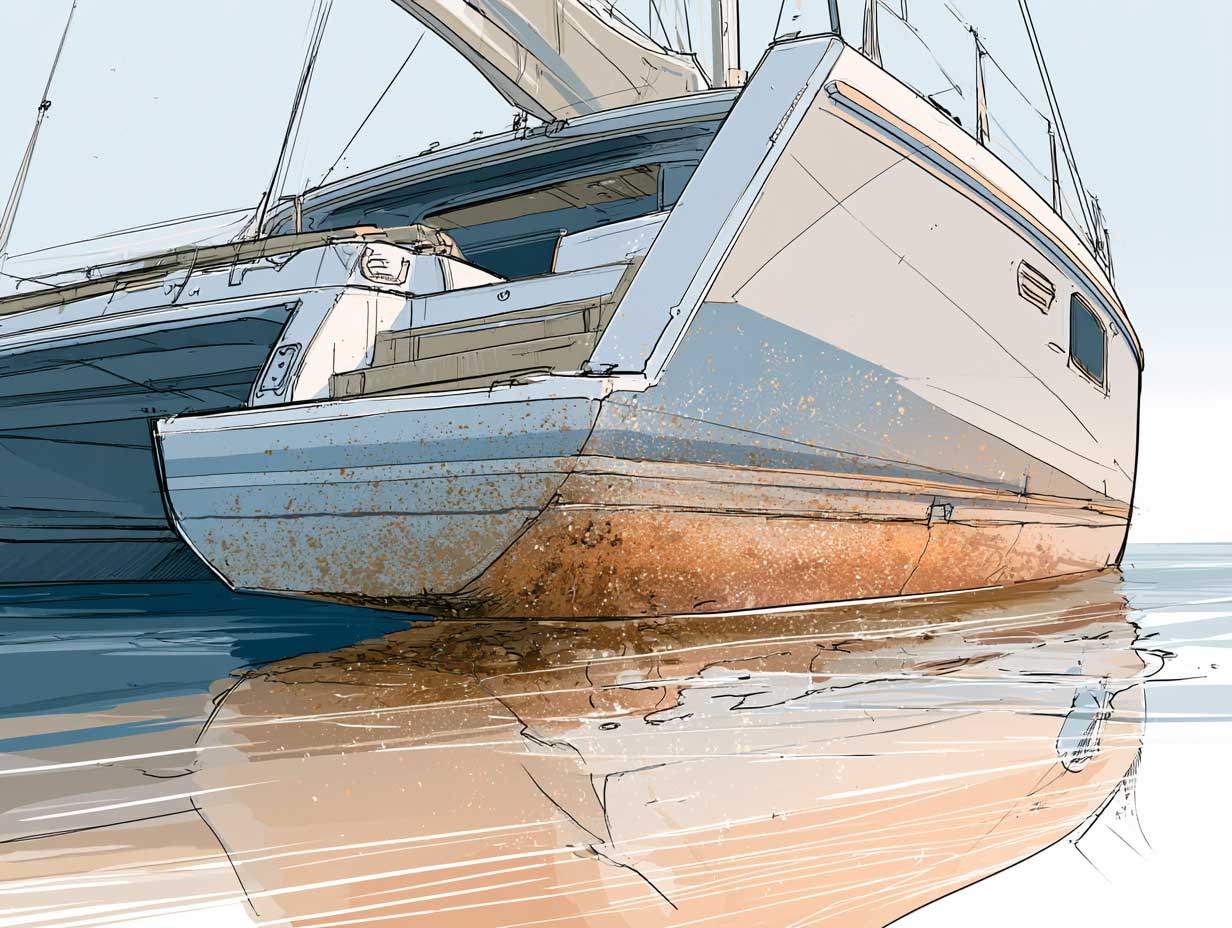
A catamaran carries two hulls below the waterline, so it asks for roughly twice the paint, labour and budget of a monohull of the same length. The right choice starts with how the boat is used. Self-polishing ablative paints suit cruising cats that move often and haul out between seasons. Hard antifouling rewards boats that stay wet for years or sail fast. Copper-epoxy systems such as Coppercoat can protect for a decade when applied and maintained well, while biocide-free foul-release coatings cut drag and fuel use for owners who sail regularly. Sailing area weighs as much as paint chemistry: warm Mediterranean and tropical anchorages foul far faster than cool northern waters. At Privilège Marine we favour hard-matrix antifoulings for their repairability and predictable behaviour worldwide. Expect to spend roughly €2,000 to €6,000 per haul-out, and plan that haul-out around your cruising calendar.
The Reason a Catamaran Needs Its Own Antifouling Strategy
At Privilège Marine, we build catamarans to cross oceans and to live aboard for years at a time. That double mission shapes everything below the waterline. A catamaran has two slender hulls, so it presents close to twice the wetted surface of a monohull of the same length. Every extra curve, keel, shaft and rudder adds area to coat and hours to the bill. A boatyard quote that looks reasonable for a 15-metre (50-foot) monohull will often double for a catamaran of the same length.
A note on propulsion. Unlike many production catamarans fitted with saildrives, Privilège yachts use shaft drives. This removes the saildrive diaphragm from the equation and reduces the maintenance burden of the underwater propulsion system. It also leaves fewer aluminium leg castings to protect below the waterline, and a simpler set of running gear to coat and inspect at each haul-out.
The way a cruising cat is used matters just as much. These boats sail flat and spend long spells at anchor in sheltered bays. Static water is where marine growth thrives. Barnacles, weed and slime settle fastest on a hull that sits still in warm, calm conditions. A coating that depends on movement to stay clean can disappoint an owner who anchors for a fortnight in a tropical lagoon.
Fouling is not only a cosmetic problem. A fouled hull drags. Even a thin film of slime raises fuel consumption, and heavier growth can lift it by 10 to 20 per cent. A heavily fouled catamaran may lose between 0.5 and 2 knots, depending on conditions. The penalty reaches well beyond the fuel tank. Drag slows the boat under sail and power alike, and it raises electrical consumption when the engines are run to charge the battery bank. Today’s owners carry lithium banks, watermakers, air conditioning and Starlink, so anything that forces longer engine hours quietly erodes the autonomy those systems are meant to provide. On a boat designed for efficient passages, that loss is felt in the tanks, the logbook and the comfort aboard.
The Difference Between Hard and Ablative Antifouling
The first real decision in any ablative vs hard antifouling comparison is how the biocide is released.
The Case for Self-Polishing Ablative Coatings
An ablative paint wears away slowly as water flows past the hull, much like a bar of soap. As the surface erodes, it exposes a fresh layer of biocide. Modern self-polishing copolymers refine this idea with a controlled release, so they keep working even during quiet weeks at anchor. Two qualities make them a common choice for cruising catamarans. They do not build up year after year, and they keep their antifouling power when the boat is hauled out for a month or longer. An owner who lays the boat up for a Mediterranean winter, then relaunches in spring after a light scuff sand, gets clean protection without stripping anything back.
The Place for Hard Antifouling
A hard antifouling, sometimes called a modified epoxy or hard matrix, dries to a firm film and leaches copper steadily whether the boat moves or not. It can be burnished smooth, which is why racers favour it for speed. It suits a boat that stays in the water for two or three years at a stretch. The trade-offs are clear. The film does not erode, so it accumulates with each season and eventually needs a careful removal. Its biocide also fades faster once the hull dries out for more than about 60 days. Repairs, on the other hand, are simple, and the surface stays fair and predictable.
The Copper-Epoxy and Foul-Release Alternatives
Two further families deserve a serious look.
Copper-epoxy coatings such as Coppercoat suspend high-purity copper powder in a water-based epoxy. The carrier holds the maximum copper allowed by law, and the manufacturer states it can provide protection for ten years or more when correctly applied and maintained. The appeal for a bluewater owner is obvious: one application instead of annual repaints. The reality is more demanding. The surface slimes up and needs regular cleaning, an occasional light abrasion is required to expose fresh copper, and application must be faultless. Owner reports range from a decade of quiet success to early failures traced to poor preparation. The application matters almost more than the product itself.
Foul-release coatings, the silicone and fluoropolymer systems led by International Intersleek and Hempel Silic One, take a different path. They carry no biocide. Their ultra-smooth, slippery surface gives fouling almost nothing to grip, and water flow shears off whatever settles. Towing-tank work has shown roughly 15 per cent less drag than self-polishing systems, and manufacturers quote fuel savings of 4 to 9 per cent. The catch is that they rely on movement. A foul-release hull left static for weeks will still grow a beard that needs wiping. For a catamaran sailed often and kept moving, the efficiency gain is real. For a boat that swings on a mooring all summer, it is a harder sell.
The Right Paint for Your Sailing Area
Choosing antifouling type by sailing area is not a refinement. It is the heart of the decision.
Warm water grows fouling fast. A boat in the eastern Mediterranean or the Caribbean fouls far quicker than one in the Baltic or on Scotland’s west coast. Salinity, current, sunlight and water quality all play a part. A high-copper self-polishing paint that lasts two seasons in cool northern water may struggle to see out a single summer in a Grenada anchorage. Tropical cruisers tend to choose the most aggressive copper loadings their hull and law allow, and accept mid-season scrubs as routine.
Regulation now shapes the shelf as well. Tributyltin has been banned for years. Since 1 January 2023 the biocide cybutryne, sold as Irgarol, is prohibited in new antifouling applications, and the European Union already barred it from sale. Some Dutch and Scandinavian waters restrict copper paints further. An owner cruising widely should confirm what is legal where the boat will float, not only where it is painted.
The Reason We Favour Hard Antifouling at Privilège
Every owner weighs these options differently, and there is no single right answer for all of them. For the sailing programme our clients follow, and for the way we think about maintenance, we favour hard-matrix antifoulings on Privilège yachts today.
The first reason is control of the result. A hard matrix is a known quantity. It is reproducible, repairable and forgiving to apply. Copper-epoxy systems reward a faultless job, but they demand controlled humidity, precise recoat windows and exact preparation. When the application falls short, the result suffers, and years later it is hard to say whether the product, the application or the upkeep was to blame. For a yard that stands behind its boats, that uncertainty is a risk worth avoiding.
The second reason is worldwide compatibility. Privilège owners cruise the Caribbean, the Pacific, the Mediterranean and Scandinavia. A hard matrix can be touched up or recoated in almost any yard on the planet, because every yard knows how to work with it. After a grounding or a structural repair, the coating is made good quickly and locally, without specialist protocols or visible mismatches. For a circumnavigation, that simplicity is itself a feature.
The thinking runs deeper than paint. We tend to choose the most reliable and most maintainable solution rather than the most novel one. The same logic explains our shaft drives, our dedicated engine rooms and our generous tankage. A well-applied hard matrix holds its thickness and its geometry, which keeps the hull surface fair and its behaviour predictable over the long run. That is the kind of dependability an ocean voyage rewards.
The True Cost of Antifouling a Catamaran
The honest figure surprises many first-time cat owners. Professional bottom work runs from roughly €300 per metre (€100 per linear foot) upward for a monohull, and a catamaran can double that because of its two hulls. On top of paint, the yard charges a haul-out fee, commonly €30 to €65 per metre (€10 to €20 per foot), plus storage and labour.
The cost per season therefore lands wide. Paint alone for a 13- to 15-metre (43- to 50-foot) cruising cat often falls between €600 and €1,500, depending on the product. A full professional haul-out, scrub, prep and recoat frequently totals €2,000 to €6,000. Industry surveys put annual routine maintenance for a well-kept catamaran, including haul-out, bottom paint and anodes, at around €3,000 to €5,000. Owners who do their own application save the labour, which is the largest single line, though the physical work across two hulls is considerable.
A copper-epoxy system reframes this maths. The upfront outlay is steep, but spread across ten years it can undercut a decade of annual repaints, provided it performs as intended.
The Art of Annual Haul-Out Planning
Sound annual haul-out planning protects both the hull and the budget. Most cruising yachts repaint every 12 to 24 months, and yard professionals advise hauling before growth takes hold rather than after. Stretching the interval to chase a saving usually costs more later in scraping and lost coating.
Timing should follow the cruising calendar and the climate. A spring relaunch suits a boat laid up over winter, since fresh paint then protects through the active growing season. Book the slot early; well-run yards fill their travel-lift schedule months ahead, and a catamaran needs a wide-enough hoist and hardstand. While the boat is ashore, inspect the propeller shafts, struts, cutless bearings and folding propellers, change the sacrificial anodes and check the through-hulls. These small jobs share the haul-out cost and rarely come cheaper than when the hull is already dry and accessible.
The Application Details That Decide Performance
Even the best antifouling paint for catamaran hulls fails if it is applied poorly. A few application tips separate a clean season from an early scrub.
Preparation comes first. Pressure-wash the hull, remove loose or flaking paint, and lightly wet-sand to give the new coat a key. Confirm compatibility before you start, since most paints want to go over their own family unless a tie-coat primer is used. Apply at the right temperature, usually between 10 and 25 degrees Celsius (50 and 77 Fahrenheit), and respect the drying window before relaunch.
What matters most is film thickness, not coat count. Two coats is the working minimum, with an extra coat at the high-wear zones: the waterline, leading edges, keels, rudders, shafts and struts. A practical trick is a contrasting signal coat applied first; when it shows through next season, the paint is worn and due for renewal. Stir thoroughly and often, because the heavy biocide settles fast and uneven mixing leaves weak spots.
The Clean Hull as Offshore Safety
Before any ocean crossing, hull condition deserves the same attention as rigging, sails and safety equipment. A clean hull is one of the simplest ways to improve safety, autonomy and comfort offshore. It holds boat speed, shortens passages, saves fuel and spares the battery bank that runs everything aboard.
A catamaran rewards this discipline twice over, once per hull. The boat we build is meant to carry its owners across oceans in confidence. A well-chosen, well-applied antifouling keeps it fast, clean and ready for the next horizon, and turns a yard chore into one of the quiet foundations of a good year afloat.
A bluewater catamaran must serve real life at sea. Privilège Marine explains why lifestyle-led layouts outlast fashion-led interiors.
A luxury bluewater catamaran is not judged only by its fabrics, surfaces or styling. Those elements matter, but they can change. A layout is different. It defines how the owner wakes up, cooks, works, hosts, rests, stores equipment, moves at sea and lives during long passages. For Privilège Marine, this distinction is central. We build ocean-crossing catamarans that must also work as floating homes. A colour palette may be updated in a refit. A timber veneer may be replaced. Lighting, upholstery and hardware can evolve with taste. The core arrangement of cabins, storage, galley, circulation, watchkeeping areas and private spaces has a deeper impact. It shapes the owner’s daily life for years. In a luxury sailing catamaran, fashion can create appeal. Lifestyle creates value. The best yacht layout design starts with the owner’s real use, not with a trend board.
The real test of a yacht begins after the first season
The launch of a luxury yacht often focuses attention on the visible. The first photographs show the saloon, the materials, the lighting, the cushions, the tableware and the mood. This is understandable. Design sells emotion. It gives a yacht its first impression. Yet a luxury bluewater catamaran is not a showroom. It is a vessel made for movement, distance and repeated use.
The real test starts after the delivery cruise. It starts when the owner spends several weeks aboard. It starts when the yacht crosses from the Mediterranean to the Caribbean. It starts when guests arrive with luggage, water toys, diving gear, spare parts, food supplies and expectations. It starts when two people live aboard for months and need privacy, silence, safe circulation and proper storage.
At Privilège Marine, this is where our view of luxury becomes clear. A yacht must be beautiful. It must also function with discipline. On a bluewater catamaran, the interior is not decoration around a hull. It is part of the vessel’s operating logic. It affects weight distribution, access to systems, ventilation, storage, crew routines, privacy and safety.
This is why lifestyle-led layout matters more than fashionable styling. A fashionable interior can impress at a boat show. A well-conceived layout supports life at sea after the novelty has passed. The difference becomes obvious at anchor, underway and during long-distance cruising.
A 54-foot or 60-foot catamaran offers generous volume compared with a monohull of similar length. That volume creates opportunity, but also risk. Poorly planned space can look impressive and still be tiring to use. A large saloon can feel luxurious in photographs and impractical at sea if handholds, seating geometry and circulation are weak. A guest cabin can look elegant and still fail as a long-term storage solution. A galley can appear residential and still disturb watchkeeping routines if it is placed without thought.
The best yacht layouts begin with a simple question: how will the owner really live?
The owner’s routine should decide the plan
There is no universal owner. Some sail as a couple. Some sail with family. Some use a skipper and hostess. Some bring friends for short periods. Some want privacy from crew. Some need a proper office. Some plan ocean crossings. Some use the yacht mainly in the Mediterranean with seasonal passages. Some want a large owner’s suite. Others prefer more guest cabins and flexible spaces.
A production-led approach often begins with market averages. It asks how many cabins will be easiest to sell. It follows the plan that seems safest commercially. That may work for charter-focused boats, where cabin count and quick turnover matter. It is less convincing for an owner-focused bluewater catamaran.
A private owner does not live by averages. A yacht that will be used for serious cruising should be shaped around the owner’s real pattern of life. The layout should consider who sleeps aboard, who works aboard, who cooks, who maintains the yacht, how often guests join, how much equipment is carried, and whether the yacht is operated with or without crew.
This is the reason Privilège Marine treats personalization as a technical subject, not as a decorative option. A custom yacht interior begins with use. Materials come later. The layout must answer practical questions.
Where does the owner sleep on passage? Where do guests put wet clothing? Can the galley function safely when the yacht is moving? Is there enough freezer capacity for long cruising? Can tools and spare parts be stored without invading living spaces? Can the owner work privately during a transatlantic passage? Can children move safely between cockpit and saloon? Can crew service the yacht without disturbing the owner’s cabin?
These are not minor details. They are the difference between a yacht that is admired and a yacht that is lived in.
The layout carries more value than the colour palette
Interior fashion changes quickly. Beige gives way to grey. Gloss gives way to matte. Dark veneers return. Light oak becomes dominant. Curves come back. Bronze hardware replaces stainless steel. Textile trends move faster than the construction cycle of a yacht.
A yacht built for long ownership cannot be governed by this rhythm. Colours, fabrics, veneers, carpets, wall coverings, lighting scenes and loose furniture can be changed through time. Aesthetic updates are part of normal ownership. The global yacht maintenance and refit market was valued at USD 2.5 billion in 2023 and is forecast to reach USD 4.9 billion by 2032, according to Global Market Insights. The same report states that refit represented around 70 percent of the market in 2023. Owners clearly update yachts. They refresh them, modernize them and adapt them.
The lesson is simple. Materials can evolve. A layout is far more consequential.
Moving a cushion is easy. Moving a structural bulkhead is another matter. Changing a fabric can be done in a winter period. Rebuilding a cabin arrangement affects joinery, systems, wiring, plumbing, ventilation, lighting, air-conditioning ducts and weight. On a catamaran, it can also affect balance between hulls. A poor initial plan is expensive to correct and sometimes impossible to correct elegantly.
This is why the layout should be treated as a long-term decision. The yacht’s plan should outlast fashion. It should be calm, rational and adaptable. It should allow the owner to change atmosphere without having to change the boat’s logic.
The strongest luxury sailing catamarans are not the ones that follow a momentary visual language. They are the ones that can age well because their architecture is right.
The bluewater catamaran must work as a home and as a vessel
A bluewater catamaran has a double role. It must be a safe ocean-going platform. It must also be a home. These two roles cannot be separated.
The Privilège Signature 510 illustrates the point. With a length overall of 17.09 metres (56 feet), a beam of 7.98 metres (26 feet), 600 litres (158 US gallons) of fresh water and 800 litres (211 US gallons) of fuel, it is designed for autonomous bluewater sailing. Its CE A-12 certification, storage capacity and protected helm station are not lifestyle details. They are part of its long-distance purpose.
Inside, the Signature 510 includes one of the clearest examples of layout as lifestyle: the full-beam owner’s suite forward in the nacelle. This is more than a large cabin. It changes the owner’s relationship with the yacht. It gives privacy, panoramic views and a residential feeling that supports long periods aboard. For a couple planning distance sailing, this matters more than a fashionable finish.
The Signature 580 shows the same philosophy at a larger scale. At 19.10 metres (about 62 feet 8 inches) overall, with a beam of 9.18 metres (30 feet 1 inch), 2 x 485 litres of fuel and 2 x 450 litres of fresh water, it offers a different level of volume. The flybridge, forward cockpit access, saloon connection and 4-to-5 cabin arrangement create a broader range of use. The owner can host, sail with crew, welcome family or create more private guest separation.
These figures matter because they show that layout cannot be discussed only as design. Capacity, circulation and accommodation are linked. A long-range cruising catamaran must carry people, water, fuel, equipment, provisions, safety gear, tools and personal objects. The more serious the sailing programme, the more the layout must absorb real life.
The storage question is a luxury question
Storage is rarely glamorous. It is also one of the most honest measures of a yacht.
A boat used for short coastal trips can hide a lack of storage. A liveaboard yacht cannot. Owners who sail for weeks or months need space for spare filters, belts, pumps, tools, bedding, foul-weather gear, medical supplies, provisions, personal luggage, cleaning products, water toys, paddleboards, diving equipment, safety gear and sometimes professional equipment.
Poor storage has a direct effect on comfort. Loose objects occupy cabins. Technical items invade guest areas. Cockpit lockers become overloaded. The yacht begins to feel smaller than it is. The owner feels the compromise every day.
Good storage is different. It is planned, distributed and accessible. It respects the difference between daily-use objects, heavy technical items, long-term spares and personal belongings. It avoids placing weight thoughtlessly. It allows the yacht to remain calm, ordered and safe at sea.
This is where long-term experience changes design priorities. A fashion-led interior may remove storage to create a cleaner visual effect. A bluewater layout must resist that temptation. Minimalism at sea can become inconvenience if it removes practical capacity.
At Privilège Marine, long-term liveaboard comfort means accepting the reality of objects. Owners bring life aboard. A yacht should make room for that life without losing elegance.
The flexible cabin is becoming a serious design tool
The modern yacht owner often lives differently from the traditional cruising family. Remote work is now normal. Owners may want a private office with acoustic separation. They may want a gym, a media room, an art space, a children’s cabin, a walk-in wardrobe, a technical storage room or a treatment room. These uses are not decorative fantasies. They reflect how people with time, mobility and global lives actually use yachts.
The new Privilège Signature 600, unveiled in 2026, makes this shift explicit. The yacht evolves from the Signature 580 and focuses on the quality of life aboard, the feeling of space and the ability to shape the yacht around the owner’s way of living at sea. One defining feature is the aft portside cabin, treated as a flexible space rather than a fixed answer. It can become a cinema, gym, office, storage area, artist’s studio or walk-in wardrobe.
This approach is important because it moves personalization beyond colours. It recognizes that a cabin can be more valuable as a function than as another berth. For some owners, the fifth cabin is less useful than a proper office. For others, storage is more valuable than a sofa. For another family, a media room may make the yacht more enjoyable during long periods at anchor.
The market often counts cabins. Owners count usefulness.
This is one of the clearest differences between a charter logic and an owner logic. Charter value often rewards maximum berths. Private value rewards relevance. A yacht designed for its owner should not apologize for that. It should be frank about priorities.
The galley reveals the owner’s lifestyle more than expected
The galley is one of the most revealing decisions in yacht layout design. It tells us whether the yacht is intended for private family use, professional service, social entertaining or long-distance autonomy.
A galley-up arrangement connects cooking with the saloon and cockpit. It suits owners who cook themselves, enjoy informal life and want the person preparing food to remain part of the conversation. A galley-down arrangement can create separation, free social space and support crewed service. Neither is universally better. Each answers a different lifestyle.
The wrong choice is costly because the galley is a technical zone. It involves refrigeration, ventilation, electrical loads, gas or induction choices, water supply, storage, waste management and safety. It also affects smell, noise, movement and service routes.
For long-distance cruising, the galley must be secure underway. Work surfaces need usable geometry. Storage must prevent movement. Cold storage should match the intended autonomy. The cook must be able to brace. The path from galley to cockpit must be logical. A beautiful galley that fails during a passage is not luxurious.
This is where the motorboat industry offers useful lessons, especially in the way it treats residential comfort, sightlines and owner experience. Yet a sailing catamaran cannot simply copy a motor yacht. It heels less than a monohull, but it still moves. It must respect weight, sea state, watch systems and access to sailing functions. The result should feel residential without forgetting the ocean.
The owner’s suite should be designed around rest, privacy and time
In bluewater cruising, the owner’s cabin is not only a place to sleep. It is the private centre of the yacht. It must allow recovery after watches, privacy when guests are aboard, storage for long ownership and a sense of calm during changing weather.
This is why the position and structure of the owner’s suite matter. A forward nacelle suite, as seen in the Privilège Signature 510, creates a strong owner identity. It allows the yacht to feel like a private residence rather than a collection of cabins. Other owners may prefer a hull-based suite with greater separation from guest circulation. The right answer depends on the use.
Privacy has practical dimensions. Can guests cross the yacht without passing the owner’s door? Can crew access technical spaces without entering private zones? Can one person sleep while another uses the saloon? Is the bathroom arrangement suitable for long-term use? Is there enough wardrobe volume for extended cruising? Is the bed accessible from both sides? Can the cabin ventilate naturally?
These details sound small until they are repeated every day. Repetition is the true measure of comfort. A layout that works once at a boat show may fail after three months aboard. A layout that respects routines gains value with time.
The circulation plan protects safety and serenity
Circulation is one of the least discussed elements of catamaran interior design. It deserves more attention.
At sea, people move in imperfect conditions. They carry mugs, plates, tools, bags, jackets and children’s items. They move at night. They move when tired. They move when the yacht accelerates or slows in a sea. Good circulation reduces friction. It also reduces risk.
On a catamaran, the relationship between cockpit, saloon, helm station, flybridge, side decks and cabins is central. The Signature 510’s protected helm station is designed to offer visibility while remaining connected to cockpit life. The Signature 580’s helm position, forward cockpit access and flybridge arrangement show how movement between navigation, relaxation and social areas becomes part of the yacht’s character.
A yacht layout should never make daily movement feel like negotiation. Clear pathways, proper steps, protected transitions, visible handholds and logical access to technical systems support comfort. They also support confidence.
This is part of offshore safety. Safety is not only equipment. It is the way a yacht allows people to behave when tired, wet or in motion.
The market rewards personalization, but owners need discipline
The luxury yacht market continues to expand. Grand View Research estimated the global yacht market at USD 10.34 billion in 2025 and projected it to reach USD 15.52 billion by 2033. It also identified the 20-to-50-metre segment as the largest length category by revenue share in 2025. This is the area where many serious owner-operated and crew-assisted yachts sit.
At the same time, Capgemini reported that global high-net-worth individual wealth rose 4.7 percent in 2023, while the HNWI population increased 5.1 percent. This matters because the modern yacht buyer is often more experienced, more mobile and more demanding. He may own several homes. He may compare the yacht with private aviation, boutique hotels, architecture, wellness spaces and remote working environments. He expects relevance.
Yet personalization requires discipline. A bespoke yacht should not become a catalogue of impulses. The best layouts are personal, but not chaotic. They prioritize. They distinguish between essential use and occasional fantasy. They protect resale without sacrificing ownership pleasure. They allow a future refit to update the atmosphere without destroying the original intelligence of the plan.
This is why the dialogue between owner, shipyard, naval architect and designer is essential. The owner brings lifestyle. The shipyard brings experience. The naval architect protects performance and safety. The interior designer translates use into atmosphere. When these roles work together, the yacht becomes coherent.
The best layout is the one that still makes sense ten years later
A yacht built for ocean cruising should be judged over time. The question is not only whether it looks current at launch. The question is whether it still makes sense after ten years of ownership, refits, passages, guests, maintenance and changing family needs.
This is where layout has its deepest value. A good plan can receive new materials. It can accept updated lighting. It can be refreshed with new textiles. It can adapt through soft changes because its core logic is strong. A weak plan keeps asking the owner to compromise.
At Privilège Marine, our position is clear. A bluewater luxury catamaran should be built around life, not fashion. It should cross oceans with confidence. It should provide the comfort of a real home. It should reflect the owner’s habits, ambitions and private rhythm. It should also be honest about what cannot be changed easily.
Fashion has a place. It gives pleasure, identity and freshness. It should sit on top of a stronger structure. In yacht design, the lasting luxury is not the colour chosen for the first season. It is the ease of living created for every season after that.
The owners who understand this make better boats. They choose layouts that support how they live, not how a trend says they should live. They know that a yacht is not a static object. It is a private world in motion. The layout is the architecture of that world.
The smartest decision is to design it around real life from the beginning.
The best Sardinian coves, marinas, restaurants and clubs for 50 to 70 ft luxury catamarans, from calm bays to Porto Cervo nightlife.
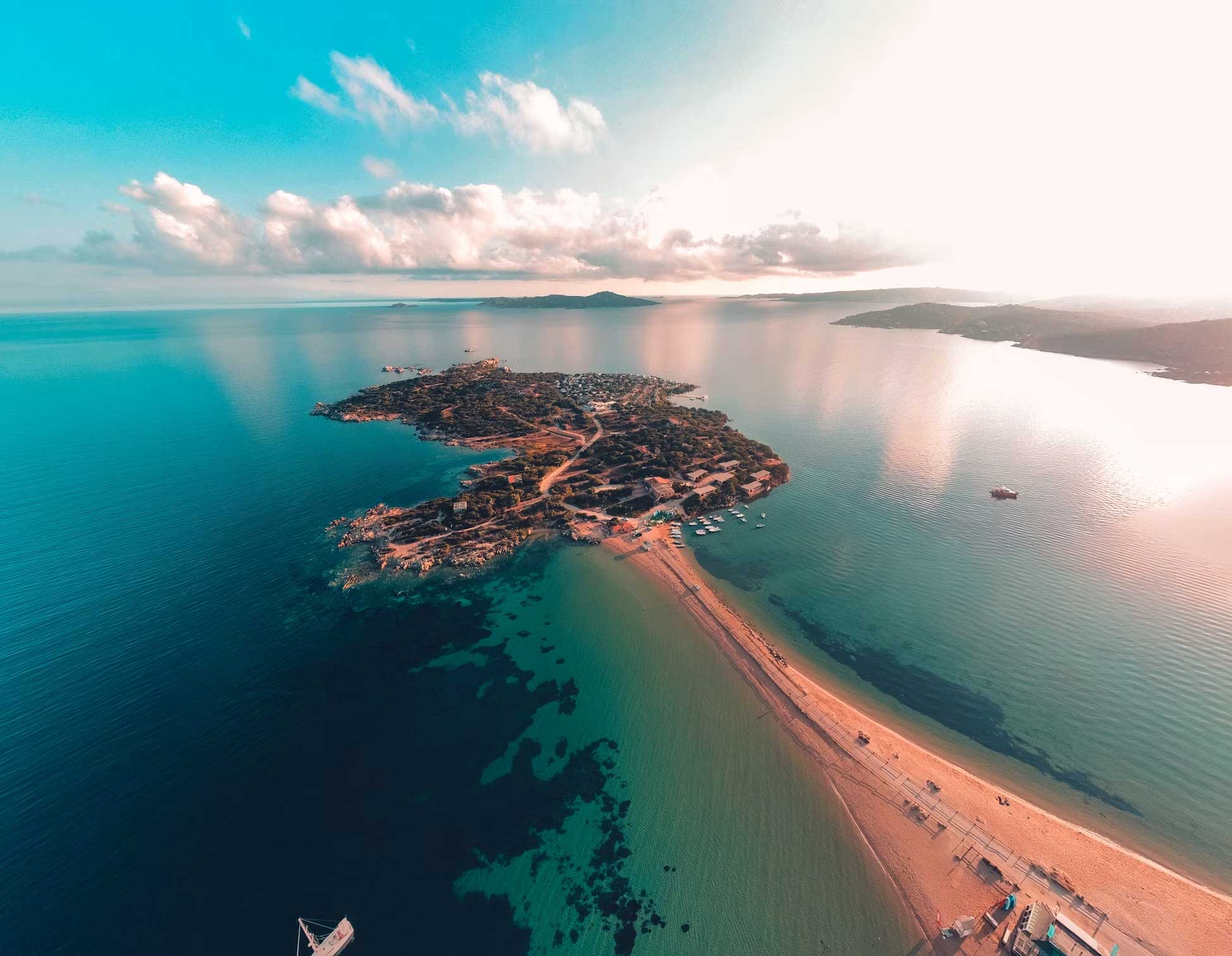
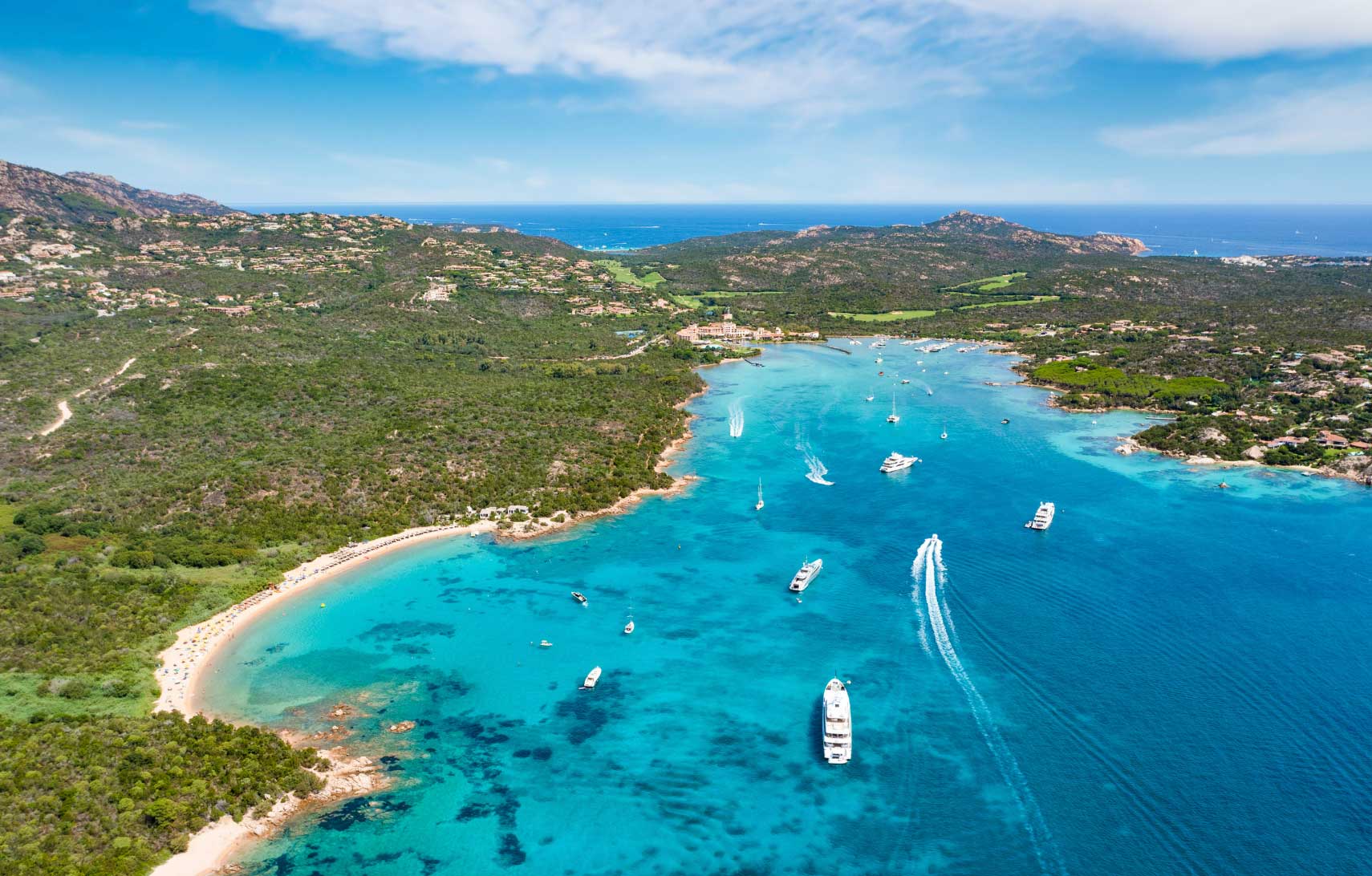
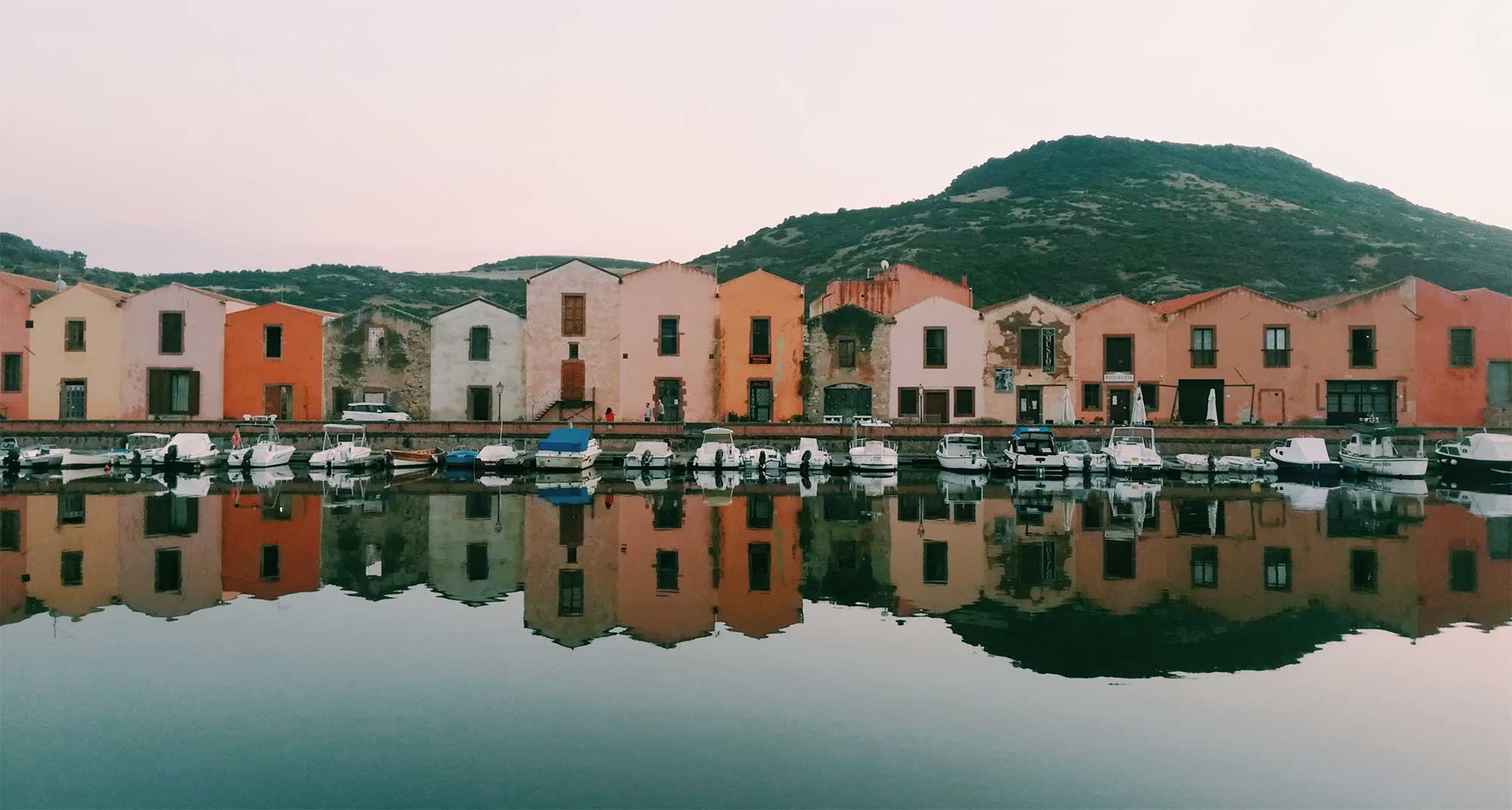
Sardinia is one of the most rewarding cruising grounds in the Mediterranean for a large luxury catamaran. A 50 to 70 ft yacht, about 15.2 to 21.3 metres, can use the island in a way that neither a small day boat nor a deep-draft superyacht can. It can anchor in clear water, remain stable overnight, carry guests in comfort and move between quiet coves, serious marinas, beach clubs and high-end restaurants. The best areas depend on the mood of the owner. Cala di Volpe and Romazzino deliver elegance and calm. Liscia Ruja and Cala Petra Ruja suit beach-club days. Porto Cervo brings restaurants, regattas and status. Baja Sardinia has the strongest sunset and nightlife scene. La Maddalena offers the most spectacular scenery. Tavolara gives a wilder southern alternative. For Privilège Marine owners, Sardinia is a perfect demonstration of freedom at sea.
The large catamaran reads Sardinia differently
Sardinia is often sold through beach photography. For the owner of a large catamaran, it should be read through shelter, seabed, tender access, berth availability, restaurants, clubs and wind direction.
A 50 to 70 ft catamaran, roughly 15.2 to 21.3 metres, needs more than a pretty bay. It needs space to swing. It needs holding that is suitable for anchoring. It needs protection from the Maestrale when the north-westerly wind builds. It needs safe tender landings. It also needs a plan B in a marina when weather, guests or logistics require it.
This is why Sardinia works so well for a Privilège Marine owner. Our yachts are built for ocean passages, but they are also floating homes. The same qualities that matter offshore become valuable along the Sardinian coast. Autonomy allows the yacht to stay longer at anchor. Beam creates stability. A protected cockpit turns the anchorage into a living room. A real galley allows lunch on board when restaurants are full. Proper storage supports several days away from shore.
Sardinia gives owners a rare choice. They can anchor in quiet water in the morning, send a tender ashore for lunch, return to the yacht for the afternoon, then move by tender or car to dinner and music in the evening. The yacht remains the private base. The island provides the atmosphere.
The best itinerary should combine silence and social energy. It should avoid treating the coast as a checklist. Sardinia rewards owners who stay in fewer places and understand them properly.
The Costa Smeralda is the natural gateway for large yachts
The Costa Smeralda is the logical starting point for most large catamaran cruises in Sardinia. It concentrates marinas, anchorages, restaurants, clubs, hotels, provisions, technical services and fast access to Olbia Costa Smeralda Airport. For owners flying in with family or guests, that matters.
Marina di Porto Cervo is the symbolic centre. It offers around 700 berths and can accommodate yachts up to 160 metres, which means a 50 to 70 ft catamaran sits comfortably within its operating range. It is the best marina for owners who want high visibility, luxury retail, yacht services, regatta culture and direct access to Porto Cervo’s restaurants.
IGY Portisco Marina is more practical as an operational base. It has 589 berths and accepts yachts up to 90 metres, with deep water and a location between Porto Cervo and Porto Rotondo. It is a strong choice for provisioning, crew changes, repairs and a quieter first or last night. Cala dei Sardi is another useful base, especially for catamarans and charter logistics. It sits close to the Gulf of Cugnana and gives easy access to Porto Rotondo, Portisco and the northern Costa Smeralda.
Marina di Olbia is less glamorous, but it is extremely useful. It offers 270 berths and can take large yachts, with direct proximity to the airport, city services and road connections. For owners who value efficiency over display, Olbia is a sensible embarkation point.
For restaurants near this first cruising zone, Porto Rotondo gives two easy names. Tartarughino is useful for owners who want a relaxed seafood lunch or dinner with a polished but informal local mood. It works well after a day at anchor near Porto Rotondo or after a berth in Portisco. Bambusa, in Piazzetta I Ginepri, is better for a more cosmopolitan dinner, with Mediterranean cuisine influenced by international flavours. It suits guests who want a polished port evening without the intensity of Porto Cervo.
For nightlife, Country Club Porto Rotondo is the local reference. It has been part of the Porto Rotondo summer scene since 1980 and is the place to choose when the group wants dinner to become a long night. It is less showy than some Porto Cervo addresses, but it has history, music and a more local Costa Smeralda rhythm.
The Cala di Volpe anchorage is the elegant centre of the coast
Cala di Volpe is one of the most famous bays in the Mediterranean. Its appeal is easy to understand. The water is clear, the landscape is sculpted by granite, and the bay has a calm, refined atmosphere when the weather is settled. For a luxury bluewater catamaran, it is one of the most comfortable places to spend a day or a night in the right conditions.
For a 50 to 70 ft catamaran, Cala di Volpe offers space, scenic value and access to some of the most desirable restaurants on the coast. The skipper should still be disciplined. The bay is popular in high season. The anchorage should be chosen with care, avoiding Posidonia seagrass, swimming zones and areas with too much tender traffic. A catamaran’s modest draft helps, but beam and swinging radius still matter.
The dining scene is the reason many owners return. Matsuhisa at Cala di Volpe is the address for guests who want Nobu-style Japanese-Peruvian cuisine in a Sardinian setting. It works well for a refined evening after a quiet day on board. Beefbar Cala di Volpe is the better choice when the group wants a more international menu built around premium meat, polished service and hotel glamour. Quattro Passi al Pescatore, in Porto Cervo, also fits this area because it is one of the classic waterfront seafood restaurants to book when staying in or near Cala di Volpe and moving ashore by car or tender transfer.
Cala di Volpe is where owners go for elegant understatement. It has celebrity weight, but it does not need to be loud. Superyachts sit in the bay. Hotel guests move between restaurants and private decks. Tenders run quietly across the water. The best way to use the bay is to anchor early, swim before the traffic builds, have lunch on board, then go ashore for dinner.
This is not the best place for owners seeking total solitude in August. It is the right place for owners who want scenic beauty, refined dining and the feeling of being inside the classic Costa Smeralda story.
The Romazzino and Pevero bays are made for calm days with easy access
Romazzino and Pevero are useful because they sit close to Porto Cervo and Cala di Volpe while offering a softer rhythm. They work well when the owner wants a beautiful anchorage without committing to the theatre of Porto Cervo marina.
Grande Pevero and Piccolo Pevero are practical in settled weather. The beaches are attractive, the water is clear, and road access from shore is simple. This makes the area useful for guests who want to meet a car, play golf nearby, go to lunch, or move to Porto Cervo in the evening. For a large catamaran, the key is to anchor outside the busy beach zone and keep enough room for wind shifts and other yachts.
Romazzino is quieter and more discreet. It suits owners who want the Costa Smeralda without its full social volume. The anchorage gives the yacht a strong sense of place: pale sand, blue water, low green hills and granite edges. It is excellent for families, couples and guests who want swimming, paddleboards and lunch on board.
For restaurants, the best approach is to use the yacht as the base and move by tender or road transfer to Cala di Volpe or Porto Cervo. Matsuhisa and Beefbar remain strong choices from Romazzino. Quattro Passi al Pescatore works well for a more maritime dinner in Porto Cervo. Novikov Porto Cervo is the choice when guests want Asian fusion, a fashionable atmosphere and a terrace view over the bay.
For a club mood, Pevero is not the strongest area. That is its advantage. It is better for a quiet evening, followed by a short transfer to Porto Cervo if the group changes its mind. Owners who want calm waters should consider this zone carefully, especially outside peak August weeks.
The Liscia Ruja and Cala Petra Ruja coast is built for beach-club energy
Liscia Ruja is one of the broadest and most attractive beaches on the Costa Smeralda. For a large catamaran, it offers a more open feeling than Cala di Volpe. The water is bright, the beach is long, and the view toward the offshore islands gives the anchorage a natural sense of space.
This area suits owners who want a day anchored off a famous beach, with swimming, paddleboards and a relaxed social tone. It is not a protected refuge in all winds, so the skipper must read the forecast carefully. In settled conditions, however, a 50 to 70 ft catamaran can sit beautifully here, with the yacht acting as a private floating beach house.
Cala Petra Ruja adds a stronger social element because Nikki Beach Costa Smeralda is located there. This is the address to choose when guests want a beach-club lunch, music, sunbeds, champagne, cocktails and a polished international atmosphere. The venue describes its style as barefoot luxury, and that is the right way to use it. It is relaxed in dress, but carefully staged in service.
The reason to go to Nikki Beach is clear. It gives a group energy without requiring a full marina stop. Owners can keep the yacht anchored, run guests ashore by tender according to local conditions and club arrangements, then return to the privacy of the catamaran when the mood becomes too loud.
This zone is best for owners who want beach-club energy rather than silence. In July and August, it can be busy. In June and September, it becomes far more attractive. The water is still warm enough for long swims, but the coast feels less crowded.
The Porto Cervo stop is for restaurants, regattas and status
Porto Cervo should be used with intention. It is not the quietest stop in Sardinia. It is the place to enter the social and yachting centre of the Costa Smeralda.
For a 50 to 70 ft catamaran, Marina di Porto Cervo offers the most complete luxury infrastructure in the area. Berthing here gives immediate access to restaurants, boutiques, yacht services, security, provisions and the Yacht Club Costa Smeralda. During the regatta season, the atmosphere becomes especially interesting. The 2026 Yacht Club Costa Smeralda calendar includes events such as the Giorgio Armani Superyacht Regatta, the Rolex TP52 World Championship, the Smeralda 888 events and the Palermo-Porto Cervo-Montecarlo race.
This is why sailors should go to Porto Cervo at least once. The marina is not only about wealth. It is also one of the Mediterranean’s great sailing stages. Owners who appreciate yacht design, racing culture and maritime theatre will find it worthwhile.
For dinner, Quattro Passi al Pescatore is the classic choice. It is a waterfront restaurant and one of Porto Cervo’s most established seafood addresses. It suits owners who want dinner to feel connected to the port rather than hidden in a hotel. Novikov Porto Cervo is more urban and international. It works for guests who want Asian fusion, a dressier atmosphere and a fashionable table. For a more hotel-led dinner, the Cala di Volpe restaurants remain within easy reach by road.
For clubs, Porto Cervo has a changing seasonal scene, so reservations and current programmes matter. The stronger constant is the wider Porto Cervo and Baja Sardinia axis. Owners who want nightlife should plan dinner in Porto Cervo, then move toward Phi Beach or Country Club Porto Rotondo depending on the night.
Porto Cervo is where celebrities, yacht owners and luxury travellers concentrate because the system is complete. There are marinas, hotels, restaurants, shopping, privacy and security. For some owners, it will feel too staged. For others, it is exactly why they came.
The Baja Sardinia and Phi Beach area is the sunset and nightlife choice
Baja Sardinia is the right answer when the brief is action, music and a strong evening atmosphere. It is close enough to Porto Cervo to be part of the same social circuit, but its mood is more sunset-driven and club-oriented.
Phi Beach is the key venue. It sits at Forte Cappellini and is one of the most established beach-club and nightlife addresses in Sardinia. The reason to go is the setting. The rocks, the west-facing view and the sunset create a natural amphitheatre. The venue then adds dining, DJ sets and a late-night programme.
For yacht owners, Phi Beach is particularly useful because it provides a tender service and the possibility of booking buoys, subject to availability. This matters for a large catamaran. It reduces the uncertainty of getting guests ashore and makes the evening easier to plan. Owners should still check conditions, availability and local rules before committing.
The restaurant programme at Phi Beach has evolved, with Luciano’s presented as a restaurant concept inspired by Mediterranean coastal and inland traditions. Nammos Baja Sardinia also brings its high-energy seaside style to the area. These names give the group options. Luciano’s is better for a dinner that still feels linked to Sardinia and the sea. Nammos is the stronger choice when the guests want glamour, music and an international beach-club mood.
This area is not for a quiet night. It is for the owner who wants the yacht to be the private retreat before and after the party. A Privilège catamaran works well in that role. Guests can spend the day in calm, enjoy sunset ashore, then return to a quiet cabin and a stable platform.
The La Maddalena Archipelago is the scenic prize with rules
The La Maddalena Archipelago is the most spectacular cruising area in northern Sardinia. Spargi, Budelli, Razzoli, Santa Maria and Caprera create some of the clearest water and most dramatic granite scenery in the Mediterranean. For a large catamaran, this is where the yacht feels fully justified.
The area is also a national park. That means the skipper must use current official rules, permits and zone maps. Permits are required. Anchoring is regulated. Posidonia oceanica seagrass must be protected. Overnight anchoring rules have changed in recent years, so captains should verify the current framework before arrival rather than relying on older cruising guides.
For scenic anchorages, Cala Corsara on Spargi is one of the major names. It is famous for its pale sand, rock shapes and extraordinary water. Budelli’s Spiaggia Rosa is protected and should be admired respectfully from the sea. Caprera is better for owners who want a quieter and more rugged mood, depending on wind and permitted zones. The area around Porto Palma can be useful in the right conditions.
Restaurants and clubs are more limited here, which is part of the charm. La Grotta in La Maddalena town is a good restaurant to choose for seafood and local continuity. It has been part of the island’s dining scene since 1958 and works well after a day in the park. Zi Antò at Punta Tegge is another strong choice, especially for owners who want a waterfront meal with a more traditional Sardinian feel. La Scogliera, on its private-islet setting near the archipelago, is the more glamorous option. It is the one to choose for a high-end seafood lunch or dinner reached by boat transfer.
La Maddalena is best for calm seekers, families, swimmers and owners who value landscape over nightlife. It is also where a Privilège’s autonomy matters. The best experience is to slow down, follow the rules, avoid crowded hours and let the anchorage do the work.
The Tavolara and Punta Coda Cavallo area gives a wilder southern alternative
South of Olbia, Tavolara and Punta Coda Cavallo offer a different version of Sardinia. Tavolara rises sharply from the sea and gives the area a more monumental character than the Costa Smeralda. The coastline feels wilder. The water around Molara, Tavolara and Cala Brandinchi can be exceptional.
This area belongs to the Tavolara Punta Coda Cavallo Marine Protected Area. It covers about 15,000 hectares of sea and around 40 kilometres of coastline. Navigation, anchoring and mooring depend on zones. Some areas restrict free anchoring and require official mooring buoys. A large catamaran should plan carefully and avoid improvisation.
The reason to go is contrast. After Porto Cervo, Cala di Volpe and Baja Sardinia, Tavolara feels cleaner and less social. It suits owners who want natural scenery, swimming and a more elemental day at sea. It is also practical because Olbia remains close.
The restaurant to know is Da Tonino Re di Tavolara. It is located on Tavolara Island and can be reached by boat, with a pier close to the restaurant. The reason to go is the setting as much as the food. A meal there gives guests the feeling of arriving somewhere by sea, not simply visiting another coastal restaurant. It is simple, memorable and geographically specific.
For a more refined shore option, Ristorante La Corona on Tavolara is also worth considering. It suits guests who want the island setting with a more polished dining mood. This area is not a club destination. It is a place for lunch, swimming, landscape and a quieter night on board.
The Cagliari and Villasimius coast rewards longer cruises
The south of Sardinia is often overlooked by owners who focus only on the Costa Smeralda. That is a mistake for longer cruises. Cagliari, Villasimius and the Capo Carbonara area offer a different rhythm, with broader beaches, strong food culture and less dependence on the celebrity circuit.
Villasimius and Capo Carbonara are especially attractive for owners who want clear water and natural scenery. The marine protected area requires attention to zones, anchoring rules and seagrass protection. This is another place where the captain should check official information before entering.
For restaurants, Villasimius works well for a more local dinner after days at anchor. Cagliari is the stronger gastronomic stop. Da Marino al Saint Remy is a useful name for seafood and city dining. Luigi Pomata is a strong choice for tuna, contemporary Sardinian cooking and a more chef-led experience. Antica Cagliari is better for a traditional meal in the old town, especially when guests want Sardinian dishes and a warm local atmosphere.
For bars and evening life, Libarium Nostrum is one of the more memorable Cagliari choices because of its terrace and city views. It works after dinner rather than as a yacht-club style venue. Cagliari does not have the same yacht glamour as Porto Cervo, but it has a real city behind it. That gives the cruise cultural depth.
The south suits owners with time. It is better for a two-week itinerary than a short Costa Smeralda escape. It rewards those who want Sardinia beyond the familiar names.
The ideal Sardinian route depends on the owner’s mood
The best Sardinian itinerary for a 50 to 70 ft catamaran should be built around mood, not distance.
For calm, the strongest choices are Romazzino, selected parts of La Maddalena outside peak season, Caprera, Tavolara and the quieter southern coast. For a refined Costa Smeralda feeling, choose Cala di Volpe, Pevero and Porto Cervo. For beach-club energy, go to Nikki Beach at Cala Petra Ruja. For sunset, music and nightlife, go to Phi Beach and Baja Sardinia. For logistics, use Olbia, Portisco, Cala dei Sardi or Porto Cervo. For a proper sailing culture stop, time the visit around the Yacht Club Costa Smeralda calendar.
The restaurants should follow the area. Cala di Volpe means Matsuhisa or Beefbar. Porto Cervo means Quattro Passi al Pescatore or Novikov. Porto Rotondo means Tartarughino or Bambusa. Baja Sardinia means Phi Beach, Luciano’s and Nammos. La Maddalena means La Grotta, Zi Antò or La Scogliera. Tavolara means Da Tonino Re di Tavolara or La Corona. Cagliari means Luigi Pomata, Da Marino al Saint Remy, Antica Cagliari and Libarium Nostrum.
This is the real pleasure of Sardinia by catamaran. The yacht gives the owner the ability to change atmosphere without changing identity. A Privilège can be a quiet home at anchor in the morning, a platform for friends at lunch, a tender base for a beach club in the afternoon and a calm private retreat after dinner.
Sardinia works because it gives that freedom real structure. It has the bays, marinas, restaurants, clubs, protected areas and road access to make a large catamaran meaningful. The owner simply needs to choose the right mood for each day.
A luxury catamaran is more than an asset. It is a private space for freedom, family, time and long-distance life at sea.
A luxury bluewater catamaran is often described through length, beam, sail area, finish level and performance. Those figures matter. They define safety, autonomy and value. Yet they do not explain why an owner chooses to build such a yacht. A Privilège is never just a yacht because it carries a larger decision: to change the way time is spent. It becomes a home, a family base, a private retreat, a passage-maker and a life project. It allows owners to cross oceans, but also to recover something rarer than distance: presence. At Privilège Marine, we build safe, robust and refined bluewater catamarans for people who want more than occasional boating. They want a yacht shaped around their family, habits, dreams and future. The true value of a bluewater luxury catamaran lies in what it makes possible.
The yacht becomes meaningful when it changes daily life
A yacht can be measured. A life project cannot be measured in the same way.
A luxury bluewater catamaran has a length overall, a beam, a displacement, an engine specification, a sail plan and a certification category. These details are essential. They tell an owner whether the boat can cross oceans, carry supplies, protect people and remain reliable over time. Yet they do not explain why a person decides to build one.
The deeper reason is rarely technical at first. It is personal.
People do not come to Privilège Marine only because they want a boat. They come because they want time differently arranged. They want mornings at anchor with their family. They want distance from schedules that have become too full. They want to cross the Atlantic with confidence. They want to show their children another map of the world. They want a private place where life slows down without becoming smaller.
This is why a yacht is never just a yacht. At this level, a yacht becomes a decision about freedom, family and the future.
The word freedom is often used carelessly in yachting. It should be used with precision. Freedom at sea does not mean the absence of discipline. It means the ability to choose your route, your rhythm and your horizon while trusting the platform beneath you. It means having the autonomy to stay longer. It means having the space to live properly. It means feeling secure when land disappears.
For Privilège Marine, this emotional promise must rest on engineering. A bluewater catamaran must first be strong, seaworthy and coherent. Romance at sea lasts only when the yacht is reliable.
The family becomes the real destination
Many owners first speak about destinations. The Caribbean. Corsica. The Balearic Islands. Polynesia. The Mediterranean in summer. The Atlantic crossing. The Pacific dream. These places matter. They provide the first images. Yet after years of conversations with owners, one truth becomes clear: the destination is often secondary.
The true destination is the family gathered aboard.
A yacht creates a rare form of shared time. At home, family life is fragmented by school, business, travel, phones, meetings and social obligations. On a bluewater catamaran, the environment changes. Meals last longer. Conversations return. Children help with lines, watches, dinghy trips and navigation. Friends become part of a journey rather than a dinner. The day is shaped by weather, light, water and movement.
This is not nostalgia. It is a practical observation. Modern wealth often creates access to many places, but less access to uninterrupted time. A luxury yacht can answer that problem if it is designed as a real home at sea.
A Privilège must therefore support intimacy as much as adventure. Cabins must offer privacy. The saloon must gather people naturally. The cockpit must be protected and generous. Circulation must be safe. Storage must be serious. The galley must support real meals, not occasional service. The owner’s suite must allow rest. The helm station must keep the skipper connected to life on board.
Family life at sea is beautiful when the yacht makes it easy. It becomes tiring when the yacht has been designed only for photographs.
This is why family cruising is a technical subject. It affects layout, safety, storage, access, visibility and autonomy. A child moving between cockpit and saloon needs safe steps. A guest staying for two weeks needs proper storage. A couple crossing an ocean needs protected watchkeeping and a cabin that restores energy. Comfort is not softness. Comfort is the intelligent removal of daily friction.
The bluewater catamaran turns distance into confidence
A bluewater catamaran is built around distance. It must carry people across open water and allow them to live well while doing so. This is where the emotional idea of freedom meets the hard reality of naval architecture.
The Privilège Signature 510 gives a clear example. With a length overall of 17.09 metres (56 feet), a beam of 7.98 metres (26 feet), 800 litres (211 US gallons) of fuel and 600 litres (158 US gallons) of fresh water, it is conceived for autonomous bluewater sailing. Its CE A-12 certification places it in a category intended for serious offshore use. Its protected helm station, large storage capacity and full-beam owner’s suite are not decorative gestures. They support real long-distance living.
The Signature 580 moves the same philosophy into a larger volume. It measures 19.10 metres (about 62 feet 8 inches) with a beam of 9.18 metres (30 feet 1 inch), a full-load displacement of 35 tonnes (77,162 pounds), 2 x 485 litres of fuel and 2 x 450 litres of fresh water. Its 259 m² (2,787 square feet) sail plan and CE A-12 certification underline its ocean-going purpose. The flybridge, forward cockpit access and fluid connection between interior and exterior spaces create a more residential experience without abandoning offshore logic.
These figures matter because they turn emotion into trust. Owners can dream about islands, but they need confidence in the boat. A yacht that invites a family to cross oceans must earn that trust through structure, systems, ergonomics and experience.
The ocean is not impressed by luxury language. It respects preparation.
The floating home must be built around real routines
A luxury bluewater catamaran is a floating home only if it supports life every day.
This is where Privilège Marine’s approach becomes distinct. We do not see the yacht as a weekend object enlarged into luxury. We see it as a private residence that must move safely through open water. That difference changes every design decision.
A real floating home needs storage for provisions, clothing, tools, spare parts, water toys, bedding, books, medical supplies and technical equipment. It needs ventilation. It needs quiet cabins. It needs a galley that can be used underway. It needs service access. It needs safe movement at night. It needs places where people can be together and places where they can be alone.
A fashionable interior can make a strong first impression. A good floating home becomes more valuable with use.
Owners quickly learn that the yacht is judged through repetition. Where do shoes go after a wet tender ride? Where does the laptop go during dinner? Can a child sleep while adults remain in the cockpit? Can the owner work privately during a crossing? Can guests move without disturbing the owner’s suite? Can technical maintenance happen without dismantling living spaces?
These questions define liveaboard comfort. They also explain why a yacht built around the owner’s life has more emotional value than a standard layout decorated with expensive materials.
A colour scheme can be changed. A cushion can be replaced. The way a yacht holds a family’s daily life is much harder to correct later.
The owner’s yacht reflects a private idea of success
The global yacht market is growing because more people can afford private marine assets. Grand View Research estimated the global yacht market at USD 10.34 billion in 2025 and projected it to reach USD 15.52 billion by 2033. Capgemini reported that global high-net-worth individual wealth reached USD 98.3 trillion by the end of 2025, with 25.3 million HNWIs worldwide.
Those numbers explain demand. They do not explain meaning.
A yacht is one of the few luxury assets that can change how a family lives. A watch marks time. A house anchors status. A car gives movement. A yacht combines shelter, mobility, privacy and adventure. It can host a family for dinner in Les Sables-d’Olonne, cross the Bay of Biscay, spend a season in the Mediterranean, then make a transatlantic passage toward the Caribbean.
This is why many owners approach a yacht with a different seriousness. They are not only buying an object. They are designing a chapter of life.
For some, the yacht is a reward after years of work. For others, it is a transition into a more mobile existence. For a couple, it may be a shared project after children have left home. For a family, it may become the place where children remember their parents most vividly. For an entrepreneur, it can be a rare private space beyond the speed of business.
The best yacht builders understand this. They do not reduce the owner to a buyer. They listen to the life behind the purchase.
The Privilège story has always been tied to family and ocean life
Privilège Marine was founded in 1985 by Philippe Jeantot, a renowned solo sailor and creator of the Vendée Globe. The origin of the shipyard matters because it connects ocean experience with family cruising. Jeantot did not imagine only a fast boat. He imagined a catamaran capable of taking his family across the seas with confidence and comfort.
That founding idea still matters today.
Privilège Marine builds in Les Sables-d’Olonne, a place deeply associated with offshore sailing. The local culture is not ornamental. It shapes the way boats are understood. The Vendée coast has a direct relationship with open water, weather, preparation and departure. A yacht built there carries more than a brand address. It carries a maritime context.
This is important because bluewater cruising cannot be faked. It requires serious thinking about structure, protection, system access, sail handling, visibility, load-carrying capacity and the balance between performance and comfort. The yacht must reassure its owners without making the sea feel remote.
Our catamarans are designed as spaces of freedom, but that freedom depends on robust decisions. The owner’s suite, protected helm, large cockpit, storage capacity, interior volume and offshore certification all serve the same purpose: to allow people to go further and stay longer.
The emotional promise is real because the technical foundation is real.
The new generation of owners wants more than escape
It would be too simple to say that yacht owners want to escape. Many want the opposite. They want to reconnect.
They want to reconnect with family. With time. With nature. With silence. With movement. With a more direct relationship to weather and place. They want life to feel less abstract.
This shift is visible in the way owners now discuss yachts. They ask for office space because they do not want to choose between business and distance. They ask for larger storage because they want longer autonomy. They ask for flexible cabins because family needs change. They ask for better owner privacy because they spend more time aboard. They ask for natural light, sound comfort and fluid circulation because they are thinking about daily life, not only occasional use.
The Privilège Signature 600, unveiled in 2026, reflects this evolution. Developed as a natural evolution of the Signature 580, it keeps the offshore capability of the platform while refining interior design, spatial continuity and the perception of volume. It also pushes personalization further, with spaces conceived around owner use rather than fixed convention.
That is the direction of serious luxury. Less spectacle. More relevance.
A yacht that supports a life project must accept that owners evolve. Children grow. Work patterns change. Guests come differently. Cruising programmes expand or contract. The yacht must remain coherent through these changes. This is why adaptable spaces, intelligent layouts and durable design matter so much.
The future of luxury yachting will belong to boats that feel personal without becoming fragile.
The ocean gives time a different value
At sea, time changes. It is less compressed. The day is built around weather, light, meals, watches, swimming, maintenance and rest. This rhythm can feel unfamiliar at first. Then it becomes one of the greatest privileges of ownership.
A bluewater catamaran gives an owner the ability to choose this rhythm more often. It creates a private world where time is not only managed, but lived.
This is the emotional heart of the subject. A yacht is never just a yacht because it touches the way people spend the most finite resource they have. Time with children. Time with a partner. Time away from interruption. Time to cross an ocean slowly enough to feel its scale. Time to arrive somewhere by effort, not only by ticket.
Luxury often speaks about rarity. In modern life, uninterrupted time may be the rarest luxury of all.
This is why the yacht must be designed with honesty. If the owner wants to cook, the galley must support it. If the owner wants solitude, the suite must protect it. If the owner wants to host, the cockpit and saloon must make it natural. If the owner wants ocean passages, the yacht must be ready for them. If the owner wants family life, the boat must welcome family life with practical intelligence.
A beautiful yacht that fails these tests becomes a possession. A yacht that passes them becomes part of a family’s story.
The best yachts are remembered through moments
Owners rarely remember only specifications. They remember departures before sunrise. They remember a child taking the helm. They remember the first night watch. They remember dinner in a quiet anchorage. They remember the relief of a protected cockpit in weather. They remember the silence after land disappears. They remember laughter in the saloon and the simple dignity of arriving by sea.
This does not reduce the importance of engineering. It proves its value. The technical quality of the yacht makes these memories possible. Safety, comfort, autonomy and reliability are the quiet foundations beneath the emotional life of the boat.
At Privilège Marine, this is the responsibility we accept. We build luxury bluewater catamarans for owners who want to live more fully at sea. The yacht must be elegant, but elegance alone is too small an ambition. It must be safe. It must be personal. It must be robust. It must be calm. It must have the humility to serve the owner’s life rather than dominate it.
The most meaningful yachts do not ask owners to adapt their dreams to a catalogue. They make room for the dream to become practical.
A Privilège is built for crossings, anchorages, family dinners, quiet mornings, hard weather, long horizons and ordinary days made extraordinary by place. That is why the yacht is never just a yacht. It is the architecture of a life chosen at sea.
The Signature 510 helm station brings protection, control, visibility and cockpit connection into one serious bluewater sailing position.
The Privilège Signature 510 helm station is one of the clearest examples of how intelligent design changes life at sea. On many catamarans, the helm is treated as a steering position. On the 510, it becomes the operational centre of the yacht. It offers two access routes, one from the cockpit and one from the interior, which improves movement and safety in bad weather. It keeps the skipper connected with guests and family in the cockpit. It brings the running rigging back to the helm, allowing sail handling from one protected position when the yacht is specified with electric systems. It shelters the watchkeeper behind a hardtop and windscreen. It also offers an unusually complete view of the boat, including the four corners. This is why the 510 helm station is not a detail. It is a defining feature of a serious luxury bluewater catamaran.
The helm station defines the real character of a bluewater catamaran
A luxury bluewater catamaran is judged by many visible elements. Buyers notice the owner’s suite, the cockpit, the saloon, the finishes, the galley and the general feeling of space. These points matter. They shape comfort and emotion. Yet the helm station tells the deeper truth about the yacht.
The helm shows how the boat is meant to be sailed. It reveals whether the yacht was designed for occasional fair-weather use or for serious time at sea. It shows whether the shipyard understands short-handed sailing, fatigue, weather, family life, visibility, protection and fast decision-making.
On the Privilège Signature 510, the helm station is not an accessory placed on the deck. It is the command centre of the yacht. It sits at the heart of the boat’s bluewater logic. It allows the skipper to steer, trim, reef, monitor systems and stay connected with the cockpit. It also protects the person on watch when conditions deteriorate.
This is why we can speak frankly. The protected helm station of the Signature 510 is one of the strongest in the luxury catamaran market. It brings together ideas that are often separated on other boats: safety, comfort, visibility, sail handling and social connection.
The numbers give the context. The Signature 510 measures 17.09 metres (56 feet) overall, with a beam of 7.98 metres (26 feet). It carries a 165 m² (1,775 square feet) sail area, including an 88 m² (947 square feet) mainsail, a 57 m² (613 square feet) genoa, a 20 m² (215 square feet) staysail and an optional 120 m² (1,292 square feet) gennaker. This is a real sailing platform. It requires a helm station that can manage power, loads and visibility with confidence.
The 510 answers that requirement with a simple idea: the helm must make the boat easier, safer and more enjoyable to sail.
The double access changes safety in bad weather
The first advantage is also one of the most important. The Signature 510 helm station has two ways in. One access comes from the cockpit. The other comes from the inside. This is a major point for offshore sailing.
In calm weather, this may sound like a detail. In a squall, at night, in cold rain, during a reefing manoeuvre or on a long passage, it becomes essential. A watchkeeper can reach the helm without exposing himself unnecessarily. Movement between the saloon, cockpit and helm remains controlled. The crew does not need to cross large open deck areas to take action.
This matters because bad weather rarely announces itself politely. A cloud line builds. The wind increases. A reef must be taken. A sail needs trimming. A course must be adjusted. The skipper needs safe access, not a dramatic climb.
The two routes to the helm improve the yacht’s operational safety. They also reduce fatigue. On long passages, the crew may rotate watches every two or three hours. If each watch change is exposed, wet and physically demanding, fatigue builds faster. The 510’s helm design reduces that friction.
This is a serious bluewater advantage. Safety at sea is not only about emergency equipment. It is also about the way people move every day. A yacht becomes safer when its layout allows calm, direct and protected action.
The Signature 510 understands that.
The cockpit connection keeps the skipper inside the life of the boat
Many catamarans separate the skipper from the social life of the yacht. Some flybridge helms give a commanding view, but they can place the person on watch far from the cockpit. Some bulkhead helms keep the skipper lower, but reduce visibility. Some exposed stations work well in the sunshine and become uncomfortable in spray or rain.
The Privilège 510 takes a more intelligent route. The helm station remains connected to the cockpit. The skipper can speak with guests. He can see what is happening behind him. He remains part of the life on board.
This matters because a bluewater catamaran is often sailed by an owner couple or a family. The helm should not isolate the person responsible for the yacht. On a long passage, communication matters. At anchor, it matters. During coastal sailing, it matters. When guests are aboard, it matters.
The cockpit connection also improves practical safety. The skipper can coordinate with someone preparing lines. He can watch children moving between spaces. He can speak naturally with the crew during sail handling. He can remain aware of the atmosphere on board.
This is one of the great strengths of the Signature 510. The helm position feels protected and serious without becoming remote. It supports command without removing the skipper from the human centre of the yacht.
A luxury bluewater catamaran must do both. It must be a sailing machine and a floating home. The helm station must respect both roles.
The running rigging creates real command from one place
The second major advantage is sail control. On the Signature 510, the running rigging is led back to the helm area. This includes the key lines needed to manage the sail plan. The boat’s equipment descriptions refer to electric two-speed Antal winches at the helm area for the mainsail halyard, reefing lines, gennaker, Code 0 or spinnaker furling lines, topping lift, genoa and staysail sheets, mainsheet and traveller control.
This arrangement changes the way the yacht is sailed. The skipper can manage major sail functions from a single protected position. This is especially important for short-handed cruising.
A 17.09-metre (56-foot) catamaran with a large square-top mainsail carries serious loads. The 510 has an 88 m² (947 square feet) mainsail and a 57 m² (613 square feet) genoa. Add the optional 120 m² (1,292 square feet) gennaker, and the need for efficient control becomes obvious. Sail handling must be simple, logical and safe.
The advantage of all lines led to hand is clear. The skipper does not need to run from one winch to another. The crew does not need to work exposed at different stations for routine manoeuvres. The yacht can be trimmed, reefed and managed with fewer people.
When the yacht is specified with electric winches and electric furling options, the helm station becomes even more powerful. The owner can control sheets, halyards, reefing and furling with a level of ease that suits real cruising. This does not remove seamanship. It makes seamanship more controlled.
The point is not laziness. The point is safety. A yacht that is easy to reef early is a safer yacht. A yacht that allows one person to reduce sail from a protected position is a calmer yacht. A yacht that centralizes loads reduces unnecessary movement in difficult conditions.
This is why the Privilège 510 helm station deserves attention. It turns sail management into a coherent system.
The protected position keeps the watchkeeper dry and focused
Protection is one of the most underrated luxuries at sea. It becomes important when weather changes, when temperatures drop, when spray comes over the deck, when rain arrives, or when a night watch lasts longer than expected.
The Signature 510 helm station is protected by a hardtop and windscreen. With enclosure options, it becomes a genuine all-weather command area. The watchkeeper can remain dry. Instruments stay readable. The skipper can concentrate on the sea, the sails and the course instead of fighting discomfort.
This is not only about comfort. It is about performance and judgment. A cold, wet and tired skipper makes poorer decisions. A protected skipper sees better, thinks better and reacts faster.
The bad-weather security of the 510 helm station comes from this combination of shelter and access. The helm is outside enough to feel the boat and see the environment. It is protected enough to make long watches realistic. It is connected enough to remain part of the cockpit. It is centralized enough to control the sail plan.
This balance is difficult to achieve. A fully exposed helm can be exciting in perfect weather and punishing offshore. A fully internal station can feel secure, but disconnected from sail trim and the sea. The 510 finds the right middle ground.
The result is a helm station designed for owners who actually sail.
The all-round view gives the skipper control of the whole boat
Visibility is another decisive point. A catamaran is wide. The Signature 510 has a beam of 7.98 metres (26 feet). That width gives stability, volume and comfort, but it also creates a visibility challenge. The skipper must understand the four corners of the yacht, especially when docking, anchoring, manoeuvring in a marina or moving in tight spaces.
The 510 helm station offers a rare advantage: the skipper can see the boat properly. From the helm, visibility extends across the platform and allows awareness of all four corners. This matters for precision manoeuvres and for psychological confidence.
The expression 360-degree visibility is often used too loosely in yacht marketing. On the 510, the principle is practical. The skipper needs to see forward, aft, to port and to starboard. He needs to judge distance to pontoons, other boats, mooring buoys, swimmers, tender traffic and dock lines. He needs to know where the extremities of the yacht are.
On a 17-metre catamaran, that is not optional. It is central to safe handling.
Good visibility also improves sailing. The skipper can read sails, watch traffic, monitor the sea state and remain aware of movement around the cockpit. When combined with the protected position and centralized controls, this gives the 510 helm station its rare quality. It does not solve one problem. It solves several at once.
That is the mark of a mature design.
The short-handed sailor gets a yacht that feels smaller in operation
Many owners of luxury bluewater catamarans sail with limited crew. Some sail as a couple. Some sail with family. Some bring a skipper for deliveries or difficult passages, then operate the yacht privately during the season. This is the reality of modern owner use.
For these owners, the best catamaran is not always the one that offers the most dramatic layout. It is the one that feels manageable.
The Signature 510 is a large and capable yacht, but its helm station makes operation feel more controlled. The sail plan is brought to the skipper. The controls are concentrated. The helm is protected. Access is logical. Visibility is complete. The cockpit remains close.
This is what short-handed sailing requires. It does not mean that one person should do everything in every condition. It means the yacht should allow a small crew to act safely and efficiently.
The 510’s helm station helps an owner make good decisions earlier. Reef before the wind becomes too strong. Trim without sending someone forward. Adjust course while staying in touch with guests. Monitor instruments without leaving the command position. Dock with a better view of the hulls.
This ease changes the emotional experience of the yacht. The owner feels less intimidated by the boat. The crew becomes calmer. The family enjoys the passage more. The yacht’s size becomes an asset rather than a burden.
The protected helm supports the Privilège idea of ocean comfort
Privilège Marine builds catamarans that are safe, capable of crossing oceans and designed as real floating homes. This philosophy is visible in the Signature 510 as a whole.
The yacht carries 800 litres (211 US gallons) of fuel and 600 litres (158 US gallons) of fresh water. It has a full-load displacement of 22.8 tonnes (50,700 pounds). It offers 3 to 4 cabins and CE A-12 certification. It was designed by Cabinet Marc Lombard, with interior design by Darnet Design. These facts place it in the world of serious bluewater cruising, not decorative coastal sailing.
The helm station belongs to that same logic. It is not designed only for a sunny afternoon. It is designed for the owner who leaves Les Sables-d’Olonne, crosses the Bay of Biscay, sails to the Mediterranean, spends time in the Atlantic islands, or prepares for the Caribbean.
This is why bluewater logic matters. Every feature must serve use. The helm station must protect the skipper. The cockpit must keep people safe and connected. The running rigging must reduce unnecessary exposure. The visibility must support manoeuvres. The systems must be accessible. The yacht must make the sea feel manageable without pretending the sea is simple.
The Signature 510 respects this balance. It does not chase a single spectacular idea. It solves the real problems that owners face.
The best helm station is the one that works when conditions are poor
A yacht feature proves its value when conditions are difficult. In perfect weather, almost every helm station can seem pleasant. The real judgment comes at night, in rain, in a rising breeze, in a crowded anchorage, in a marina crosswind, or during a tired watch after several days at sea.
This is where the Signature 510 stands apart.
The skipper can reach the helm securely from two directions. He remains protected. He keeps contact with the cockpit. He has the lines close at hand. He can use electric assistance for key manoeuvres when specified. He can see the four corners of the boat. He can stay dry enough to remain alert. He can manage the yacht without turning every adjustment into a deck operation.
This is why the helm station feels so complete. It is not simply a steering wheel with a view. It is a command architecture.
For Privilège Marine, that difference is essential. We build yachts for owners who want beauty, comfort and freedom, but also seriousness. A bluewater catamaran must earn the trust of the people who live aboard. The 510 helm station earns that trust through details that become important every day.
The best designs often feel obvious once they exist. The Privilège Signature 510 helm station has that quality. It places the skipper where he should be: protected, connected, informed and in control.
That is why it can be described as one of the finest helm stations in the world of luxury bluewater catamarans. It is not the most theatrical claim. It is the most practical one. At sea, practical intelligence is the highest form of luxury.
A practical guide to catamaran diesel engine maintenance, annual service, impellers, anodes, belts, filters and DIY owner checks.
Engine maintenance on a catamaran is not glamorous. It is one of the quiet disciplines that makes long-distance sailing possible. A bluewater catamaran has two engines, two cooling circuits, two fuel paths, two transmissions, and twice the number of small parts that can stop a voyage. The owner who understands the annual service checklist gains more than mechanical knowledge. He gains autonomy, safety and confidence.
A modern catamaran diesel engine maintenance schedule should cover oil, fuel filters, raw-water impellers, belts, coolant, hoses, batteries, wiring, seacocks, strainers, anodes, gearbox oil, shaft-drive systems and sea-trial checks. Some work is suitable for a careful DIY owner. Some work belongs to a trained marine technician.
At Privilège Marine, we build catamarans for ocean crossings and life on board. They are safe bluewater yachts, but they are also true floating homes, designed around the needs, habits and expectations of their owners. Reliable propulsion is part of that promise. It deserves method, records and respect.
The engine room is part of the yacht’s safety system
A sailing catamaran is powered by wind, but its engines are not secondary equipment. They are used for harbour manoeuvres, narrow passes, reef entrances, charging, docking, emergency avoidance and poor-weather decisions. On a long-distance yacht, propulsion is a safety tool.
This matters even more on a catamaran. Twin engines give excellent manoeuvrability. They also double the maintenance load. Every annual service means two oil changes, two fuel-filter systems, two impellers, two belt inspections, two raw-water strainers, two exhaust outlets and two sets of engine mounts. The redundancy is valuable. It works only when both sides are maintained with the same discipline.
Privilège catamarans are designed for autonomous bluewater sailing and extended life on board. The Signature 510 can be specified with two 80 hp or 110 hp engines, depending on configuration. The Signature 600 is specified with two 110 hp engines. The Signature 650 can be fitted with two 150 hp or 195 hp engines. These figures explain why maintenance should be treated as a system, not as a loose collection of tasks. The larger the yacht, the more each engine supports comfort, electrical autonomy and safe manoeuvring.
The honest rule is simple. A yacht that is prepared for oceans should have an engine-maintenance culture that matches its cruising ambition.
The dedicated engine rooms make maintenance safer and more realistic
Access changes everything. Many production catamarans place machinery in confined spaces where service work can be awkward, hot and physically uncomfortable. That discourages regular inspection. It also makes small problems easier to miss.
Privilège has historically taken another approach. Its catamarans feature dedicated engine rooms designed to provide safe and comfortable access for maintenance. This is not a cosmetic detail. It is a technical advantage. Proper access allows owners or technicians to inspect belts, hoses, seacocks, filters, pumps, wiring and mounts without working in unsafe positions or compromising comfort on board.
A dedicated engine room also encourages routine. When machinery is accessible, the owner is more likely to open the hatch, look, listen and check. Salt marks, belt dust, diesel smell, coolant residue or abnormal vibration can be noticed earlier. On a bluewater yacht, early detection is often the difference between a simple service item and a serious interruption.
This philosophy fits the Privilège idea of the yacht as both an offshore platform and a floating home. The systems must be reliable. They must also remain serviceable during real cruising life.
The shaft-drive philosophy reflects bluewater priorities
Many catamarans rely on saildrives. Saildrives can be compact and efficient, and they are widely used across the market. Privilège has historically continued to favour shaft-drive installations because of their robustness, accessibility and suitability for long-distance cruising.
A shaft-drive system has its own maintenance points. The owner must inspect shaft seals, alignment, couplings, bearings, propellers, anodes and vibration. The system should be checked visually and mechanically during annual service and before any long passage. Water ingress around shaft seals, unusual vibration, shaft movement or coupling wear should never be ignored.
This distinction matters because maintenance advice should match the yacht. A generic catamaran article often speaks about saildrive oil, diaphragms and saildrive anodes. Those items are relevant to many boats, but they do not define the Privilège approach. For a Privilège owner, the practical focus is normally the diesel engine, gearbox, shaft line, cooling circuit, fuel system, propeller, anodes and access around the machinery.
The point is not to turn one system into a marketing slogan. It is to recognise that long-distance cruising rewards equipment that can be inspected, understood and serviced properly.
The maintenance schedule should follow hours and calendar time
A good catamaran diesel engine maintenance schedule is built around two clocks. The first is engine hours. The second is time. A yacht that runs 300 hours in a year needs service because the engines have worked. A yacht that runs only 40 hours also needs service because oil ages, seals harden, fuel absorbs moisture, impellers sit compressed, belts lose condition and corrosion continues.
Yanmar’s JH common-rail operation manual uses a clear structure. It lists daily checks, an initial 50-hour service, then periodic intervals at 250 hours or one year, 500 hours or two years, and 1,000 hours or four years, whichever comes first. For owners, the phrase “whichever comes first” is important. It prevents the common error of waiting for engine hours when the calendar has already made service necessary.
The annual service is the practical centre of the programme. On many Yanmar JH installations, the 250-hour or one-year interval includes draining the fuel tank, replacing the fuel filter element, changing engine oil, replacing the engine oil filter, changing marine gear oil, checking or replacing the seawater impeller, changing coolant, cleaning the intake silencer element, cleaning the exhaust/water mixing elbow, adjusting alternator belt tension, checking wiring connectors and tightening major nuts and bolts.
This is the backbone of a serious Yanmar catamaran engine service. The owner should then adapt it to the exact engine model, gearbox, shaft-drive installation, cruising zone, fuel quality and manufacturer documentation.
The annual service checklist should be written before tools come out
A DIY owner should never start with the toolbox. He should start with the checklist, the engine manual and the parts laid out in advance. Even with good access, stopping halfway through because the correct filter, gasket or impeller cover seal is missing is a poor use of time.
The annual service checklist should include engine oil, oil filter, primary fuel filter, secondary fuel filter, fuel-water separator bowl, coolant level and condition, raw-water strainer, raw-water pump, impeller, gasket or O-ring, alternator belt, belt dust, belt tension, hose clamps, exhaust elbow, seacocks, engine mounts, wiring, battery terminals, gearbox oil, shaft seals, shaft coupling, propeller condition, anodes and a final sea trial.
The record is as important as the work. Every service should be logged with date, engine hours, parts used, oil grade, filter references, impeller reference, observations and photographs if useful. For a future buyer, a clean maintenance file has real value. For the current owner, it prevents uncertainty. Nobody should have to guess when the port engine impeller was last changed.
Modern owners increasingly use digital maintenance logs. These tools allow service history, spare part references, invoices, photographs and engine-hour records to remain accessible anywhere in the world. They are useful when the yacht is in another country, when a technician needs a filter reference, or when the owner wants to prove maintenance continuity at resale.
A careful owner also services both engines symmetrically. If the starboard fuel filter is replaced, the port filter should normally be replaced at the same time. If one impeller has been removed and inspected, the other should receive the same attention. Symmetry keeps diagnosis simple.
The oil and filter service protects the core of the engine
Oil is the engine’s working blood. It lubricates, cools, cleans and protects internal parts. Old oil carries soot, acids, fuel dilution and metal particles. The filter traps contamination until it becomes saturated. Waiting too long turns a cheap service item into unnecessary engine wear.
The DIY sequence is straightforward in principle. Warm the engine. Shut it down. Extract the oil through the dipstick tube or dedicated sump pump. Replace the oil filter. Check the old filter area for a stuck gasket. Lubricate the new gasket. Refill with the correct grade and quantity from the engine manual. Run the engine. Check pressure, leaks and final level.
The mistake is to rush. Overfilling can be as harmful as underfilling. Mixing incompatible oils is poor practice. Leaving oil in the bilge is unacceptable. A bluewater yacht should carry spare oil and filters for both engines, with enough absorbent pads and waste containers to handle the job cleanly.
The gearbox oil also belongs in the annual discussion. Milky oil can indicate water ingress. Metallic debris can indicate wear. A clear inspection during service can catch an expensive problem before it becomes a disabled engine. On a shaft-drive yacht, gearbox condition, coupling condition and vibration should be considered together.
The fuel system is where many offshore problems begin
Diesel engines need clean fuel more than anything else. Water, microbial growth, sludge and particles can stop an engine quickly. The risk rises when a yacht changes countries, takes fuel from small docks, motors in rough weather or leaves tanks partly filled for long periods.
A proper annual service includes draining water and sediment from the tank when accessible, checking the fuel-water separator, replacing primary and secondary filters, inspecting hoses and ensuring the fuel shutoff valves work. The owner should also know how to bleed the fuel system after filter replacement. This is not theory. It is a practical skill that can save a difficult approach to harbour.
Primary filters are often Racor-type or equivalent separators fitted before the engine. Secondary filters are mounted on the engine. Both matter. The primary filter catches water and larger contamination. The secondary filter protects the injection system. On common-rail engines, fuel cleanliness is critical because injection components operate with very fine tolerances.
A prudent owner carries several spare filters, not just one. Long-distance cruising can turn one dirty fuel load into multiple filter changes. The spares locker should reflect the cruising plan.
The raw-water impeller is small, cheap and decisive
The raw water impeller catamaran search usually comes from owners who have heard the same story: the engine overheated because a small rubber impeller failed. That story is common because the part is simple and essential.
The impeller sits inside the raw-water pump. Its flexible blades draw seawater through the seacock and strainer, push it through the heat exchanger, and send it into the exhaust system. If the impeller fails, cooling flow drops or stops. The engine overheats. The exhaust note may change. The seawater outlet may show little or no flow. In some cases, broken vanes travel downstream and block the heat exchanger.
Yanmar’s JH schedule calls for checking or replacing the seawater pump impeller at 250 hours or one year, and replacement at 1,000 hours or four years even if it appears undamaged. Many offshore owners choose a more conservative annual impeller change, especially before a long passage, because the part is inexpensive compared with the consequences of failure.
The DIY owner should close the seacock before opening the pump. He should photograph the cover orientation, remove the cover screws carefully, extract the impeller, inspect every blade, lubricate and install the new part in the correct rotation, replace the gasket or O-ring, reopen the seacock and verify flow immediately after start-up.
The most important detail comes after removal. If any blade is missing, it must be found. The missing rubber may be in the pump outlet, hose, heat exchanger or mixing elbow. Ignoring it can create a second cooling problem after the first one appears solved.
The anodes demand model-specific judgement
The phrase engine zincs catamaran is widely used by owners, but it needs precision. Anodes are sacrificial metals used to protect more valuable metals from galvanic corrosion. They may be zinc, aluminium or magnesium depending on water type and manufacturer guidance. Salt water, brackish water and freshwater can require different choices.
On older marine engines, pencil zincs may be fitted in heat exchangers or oil coolers. Some modern engines do not have the same routine engine zinc arrangement. Yanmar’s current JH common-rail maintenance table does not present pencil zinc replacement as a standard annual owner item for the 4JH45, 4JH57, 4JH80 and 4JH110 schedule. That does not mean a catamaran has no anodes. It means the owner must identify the exact protection points on his installation.
A catamaran may have propeller anodes, shaft anodes, hull anodes, bow-thruster anodes, generator anodes and heat-exchanger anodes depending on equipment. The exact list depends on the yacht and its systems. The wrong anode material can protect badly. A painted anode is useless. A loose anode is dangerous.
The annual service should include removing, weighing or visually assessing anodes, replacing any anode that is heavily wasted, cleaning contact surfaces and checking bonding where applicable. Anodes should be inspected regularly and replaced according to the manufacturer’s recommendations or whenever their remaining material is considered insufficient to ensure proper protection.
The frank point is this: anodes are not decorative metal lumps. They are corrosion insurance.
The belts, hoses and clamps reveal the yacht’s real condition
Belts and filters are small parts, but they tell the truth about maintenance culture. A glazed belt, black belt dust, cracking, frayed edges or poor tension points to neglect or misalignment. Yanmar guidance for general maintenance highlights belt-tension adjustment at 250 hours and replacement if necessary. On the JH schedule, alternator V-ribbed belt tension is part of the 250-hour or one-year service, with replacement appearing in the longer 1,000-hour or four-year interval.
On a cruising catamaran, the alternator belt has particular importance. Engines often support battery charging. A slipping belt can reduce output, overheat, shed dust and fail at a bad moment. Carrying a spare belt for each engine is basic seamanship.
Hoses deserve the same attention. Fuel hoses, coolant hoses and raw-water hoses live in heat, vibration, salt and confined spaces. The JH schedule calls for rubberized fuel and water hoses to be replaced every two years. Even when a hose looks acceptable, the clamp may be weak, corroded or cutting into the rubber. Double clamps may be appropriate on some raw-water connections, but only when the fitting has enough length and the clamps are correctly installed.
The DIY owner should squeeze hoses by hand, inspect bends, look for salt crystals, check clamps with a tool and photograph anything suspicious. Salt residue often reveals a small leak before the leak becomes obvious.
The pre-passage inspection gives bluewater maintenance its meaning
Annual service is essential. It is not enough before an ocean passage. Before any offshore passage, even if the annual service has recently been completed, owners should perform a dedicated pre-passage inspection. This should include spare parts inventory, belt condition, impellers, fuel filtration systems, emergency repair kits, raw-water strainers, shaft seals, batteries, charging output, control cables, engine mounts and cooling-water flow.
The logic is simple. A passage changes the consequences of failure. A blocked fuel filter near a marina is inconvenient. The same filter problem 1,000 nautical miles from land becomes a safety issue. A worn belt at anchor is easy to replace. A worn belt in a seaway is another matter.
A Privilège owner preparing for an Atlantic crossing should know exactly where the spare impellers are stored, which belt fits which engine, which filter belongs to the primary separator, how to close each seacock, how to bleed the fuel system and how to communicate the problem to a technician by satellite if needed.
Bluewater maintenance is practical. It is also mental preparation. The owner leaves port with fewer unknowns.
The daily checks make the annual service meaningful
Annual service will not protect an engine that is ignored during use. Daily checks remain essential. Before departure, the owner should inspect the engine exterior, look for oil, fuel or coolant leaks, check oil level, check coolant level where appropriate, inspect the bilge under the engine, verify the fuel-water separator, check belt condition and confirm the seacock is open.
After starting, the owner should check the exhaust outlet. There should be a regular discharge of cooling water. The engine should settle into normal sound and vibration. The alarm panel should behave normally. Any change in smell, smoke, sound or temperature deserves attention.
This is where ownership becomes intelligent. A professional mechanic may perform the annual service, but the owner is the person who hears the engine every day. He is the first diagnostic instrument on board.
The DIY boundary should be clear and respected
Many owners can change oil, replace filters, change an impeller, inspect belts, clean strainers and check anodes. These are useful skills. They increase autonomy and reduce anxiety during cruising.
Other tasks require professional competence. Valve-clearance adjustment, injector work, common-rail diagnostics, turbocharger service, engine alignment, major cooling-system cleaning, ECU diagnostics and persistent overheating problems should involve trained technicians. Yanmar itself marks some maintenance items for consultation with an authorised dealer or distributor. That distinction should be respected.
The goal is not to turn every owner into a mechanic. The goal is to make the owner informed enough to maintain the basics, notice early warning signs and speak clearly with professionals.
At Privilège Marine, this approach fits the yacht’s purpose. A Privilège is a safe ocean-crossing catamaran and a true floating home. That home depends on systems that must work quietly and reliably. Engine maintenance is part of comfort, safety and independence.
A Privilège catamaran is designed to cross oceans and carry its owners safely to the next horizon. Reliable propulsion is not simply a technical requirement. It is part of the confidence that allows owners to cast off their lines and leave port with peace of mind.